August 2008 Archives

The science writer John Horgan published his bestselling book, The End of Science in 1996.  Horgan's basic claim was that science had achieved all of its fundamental discoveries and that all original scientific work was pretty much finished.   Recently, Horgan revisited his claim with an article in Science and Spirit magazine.

Related Posts with Thumbnails

i_perazzi_la_mozza_morellino_di_scansano_2004.jpgWine is one of the great pleasures of being human and I Iove experimenting and finding new varietals to taste.  Recently I've been trying quite a few Malbecs from Argentina and the Ruca Malen Malbec is a fine example at just under $20.00.   Further, I've been looking to find nice values from Italy (Barolo will break the bank) and have recently pointed readers to Aglianico and, now, Morellino di Scansano.  Mario Batali and Joe Bastianich recently purchased some land in Toscana and have been producing a nice varietal at under $14.00 (I Perazzi Morellino di Scansano La Mozza).  Here's a snippet from Wikipedia on Morellino:

Morellino di Scansano does not need to age in wood and can be released in the January after harvest, meaning that it can be found on the shelf with less than 8 months of life, thus an amazingly fresh and crisp wine.

It is only in the past twenty years that vintners have begun to harness the potential of this coastal terroir, other areas that are very similar in terms of their microclimate such as Bolgheri are already world famous. This means that consumers can get some great value wines of a tremendous quality. Fattoria di Magliano, Castello Romitorio, and Fattoria dei Barbi have been writing the history of this young denomination, which is still lacking a definite identity but in general is a fresh elegant, high-quality wine

Related Posts with Thumbnails

Sci-Fi writer Neal Stephenson has a new novel out (September 9th) entitled Anathem.  As Jason Kottke mentions there's a nice summary in the latest Wired Magazine:

Set on a planet called Arbe (pronounced "arb"), Anathem documents a civilization split between two cultures: an indulgent Saecular general population (hooked on casinos, shopping in megastores, trashing the environment -- sound familiar?) and the super-educated cohort known as the avaunt, or "auts," who live a monastic existence defined by intellectual activity and circumscribed rituals. Freed from the pressures of pedestrian life, the avaunt view time differently. Their society -- the "mathic" world -- is clustered in walled-off areas known as concents built around giant clocks designed to last for centuries. The avaunt are separated into four groups, distinguished by the amount of time they are isolated from the outside world and each other. Unarians stay inside the wall for a year. Decenarians can venture outside only once a decade. Centenarians are locked in for a hundred years, and Millennarians -- long-lifespanners who are endowed with Yoda-esque wisdom -- emerge only in years ending in triple zeros.

Stephenson is a prolific Sci-Fi writer and not only has he predicted and coined terms like, "Cyberspace" he also has an almost academic understanding of physics, sociology, philosophy, etc.  Stephenson's best work, in my opinion, is Snowcrash.

The United States Open tennis tournament begins today in Flushing, Queens and former world number one is not the favorite.  George Vecsey of the NY Times has an excellent article on how Federer has turned into a mere mortal over the last 2-3 big tournaments.

Related Posts with Thumbnails

mayle_provence.gifI recently read Mayle's A Year In Provence while laying on the beach.  The book is a fantastic read and it especially motivates the reader to eat and live well.

The eating and living well philosophy has been mostly foreign to the American lifestyle, but with the green and organic movements in full swing attitudes towards the "good life" have changed and really taken root in North America!

Go to your local library and check out A Year in Provence and then make a great meal when you're done with the book!

Related Posts with Thumbnails
vinegar.JPG

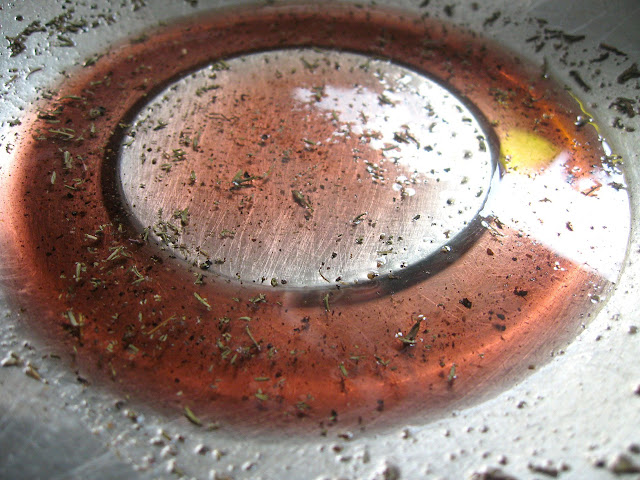
Folks who purchase bottled salad dressing are as misguided as people who have plastic plants in their home; so, next time you reach for your bottle of Kraft Ranch Dressing just whip up a bunch of the homemade stuff:

Ingredients:

  • 1/2 cup of olive oil
  • 1/4 cup of red wine vinegar
  • Kosher Salt and Fresh Ground Pepper to taste
  • 1 teaspoon Dry Thyme
  • 1 tablespoon of Dijon mustard

Place the salt and pepper in a small mixing bowl and add vinegar first (this will help dissolve the salt) and mix well.  Next, add Thyme and mustard and beat once again.  Finally, slowly add the olive oil and beat/whisk until you have emulsification. 

Note: most folks believe in a 1 to 3 ratio of oil to vinegar but I enjoy a slightly more acidic dressing.  Also, for those of you who like anchovies feel free to add a single, minced, anchovy (cured in salt or olive oil) to the mixture!

Related Posts with Thumbnails

Aruba is located in the southern Caribbean, just 15 miles off the coast of Venezuela (and 12 degrees north of the equator). Aruba has excellent, year round, weather (with little rainfall). 

If you're into the full service hotel experience then consider the Hyatt Regency on Palm Beach (there are also smaller hotels on Eagle Beach)  The Hyatt is a full service hotel with a private beach, multiple pools, bars, restaurants, and a casino.  The staff and service are excellent, as are the food and drinks!

Aruba also has some of the best food in the Caribbean, consider the following restaurants if you visit the island:

Related Posts with Thumbnails

bug.jpgThe New Yorker ran an excellent piece on the rise of super bacteria and their resistance to antibioticsJerome Groopman argues that hospitals are breeding grounds for "super bugs" and that Doctors have been too quick to prescribe antibiotics (which only help bacteria assimilate and fight off treatments). 

Here's a brilliant description of how a particular bacteria adapts to antibiotics:

In April, I visited Dr. Stuart Levy, at Tufts University School of Medicine. Levy is a researcher-physician who has made key discoveries about how bacteria become resistant to antibiotics. In addition to the natural cell envelope of Klebsiella, Levy outlined three primary changes in bacteria that make them resistant to antibiotics. Each change involves either a mutation in the bacterium's own DNA or the importation of mutated DNA from another. (Bacteria can exchange DNA in the form of plasmids, molecules that are shared by the microbes and allow them to survive inhibitory antibiotics.) First, the bacteria may acquire an enzyme that can either act like a pair of scissors, cutting the drug into an inactive form, or modify the drug's chemical structure, so that it is rendered impotent. Thirty years ago, Levy discovered a second change: pumps inside the bacteria that could spit out the antibiotic once it had passed through the cell wall. His first reports were met with profound skepticism, but now, Levy told me, "most people would say that efflux is the most common form of bacterial resistance to antibiotics." The third change involves mutations that alter the inner contents of the microbe, so that the antibiotic can no longer inactivate its target.


Related Posts with Thumbnails

photo_brooks_large.jpgI've been reading David Brooks since the publication of "Bobos in the Paradise" and I've been thoroughly impressed with how he describes American society and our "unique" way of living.

Brooks appears on PBS' Newshour and is also a NY Times Op Ed Columnist.  His latest column is entitled, "Lord of the Memes" and is a must read; here's an excerpt:

But on or about June 29, 2007, human character changed. That, of course, was the release date of the first iPhone.

On that date, media displaced culture. As commenters on The American Scene blog have pointed out, the means of transmission replaced the content of culture as the center of historical excitement and as the marker of social status.

Think about what Brooks just said, viz., that the "means of transmission" (say, the iPhone or a Facebook page) has "replaced the content of culture" (say, a piece of classical music or a novel); this is a significant and scary shift!

Finally, here's a brief bio from the PBS web site.

Related Posts with Thumbnails
....tune in next week! Related Posts with Thumbnails

whole.jpgIf you happen to have a Whole Foods supermarket in your area then you've probably noticed how popular the chain has become over the last 3-4 years.  After all, where else can you get a few stalks of organic Swiss Chard for $6.99 or imported whole been coffee for $17.99 a pound?  Heck, I was so enamored with the supermarket when it first opened in our area that I would make excuses to visit just to take in the quality of the produce and walk down some of the aisles showcasing potassium rich coconut water and rich veal demi glaze (without making a purchase).

So, it came as a big surprise today when the chain supermarket reported a 30 percent decrease in profit during the 3rd quarter - Whole Foods executives blamed the tough economy and consumers move to "cheaper products and discount stores." 

Specifically, the decline surprised me because the folks who shop at Whole Foods tend to be in high income brackets (and usually don't lose sleep over a slow down in the economy).  So, if Whole Foods shoppers are staying home we may have a real problem brewing in the economy (this is also true in the current luxury automobile market).

Related Posts with Thumbnails

health.jpgNPR aired a series of radio reports on the US health care system as it relates to Europe and Asia and they, in sum, described how other countries manage to run state sponsored, universal, health care programs.

The program was eye opening!

Related Posts with Thumbnails

National_IQ_Lynn_Vanhanen_2006_IQ_and_Global_Inequality.pngGiven a recent conversation on "where would you live in the world" I dug up some info on 1., standard of living and 2., human development index.  Here are some fun facts to consider next time someone asks the "where should you live" question:


  • The United States ranks 4th in GDP (or gross domestic product), but 92nd in terms of distribution of wealth (in other words, if you have money in the US it is a great place to live <but given the concentration of wealth in the US, most individuals don't benefit from high GDP and associated increases in productivity>). 

  • HDI or Human Development Index measures average achievement of a country based on life expectancy, adult literacy rate, and gross domestic product per capita at PPP or purchasing power parity (basically, how to compare the purchasing power of two currencies). 

Here are the top ten:

  1. Norway
  2. Iceland
  3. Australia
  4. Luxembourg
  5. Canada
  6. Sweden
  7. Switzerland
  8. Ireland
  9. Belgium
  10. United States

So, where would you live?  If you got bucks, set up camp in the US; if not, pack your bags and move the clan!

- from the UN (http://hdr.undp.org/en/)

Related Posts with Thumbnails

Welcome To Scordo.com

Google Ads:


Follow Us:
twitter scordo facebook fan page scordo rss feed contact scordo.com more about scordo.com


Read Through Our Top Categories:
personal finance best of house and home best of italian way food and products best of how to and home improvement best of

Sign Up: Scordo.com What's New Newsletter
* indicates required

Help Keep Us Going:

Feeling generous and want to help keep Scordo.com producing fresh and original content?

Questions, Ideas, or Tips:

email scordo.com: blog at scordo.com


Blog Flux Directory

Note: The views expressed herein are solely my own and should not be attributed to my employer in any way. This site is not maintained utilizing my employer's resources or on company time.

RSS feed graphic for scordo.com Subscribe to Scordo.com via RSS

Blog Roll