November 2009 Archives

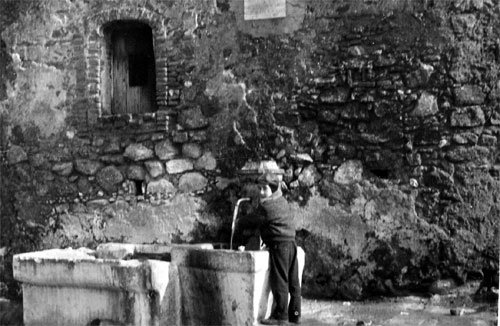
kidfountain
(photo: my young uncle washing his hands in an outdoor fountain in Bagnara, Calabra - Village of Pellegrina)

One of the most important life skills you can teach your child is how to save or, more specifically, why it's important to save.   My parents would often bring me to the bank as a small child and I observed my mother writing and cashing checks, depositing money, etc.  By the time I was 7 or 8 my parents told me about a little blue passbook they had opened for me when I was born.  The passbook (or savings account) contained some regular deposits and a healthy amount of money.  I had no sense of the value of the account or what the cash really represented, but I do remember my parents telling me:

1. This is where you will (not can) save any money you come across (birthday, holiday, etc.).

2. Once you put money into the little blue book you really do not want to take it out.

3. The bank will give you some money in return for keeping a little blue book full of money.

The lesson above was very simplistic; namely, that saving is good and should be taken seriously.  Beyond setting up a savings account for me, my parents also exposed me to their financial goings-on from a very early age (I knew for example how much my father made via his paycheck, what our tenants would pay in rent each month, and how much my dad would collect for small handy-man type projects).  My parents hid nothing about our financial life or status, so I was "in the know" from a very early age.  Some experts have argued, especially in light of the recent recession, that parents should aim to shelter financial goings on from their kids given stress, anxiety, etc.  And while every parents should customize parental advice for his or her child (read: understand what type of child you have and adjust parents style), I believe in empowering children and raising smart, pragmatic, kids who will be ready to face the world!

So, when beginning your child's fiscal eduction you want to make sure you do the following:

1. Set up a savings account
 and describe what it is meant for and how you make regular deposits.

2. Expose your child to every inch of your family's financial life (in a sense treat the child as an adult and describe how much money the family makes <and the different sources of money>, what the family does with money, and what money can and cannot provide).

Start the personal finance discussion slowly and make it as easy to digest as possible.  That is to say, talk about saving money and not interest rates or how money is needed for a home, food, and security and not to buy video games, go out to eat, or impress people.  

I know of some families that never discuss money matters and this can be potentially dangerous to a child's personal finance eduction (which isn't taught in schools, unfortunately, and is the responsibility of the parent).  Money is not a dirty word nor should parents treat it as formal topic only open to adults.  The sooner a child feels comfortable dealing with money the quicker he/she can begin to see the value of money what it can and cannot provide an individual (security versus happiness, for example).  

Related Posts with Thumbnails
apps

Around the same time last year, I offered some no-brainer tips on how to get along with everyone at Thanksgiving.  The tips emanated from the fact that even if you love most of your family members there comes a point during the holiday season when you'd like to get Uncle Pasquale in a headlock and give him a good noogie.  

Personally, I enjoy hanging out with the extended family but come New Year's Day I'm ready to spend a few weeks in isolation in an undisclosed New England cabin (and, yes,  I have preached on the virtues of keeping your family close!). So, without further ado here are 4 tips on how to get along with your dinner companions on Thanksgiving Day  

1. Be nice. Getting along with people is not rocket science.  If you're coming across as cold, snobby, and unwilling to engage in a conversation, you'll most likely be sitting by yourself watching some mediocre football game.  Try extra hard and smile, comb your hair, and engage people in conversation.

2. Have a glass of wine.  I'm not advocating funneling a bottle of Cote du Rhone, but grab a glass of wine when you arrive and it will help you engage people in conversation and just make you feel relaxed.
 
carving

3. Dress nice.
 Everyone likes being around people who look good, so keep your jeans and the 30 year old wool sweater in the closet and put on a nice pair of pants and dress shirt.  It also tells the Thanksgiving Day crowd that you acknowledge the holiday and are ready to celebrate or give thanks (if that's your thing)!  Don't pay attention to the above pictures.

4. Bring something to dinner.  Not only will your host appreciate a nice bottle of wine, a fruit platter, or a home made pie, but, again, the gesture will signal to the dinner table that you are excited about the holiday and ready to have a good time.

If you hate Thanksgiving then I can't help you, but it tends to be once of the nicer holidays of the season so enjoy and Happy Turkey Day!

Related Posts with Thumbnails
calabria
(Photo: that's my mother, grandmother, and aunts leaning on an Oxen in rural Calabria)

If you haven't noticed, Scordo.com has been posting on all things Italian as of late (salami, mushroom hunting, espresso, Italian cocktails/Amari, Italian immigrants and money, dry pasta, pesto, cheese, etc.) and I wanted to reassure my readers that while the editorial theme of Scordo.com will not move away from practical living, home & garden, personal finance, and food I will be dedicating a bit more space to Italian living content.  What this means is that you'll continue to see the same great content on past topics such as remodeling your kitchen, making your own tomato sauce, and saving money, but you'll gain new entries on Italian culture, products, and lifestyle (from the perspective of a first generation Italian-American!).  

With the above said, here's a list of three Italian-themed sites and blogs I recently stumbled upon; if you have others that should be on this list drop me a note and I'll review them and add if appropriate:

Written by Joe from MA. Joe writes on Italian-American traditions and his food, culture, and living experiences both in the States and in Italy.

Bleedingespresso.com
Michelle is a former attorney from PA whose family is originally from Calabria.  A couple year's ago she picked up and moved to Calabria full time!  Michelle is basically living my dream; go and read all about her adventures!

Ciao Chow Linda
A food blog with tons of great photos!  Linda was born in the States, moved to Italy, and now write about Italy and food from the US!
Related Posts with Thumbnails
campari-aperatif

Do you do bitter?  No, no I'm not asking you if you like to complain or wake up each morning looking for a fight with the world (or worse your spouse)!  What I'm asking is if you've ever had the pleasure of experiencing what the Italians refer to as Amari?  Amari are traditional digestivos or spirits (read post dinner drinks or liquids that will help you digest your massive meal).  Amari are made by distilling a wide variety of herbs and spices - no one Amari shares the same makeup or ingredients.  For example, Amaro Averna from Sicily is comprised of citrus, herbs, roots, and caramel and Fernet-Branca includes aloe, gentian roots, rhubarb, galangal, red bark, etc. (Fernet-Branca keeps most of the ingredients a secret).

Generally speaking, and as Eric Asimov explains in a recent "The Pour" article, bitter drinks aren't exactly the rage in the US and, moreover, Americans haven't yet reached the ephemeral state of post digestive bliss.  That is to say, Mr. Smith could care less about how his stomach is doing after a large meal, conversely, in Italy, the digestive system is taken more seriously than Catholicism, hence the fascination with post dinner Amari designed to soothe both the stomach and the soul (don't worry I'm not a Cartesian).   Also related to post meal digestion, the Italian tradition of fruit after lunch and dinner is also meant to cleanse the palate and help the stomach do it's thing. 

I grew up with a few basic Amari including Campari (which is made from cascarilla bark and the insect Dactylopius coccus which gives the liquor it's distinctive red color) and Vecchio Amaro del Capo (an herbal and minty amaro made in Calabria).  My parents served Amari before and after lunch or dinner.  In terms of consuming fruit after a meal, it was a given that we had a virtually fruit stand at our dinner table every night, including two types of pears, a couple of varieties of apples, oranges, cactus pears, grapes, peaches, plums, etc. (all according to the correct season).  I still consume tons of fruit after dinner, but I can't peel a pear like my father or grandfather.

The following is a wholly non comprehensive list of Italian Amari (thanks to both Asimov <NY Times> and Weber <San Francisco Chronicle> for doing all the heavy lifting; let's start with Weber's list (quotes are straight from his wonderful article, That's amari: Italy's traditional bitter liqueurs find new life with American consumers):

amaro_nonino1

Amaro Nonino (about $42).
  "A lighter style of amaro made in Friuli at the Nonino distillery. Its flavors are warm, with a gentle spiciness and smooth texture. The spice character lingers on the finish, proof that Nonino is one of the more elegant amari on the market. Contains a portion of ÙE Grape Distillate, a proprietary aquavit aged in small barriques of nevers, limousin and sherry woods, plus an infusion of herbs. It is best enjoyed as a digestivo or as an aperitivo with ice and orange peel."

AMARO_AVERNA

Amaro Averna (about $35).
  "A sophisticated and complex amaro that hails from Sicily. The addition of blood orange and lemon peels to the aromatic herbs used to make this amaro adds a bright and refreshing character. Averna is widely considered to be one of the most versatile Italian amari."


capo

Vecchio Amaro del Capo.
 An herbal and minty amaro made in Calabria, my parents place of birth.  Capo is excellent when served on the rocks or ice cold from the freezer.  

cynar

Cynar (about $22).
  "The earthy flavors in this herbal amaro are enhanced by the flavors of the artichokes used in its production. Cynar also has a relatively low alcohol level (16.5 percent), making it a popular amaro for cocktails, as well as a style of amaro that's enjoyable as an aperitivo."

fernet-branca

Fernet-Branca (about $30).
 "A pungent and black drink made in Milan and considered by many to be the benchmark Italian amaro. Flavors of anise and saffron add complexity to this forceful drink."

mariaal

Santa Maria al Monte ($38).
 "This shows an engaging herbal complexity that recalls fresh basil and spearmint. Its strength and power are similar to Fernet-Branca, while the vibrant finish feels spicy and rich." From the Valle d'Aosta, Santa Maria al Monte is a digestivo that uses bitter orange peel and ginseng among other flavoring agents.  Menthol presence is heavy.

ramazzotti

Ramazzotti ($24).
  "One of the more popular Italian amaro brands, Ramazzotti is made in Milan. The balance between bitter and sweet in this aromatic amaro feels almost seamless, while the snappy flavor of fresh ginger lingers on the finish."

Other brands mentioned in Asimov's article:

12campari

Campari (about $26).
 Originally produced in 1860 by Gaspare Campari in Milan.  As stated above, Campari is made from cascarilla bark and the insect Dactylopius coccus which gives the liquor it's distinctive red color (note: as of 2006 insects are no longer used to give Campari it's red color; a red dye is now used).  I like Campari via the Negroni, Americano, or with grapefruit juice and a splash of red vermouth)
luxardo

Girolamo Luxardo of Veneto.  A pleasant aperitif liqueur obtained by the infusion of several herbs and fruits such as: sweet oranges, bitter oranges, rhubarb, mint, marjoram and thyme.

brancamenta

Branca Menta (about $27.50).
 As one online reviewer put it, "Deep chestnut, mahogany. High toned, mineral, alpine herbed, licorice aromatics. Rich texture. Wild, intensely concentrated palate - like liquid Ricola. Very fresh, minty and clean with a powerful infusion of spice. For all its presence, it retains nice balance. Use this in winter - should cure anything."


mioamaro

Inga Mio.  More info to follow.

Chinati.  Made from wine with the addition of herbs
Related Posts with Thumbnails
stree_scene

Good morning everyone and if you're located on the East Coast, I hope you're enjoying the Fall weather!  In the NYC area, there are still a few Norway Maples with bright yellow leaves, but the Sycamores, Red Maples, and Red and White Oaks have lost their leaves.  

While the trees may be loosing their leaves, Scordo.com readers are gaining a new feature: a quarterly "What's New" newsletter!   The quarterly newsletter will feature top stories, insightful comments from readers, the best in Italian food and home lifestyle products, and other great original content you've come to expect from Scordo.com, including:

- Tips on Practical Living
- How To Save Money, Yet Live a High Quality Life
- Food Advice and Recipes
- Home and Garden How To

You'll receive the "What's New" newsletter four (4) times per year, so you don't have to worry about your inbox swelling with more unread email   

Subscribe Now for the Scordo.com "What's New" Newsletter - it's easy and free!
Related Posts with Thumbnails
IMG_4763

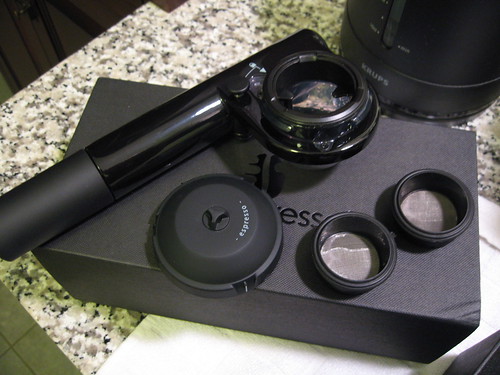
At first glance it just doesn't make any sense.  That is to say, how could a shot of liquid gold (aka, fresh espresso) come out of a handheld device?  Afterall, if you walk into your neighborhood café or Starbucks you'll mostly likely see a $10,000 plus hunk of steel with a brass broiler, multiple portafilters, a warming tray to accommodate 40 cups and saucers, and enough electrical circuitry to make the latest iPhone 3G S seem like your grandma's beige rotary phone.  The handheld device in question is the new Handpresso Wild Domepod.

IMG_4762
(photo: product packaging is real nice and is similar to the way Apple packages products)

The Handpresso Wild Domepod is an update to the Handpresso Wild ESE. The key difference between the two models is that the Domepod can be used with freshly ground coffee and cannot be used with ESE pods.  As stated in my earlier article on the Handpresso Wild ESE, the Domepod contains the following features:

- The unit does not require electricity but rather creates 16 bar of pressure via a "bicycle pump" like mechanism on handheld device .  This method differs from the CO2 cartridges used in products like the MyPresso Twist which I've yet to try.  

- The unit contains a filtered plastic/metal basket that holds about 4-5 teaspoons of ground espresso (which is ground to a powder like consistency and different than, say, the ground coffee used for your typical French Press cup of coffee).

- The unit retails for $99.00 at Importika.com (it's not cheap).

I tried a sample version of the Handpresso Wild Domepod for a 1 week period (including a few trials with my Italian born parents).  I used both freshly ground espresso from WholeLatteLove.com called Malabar Gold which contains less acid and is milder in form than your typical espresso (it's been called a European type blend) and illy Café pre-ground espresso (find grind).  I used freshly filtered water to brew my espresso and what follows are my wholly unscientific impressions of the unit:

- I was excited that the Domepod would allow me to use freshly ground espresso versus ESE pods, yet I was worried about the process of both filling the unit with ground espresso and, thereafter, removing the grounds .  I'm happy to report that filling the unit was fairly easy.  I used both a standard plastic spoon and typical spoon served with espresso to fill the unit and it was an easy process.  Emptying the espresso cartridge which contains the used espresso grounds was easy and simply required a tap against the side of my garbage can to release.

- The pump mechanism seemed improved in the Domepod versus the ESE version, though the product packaging contains no indication the pump is improved or redesigned.  The unit required about 7-10 pumps to reach 16 bar pressure; this isn't bad considering that the end user is providing the power and not dependent on a CO2 cartridge or electrical plug!

- As I mentioned with the ESE model, boiling water is required to produce decent results.  Using warm water, or water that is even 4-5 minutes off the boil will significantly reduce the quality and extraction of your espresso (unfortunately, this rules out using water at work via a hot water dispenser or even water from a thermos).

IMG_4768
(photo: Ground Malabar Gold)

 - As stated above I used both Malabar Gold and illy fine grind Espresso.  When using the Malabar, which was ground fresh and via a professional grade grinder, the unit extracted the coffee well and there were no leaks at the beginning of the extraction process.  However, when using illy ground espresso (direct from the can) the results were disastrous.  The unit leaked and splashed water during the extraction process almost as though the ground espresso clogged the head (I tried to brew 5 separate cups using the illy ground espresso and each time I had the same end result) - see picture below.  When I used the Malabar Gold, the unit worked effortlessly.  My conclusion: the bean grind is critical to the Domepod (this has nothing to do with the quality of illy coffee, but rather maybe a byproduct of the compatibility of certain bean grinds with the Domepod).

- The espresso cartridge housing the ground espresso needs to be lightly tamped with each brew (I did this with the end of my spoon).  

IMG_4771 


IMG_4773

IMG_4774
  
- Using the right type of freshly ground espresso greatly enhances the quality of the product.  The Malabar Gold produced a rich and flavorful cup of coffee with decent crema and some complex flavors.  Don't get me wrong, the Domepod WILL NOT produce café type espresso (like the espresso found in the best spots in Europe; think northern Italy and Austria).  However, the Domepod does produce a better cup of espresso than a typical Bialetti stove top unit.  I would even go further and state that the Domepod espresso is better than the typical crap you'll find at your local Starbucks (yes Starbucks espresso isn't good, sorry I wish I had better things to say about the chain).  

- I was disappointed with the temperature of the espresso coming out of the Domepod.  Even with pre-heating my cup and using just off the boil water, my espresso wasn't at the ideal temperature I'm used to (whether I'm comparing it to stove top espresso or café/bar espresso).

- The Domepod model now contains a water level indicator to guide the user as to how much water to pour into the water chamber.  This is critical as the flavor and texture of the espresso varies greatly with the amount of water used; using too much water will produce a watery cup without much flavor and using too little will create a super concentrated cup.  I found filling the water chamber just below the water line works best (so don't follow the water level indicator exactly)

IMG_4776


IMG_4777
(photo: explosion when using Illy fine grind espresso, not sure if there is a espresso grind compatibility issue with the unit)
 
- I'm still experiencing a small amount of water leakage towards the end of the extraction process which is similar to what I reported in the ESE model.  The is a little frustrating as any excess water will dilute the flavor of your espresso; in turn, I've learned to move my espresso cup just before the final drops of coffee are being extracted).  

- Just as with the ESE model, the build quality is superb with the Domepod and the unit feels solid and should last a lifetime provided you keep the pumping mechanism clean and occasionally change the unit gasket.  As I said above, the product design and packaging is at a high level.

- The Domepod, like the ESE model, is really designed for single use.  I tried brewing multiple cups of coffee for family members one evening and the process of constantly removing coffee grinds and refilling the unit with water is cumbersome.  The unit is best for single service at the office or when traveling.

IMG_4766
(photo: Malabar gold espresso ground professionally)

The bottom line is that the Domepod is an improvement over the ESE model simply because the former utilizes freshly ground coffee and other than the aforementioned, the ESE and Domepod are identical machines.   While the flavor, texture, and aroma are all improved via the Domepod, I wouldn't want to mess with ground coffee at the office or on a business trip, for example.  So, the choice is yours in terms of which model to purchase:  The ESE (Wild) is convenient but produces a lower quality cup, while the fresh ground coffee (Domepod) makes a richer and more flavorful espresso but requires carrying and handling finely ground coffee.   
Related Posts with Thumbnails
walmart

With the notorious holiday shopping season fast approaching I'm having nauseous visions of deals, coupons, free mass produced turkeys and hams, free shipping, wal-mart, and 40 percent off blow out sales.  The visions are not only vivid and haunting they are actually true!  

Don't get me wrong, I wouldn't pass up a deal on a particular consumer item that I needed, but much of the typical consumer's behavior and the retail and/or manufacture's promotional tactics to sell a product are logic defying acts.   Especially when you think hard about what the entities in question are trying to get you to do and what channels they are utilizing.   Let's look at a few examples:

1.  Free Shipping.  The typical ground shipping cost for a consumer electronic items like a GPS device or digital camera is between $7-$9 (I used Best Buy as an example).  The typical cost for a middle of the road GPS device or digital camera is about $150-$250.  Using common sense does it make sense to purchase an item you don't need in order to obtain or "save" on free shipping?  The answer, of course, is no.  This tactic aims to bring a nominal cost, such as shipping, to the forefront of the shopping experience in order to downplay the actual cost of the item.  Think actual need ahead of nominal savings.

2.  Percentage off / Deals.  The main tactic here, again, is highlighting a percentage off a certain item.  You see the deals language lots a week or so before "Black Friday" (or the day right after Thanksgiving) so that retailers can attract foot traffic and curious shoppers.  Often, if you look closely at the products being discounted they are not only items you can probably do without (mediocre electronic devices, men's gloves made of fake leather, a set of 5 Teflon-like pans, etc.) but the quantity or model number is often limited.  This is the same tactic car dealers use to lure you into the dealership in Sunday morning newspapers (i.e., you'll see a ridiculously low price for a certain unreliable and gas-guzzling model which is often tied to a single VIN number).  Again, think about whether you need the item ahead of savings measly 10-20 percent.  

3.  Coupons.  The number of coupons sites on the web must double each and every day (I haven't validated this, but it's just a hunch).  These days you can save twenty five cents on yogurt at ShopRite, get two large pizzas at Domino's for $5.99, and find an oil change joint that will replace your engine oil and filter for $15.  I have to admit that coupons don't excite me, rather what excites me is value.  For example, if I see generic yogurt on sale that contains tons of sugar and limited real fruit/flavor I'll often pass on the sale item and spend an extra couple of cents per container because I'd rather purchase the brand that uses real sugar, organic milk, and fresh, real, fruit.  With food specifically, I don't want my choices of what I prepare for my family and myself to be influenced by a circular in the paper or a mass email campaign from Stop & Shop.  The bottom line is that the choice in the food that I consume is something I value highly and don't want influenced by saving, for example, five dollars at check out at my local market (this shouldn't be interpreted as some sort of elitist, East Coast, view, but rather a viewpoint that is centered on quality of life and the best choice).

cart 

Overall, when it comes to shopping and buying stuff (including clothes, food, shoes, consumer electronics, auto renewing services and subscriptions, etc.) I'm a big believer in putting 1. real need and 2. value ahead of spontaneous and pure "saving" shopping behavior.  What I'm driving at is that you shouldn't buy what you don't need regardless of a blockbuster deal or free shipping and you shouldn't let important consumer decisions, like food choice, be driven by coupons; instead, look for value when shopping (which I define as the best product for the best price).      

Related Posts with Thumbnails
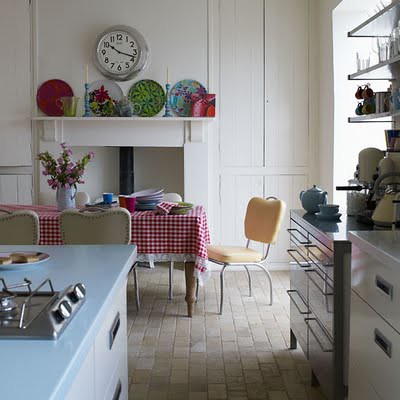
retrokitch

Back in February I wrote a short article on how to clean your kitchen and touched on hot topics such as floor washing, stainless steel polishing, and granite cleaning (I'm sure you're thinking: riveting subjects!).  On the topic of cleaning granite, I suggested folks use a white vinegar/water solution to clean their granite, but I'd like to now officially retract my suggestion.   After a few months of consistent use, I have started to see some very light etching take place.  The etching is minor and I may have overdone the percentage of white vinegar to water ratio, thus causing a bit of etching.  Moreover, I have started to use a small microfiber towel and regular dish soap to wash and sanitize my granite on a every other night basis (this is a three step process: washing, remove soap, and dry).  The dish soap does a great job of cleaning the granite, so long as the granite is free of debris (i.e., no crumbs, ground coffee, etc.) before washing.  The dish soap cleaning method also does not cause any etching.  

What my new method does not do well, however, is polish granite.  Our granite has been fairly shiny and new looking, but now that we're entering year three with our countertop I'm craving that new granite look again and rethinking the idea that you do not need specialty products to clean a kitchen well.  Enter Goddard's, a 170+ year old brand that earned it's reputation on silver cleaning products.  Nowadays, Goddard's produces a whole range of cleaning products, including a granite polish, stainless steal cleaner, and appliance and countertop polish.

IMG_4744
 
Stainless Steel Polish and Cleaner

I recently sampled the three Goddard products mentioned above in my own kitchen (partly out of pure necessity given that our metal and stone surface were a big old mess and also because of a sample pack). My black/white granite was dull and fading fast and my stainless steel appliances were full of smudges, micro-scratches, and very dull looking overall.  The first Goddard product I tried was the stainless steel cleaner.  The cleaner had a watery consistency and came in a spray bottle.  I sprayed my fridge and dishwasher twice and proceeded to remove the excess liquid with a microfiber clothe (I did this in two distinct stages).  I was also careful to wipe with the grain of the steel.  Overall, the stainless steel cleaner did not do a good job removing smudges or provide any sort of polish or shine to the metal.  The product did remove some of the contaminants on the surfaces of my fridge, stove, and dishwasher, but overall I was disappointed with the product and, to be perfectly honest, the cleaner gave me the same end results as using hot water and dish soap.  

I've had much better success with Signature Polish, which is recommended by Wolf / Sub Zero and acts as both a cleaner and polish.  I received a sample bottle with my Wolf stove purchase and it has outperformed all of the stainless steel cleaners that I've applied to my appliances in three plus years.  The Signature Polish provides a deep shine, removes small scratches, and cleans exceptionally well.  Moreover, the polish/cleaner goes a long way and only a small amount of liquid is needed to clean a large area.  Overall, when it comes to cleaning stainless  and getting that great, smudge less shine, I think it's always best to go with a thicker, polish type, solution versus a water based product.  

IMG_4778


IMG_4780

Granite Polish and Cleaner

I also tried Goddard's granite polish and without jumping the gun the spray solution was outstanding.  I applied the polish with a paper towel and removed excess with a microfiber cloth.  The solution gave my granite an exceptional shine and provided an ultra smooth feel to my countertop.  In fact, my wife thought our granite felt just like the day we installed it some 3 years ago.  The only two compliant I have are that the solution is a bit oily, in turn leaving some swirl marks and a bit of elbow grease is required to get the stone dry and free of any polish.  The bottle also doesn't state whether the polish is food safe (i.e., whether you can place fruit, vegetables, etc. directly on the stone).

Finally, I tried the much thicker Goddard's Appliance and Countertop Polish on our granite only and compared to the granite polish it did not provide the same sort of shine and feel.  The solution was also much thicker and more difficult to wipe up.  There may be a better application for the appliance and counter top polish (such as a glass stove top), but it was only average on our granite countetops (the solution provided decent cleaning power, but it did not produce a superb shine).  The product would be better labeled as a cleaner versus a true polish.  On the positive side, Goddard's Appliance and Countertop Polish is labeled food safe and is also a certified Kosher product. (UPDATE: I tried the Appliance and Countertop Polish on black, stove top, enamel and the result was very positive.  The polish did indeed provide a nice, deep, polish and cleaned the enamel quite well.  The polish did require a bit of work in terms of removal (it was a little oily) and to get a true shine, but it seems the mirror like finish will last a bit.  I'm curious to see how the polish holds up to spills, oil, heavy cooking, etc.)

So, yes I do recommend a good stainless steel polish and granite/stone cleaner for your home kitchen, as well as a basic cleaning kit including white vinegar (floors), Murphy's Oil (wood cabinets), Pine Oil, dish soap (granite, stove burners and top), and Soft Scrub with bleach cleanser (porcelain sink).   What are you waiting for, get out there and go clean those hunks of steel and stone in your kitchen!

Related Posts with Thumbnails
IMG_4732

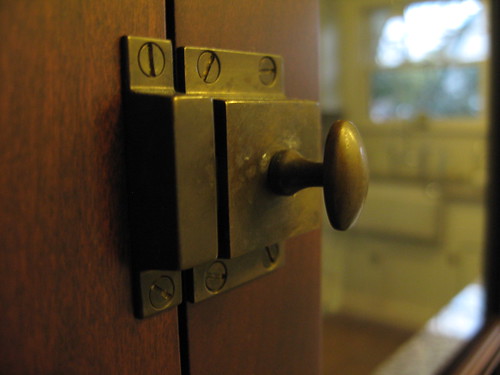
As I stated in my guide to renovating your kitchen, splurging on good quality kitchen cabinets is usually a good idea when it comes to redesigning your home kitchen (especially if you're looking to stay in your home for long term).  High quality kitchen cabinets are usually composed of solid wood cabinet faces (e.g., maple), full plywood box construction, dovetail drawers, etc.  Moreover, hiring a quality craftsmen to install your cabinets is always a good idea.  For example, during our kitchen renovation our cabinet installer Brian was meticulous when it came to hanging lower and upper cabinets, preparing for the install of our farmers sink, installing crown molding, and attaching our cabinet latches and pulls.

IMG_4729

One of the small details of our kitchen renovation that I had not given much thought to was cabinet hardware.  In fact, the only thought I had when it came to selecting cabinet hardware was to head down to the local hardware store and select a moderately priced set of pulls.  Well, as soon as I got a hold of some the "genuine brass" pulls and latches offered at the neighborhood Ace hardware store I knew they wouldn't work in our new kitchen.  The hardware store components were cheap looking, didn't function well, and were of a low quality design and construction.  That's when I stumbled upon Horton Brasses via a recommendation from the GardenWeb Kitchen Forum.  

Horton Brasses, a Cromwell, Connecticut based hardware company, produces more than 1,000+ pieces of cabinet and furniture pieces, from kitchen cabinet pulls to clock finials!  For our kitchen cabinets, we choose to go with a traditional pantry latch and drawer pull.  

IMG_4728

We ordered latches in both polished chrome and antique brass as well as pulls in polished chrome (The pulls and latches are available in seven finished).  The first thing I noticed when I received the hardware was the overall build quality of the pieces.  Each item had a high quality brass finish and the latches, specifically, had a high quality mechanism.  In fact, I had some concern about using pantry latches for our upper cabinets because I heard horror stories about the mechanism failing after prolonged use, but the customer service department at Horton assured me their latches were built to last.  And last they have for well over 3 years now!  Horton's hardware also comes with historically accurate fasteners (screws) that complete the look of the kitchen hardware.  

IMG_4730

Where Horton also shines is in the customer service department.  I spoke to Amy at Horton several times via the phone/email about both replacement parts and technical issues and she was a pleasure to work with.  Moreover, when one of the screw heads broke during a latch install because of tough hardwood and applying too much torque, a technician at Horton got on the phone with me and explained what drill bit to use when pre drilling, how to remove a broken screw head, and, generally, how to install the latch mechanism.  The people at Horton went well beyond the typical customer service support call.  What also gets me excited about Horton is how well priced their items are and, moreover, that the items are manufactured by the company in the United States.  Horton isn't a big company, but it's the type of customer experience I had that makes small companies grow and earn an outstanding reputation for both product and customer service.  Building a company is easy when you stick to the basics: great product, fair pricing, and outstanding customer service.
 
If you're looking for high quality kitchen hardware for your next kitchen renovation project check out Horton's bin pulls, pantry latches, and other fine hardware.  
Related Posts with Thumbnails
leaves

(The following is a guest post from Adrienne Carlson; who regularly writes on the topic of criminal justice.  See Adrienne's
related article on DIY ways to protect your home.)

Your home is probably the greatest asset you own, and when you let it run to ruin you are wasting your money in the worst way possible. A home that is clean and well maintained is worth more than one that is dirty and run down, even if the latter is bigger than the former. And when it is the place where you live on a regular basis with your family, your motto should be the clichéd proverb, "Cleanliness is next to Godliness." 

There are cheap and easy ways to clean your home, even if you've neglected cleanliness for some time now:

Be organized: Have a plan to clean your home. Don't try to do it all in one day, because it is going to take forever. Start with one room at a time, and when you're done, move on to the next one. Keep the bathrooms and kitchen for last, as they have the most stains and dirt. 

Remove clutter: A place for everything and everything in its place is a wonderful and easy way to keep your home clean. If you avoid throwing things around the house, you don't have to spend time picking them up later.  

Don't neglect the outside: Ensure that you keep your lawn and driveway neat and tidy at all times. The outside is what most people see, so make sure your paint is fresh and that your windows are washed and sparkling. 

Rope the entire family in: If you make cleaning a family affair, it's easier on all of you. It's not an easy job to keep cleaning up after messy children and spouses, so enforce cleanliness as a rule in your family from the time your kids are very young. Hold them responsible for keeping their rooms clean and reward them for neat and tidy rooms. 

Quick Tips:

- Use toothpaste to get your taps and other chrome fixtures shining.

- Use newspaper when cleaning mirrors, windows and other glass surfaces. It does not leave behind ugly streaks like cloth does.

- Do your laundry once or twice a week, but allocate storage space and enough baskets for your family's dirty clothes. Train your kids and spouse to separate laundry before they put them in the baskets. 

- Make your bed as soon as you get up. It's a routine that saves a lot of time. 

- Empty your garbage regularly; and invest in a garbage can with a closed lid so that the odor does not permeate your entire house. 

- Keep your windows open to let in fresh air and remove the smell of staleness that hangs around closed homes. 

- Never keep your dirty dishes for later. A sink full of stinky dishes can cause slime to build up and also create an unpleasant odor in your kitchen.

- Keep an eye out for cobwebs and dust bunnies - they can crop up at any time, so get rid of them instantly. 

Cleaning your home should be an everyday process, not one that you adopt once a year or when the mood strikes. When you do a little each day, the entire process is more manageable and seems like less of a chore. So get into the habit of cleaning everyday as part of your routine, and you can save yourself a huge amount of time, effort and money in the process.

For more in depth tips on cleaning your home see the following Scordo.com articles:


(The following is a guest post from Adrienne Carlson; who regularly writes on the topic of criminal justice.  See Adrienne's related article on DIY ways to protect your home.)
Related Posts with Thumbnails

Welcome To Scordo.com

Google Ads:


Follow Us:
twitter scordo facebook fan page scordo rss feed contact scordo.com more about scordo.com


Read Through Our Top Categories:
personal finance best of house and home best of italian way food and products best of how to and home improvement best of

Sign Up: Scordo.com What's New Newsletter
* indicates required

Help Keep Us Going:

Feeling generous and want to help keep Scordo.com producing fresh and original content?

Questions, Ideas, or Tips:

email scordo.com: blog at scordo.com


Blog Flux Directory

Note: The views expressed herein are solely my own and should not be attributed to my employer in any way. This site is not maintained utilizing my employer's resources or on company time.

RSS feed graphic for scordo.com Subscribe to Scordo.com via RSS

Blog Roll