January 2010 Archives

pot2
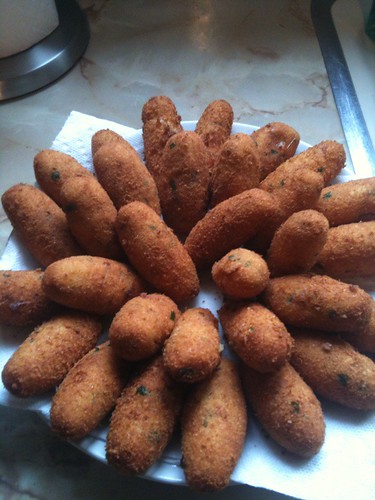
(perfectly fried crocchette and ready to consume)

Don't tell my wife but I had a secret lover on my wedding day.  That's right, in addition to my beautiful wife I secretly adored the Crocchette di patate that were being served at our party!  The potato croquettes were made with a mashed potato filling, stuffed with cubes of fresh mozzarella, and breaded with fresh breadcrumbs, dried oregano, and finely chopped parsley.  Thereafter, the croquettes were deep fried and served piping hot.  The restaurant where we held our wedding reception served the crocchette as a side to the main course, but I would have had 6-7 of the delicate croquettes with a few glasses of Ciro as my main meal.  

While I adored the crocchette made for our wedding, I always prefer making the real deal at home (even if it does include frying and messing up the kitchen; I'm with Jacque Pepin here, the only thing I hate about cooking is the cleanup!).  The following is my crocchette di patate recipe.  Serve the crocchette as an appetizer with a few cocktails or as a side with wild salmon of dry aged sirloin.  Let's start with the ingredients:

- 2lbs of Idaho Potatoes (you'll be baking these as the process nicely eliminates the moisture in the potatoes and makes for a better frying experience)
- 1 bunch of parlsey
- 1 cup of grated Parmigiano-Reggiano
- 2 eggs
- Salt and pepper to taste
- 2-3 cloves of garlic (crushed and minced finely)
- 2-3 tablespoons of fresh breadcrumbs

pot1
(photo: notice the crunchy exterior without using too much breadcrumb; the potato should be king here and not the breadcrumb)

women
(photo: three generation of crocchette makers: from left to right, my mother, great grandmother, and grandmother.  the photo was taken on Via Nazionale in the early 1960's)

Bake the potatoes at 400 degrees for 20-25 minutes.  Next, scoop out the interior of the potatoes and mash them with a potato masher (don't use an electric mixer as you'll develop too much gluten in the potatoes).  Move the mashed potatoes into a bowl and add Parmigiano-Reggiano, eggs, 1 tablespoon homemade breadcrumbs, and salt and pepper to taste.  Mix the ingredients and scoop approximately 1 tablespoon of the mixture into your hand and shape the potatoes into an oblong shape (similar to the photo above); you can add some cubed Mozzarella at this point, if you'd like).  Finally, role the individual croquettes in the remaining breadcrumb (very lightly) and fry your croquettes in your preferred oil (I use canola).  You can season the remaining breadcrumbs with a bit of salt, pepper, and dried oregano prior to rolling your crocchette.   You can also use a deep fryer to cook the crocchette, but I simply fill a large sautee pan with about an inch of vegetable oil and/or olive oil (just enough to cover the crocchette).  Fry the croquettes until golden and serve hot!  

08SlowFood
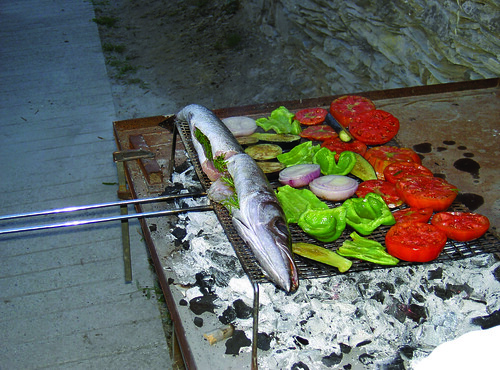
(photo: couch's whiting or blue whiting with red onion, peppers, and tomatoes)


(UPDATE 1/31/09: Contest is closed.  The winner is Evan Lucas!  Thanks to everyone for participating.)

In Elena Kostioukovitch's preface from the book, "Why Italians Love to Talk About Food" Elena asks, "And why is that you identify particular historic moments with references to food?"  The "you" Elena is referencing are the intelligentsia of the Italian landscape (i..e, scholars, journalists, historians, political figures, etc.) but she might as well be talking about the seamstress from Naples or the fisherman from Calabria.  You see, for most Italians, food is the identifier of moments (hence the phrase, "Parla come mangi" or Speak the Language of Your Food); it bonds Italians, allows them to experience pleasure, and defines what it means to lead a good life.  In America, we consume material or money, while in Italy its inhabitants eat wonderful foods to "live well and soundly" (and it's the most basic and pure form of consumption).  

18Pasta 
(photo: is that drying pasta or makeshift window curtains?)  

21Marches
(photo: the long process of harvesting saffron)

I have to confess, I was fascinated with Kostioukovitch's book well before I sat to read through the 450 pages.  My fascination wasn't, of course, centered on how a people could disregard economic or material status for the sake of food, but, rather, why anyone would want to chase the good life in any other manner beyond eating well.   You see, I learned early only to associate both important events in my life, as well as the mundane, with wonderful food.  For example, I associate my first trip as a boy to Italy with the taste of cold pressed extra virgin olive oil from Nonno Latella's small olive orchard outside of Bagnara Calabra.  The olive oil was different from the corn oil my Italian family consumed in the States (we couldn't afford olive oil in those days) and I quickly identified our trip to Calabria with the green nectar from many years to come.  And it wasn't just olive oil that formed strong references to key events in my life.  I still associate, vividly, the smell of frying dough with Christmas Eve (zeppola), boiling pasta water with Sunday mornings (linguine with a rabbit ragu), sun dried tomatoes , provolone cheese, and salami to my parent's Saturday evening dinner parties, and strong stove top espresso with my mother's breath.    

Kostioukovitch does a great job of documenting the same sort of food associations I mention above in her 19 chapters on Italian regions, history, and folklore.  I was particularly interested in her chapter on Calabria and it didn't disappoint.  Here are some interesting food and cultural tidbits on the southern Italian province of Calabria from Kostioukovitch:

24Mediterranean Diet
(photo: I'll take the zucchini blossoms!)

1. In some parts of Calabria, "farmers still read omens from a pig's entrails when it is taken to slaughter, as the Etruscan haruspices did."  I remember when Nonno Latella used to slaughter a given pig from his stock (about every 2 years or so) and the ritual was very solemn (he didn't do much reading or perform any rituals; rather he was focused on slaughtering the pig).

2. Calabrian women danced and shouted incantation to drive away evil spirits while kneading dough.  Both my Calabrian born grandparents kneaded plenty of dough and I don't remember them shouting, unless of course I came into the kitchen with dirty hands.  However, I do remember Nonna Scordo telling me I had very poor hip movement when I kneaded (she said I had no rhythm or style and she was right).  

03Veneto 
(photo: grilled seafood in Veneto)  

3. The sign of the cross is traced on loafs of bread before they enter the oven.  I'll have to ask Zia Giovanna if she performs this ritual in her bakery each morning.  My hunch is that she may on occasion trace a few crosses, given her belief that one can make major life decisions by placing a single drop of extra virgin olive oil in a bowl of water and then asking the oil to move in a certain manner (when she did this for me as a small child I thought we were playing the Oiju board game; I was slapped quickly and told to sit still).

4. Calabria was part of Magna Craecia (or "Greater Greece" from the eight century B.C. until the third century.  The Romans arrived in Calabria 500 years after the Greeks and loved the local wines!  After the Roman empire fell, "Calabria was ruled by the Germans, the Goths, the Lombards, the Byzantines, the Normans, the Franks, the Swabians, the Saracens, the Spanish, and the French."  The 'ndrangheta (Calabrian mafia) begin flexing it's muscle from 1850 onwards and some say they've never loosened their vice grip on the region (a sad fact for the people of Calabria).  

5. Cistercians monasteries dominated much of Calabria and their traditions continue to this day, such as practicing an ascetic way of life and deep reliance on agriculture.

6. An annual swordfish sagra (festival) is held on the first Sunday in July in Bagnara Calabra.  The sagra features wonderful food and is best known for the blessing of the ontre or traditional fishing boats used to spear swordfish.  The is one cool event and it takes place only 10 minutes outside of Pellegrina (Pellegrina has it's own sagra focused on wheat)

7. Calabrians are famous for the diversity of their eggplant crop as well as reliance on fava beans, broad beans, and white beans.  Many fish are consumed from the Tyrrhenian and Ionia seas including swordfish, tuna, sardines, and herring.  See my article on 10 Ways to Cook Like An Italian here.

09ValleAosta
(photo: boar head next to boar salami?)

Contest / Book Give Away

In order to spread the concept of leading the good life via food (or at least talking about it!) the folks over at Farrar, Straus, and Giroux hava agreed to send a free copy of Why Italians Love to Talk About Food to one lucky Scordo.com reader !  Here's how you can enter the Why Italians Love to Talk About Food book giveaway contest:

- Prize Giveaway includes one (1) copy of Why Italians Love to Talk About Food.

- What you need to do to enter: 1. leave a comment under this post on a favorite food memory (from any region of the world) and how you indentify it to a major life moment or event (or even an important person or relative) and 2.sign up for the Scordo.com What's New Newsletter here (if you're already a newsletter subsriber than you'll need to sign up as a fan of Scordo.com on Facebook here).
 
- Only one entry per person please.

- The contest is open until 12 midnight on 1/30 and a single random user will be picked via Random.org (sorry contest only open to folks from the US given shipping logistics).  The winner will be announced immediately on Twitter (so please follow me) and on Scordo.com by 5PM on Monday, 2/1. 

cover
(photo: book cover)

- Please use a valid email address when leaving a comment so I can contact you just in case you're the lucky winner (I'll need your shipping address). 

- Farrar, Straus, and Giroux will send out the book to the single contest winner during the week of 2/1.

Finally, Elena was nice enough to answer a few of my questions on Italians and food.  You can find the full interview below and also purchase the book via Amazon:

1. How did you first get interested in the relationship a typical Italian has with his or her food?
 It was soon after I began my formal study of Italian language and culture in the University of Moscow. Suddenly I realized that there's a multitude of topics, either abstract or practical, which are closely linked to a food themes of in the mind of Italian people (and of people of Italian origins of course). An Italian says about his or her mother that 'she's as gentle as a bread', about a friend: 'we're like mac and cheese' ('cacio con i maccheroni'), and about a nasty person: 'his pumpkin (head) obviously lacks salt (brains)'. So the more I've been reading Italian journalism, poetry, novels, even philosophy and academic books, the more obvious it was: in order to understand Italy and Italians, one definitely should familiarize herself with secrets of their culinary code.
 
2. What surprised you the most about how Italian interact and relate to food?
I just love their comprehensive approach to food! A dish can't be 'delicious' or 'bad' per se, it's to be evaluated in context of the entire feast menu. To really enjoy spaghettis, one should take into account a dish that was served before it (antipasto), what was a main dish, and what followed (a dessert). Such an approach suppose that a customer is not only able to evaluate a palatability of every single dish, but also understands what sequence/combination of dishes might be considered prefect, good, adequate, bad, or disastrous. I should affirm that literally every adult Italian has got - subconsciously in the majority of cases - this culinary culture, that he or she has adopted from the very childhood, both in family and in social institutions (kindergarten, school, college etc.)

Yet to say that Italian teenagers today - and especially in big cities - gradually absorb an American-style eating traditions: hamburgers, French fries, hotdogs, Coca-Cola. It is possible that in a decade or two Italian culinary rituals and traditions will sink into degradation and will be swept away by a globalization.
 
3. Americans get a bum wrap for their relationship with food (not to mention the typical American diet); are things changing in the US? Will we ever see regional cooking make a comeback in the US?
 Well, you tell me! I strongly hope that there's a possibility for that in the US, but let your readers express their own judgments. I will enjoy reading them.  (Scordo comments: well, what do you think of Elena's question, will American ever be food obsessed in the way Italians live and eat?)
 
4. Your book is not a typical cookbook; was it difficult to talk about food with no references to recipes?
The main subject of my book is not a food in itself, but what Italians SAY about it. To a certain degree, my book is a systematized collection of testimonies of Italians who cook, sell, describe, picture, enjoy and eat Italian food. To put it the other way, my book's main focus is not on recipes, but on existing general concepts and their roots.
 
5. Is there a particular regional, Italian, cuisine that you like best?
 My favorite regional Italian cuisine is definitely that of beautiful Toscana (Tuscany). Its food is full of energy and dynamism essential for Tuscan character. I adore the taste and look of fresh Tuscan products: vegetables, bread, fish, meat, and not to forget about its inimitable wine. I would highly recommend a freshly-made fiorentina beef stake (only a couple of minutes on grill), a cazzimperio salad made of fresh vegetables and special seasoning (vinegar, olive oil, local spices). Tuscan bread is in the base of the world-known bruschettes. As for a local fish courses, made of Tuscan fish, so rich in flavor, my favorite is a delicious cacciucco soup, which according to a local tradition should be prepared of at least five different kinds of fish (as many as Cs in its name, cacciucco), though the more the better.
 
6. Of the southern regions of Italy, is there a dish or food philosophy that you enjoyed researching or were surprised by?
As almost every newcomer, I was amazed by a practice of  meridionale (southerners) to eat a wet uncooked fish or seafood just from the net, seasoning it only with salt and lemon juice and washing it down with chilled white local wine. This viand turned to be just as tasty, nutritious and delightful as French oysters accompanied by Chablis wine or Japanese fugu sushi with Japanese beer; the only difference is that the last two are world-famous luxury food, while only few connoisseurs outside Italy know the divine taste of a freshly caught octopus, sea urchin and frutti del mare accompanied by chilled Fiano wine (brought to Apulia by Angevins some 800 years ago). To tell you all the truth, I believe that one should try these delicacies only in Italy, combining a joy of gourmet with other esthetic pleasures Apulia with its magnificent seashore and plenty of old Norman castles offers.
riceballs
(thanks to mondo del gusto for the photo)

One of my favorite dishes at a local trattoria in New Jersey is an appetizer consisting of potato croquets, mozzarella in Carrozza  (mozzarella sticks), calzoncini (friend pockets of dough), and arancini (rice balls).  All of the items in the dish, officially called frittura Napoletana, are expertly fried and generally well executed.  However, it's the arancini that stand out and remind me of the fried treats I consumed on the Violet coast (in Bagnara Calabra) as a child (usually from street vendors or small pizzerias) during my summer vacations.    

Arancini are traditionally prepared with Arborio rice, tomato sauce with ground beef or pork, peas, and mozzarella (or another local cheese that melts well), coated with an egg wash, breaded, and finally deep fried until golden and the cheese is melted (click here for our arancini photos).   The arancini of my youth were especially delicious after a day spent swimming in the Mediterranean with my cousins Vice, Maria, and Giuseppe.  And while the grown ups scolded us for consuming "vile", and fried, street food I wondered how they could compare melted cheese and creamy Arborio rice to the swordfish and roasted goat dishes they would later have for dinner (I later learned to love both swordfish and goat, of course!).  

riceballs3
(thanks to stefaniav for the photo)

My mother Annunziata continues the fried rice ball tradition in her New Jersey kitchen, though it's become a once a year thing as the work to prepare arancini becomes more daunting with age (don't tell my mother I said that).  Annunziata's State-side arancini do not differ widely from the Italian variant in both size and flavor (a rare happening when trying to replicate Italian dishes in the US) as she uses good ingredients, is meticulous about preparation, and most importantly, is an expert fryer.

Here's Annunziata's rice ball or arancini recipe (call them Calabrian or Sicilian in origin - it doesn't really matter once you take your first bite):

Ingredients:

- 2 cups of plain arborio based risotto (there's no substitute for arborio rice)
- 3 cups tomato sauce with ground beef or pork
- 1 cup of peas 
- 2 ounces of cubed mozzarella  
- 1 ½ cups of plain breadcrumbs
- 2 large eggs
- salt, pepper, oregano to taste
- ½ cup of finely chopped parsley
- vegetable oil for frying

rice5
(thanks to yosoynuts for the photo)
  
Process:

- Make plain risotto and proceed to scoop out a healthy amount into the palm of our hand (you're looking for baseball size arancini; note they don't need to be perfect spheres, in fact, I'm used to seeing arancini with a more oblong shape versus something perfectly round).  Make sure to wet your hands with some fresh water prior to handling the rice (this will prevent the rice from sticking)

- Make an indentation in the middle of the rice and proceed to fill the ball with a little tomato sauce, 3-4 cubes of mozzarella, and peas

- Next, close the rice around the filling and seal the ball by shaping the rice into a ball.

- Beat a few eggs and season them with a bit of salt and pepper.  Next dip the rice ball into the egg mixture and then in a bit of flour.  Thereafter, dip the ball back into the egg mixture and then into fine breadcrumbs (buy fresh breadcrumbs from a local shop that are not seasoned; you can season your own breadcrumbs with salt, pepper, oregano, and finely chopped parsley).  

- Begin heating your vegetable oil in a large pot (no need to use Extra Virgin Olive Oil as Mario Batali used to do on his FoodTV cooking show, as it's a royal waste of money).  The ideal frying temperature is between 350 and 375 degrees.  You can invest in a thermometer like this, but after several frying sessions you'll get a sense of when your oil is ready.  

- Gently place the balls in the hot oil and fry for about 4 to 4.5 minutes (depending on the size of the ball itself).  You're looking for a golden exterior appearance but ultimately you want the mozzarella to melt well and achieve "gooey" consistency; I've had very bad rice balls in the US that appear golden and perfectly cooked only to have barely melted cheese in the ball center)

Enjoy the rice balls right out of the fryer (you need to consume this product right away).  You can reheat rice balls but they often become dry.  

scholar
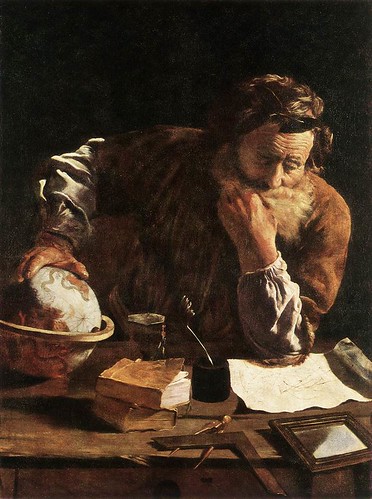
(photo: Feti's Painting Portrait of a Scholar)

If you've read Professor Nick Smith's guide for undergraduates considering law school, then his Inside Guide to Academic Success article (see below) is required, secondary, reading!

As Professor Smith points out, academic success is about applying oneself, pragmatically, to his or her studies.  There's no secret sauce or strategically practicing all night cramming sessions, rather doing well at a competitive 4 year college or university is comprised of hard word, discipline, and the realization that there's a 1:1 relationship between working hard as an undergraduate and post-college success (ok, ok there are a few exceptions like Bill Gates but they are few and far between).

Professor Smith holds a J.D. and before becoming a full time Philosophy Professor he worked as an attorney at a prestigious Manhattan law firm.  Nick's advice is brutally honest and a must read for all undergraduates!

By Nick Smith, J.D. and Ph.D.
 
When I began college, I had no idea what I was doing.  But, being a typical 18 year old, I thought I knew everything.  I took five writing-intensive classes each of my first two semesters, did hardly any of the assigned reading, began papers the night before they were due, and spent most of my time pursuing non-academic collegiate activities.  I was one of the worst students in each of my classes.
 
By the middle of my sophomore year I decided that I wanted to become a philosophy professor and perhaps go to law school.  And then I woke up, realizing that with my grades I had a better chance of playing for the Pittsburgh Steelers than I did getting into a good graduate school or law school and landing a job as a professor.  In order to salvage my G.P.A. and try to actually learn something, I reformed.  I tried everything, and I offer the following advice to those finding themselves in similar situations.  For many of you, this advice will reinforce what you already know.  Some of these suggestions are specific to excelling in my classes, but you may find them helpful in a variety of contexts.
IMG_5295[1]

Cold temperatures and bitter winds have parked themselves here in the Northeast over the last 4-5 days and with cold weather comes an increase in the consumption of comfort foods for yours trully.  Comfort foods mean different things to different folks; for example, I'm comforted by the following food items: fresh bread, cheese, olives, salumi, pasta, rice, and stew!  

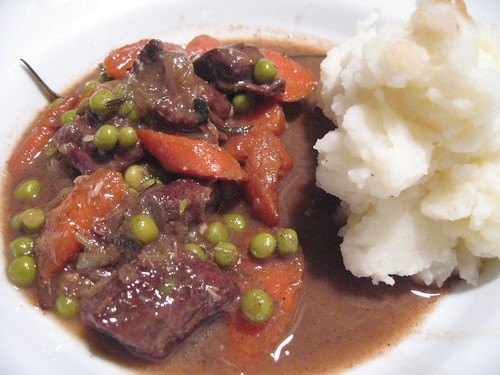
Specifically on beef stew as a comfort food, I especially enjoy slow cooked beef with nice chunks of carrot and petite peas.  My wife's beef stew includes rosemary (fresh or dried), oregano (dried), and Chianti (hence the Italian moniker.  Here's the quick recipe:


beefstew

Process and Ingredients:

  1. Season one pound of chuck beef with salt, pepper, garlic and oregano. 

  2. Dredge the meat with ¼ cup of flour and shake off any excess.  

  3. Heat 2 tablespoons of olive oil in a large pot. 

  4. Brown the meat on all sides.  

  5. Remove meat with a slotted spoon and all but about 2 tablespoons of oil (add more fresh oil if necessary).  

  6. Add four carrots, one red onion, three stalks of celery, and one small potato (cut into large symmetrical pieces).  Cook for about 5-10 minutes or until the vegetables start to soften.  

  7. Add the meat back to the pot.  

  8. Cover the meat with equal parts of good, dry, red wine, fresh water, and tomato passato (you'll want to barely cover the ingredients)

  9. Add two sprigs of fresh rosemary, bay leaf, and dried oregano

  10. Bring to a boil and then reduce heat to a simmer (cook for about two and a half hours or until the meat is fork tender).  

  11. After the two and half hours, add salt and pepper to taste and one can of fresh or frozen peas.  Enjoy with mashed potatoes.  

IMG_5296[1]
Pge 191
(photo: via the Italian Farmer's Table, rye bread)

(UPDATE 1/10/09: Contest is closed.  The winner is SimplyForties!  Thanks to everyone for participating.)

If you've read any of my articles focused on Italian living and lifestyle over the last 6 months, then you've probably come to the conclusion that my Italian roots (and those of my parent's) are firmly situated in the mezzogiorno (the word mezzogirono references the southern region of Italy, including the regions of Basilicata, Campania, Calabria, Apulia, Molise,  Abruzzo and the islands of Sicily and Sardinia ).  In turn, I often shy away from writing about northern Italy because I'm both unfamiliar with the region and also because so much has been documented and said about areas/cities such as Toscana, Roma, Sienna, Genoa, etc.  But when a good friend forwarded me an article from a local newspaper in Connecticut I know I stumbled upon something special, namely, a new book by husband and wife team Matthew Scialabba and Melissa Pellegrino entitled, The Italian Farmer's Table, Authentic Recipes and Local Lore from Northern Italy (see the accompanying website here!).  

0-7627-5264-5
(photo: via the Italian Farmer's Table, cover photo)

Like the movie Julie and Julia, Matt and Melissa ate, worked, and lived their way through every region of northern Italy by way of agriturismi (subsidized, working, family farms that provide lodging and meals to travelers).  The couple also documented 150 northern Italian recipes from the farms, including many dishes I've never read or encountered in Italian cuisine.  The 150 recipes are translated with great care and they can, for the most part, be easily adapted for the American kitchen.  In addition to the recipes, the book also include tidbits on local traditions, events, and, of course, food items (for example, in the the chapter on the Casa Al Campo farm we learn about the Dolomite Mountains and the hunting rituals surrounding deer and chamois).  The Italian Farmer's Table also features great photography, especially photos taken with the farm owners and their local products.  

Pg 5
(photo: via the Italian Farmer's Table, making pasta)

I loved the Italian Farmer's Table so much that I asked Matt and Melissa if they were willing to offer a free copy of their book to a lucky Scordo.com reader and, echoing the generous spirit of the Northern Italian farmers referenced in the book, they agreed!  Here's how you can enter to win a free copy of The Italian Farmer's Table:

- Prize Giveaway includes one (1) copy of the The Italian Farmer's Table

- What you need to do to enter: 1. leave a comment under this post on your favorite Italian region or city that you've visited (if you haven't been to Italy which region would you like to visit?) and 2. sign up for the Scordo.com What's New Newsletter here.
 
- Only one entry per person please.

- The contest is open until 12 midnight on 1/10 and a single random user will be picked via Random.org (sorry contest only open to folks from the US given shipping logistics).  The winner will be announced immediately on Twitter (so please follow me) and on Scordo.com by 5PM on Monday, 1/11. 

- Please use a valid email address when leaving a comment so I can contact you just in case you're the lucky winner (I'll need your shipping address). 

- Globe Pequot Press will send out the book during the week of 1/11.

Finally, Matt and Melissa were also nice enough to answer a few of my questions on local versus organic food, the agriturismo industry, why Italians place so much emphasis on eating well, etc.  You can find the full interview below and also purchase the book via Amazon.  

1. What inspired you pick up and leave the US and live in a foreign country.  Was it difficult to adjust and handle the practical elements of living a foreign country.
We had been toying with the idea to write a cookbook about the Italian agriturismo for about six years.  After numerous rejection letters from publishers, we decided to do the trip ourselves.  We knew that the whole agriturismo system was practically unknown to the American tourist and that as the farm to table mantra began to pick up steam here in America, the timing was right for a book of this nature.  We had both lived in Italy before so being there again was not that big of an adjustment.  I think the hardest part was living out of a suitcase for four months and changing farms every 5th day.
 
Pg 94
(photo: via the Italian Farmer's Table, fennel)

2. There's been lots of talk in the media surrounding organic and local foods.  Should shoppers concentrate on buying local versus organic?
Hopefully if it's local, it's also seasonal and not shipped across the country or from another country.  While we commend organically grown food we are not that big on its status symbol and government approved stamp.  There is nothing better than eating ingredients that are in peak season and harvested close to where they are sold.  Many of the farms we visited considered themselves "independently" organic, farming naturally without pesticides or chemicals, but perhaps lacking an official organically grown certificate. Hopefully, most locally grown food available to consumers are adopting a similar philosophy.
 
Pg 68
(photo: via the Italian Farmer's Table, harvesting grapes)

3. How do Italian shop for food and is there a big emphasis on organic or local foods?
 Italians shop for the day, often going to the markets every day to seek out what's fresh and looks the best.  Kitchens often have much smaller refrigerators than we have in the US and they eat far less processed foods and snack food.  

4. What's an agriturismo?
An agriturismo, is a working farms with accommodations and restaurants, where everything grown and raised on the farm are served to guests.  The system was formed in the eighties to help preserve small family farms.   By allowing them to open their doors to overnight guests, farms were able to supplement their incomes by providing food and lodging.  They have experienced tremendous success, and there has been a huge movement throughout the country as crumbling farms are being renovated and revitalized.  There really is no better way to experience rural Italy than to stay at an agriturismo and soak in some local culture and eat and drink like a real Italian.  
 
5. What makes local Italian food taste so good and is it really possible to recreate the dishes in your book here in the US?
Prime ingredients that haven't traveled hundreds of miles.  We have adapted all recipes for the American home cook
 
6. What's your favorite northern Italian region?
Too difficult a question - each region has its own personality and charm
 
7. You mention the "Italian countryside lifestyle" - what exactly is this?
Living sustainably and with the seasons consuming what one can grow and raise locally.  
 
Pge 91
(photo: via the Italian Farmer's Table, fresh ricotta)

8. Why do Italians put so much emphasis on eating well and how does good food contribute to such a high quality of life in Italy?  
Eating well means everything to Italians.  Eating means so much more than consumption, but rather, a time to be with friends and family and to sit down and enjoy company and conversation united by food.  This all contributes to a high quality of life focused on more intrinsic values with less emphasis on material objects.  
 
9. What's your favorite, local, Italian dish to prepare in the US?
For us, in CT, we love linguine with clams.  Fresh local little necks, garlic, hot pepper, white wine, and lots of parsley.  Summer or winter, the briney salty flavor is a classic Italian (southern) favorite.

10. How is local farming set up in Italy and how can this system of food production feed a large western country and is it possible to replicate this system in the US?
The Italian agriturismo can prove to be a model example of how small farms can succeed and operate.  As more and more Americans are shopping at farmer's markets and becoming interested in learning about where their food comes from, smaller, family run farms have begun to experience success and economic sustainability.  While we are moving in the right direction, there is still much to change about American's eating habits.  The White House's first garden is symbolic of more awareness about the importance of eating well, and there's hope on the horizon for a better and healthier American diet.
   

jackielawyer
(photo: Jackie the Lawyer from Seinfeld)

I spent my undergraduate days studying philosophy, linguistics, and psychology and, as I've told many close friends (and anyone else who wants to listen), Philosophy provides an excellent academic and pragmatic (yes I mean practical) foundation for countless careers and professions.  One profession that is closely associated with studying philosophy as an undergrad is Law.  Philosophy provides excellent training for prospective attorneys given rigorous course work in logic, notoriously difficult text, and training in constructing and presenting cohesive arguments.  However, the necessary training in order to practice law (viz., law school) is not for everyone. 

Paid Ad - Law school (at the top tier academic intuitions) is intense and not for every student (certainly not for the student who can't decide between learning how to be a social worker, for example, and questioning how to continue making a decent living, and thus figures becoming a lawyer sounds like a good idea). There are of course many factors in such a decision, and evaluating the effort and costs involved is a weighty process - End Paid Ad.  Earning a law degree is certainly not for the student who can't think of anything else to do with his or her life and figures becoming a lawyer sounds like a good idea.

What follows below is the best advice I've read on whether one should go to law school.  Specifically, the advice comes from Professor Nick Smith at the University of New Hampshire.  Nick holds a J.D. and before becoming a full time Philosophy Professor he worked as an attorney at a prestigious Manhattan law firm.  Nick's advice is brutally honest and a must read for any Junior or Senior undergrad considering law school.

catan

Hello Scordo.com readers and welcome to the first Best of Money Carnival for 2010!  I'm excited and honored to be hosting this week's carnival (thanks to Free Money Finance). There was no shortage of quality content submitted (70 articles in total) from eliminating credit card debt and marital tips on dealing with money to how board games teach valuable life lessons and revisiting the idea of charitable giving.  Let's dig right in with the the top ten articles, including a quick summary from yours trully:

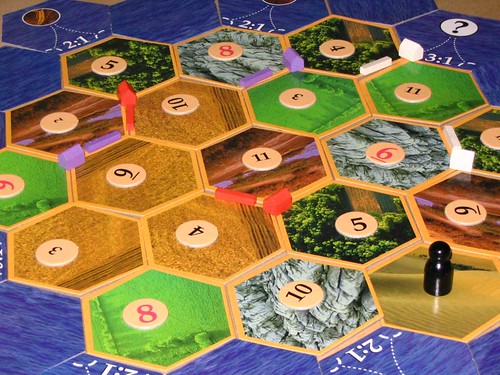
I spent a couple of hours playing Settlers of Catan with some good friends on New Year's Eve and I thoroughly enjoyed the game.  Board games are a microcosm for life and teach some great lessons.  My Life ROI looks at some popular board games and the hidden Personal Finance lessons contained in each game.
scordo on twitter scordo.com on facebook become a fan stumble scordo rss feed for scordo

Scordo.com Free Newsletter - Sign Up Today
* indicates required

BECOME A FAN OF SCORDO ON FACEBOOK:


GOOD READING:


MORE ABOUT US:


FEATURED STORIES:


Homemade Sun Dried Tomatoes in Olive Oil Recipe
Don't settle for the canned varieties found at supermarkets; find out how to make your own [+]


How to Make Authentic Tomato Sauce
This is the authentic Scordo family recipe - straight from Calabria. You'll be amazed at how simple the recipe is to make [+]


Guide to Italian Extra Virgin Olive Oil
My grandfather produced his own extra virgin olive oil in Italy and I've put together an olive oil buying guide just for you [+]


How to Make Rice Balls or Arancini At Home
The ultimate Italian street food - these fried treats are great for the holidays or for any lunch or dinner; try them with your kids [+]


Guide to Making Espresso at Home
Making good espresso at home isn't easy but once you master a few easy tips you'll never settle for the junk served at most cafes in the US, including Starbucks [+]


Why You Should Not Eat Out
My argument on why eating out doesn't make sense [+]


Guide to Italian Meats: Salame, Capicola, Prosciutto, etc.
Learn all about the great "deli meats" and authentic cured specialties from Italy [+]


Scordo Pizza Recipe
Who doesn't love pizza, but did you know it's real easy to make at home [+]


English to Italian Translation Powered by
Grab this Widget


SPONSORS, AFFILIATES, SUPPORTERS:

Italian Food and Life Site


mymelange
Independent Budget Backpacking Travel Tips

Advertise with Scordo.com


DONATE AND HELP KEEP US GOING:


Feeling generous and want to help keep Scordo.com producing fresh and original content?


QUESTIONS, IDEAS, TIPS:


email scordo.com: blog at scordo.com


Note: The views expressed herein are solely my own and should not be attributed to my employer in any way. This site is not maintained utilizing my employer's resources or on company time.


RSS feed graphic for scordo.com Subscribe to Scordo.com via RSSBlog Flux Directory