Recently in Education Category

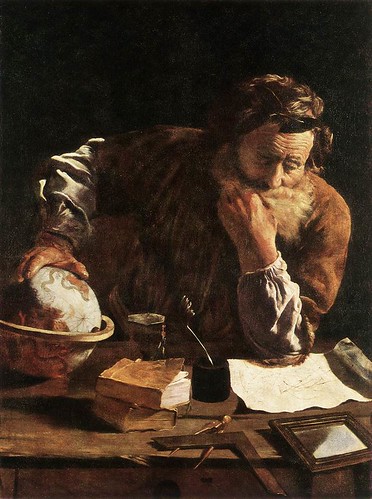
philpic.jpgI came across some old philosophy books in my study this morning and it got me thinking about the value of an undergraduate degree in philosophy.  And I can already hear the jokes, so please keep them to yourself!  ; - )  At first glance, a Bachelor of Arts degree in philosophy provides no real practical application in the real world.  After all, you will not receive any specific training that can lead to a job, are required to read esoteric texts, and will never arrive at a "right answer" during a final exam or short quiz.  So, why on earth are US colleges and universities struggling to keep up with the demand from students wanting to both take courses and major in philosophy?

As an ex-Philosophy major, I can tell you that my degree is invaluable and I would certainly study the same subject if I had to start all over again (I would maybe throw in a degree in Economics as well).  If we cut to the chase, a degree in philosophy provides the following benefits

1. How to read critically (i.e., a book, magazine article, newspaper, P&L statement, web traffic report, etc.).
 
2. How to write well. (this could be an email, letter, report, blog, or living will).

3. How to debate and speak in front of large audiences.

4.
How to create impromptu arguments and analysis (this may be the number one business skill of all time and I'd hire someone with this skill set versus a Harvard graduate any day).

5. How to figure out what is right and wrong (ethics) and identify with different sorts of people and cultures (this is critical in the modern workforce, think how different your job is from what you see on Mad Men each week).

6. How to apply logic to any problem.

7. How to think strategically or see the "big picture."

8. How to think about a problem by deconstructing the big picture and looking at the details.

I could go on and on, but I think you get the picture.  A degree in philosophy is not a degree in electrical engineering; that is to say, the degree will not train you specifically to go out into the world and be an electrical engineer but it will equip you to do really well in the workforce by adapting to any work situation. 

Philosophy also provides excellent training for a professional degree.  Considering the benefits I stated above, philosophy majors score in the very top percentiles on the GRE, LSAT, and GMAT exams. "For example, in a recent GRE study, philosophy majors were ranked among the very top majors in their mean scores on the verbal, analytic, and quantitative components of the exam; in a recent LSAT study, philosophy majors had a higher mean score than even pre-law majors; and for recent GMAT tests, the mean score for philosophy majors exceeded that of any type of business major. Virtually no other major does this well on such a wide cross-section of standardized exams.(quote from the University of New Hampshire Philosophy Department web site http://www.unh.edu/philosophy/index.cfm?id=39F7EBE2-C029-7E5B-F1371DFC37778362)."

Did you study philosophy, let everyone know about your experience by commenting above.

kant.jpgA college professor once told me that most adults finish all serious reading by the time they reach the age of 23.  He went on to say that most professions, even ones that require a four year degree, do not require the worker to engage in prolonged or critical reading.  And while I'm sure there are exceptions to the statement, I agree wholeheartedly with the professor's conclusion.  Ask yourself, for example, what was the last serious novel you read or the last time you read The Economist from cover to cover (that's Immanuel Kant on the left, by the way; he wrote a Critique of Pure Reason and should be on your reading list)?

wallace.jpgThanks to my cousin Mike for pointing out this article/commencement speech by the late writer David Foster Wallace.  Wallace hits on a few themes in the article, but he's mostly focused on biological preservation via putting one self first, worship (not just the religious or spiritual kind), and awareness/consciousness.  In sum, though, I think Wallace is making a simple point: it's tough being human.  Here's an excerpt:

Because here's something else that's true. In the day-to-day trenches of adult life, there is actually no such thing as atheism. There is no such thing as not worshipping. Everybody worships. The only choice we get is what to worship. And an outstanding reason for choosing some sort of God or spiritual-type thing to worship -- be it J.C. or Allah, be it Yahweh or the Wiccan mother-goddess or the Four Noble Truths or some infrangible set of ethical principles -- is that pretty much anything else you worship will eat you alive. If you worship money and things -- if they are where you tap real meaning in life -- then you will never have enough. Never feel you have enough. It's the truth. Worship your own body and beauty and sexual allure and you will always feel ugly, and when time and age start showing, you will die a million deaths before they finally plant you. On one level, we all know this stuff already -- it's been codified as myths, proverbs, clichés, bromides, epigrams, parables: the skeleton of every great story. The trick is keeping the truth up-front in daily consciousness. Worship power -- you will feel weak and afraid, and you will need ever more power over others to keep the fear at bay. Worship your intellect, being seen as smart -- you will end up feeling stupid, a fraud, always on the verge of being found out. And so on.

Coincidently, I must admit to owning Infinite Jest (bought it used about 5 years ago) but never got through the first couple of pages.  I did read through a collection of essays which I thought were quite good, but the aforementioned commencement speech/article in the Wall Street Journal was particularly well done.

Here's a nice interview with Wallace on Charlie Rose in 1997, I think:

collegegrads.jpgCharles Murray has written a brilliant essay (Are Too Many People Going to College) on the value of a BA and the dark side of encouraging every 17 year old to strive for an undergraduate education.

In my view, every high school guidance counselor and parent should be required to read Murray's essay.  Here's Murray on becoming a top electrician versus an average office drone with a BA:

We return to our high-school graduate trying to decide between going to college and becoming an electrician. He knows that he enjoys working with his hands and likes the idea of not being stuck in the same place all day, but he also likes the idea of being a manager sitting behind a desk in a big office, telling people what to do and getting the status that goes with it.

However, he should face facts that he is unlikely to know on his own, but that a guidance counselor could help him face. His chances of getting the big office and the status are slim. He is more likely to remain in a cubicle, under the thumb of the boss in the big office. He is unlikely to have a job in which he produces something tangible during the course of the day.

There has never been a time in history when people with skills not taught in college have been in so much demand at such high pay as today.

If he becomes a top electrician instead, he will have an expertise that he exercises at a high level. At the end of a workday, he will often be able to see that his work made a difference in the lives of people whose problems he has solved. He will not be confined to a cubicle and, after his apprenticeship, will be his own supervisor in the field. Top electricians often become independent contractors who have no boss at all.

The intrinsic rewards of being a top manager can be just as great as those of a top electrician (though I would not claim they are greater), but the intrinsic rewards of being a mediocre manager are not. Even as people in white-collar jobs lament the soullessness of their work, the intrinsic rewards of exercising technical skills remain undiminished.

Finally, there is an overarching consideration so important it is hard to express adequately: the satisfaction of being good at what one does for a living (and knowing it), compared to the melancholy of being mediocre at what one does for a living (and knowing it). This is another truth about living a human life that a 17-year-old might not yet understand on his own, but that a guidance counselor can bring to his attention. Guidance counselors and parents who automatically encourage young people to go to college straight out of high school regardless of their skills and interests are being thoughtless about the best interests of young people in their charge.

Full essay here

money2.jpgJust how is time perceived and has the concept of time changed across human history?  Phillip Zimbardo aims to answer the above questions in his new book, The Time Paradox.

Zimbardo touches on a few "fun facts" surrounding human perception, attitudes, and facts towards time, for example:

  • Individuals living near the equator tend to be less "future oriented" and more concerned about the "present". 

  • The more education an individuals has received the more "future oriented" the person tends to be.

  • In a well publicized study, young children who are offered one treat now or two treats later (thus delaying gratification and positioning themselves in the future) tend to score better on the SAT (and is a better predictor of success than IQ).

Listen to an Interview with Zimbardo on the Leonard Lopate show from WNYC.org

Brain.png

If I were a high school guidance counselor I'd tell each one of my students (well at least the ones who displayed some intellectual curiosity) to go and pursue studies in any one of the cognitive sciences: neuroscience, cognitive psychology, neurobiology, etc. 


Our knowledge about how the brain works is just starting to develop and I predict a sort of "brain revolution" over the next 25-50 years.  So, "be all you can be" and sign up today to be a brain professional.  If you're not ready, then take a look at the current literature and catch up on your knowledge on the mind/body problem, parietal lobe physiology, and language acquisition from the New York Review of Books.

snob.jpgThe American Scholar recently ran an article on why a Harvard or Yale education may not be the best decision for most high school or post graduate students

The article is very compelling and argues that the Ivies are creating careers and not minds - an important distinction in higher education.

The New York Times ran an article on the correlation between food/diet and social status.  In turns out that the lower your status the more junk food you are prone to eat / include in your diet. 

There's lots of talk about how traditional classroom learning is dead, see:


However, and I don't know about you, but I really enjoy the small lecture type experience (ask questions, get a response back kind of thing).  And I think deep learning is not about text messages, Facebook, or web enabled distance learning (they're not bad instructional tools), but a liberal education is about classroom debate, idea formation, writing and re-writing, 1:1 instruction, etc.  So, yes technology and educational theories change, but basic human cognition and learning stay the same (unless someone is predicting a big paradigm shift in human biology).  My advice: get out your copy of Plato's Republic and start reading.

Welcome To Scordo.com

RSS feed graphic for scordo.com Subscribe to Scordo.com via RSS

Scordo.com is a weblog about living a practical life, including tips and thoughts on "how-to" and saving money. Scordo.com is run by Vince, a regular guy who, raised by immigrant (Italian) parents in the US, saw first hand how to live a frugal life, save money, and not live like everyone else. You can read more about me here.

Follow me on social network sites:

twitter.png
Twitter Scordo.com
facebook.png
Facebook Scordo.com
stumble.png
StumbleUpon Scordo.com

Contact me at:

email scordo.com: blog at scordo.com
Money Hackers Network
Frugal Hacks

Note: The views expressed herein are solely my own and should not be attributed to my employer in any way. This site is not maintained utilizing my employer's resources or on company time.