Recently in Marketing Category

walmart

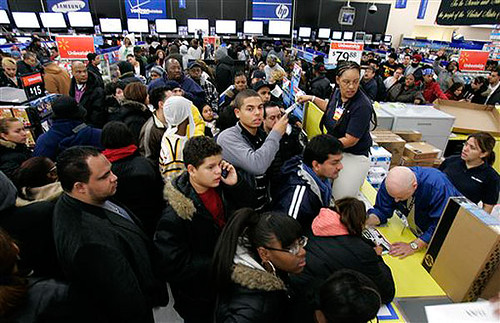
With the notorious holiday shopping season fast approaching I'm having nauseous visions of deals, coupons, free mass produced turkeys and hams, free shipping, wal-mart, and 40 percent off blow out sales.  The visions are not only vivid and haunting they are actually true!  

Don't get me wrong, I wouldn't pass up a deal on a particular consumer item that I needed, but much of the typical consumer's behavior and the retail and/or manufacture's promotional tactics to sell a product are logic defying acts.   Especially when you think hard about what the entities in question are trying to get you to do and what channels they are utilizing.   Let's look at a few examples:

1.  Free Shipping.  The typical ground shipping cost for a consumer electronic items like a GPS device or digital camera is between $7-$9 (I used Best Buy as an example).  The typical cost for a middle of the road GPS device or digital camera is about $150-$250.  Using common sense does it make sense to purchase an item you don't need in order to obtain or "save" on free shipping?  The answer, of course, is no.  This tactic aims to bring a nominal cost, such as shipping, to the forefront of the shopping experience in order to downplay the actual cost of the item.  Think actual need ahead of nominal savings.

2.  Percentage off / Deals.  The main tactic here, again, is highlighting a percentage off a certain item.  You see the deals language lots a week or so before "Black Friday" (or the day right after Thanksgiving) so that retailers can attract foot traffic and curious shoppers.  Often, if you look closely at the products being discounted they are not only items you can probably do without (mediocre electronic devices, men's gloves made of fake leather, a set of 5 Teflon-like pans, etc.) but the quantity or model number is often limited.  This is the same tactic car dealers use to lure you into the dealership in Sunday morning newspapers (i.e., you'll see a ridiculously low price for a certain unreliable and gas-guzzling model which is often tied to a single VIN number).  Again, think about whether you need the item ahead of savings measly 10-20 percent.  

3.  Coupons.  The number of coupons sites on the web must double each and every day (I haven't validated this, but it's just a hunch).  These days you can save twenty five cents on yogurt at ShopRite, get two large pizzas at Domino's for $5.99, and find an oil change joint that will replace your engine oil and filter for $15.  I have to admit that coupons don't excite me, rather what excites me is value.  For example, if I see generic yogurt on sale that contains tons of sugar and limited real fruit/flavor I'll often pass on the sale item and spend an extra couple of cents per container because I'd rather purchase the brand that uses real sugar, organic milk, and fresh, real, fruit.  With food specifically, I don't want my choices of what I prepare for my family and myself to be influenced by a circular in the paper or a mass email campaign from Stop & Shop.  The bottom line is that the choice in the food that I consume is something I value highly and don't want influenced by saving, for example, five dollars at check out at my local market (this shouldn't be interpreted as some sort of elitist, East Coast, view, but rather a viewpoint that is centered on quality of life and the best choice).

cart 

Overall, when it comes to shopping and buying stuff (including clothes, food, shoes, consumer electronics, auto renewing services and subscriptions, etc.) I'm a big believer in putting 1. real need and 2. value ahead of spontaneous and pure "saving" shopping behavior.  What I'm driving at is that you shouldn't buy what you don't need regardless of a blockbuster deal or free shipping and you shouldn't let important consumer decisions, like food choice, be driven by coupons; instead, look for value when shopping (which I define as the best product for the best price).      

Related Posts with Thumbnails
coffeestar.JPGIn yet another move away from its core business, and to curtail increasing losses, Starbucks introduced special breakfast pairings such as a tall latte with coffee cake and a tall coffee with a breakfast sandwich, all for $3.95.

The move comes after the chain announced job cuts of 6,700 and the closing of 300 stores.

My advice to the average consumer in the midst of recession:


-and-

2. Have breakfast at home
Related Posts with Thumbnails

google.jpgAbout three years ago I turned to my Uncle Patrick and said that Google is trying to get into the general advertising game.  I didn't think much of the claim until I started seeing countless articles and posts on Google Radio, Google Print, and Google TV, Google Gadgets, and Google Disply (or banner ads) over the last year or two (culminating a recent NY Times article).  And then I kind of mentally slapped myself and realized, yeah, they're trying to be an old school advertising firm (see Mad Men!) ; maybe minus the creative design part!  But, why would Google want to get old school and move away from Paid Search or Search Engine Marketing?  The answer is easy and it's driven by two factors:

  1. $$$ (or money) and,
  2. Data (or what users do)

Google continues to get rich by playing in every media channel (not just paid search or keyword advertising) and provides value to advertisers by capturing user behavior data on their brand.

The Google business model is also traditional and has been followed by countless brands (think Mercedes-Benz going from S-Class expensive sedan to C-Class entry level sedan or Giorgio Armani going from exclusive clothing to Emporio Armani "every day" clothing line). 

In other words, the first part of the Google business model centers on introducing a fabulous and exclusive consumer product (a luxurious sedan, an exquisite suit with fine material, and a super accurate search engine backed by targeted keywords on the results page).  The secondary part of the model is to broaden the product lineup by introducing a spin off product (in most cases at a lower price point and of somewhat lower quality).  Google moved into banner and radio advertising, for example, and the end product wasn't as impactful as their traditional keyword offering (results are less measurable and don't provide the advertiser with the same ROI).

So, what does the future have in store for Google?  Well, predicting the future is tough stuff but I'll bet on Google trying to deliver on the next killer app and at the same time supporting the business with targeted marketing program offerings.  Now, is the model as lucrative as Microsoft or IBM's business?  No, in the humble opinion of this blogger, but there is valaue in innovation and hard work and Google is winning on that front.

Related Posts with Thumbnails

Welcome To Scordo.com

Follow Us:
twitter scordo facebook fan page scordo rss feed contact scordo.com more about scordo.com


Read Through Our Top Categories:
personal finance best of house and home best of italian way food and products best of how to and home improvement best of

Sign Up: Scordo.com What's New Newsletter
* indicates required
Help Keep Us Going:

Feeling generous and want to help keep Scordo.com producing fresh and original content?

Questions, Ideas, or Tips:

email scordo.com: blog at scordo.com


Shop with Us:
openbadge


Blog Flux Directory

Note: The views expressed herein are solely my own and should not be attributed to my employer in any way. This site is not maintained utilizing my employer's resources or on company time.

RSS feed graphic for scordo.com Subscribe to Scordo.com via RSS
Money Hackers Network
Frugal Hacks

CookEatShare Featured Author
view my recipes
CookEatShare Featured Author