
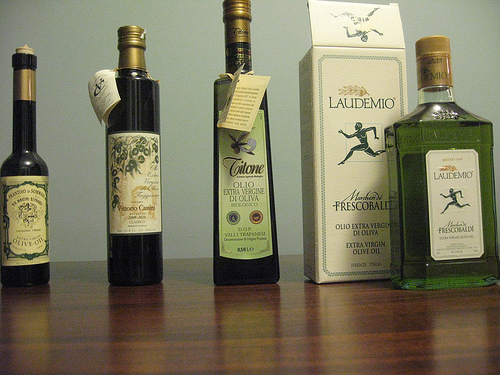
Guide to Italian Extra Virgin Olive Oil – Eight Extra Virgin Olive Oil Basics
Italians consume olive oil like it’s water and our grandparents, for example, used olive oil for cooking, shining shoes, preserving food, lubricating machinery (including various shotguns), and curing various ailments (including stomach ulcers). I wouldn’t recommend you use olive oil to lubricate your shotgun, but we’d suggest reading through our Guide to Italian Extra Virgin Olive Oil to learn the basics about one of the most vital food substances on the planet.
Let’s start with some basics about extra virgin olive oil, which are gleamed from our personal experience with homemade extra virgin olive via our family olive orchard and numerous tastings of Italian extra virgin olive oils:
1. Extra Virgin Olive Oil doesn’t get better with age. In fact, olive is meant to be consumed as quickly as possible (fresh=good). All olive oil should be consumed within 18 months after it is bottled.
2. Extra Virgin Olive Oil doesn’t like light or warm temperatures. In turn, it should be stored in a cool, dry, and dark environment. Air / Oxygen is also an enemy of olive oil.
3. Extra Virgin Olive Oil is a type of healthy fat (like butter and lard) and has a good amount of calories.
4. Unlike butter, for example, olive oil has wonderful health benefits due to its high content of monounsaturated fatty acids as well as high content of antioxidative substances.
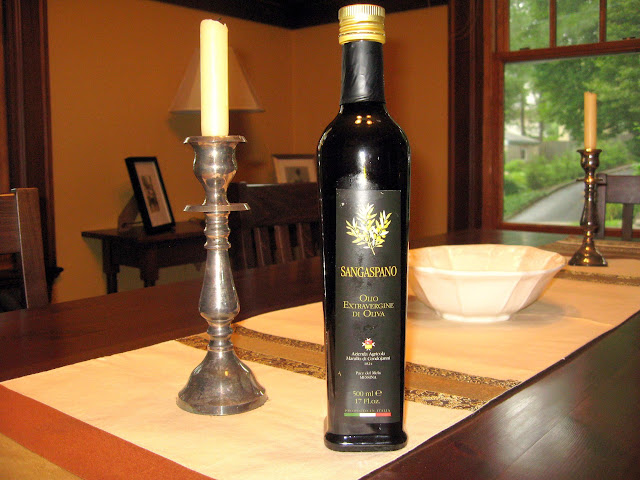
5. Extra Virgin Olive Oil helps lower bad cholesterol and helps with good cholesterol.
6. Extra Virgin Olive Oil is produced without using heat or chemicals (it must also have an acidity level of less than one percent) and is the highest grade of olive oil. The International Olive Council manages the labeling of “extra virgin olive oil” in Europe leaving it up to the individual countries to do the monitoring. European oil producers and companies aren’t tied to the same rules of the IOC when selling oil in the United States, for example (the US Dept. of Agriculture does have rules for Extra Virgin Olive Oil but they aren’t mandatory).
7. “Extra virgin olive oil” must abide by strict taste and smell standards, chemical make up, low levels of acidity, and certain ultraviolet light absorption factors. The quality of light, “olive oil” is much lower than authentic “extra virgin olive oil” Many mass market brands often sold in large supermarkets are labeled as Extra Virgin Olive Oil when in fact they are olive oil blends made from Italian, Spanish, and Greek olives.
8. Extra Virgin Olive oil is extracted from crushed olives via a mechanical process.
9. Extra Virgin Olive oil is used to saute and roast food, dress vegetables, and as a general condiment (it’s extremely popular in places such as Italy, Greece, Spain, France, parts of the Middle East, and the United States). We don’t recommend deep frying with extra virgin olive oil.
Everyday Olive Oil in the US and Italy
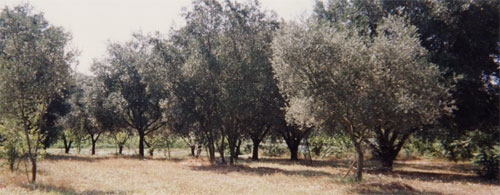
Both my grandparents and parents have told me wonderful stories about harvesting olives on the family farm in southern Italy (see La Cucina Italiana’s guide to regional olive oil) and the process involved to produce both first press olive oil (that is, the first batch of olive oil produced via an old fashioned press; nowadays, most olive oil is produced via continuous centrifugal presses) and extra virgin olive oil. I’ve tasted much of the olive oil produced by my family and the olive oil is extremely intense, pungent, bitter, and viscous for everyday use (at least for my American palette; these are not negative attributes but just a point about fresh, first cold pressed,extra virgin olive oil and everyday use). In our humble view, authentic and fresh extra virgin olive oil is a guild the lily type condiment (maybe to be used with a very ripe, in season, heirloom tomato or drizzled over a freshly baked piece of bread or roasted fish); you wouldn’t want to saute or fry with the aforementioned extra virgin olive oil. There are experts who would disagree with me, but just as you wouldn’t consume a tomato salad with a $800 bottle of Barolo you probably don’t want to waste your money dressing your iceberg lettuce with a $60 bottle of extra virgin olive oil from northern Italy.
In terms of everyday olive oil that can be purchased in most supermarkets in the US, I have a couple of top favorites (note some are not Italian):
- Trader Joe’s “Spanish” Extra Virgin Olive Oil
- 365 Everyday Value, Whole Foods Brand
- McEvoy Ranch
- Goya Spanish Extra Virgin Olive Oil
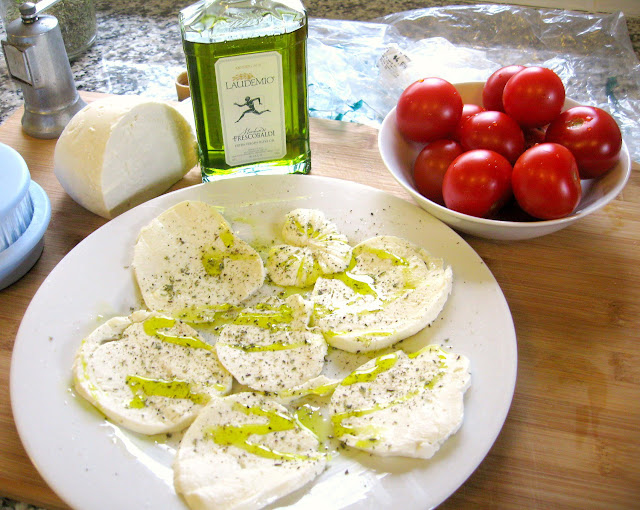
Luxury Food: Italian Extra Virgin Olive Oil
In terms of high end olive oils from small producers, it’s really a hit or miss proposition. We review many high end extra virgin olive oils from Italy and, for the most part, they are all extraordinary (with very subtle variations in color and flavor that only experts will be able to discern) but very expensive.
If you’re lucky enough to live near a large city, many Italian specialty shops bottle their own form of extra virgin olive oil from Italy and it usually presents a good value. For example, here on the East coast I’ve tried extra virgin olive oil from Bartolomeo’s Italian Food Emporium (click here for a review of the shop from Jason Perlow at Off the Broiler) in Englewood, NJ. Bartolomeo imports the oil from olive orchards in Puglia and the product is both of decent quality and good value. Fairway Market in Fort Lee, NJ also produces a decent quality, house extra virgin olive oil. Make sure to read the label and ask the store owner about production date and whether the oil is a blend or 100 percent extra virgin olive oil.
My recommendation on finding specialty extra virgin olive oil is to try different producers and stick with a brand once you find something you like (also be sure to buy in small quantities unless you plan on using the oil every day). Also, price doesn’t equal quality. In fact, I would opt for a fresh, recently produced bottle over an expensive extra virgin, first pressed, olive oil that has been sitting on the shelf for 6+ months exposed to light, warm temperatures, and air.
Finally, as I’ve said about wine, you should only buy and use what you like (don’t listen to critics unless you’ve tried the product yourself). We especially like the following extra virgin olive oil buyer’s guide, if you’re looking for more information.


Thanks so much for the information! This post is very helpful. A similar post on vinegars (red wine and balsamic) would be great too.
No problem and thanks for the suggested topic. Keep the suggestions coming and look for a vinegar post soon!
Best,
Vince
Hi Vince,
This post was awesome! I use a ton of olive oil in my cooking, but I guess I don’t have the palate to discern when it’s gone bad or lost its flavor.
I mean, I’ve been buying it in the bulk bottles from Costco, thinking I was “saving money” (I thought olive oil lasted forever). Do you think it’s better to buy the smaller bottles from the grocery store? In your opinion, how long does olive oil have before it starts to lose its mojo?
Thanks for the great post!
I use Italian olive oil from my field. Good luck.
Best Of / Top Posts
How-To / TipsBest Tools For HomeownersRecent College Grad TipsHow Many Shoes Should A Man OwnTips on Cleaning Your Kitchen and HomeTips for First Time Home BuyersHow Stress is Preventing You From Leading a Happy LifeHow to Make Homemade Wine and…
How To Make Homemade Tomato Sauce
I’ve been asked by a few readers to post a traditional tomato sauce recipe and I’ve included one below that uses crushed, uncooked, tomatoes. Tomato sauce is easy to make and incredibly versatile. I use tomato sauce for pasta, other…
Wild Cod Risotto, Summer Days, and Esino Bianco
There’s something about eating good food outdoors that makes me feel utterly alive and happy. It may be the fresh air cooling my shoeless feet or the sound of pouring cool Esino Bianco into a wine glass. Ultimately, however, it’s…
Recipe: Homemade Sun Dried Tomatoes in Olive Oil
One of my favorite, all purpose, condiments on this little planet include sun dried tomatoes preserved in olive oil. Authentic sun dried tomatoes capture the essence of the tomato and can be enjoyed year round. As a young boy, one…
Tarallini: The Perfect Italian Snack Food
(photo: tarallini made with red pepper flake) I’m going to ask the inevitable question; how many bags of chips did you consume this weekend? And did you include some dips like sour cream and chives or salsa to go with…
Great post, Vince! I am also a fan of the Colavita Extra Virgin Olive Oil.
Extra Virgin Olive Oil Review and Nonno Latella Giveaway Contest
Images have always played a large role in my life. I still have vivid images in my mind of childhood events like playing hide and seek at dusk on my New Jersey block or the fierce eyes and large…
Recipe: Risi e Bisi and/or Rice and Peas
Risi e Bisi is basically a variant of risotto and while a good risotto is creamy in texture, a good bowl of risi e bisi is looser in composition. As you would guess, the humble pea is the star…
Cheap Dinner: Wild Mackerel with Tomato Salad and Orzo with Zucchini and Parsley
(Photo: Orzo with zucchini, bits of tomato, and parsley)With the arrival of August, our household starts the summer tradition of consuming copious amounts of fresh tomatoes (at times for both lunch and dinner) – see my entries on tomato…
Extra Virgin Olive Oil and Italian Spice Review: La Poderina Toscana, Rosselli del Turco Chianti Classico, and the Canonica Verde Umbrian Spice Blend
(photo: The Canonica Verde Umbrian Spice Blend including rosemary, sea salt, garlic, and red pepper flakes)Click here for my other olive oil reviews!As you’ve probably noticed, Olive Oil and Pasta are at the heart of Italian cuisine (both above a…
One Plate Summer Lunch: Tomatoes, Whole Milk Mozzarella, and Oil Cured Sardines
Lazy, weekend, lunches are one of the small pleasure in life and I define a lazy lunch as a simple plate of food (with little to no manipulation), fresh, crunchy, bread, and a bottle of exquisite wine (psychologically, get…
The Italian Pantry – 12 Ingredients To Keep In Your Kitchen at All Times
(photo: a typical trip the market for some fresh ingredients for our kitchen, including bread, fruit, whole chicken, yogurt, etc.) I’ve always equated good cooking with being prepared, just like a fine carpenter has the necessary tools to build…
Review: Gargiulo Sorrentolio Venus Organic Extra Virgin Olive Oil 2009
(photo: great, bright, yellow color in the Gargiulo oil)There are a few Italian food products that take a bit of getting used to; I would include items like amari or digestivi, authentic espresso, meats such as rabbit and goat,…
Pancetta, Bacon, and Cured Pork Perfection
By now, you’ve read my countless references to salame, prosciutto, capicola, cured pork, etc. and you may be thinking: what’s wrong with this guy, does he have a thing for pigs or something? The short answer is yes and…
Crostini, Bruschetta, or Italian Toast Guide and Recipes
(photo: crostini with cannellini bean spread and roasted peppers)Crostini literally means “little toasts” in Italian and they are Italian appetizers or tapas consisting of flavorful toppings. Crostini are usually made from Italian baguette,…
Easy Roasted Chicken Recipe
(photo: pan roasted whole chicken, courtesy of Dr. K.)By now, you must be tired of hearing how easy it is to prepare Italian food at home and you’re probably ready to drown me in extra virgin olive oil (that actually…
Recipe: How to Make Ricotta at Home
(photo: courtesy of Dr. K) My first memory of ricotta wasn’t pleasant. I remember thinking that the cheese was tasteless and had a consistency of something akin to white mud rather than some wonderful food concoction. Fast forward about 20…
2010 Sangaspano Extra Virgin Olive Oil
(photo: Sangaspano extra virgin olive oil from Messina, Sicilia)On the morning of December 28th, 1908 a massive earthquake and associated tsunami hit the western province of Calabria and moved across the Stretto di Messina into Sicilia destr…
Grilled Zucchini or Squash (Zucchine or Cucuzza alla griglia)
(photo: freshly grilled grilled zucchini or squash <zucchine or cucuzza alla griglia>)I have to admit that I’m sucker for zucchini. I like the clean taste of zucchini when added to soups, made into a risotto, or grilled with good extr…
Chiappetta Extra Virgin Olive Oil from Calabria
(photo: bottle of 500 ml Chiappetta Extra Virgin Olive Oil from Calabria, courtesy of Chiappetta web site)Located just north of Cosenza in Calabria, San Vincenzo La Costa is a comune made up of small villages including San Vincenzo, Gesuiti, …
we really like the Tuscan oil imported by Costco – are you familiar with it? If so, how would you compare it to the TJs and WF oils?