Recently in olive oil Category

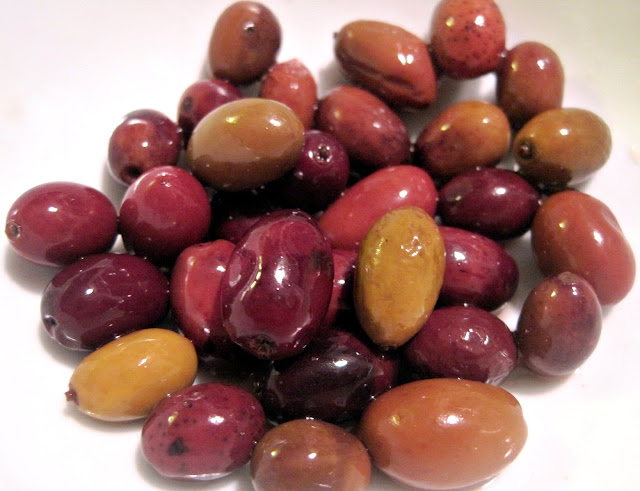
(photo:  The lovely Taggiasca olive from Liguria in northwestern Italy) 

We often talk about the importance of the Italian pantry and how critical it is to have certain staple ingredients in your kitchen at all times.  Keeping a well stocked pantry means you'll never starve, order out, and be relegated to a peanut butter and jelly sandwich for dinner.  Among the universal items we keep in our kitchen/pantry are olives; specifically, Taggiasca and Castelvetrano varieties.


One of my favorite ways to eat is to simply head to the market and pick out items that look fresh, tasty, and don't break the bank.  Don't get me wrong I'm not heading to the market every other day (like Nonna and Mamma did/do) but I usually reserve a mid week shopping trip to supplement my usually Saturday shopping trip. 
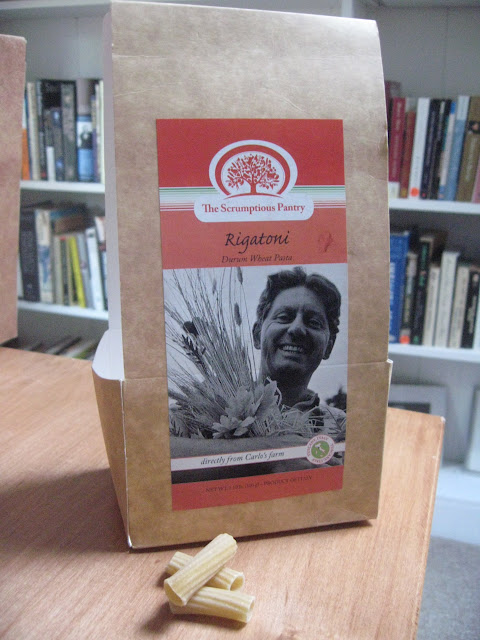
(photo:Italian durum wheat pasta made by Carlo)

When it comes to reviewing Italian products we're pretty blunt and we've, unfortunately, offended a few Italian product manufacturers with not so positive feedback.  In fact, when companies approach us to review already prepared products we often turn them away for fear of writing yet another negative review.  In turn, many of our favorite Italian products are simple and basic items like extra virgin olive oils, artisan pastas, salumi, cheese, canned items, etc.  There are exceptions like Gelato Di babbo, Aroma Antico tarallini, etc. but you won't find us talking about canned tomato sauce or frozen Italian meals produced by large consumer packaged good companies.  

So, with the above in mind, I was skeptical when Lee Greene approached us about giving our honest feedback on the products her company, The Scrumptious Pantry, produces.  I was expecting yet another jarred tomato sauce or even worse some sudo seasonal Italian American junk full of preservative with a long shelf life.  What I discovered was the complete opposite; namely, basic food made with care on small, family run, farms in Italy and America.  
 
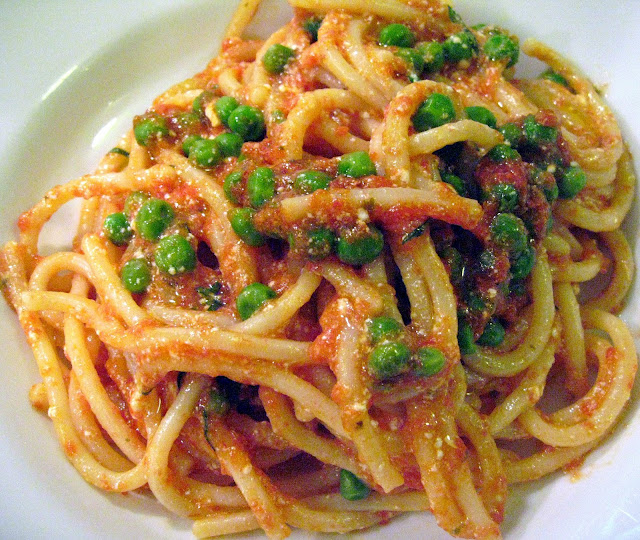
(photo: spaghetti chitarra with tomato sauce, ricotta, and peas; see below for recipe)

The now immortalized copywriter turned French cook Julia Child remarked once that, "anyone can make a bowl of pasta but it takes a skilled chef to put out a fine French meal."  You can imagine my reaction to the quote and my thinking on Child's comment; namely, she's full of rubbish, to put in mildly.  

The act of making pasta, to address the specific attack on Italian food, is not a simple task.  Preparing a dish such as linguine fine with pesto requires that the home cook understands when to pick fresh basil (did you know basil becomes more and more bitter as you pick more leaves?), how much olive oil to add to the pesto mixture, how long to cook the pasta, how much starchy water to save and add to the condiment, how much extra virgin olive oil to add to the final step of marrying pasta with condiment, how much heat to apply to the mixing of pasta and condiment so as not to destroy the basil flavor, what sort of grated cheese to use, etc.  

 
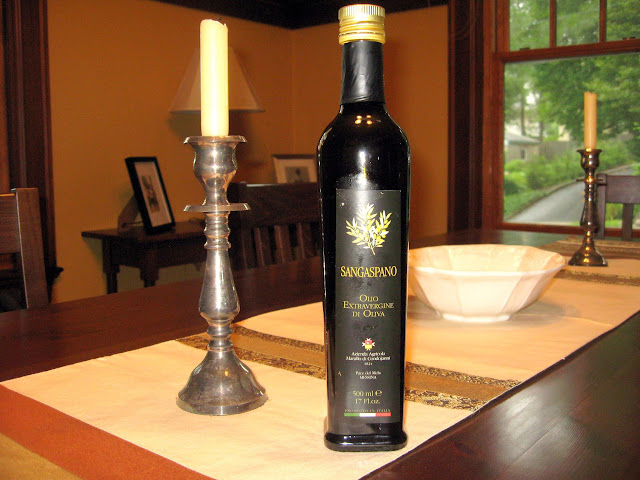
(photo: Sangaspano extra virgin olive oil from Messina, Sicilia)

On the morning of December 28th, 1908 a massive earthquake and associated tsunami hit the western province of Calabria and moved across the Stretto di Messina into Sicilia destroying city after city (including Reggio Calabria and Messina).  In Messina alone 60,000 people were killed and in Calabria our family lost many people, including small children.  In total, over 100,000 people were killed in 1908 making it the deadliest earthquake in European history.    

Prior to the earthquake, Messina was home to ancient architecture and a vibrant port.   And although the city did re-build, it was bombed extensively in 1943 by the Allies killing thousounds of Italians.  However not all of the goings-on within the Province of Messina are gloomy.  For example, the olive oil producer Sangaspano is located in the hills of Valle del Mela overlooking the Gulf of Milazzo and the islands of Stromboli and Panarea.  The land and region is beautiful and the extra virgin olive oils coming out of Sicilia rival some of the best Tuscan oils.
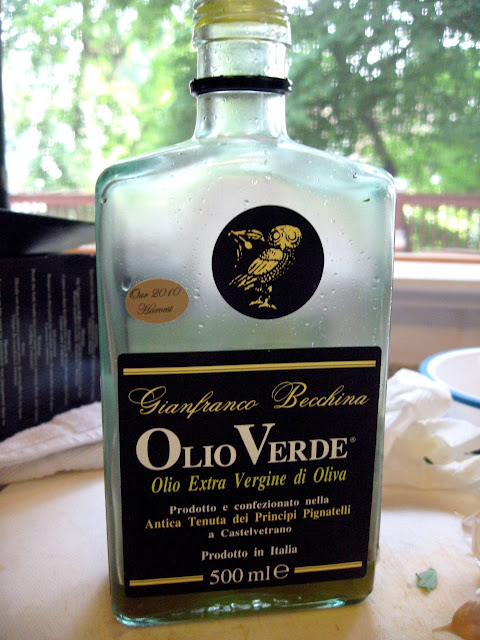
(photo: 2010 Olio Verde extra virgin olive oil from Sicilia, I had to scramble and take a photo before I consumed it all!)
 
Any time I'm asked to taste a product from the southern provinces of Italy I get excited, very excited.  There's of course a sense of pride knowing a product is made from an area you know well and have a connection with; in fact, I get the same sensation when I taste anything made with care from New Jersey (e.g., tomatoes, beer, diner food, etc.).  

New Jersey, of course, doesn't have the terroir or climate of western Sicilia so the Garden State cannot produce world class extra virgin olive oil like Gianfranco Becchina of Olio Verde does in the province of Trapani (Castelvetrano).  Becchina uses 100 percent Nocellara del Belice olives (not native to Jersey) which are harvested earlier in the season (October as opposed to November) because Gianfranco is going for a fruitier oil.  The olives are also harvested by hand and not shaken by way of a machine (the claim is that fruit bruising is limited thus the fruit doesn't begin to ripen) and grown without the use of pesticides.  
(photo: a small 55 ml bottle of white truffle infused extra virgin oil from Florence)

Prior to my first experience with Calugi's white truffle infused extra virgin olive oil I must admit I was skeptical of all infused olive oils.  After all, mother nature has already infused the very best extra virgin olive oils with terrific notes of bitterness, sweetness, acidity, etc. so it was beyond me why additives were even considered.

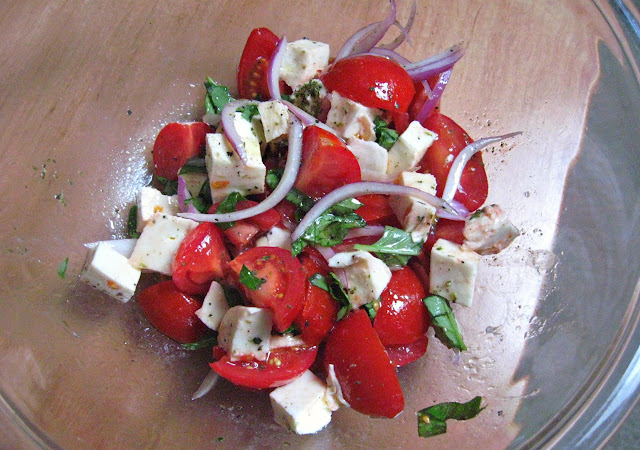
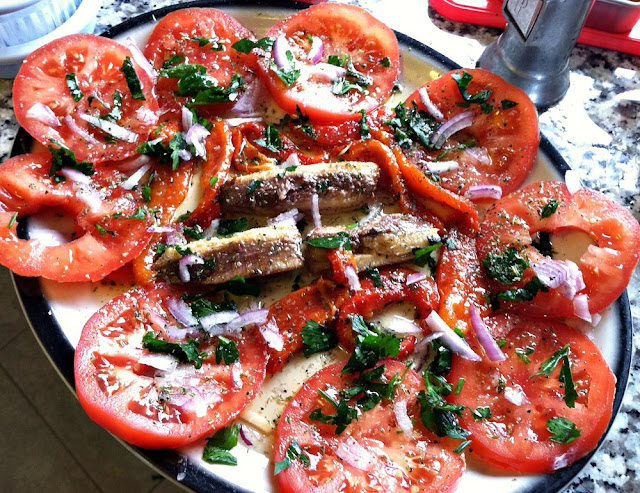
One of my favorite ways to consume olive oil is via the simple and humble tomato salad.  Our tomato salad is prepared with red onion, basil, dried oregano, Kosher salt, freshly ground black pepper and the best extra virgin olive oil we can get our hands on.  

Recently, we've fallen in love with two extra virgin olive oils that seem to have been made just for tomato salads (and, by association, whole milk mozzarella).  Specifically, we're talking about Pace da Poggio Etrusco and Laudemio Frescobaldi.  The Pace de Poggio Etrusco hails from Siena in Toscana and has a slightly sweet character along with floral and herbal notes.  The Laudemio Frescobaldi (first pressing, 2010) from Chianti Ruffina has peppery notes and reminds me of the many spring vegetables such as artichoke, asparagus, and peas.   


(photo: Fish Sauce dish with squid, scallops, and clams awaiting pasta)

Mention pasta to me and my mind drifts to fresh parsley, sliced garlic, dried red chillies, and high quality extra virgin olive oil.  In my view, the four aforementioned ingredients make up the world's best pasta sauce or condiment.  Sure, one can argue that a well executed tomato sauce (with or without braised meats) or even a sauce comprised of wild mushrooms would present great competition for parsley, garlic, hot pepper flakes, and olive oil but I'm not entirely convinced.

In the event that a worthy enough competitor arose to challenge the simple sauce above it would most likely be some variation of a fish sauce.  And any fish sauce, in my view, is an extension of parsley, garlic, red hot pepper flakes, and extra virgin olive oil; kind of like an older brother who has seen the world.  
 
(photo: an Italian tuna sandwich with tomato salad prepared with Pace da Poggio Etrusco extra virgin olive oil) 

As many of you know we keep plenty of high quality tuna in olive oil in our Italian pantry at all times!  And we usually prepare our tuna in two ways: 1. as a stand alone salad to be consumed with olives, cheese, and salumi or 2. as a simple Italian tuna sandwich combined with high quality bread.  

Ingredients:

Process:
 
(photo: rosemary and sea salt focaccia - notice the golden color)

Making Bread "Under the Fire"

The Italian word focaccia means "under the fire" and it shares many of the same traits as pizza.  However, focaccia is usually about 3/4 of an inch thick (versus the standard less than 1/2 inch thick pizza found in most parts of Italy) and is meant to be served at room temperature.  Focaccia is also prepared with less toppings than traditional pizza including sea salt, rosemary, red pepper flakes, and other savory herbs.  

My mother often waxes philosophical about her favorite meal in Italy as a child; that is to say, still hot focaccia with an ungodly amount of first cold pressed extra virgin olive oil from the family farm.  Our family makes both pizza and focaccia in the States and the only real difference between the two types of bread center on 1., the toppings and 2. the amount of olive oil used in the dough recipe.  Here's our standard focaccia recipe (adopted from our pizza dough recipe):

(photo: Capezzana Olio Nuovo 2010 with fresh whole milk mozzarella dried oregano, Kosher salt, and freshly ground black pepper)

About 25 minutes northwest of Florence in the small wine growing region of Carmignano you'll find the estate of Tenuta di Capezzana - an estate that has been producing olive oil since the year 980.  I was lucky enough to sample the 2010 Capezzana November harvest and was immediately taken by it's mind bending color; a neon green slap in the face that is especially vibrant against whole milk mozzarella.  The color is partly due to the fact that Capezzana picks their olives when they are still green.
(photo: some of the top tuna in olive oil brands: Cento, Pastene, Genova, and Ortiz, As do Mar)

Canned Tuna, Really?

As Suzzane Hamlin points out in her well written 1997 article for the New York Times, canned tuna is the best selling seafood in the country.  And your first reaction may be something akin to, "what, canned tuna, why don't American's buy fresh fish?"  Well, high quality fresh fish is, indeed, best but if you don't have access to a great fish market and regularly buy gifts for the owner and/or fishmonger, then your best bet is high quality canned fish.  I'm not talking about tasteless tuna packed in water, but tuna (or tonno in Italian) packed in oil, sardines that are oil or salt cured, canned oysters and clams, etc.  The aforementioned fish are prized in Italian and Spanish cultures, for example, and are often more desirable and expensive than fresh fish.

My favorite canned fish is tuna and I've been eating the Italian variety packed in olive oil since I can remember (in fact, it was the cause of much stress during lunch time at my grammar school and you can imagine the flack I received for eating "fancy food")  Tuna is a saltwater fish and the largest member of the mackerel family; the genus is Thunnus with 13 species or so. Most canned tuna is made from albacore, yellowfin, skipjack, and/or bluefin.
(photo: grilled chicken, fennel and feta salad, a few pieces of good bread and a bottle of Brooklyn Pilsner)

We eat tons of fennel during the winter months and usually consume it in a salad or immediately after a meal (as a digestivo).  Recently, we put together a fennel salad comprising of a simple vinaigrette and lots of good feta cheese from a local Greek market.  The salad was a side for grilled chicken that was marinated in soy sauce, honey, and orange zest.

Eating and Making Food 

One of the great thrills in my life, if you haven't noticed, is the simple ritual of preparing and eating food.  The preparing part fulfills me on a tactical kind of level; that is, finding the ingredients, thinking through how I'll manipulate the products, and working with the food.  The eating part, well, fills my stomach and provides a very basic, yet profound, sense of comfort.  

Eating food without family and friends, however, doesn't provide the same sort of existential experience mentioned.  In fact, eating alone is more akin to Nihilism if we're going to use fancy philosophical terms; that is to say, why deny yourself one of the more meaningful aspects of life?  

Olive Schiacciate

Eating with my family has always been a large part of my life and I suspect it's the case for many of our readers (Italian and non Italian).  I've also spent a good chunk of my life making food with others and it all started with my mother and grandmother.  One dish I was reminded of making with my grandmother recently was a fresh cracked olive salad.  Cracked olive salad is made in Calabria and Sicilia and is great as a side dish with a slice of pizza or with grilled or roasted meats.  Here's the Scordo family recipe (and another great recipe in Italian):


Ingredients:

- 1.5 - 2 lb green olives with pits (you can find these at any good Italian market, just mention you're making Olive Schiacciate)
- 2 Garlic cloves, chopped well.
- 1 Carrot, sliced thin (optional)
- 1/2 teaspoon of fennel seed (optional)
- 1 medium sized onion, chopped.
- 4-5 stalks of celery or fennel, diced well
- 1 tablespoon of high quality Italian red wine vinegar
- 1/4 cup of extra virgin olive oil
- Sea or Kosher Salt
- Freshly ground pepper

Process:

Crush the olives individually and remove the pit; you can use a hammer like nonna did or a metal meat tenderizer works well. Place the cracked olives in a large bowl and fill with water and let sit for 24 hours (in a cool area of your home or the fridge).  You'll need to let the olives sit in water for 8-10 days (yes, it's a long process); changing the water every 24 hours.  Once the olives have become soft (note: you'll want to have some crunch in the olive) remove them from the water and let drain in a large colander for 10-12 hours (you can add a heavy object <a gallon of water, for example> to help remove any excess water).  Finally, add the rest of the ingredients and stir well.  The salad keeps very well in the fridge.

(photo: great, bright, yellow color in the Gargiulo oil)

Olive Oil Tasting

There are a few Italian food products that take some getting used to; I would include items like amari or digestivi, authentic espresso, meats such as rabbit and goat, etc.  High quality extra virgin olive oil may also take some getting used to if the individual is not accustomed to the intense flavor profile of, say, a first cold pressed extra virgin olive oil (he or she may only experience bitter and sour flavors at first).

The Review

The 2009 Gargiulo Sorrentolio Venus organic extra virgin olive oil is an example of a well made oil that has no learning curve or entry level barrier.  That is to say, Gargiulo Sorrentolio Venus organic is "mild" and "sweet" by Italian extra virgin olive oil standards and is an ideal "starter" extra virgin olive oil.

The oil color is bright (yellow with very little green overtones).  The Gargiulo Sorrentolio Venus works well as a finishing oil in soups and with fresh salads like tomato or mozzarella.  The oil would also work well with simple pasta dishes like parsley, red pepper flake and garlic or clam sauce.  The only negative to the organic olive oil is that it's slightly greasy on the palate with a bit of heaviness (in terms of mouth feel). 

Gargiulo is produced, since 1849, in Sant'Agnello, Sorrento (south of Naples and on the mainland near the island of Capri).  The oil is made from the following olives: Ogliarola (Minucciola), Rotondella, Frantoio, and Leccino.    


I like the Gargiulo Sorrentolio Venus organic extra vigin olive oil so much that it's going to be my go to olive oil for holiday gifts (perfect for that person who's just starting to appreciate fine olive oils). You can find the oil at the excellent online shop olio2go.com, run by a wonderful woman named Luanne!  
(photo: the beautiful, 1 liter, tin housing Frankies Sicilian olive oil and a salad of tomatoes, red onion, and basil)
  
Amongst southern Italians there's a deep rivalry between Calabrians and Sicilians.  If you travel to Calabria's old capital Reggio Calabria, you'll see many Sicilian influences from the regional dialect to arancini and the breakfast delicacy brioce (a type of sweet bread that is served with a scoop of ice cream).  Both regions have unyielding loyalty to their traditions and way of life and it's not entirely clear what food or cultural item or tradition originated in which region (at least that's what the locals will tell you).  

There is, of course, a rich tradition of producing olive oil in Southern Italy (including my mother's side of the family in Calabria).  I remember tasting my first cold pressed extra virgin olive oil on Nonno Latella's farm as a 10 year old and thinking this is quite possibly some of the nastiest liquid on the planet.  Jump forward about 20 years and I'd probably label Nonno's olive oil as some of the finest unfiltered oil I've tasted (having matured later in life as a proper "foodie", as much as I hate to use the phrase).  Nonno's olive orchard was small by Italian standards and he only made enough for the immediate family (and, in especially good years, sell a few bottles to the locals).  See my general guide to olive olive here and some photos of Nonno's orchards here (including a review of other top olive oils).  


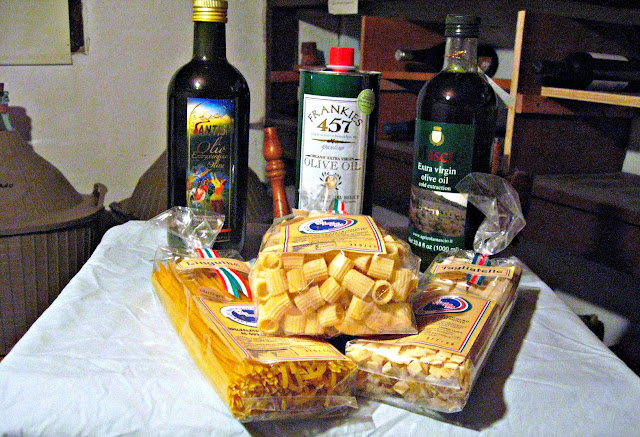
My mother still talks about smothering freshly made, and still hot, bread with Nonno's extra virgin olive oil as do a few Sicilian aunts (with similar bread and oil from their small villages on the Island adjacent to Calabria).  Recently, I had the pleasure of tasting an olive oil made from organically grown olives in Trapani, Sicily (situated on the western coast of the Island, near Palermo).  Produced under the Frankies 45 brand name (by the same family operating two Italian American restaurants in Brooklyn and Manhattan), the oil is made from first cold pressed green Nocarella del Belice olives and has a good bright and spicy flavor profile.  The oil has very good fruit and a minimal spicy aftertaste, making it a good introductory oil and also well suited for general use (in salads, as a base for any number of pasta sauces, and sautéing vegetables and meats). Frankies 457 Extra Virgin Olive Oil is mono-varietal, (or single varietal), certified organic, and unfiltered (it's style of production is DOP certified).  The oil comes in a 1 liter, uniquely designed bottle and at $32.00 it's a good bargain. 

You can find the oil at the excellent online shop Olio2go.com
IMG_6317
(photo: The Canonica Verde Umbrian Spice Blend including rosemary, sea salt, garlic, and red pepper flakes)

Click here for my other olive oil reviews!

As you've probably noticed, Olive Oil and Pasta are at the heart of Italian cuisine (both above and below the mezzogiorno, the geopolitical dividing line of Italy).  Specifically, my love for both products started in Nonna Scordo's New Jersey basement (we all lived in the same two family home for a few years before my parents purchased their own home).  As a small boy I was incredibly skinny and, as the legend goes (Italian mothers are tremendous storytellers with penchants for stretching empirical truths), I would not eat much.  One day, Nonna Scordo discovered I had a particular fondness for large rigatoni rigate with her blended olive / corn oil mixture (olive oil, athough still expensive today, was particular difficult to acquire in the mid 1970's through the mid 1980's, at least for folks in the lower to middle class ranks in the US), hence Nonna's move to stretch her olive oil.  Neverthless, rigatoni with oil and an abundance of mixed (again another "food stretch") Pecorino Romano and Pamigiano Reggiano cheese became my favorite meal (allowing me to reach puberty with some fat on my bones).  

IMG_6323
(photo: the Zitoni Cararecci - notice the length of this mammoth pasta shape!)

As a dish, pasta with olive oil is still one of my favorite simple pleasures in life and I, indeed, wax philosophical about my beloved Nonna Scordo every time I take a bit of rigatoni.  One such emotional moment came when I bit into a piece of Zitoni Casarecci from the producer Pastificio Vicidomini.  While I had the Zitoni with a chicken ragu, when I tried the pasta during the cooking process it had the same texture, mouth feel, and flavor of the rigatoni Nonna Scordo made in her kitchen.  More specifically, the Zitoni Casarecci had starchy and complex overtones, and while it didn't have the crunch and whole wheat flavor of Rustichella pasta, it certainly tasted and behaved (yes pasta must behave when cooked and tossed with the condiment) like a top flight Italian pasta.  Zitoni, as I mentioned in my last Scordo Pasta Challenge post, was a "special occasion" pasta in Italy.  As my mother describes, she would often be sent to the local shop near her Calabrian home to purchase a few kilos for Easter or Christmas lunch.   Because of the length of Zitoni Casarecci it is cut into pieces by the cook and the size can vary according to whichever pasta dish is being prepared.  

IMG_6395
(photo: the organic extra virgin olive oil from La Poderina from Grosseto)

On the olive oil side, I was fortunate to try two new olive oils from Italy this past week, including an organic oil from Grosseto La Poderina Toscana IGP, Seggianese monocultivar (made via a unique process called Sinolea) and a Tuscan variant, Rosselli del Turco DOP Chianti Classico.  Click here to read about the labels IGP, DOP, etc as they are applied to foods and wines in Italy.  

The Grosseto La Poderina is a solid extra virgin oil and can, indeed, be used as an everyday olive oil.  The relatively low acidity I found in the oil makes it a nice oil to try if you're new to consuming extra virgin olive oil.  I found the organic oil to be great with tomatoes, a salad of beet greens, and in salad dressings.  Color was outstanding with nice green/yellow contrast.  

IMG_6392
(photo: the super pungent Rosselli del Turco extra virgin olive oil)

The Rosselli del Turco was another beast entirely.  In fact, the smallish bottle that the oil is packaged in leads one to think automatically that Rosselli is a serious extra virgin.  So serious, in fact, that the shop carrying the product claims that it has one of the highest levels of polyphenols of any olive oil they've come across (think of polyphenols as tannins, like found in wine; the medical theory is that there's a correlation between the consumption of polyphenols and good health)!  Science aside, the oil was indeed pungent and overly peppery and bitter (I've had first cold pressed extra virgin olive oil straight from the press and the intensity didn't compare to the "attack" at the end of the palate the Rosselli produced; I actually coughed after tasting it).  In fact, on it's own (say with bread), I'd say it's a bit much for the American palette, but when drizzled on a piece of skirt stake with lots of black pepper it's quite good and can finish a dish that has complex flavors (maybe a piece of Bluefish or Swordfish for example).  The color of the oil was a neutral yellow.


IMG_6325 
(photo: lavish pizza made with the Umbrian Spice Blend)
 
IMG_6316

Finally, I sampled a spice packet containing an Umbrian blend (Canonica Verde Umbrian Spice Blend) of chili pepper, garlic, salt, parsley, and rosemary.  I was a bit hesitant to try a "blend of spices" because I'm accustomed to receiving herbs dryed in Italy from my family in individual containers (including oregano, red pepper flakes, rosemary, etc.) - the blending usually happens at home and for a given meal or dish.  Nevertheless, I sampled the packet on two dishes, first a lavash pizza with extra virgin olive oil, fresh basil, and provola and second a  roast chicken.  The spices proved to be a bit salty when used on the pizza, with only the sea salt and rosemary flavor components coming through.  However, when I rubbed the blend in a whole chicken and roasted the bird with a bit of olive oil, the spices blended together nicely and both the quality and flavor of the mix came though (including the chili peppers and garlic).

All the products above can be found in the wonderful online shop Olio2go.com.   
redpepper
(thanks to the A Beautiful Mosaic blog for the photo.)

I view roasted peppers as the ultimate condiment; that is to say, you can include roasted peppers in your antipasto, sandwich, as a side with grilled meats, or even include them in your favorite grilled cheese sandwich or omelet.  Sound tasty; then stop buying the jarred stuff and make them at home!

Ingredients:

- 5-6 large red or yellow bell peppers (green peppers tend to be tougher and contain less flavor in my opinion)
- 3-4 tablespoons of olive oil
- bunch of parsley or basil (if it's the summer use basil)
- dried oregano, salt, and pepper to taste.
- 1 clove of garlic


(photo: just charred, let to sit, and ready to finish pealing)

Process:

Start witf the large red bell peppers and char the peppers over an open flame (in the winter you can accomplish this right on your gas stove top <just place the pepper right on the grate!>, in the summer it's nice to char right on the barbecue).

You'll want to cook the peppers until they are fully black or singed.  You'll also want to make sure the peppers are nice and soft, if the pepper is still hard to the touch you'll need to continue roasting.

Remove the peppers from the heat source and let cool for 5-10 minutes.  DO NOT USE WATER to remove the charred skin.  Simply use your hands to get rid of the blackened skin, you shouldn't have a problem with this step if you cooked the peppers long enough (and a little bit of black skin will not kill you).  The pepper will still be hot when you begin peeling so resist the urge to use cold water (if you become a serious cook you'll eventually develop "Nonna hands" and be impervious to hot things in the kitchen <you'll be able to pick up hot pans without oven mitts and stir soup with your bare hands - just joking on the latter>).  You can place the charred peppers in a brown bag once they come off the heat (let them sit for 10-15 minutes and the skin should fall off the pepper).  

Next remove the stems and seeds (you will want to remove as many as the seeds as possible).  Cut the peppers into long 1/4 inch strips and place in a container that can store in the fridge (with a top). 

Add the olive oil, parsley, dried oregano, salt and pepper, and finely chopped garlic and mix well.  Let sit for about an hour and enjoy (the peppers should marinate before consuming).  Red peppers store well and they keep in the fridge for well over a week. 

(photo: finished product!)
saladleftover
(photo: close up of our parsley, artichoke, sun dried tomato, and romaine lettuce salad)

Next to incorporating the right leftovers into a great sandwich, putting together a "leftover salad" is one of my favorite food shortcuts; that is to say, having a great meal full of flavor without a big undertaking.  After all, what's the point of cooking great food if you're chained to your Wolf stove for half the day (this is why I'm not a fan of formal French cooking, sorry all you trained chef's out there).  

Recently, I put together the following salad for a weekday lunch (including a fresh baguette and a few glasses of Cotes de Rhone).

Ingredients and Process:

  • 2 large organic romaine hearts
  • 1 bunch of Italian parsley
  • 8-10 sun dried tomatoes
  • 3 large scallions 
  • 5-6 artichoke hearts (our artichoke hearts were coated in breadcrumbs and roasted with lots of olive oil, but you can use whatever type of artichoke hearts you have available)

Cut the scallions, sun dried tomatoes, and romaine lettuce into, roughly, the same shape.  You can tear the leaves off of the parsley being careful not to include too much of the stem.  


That's it, enjoy the salad with some good bread and a bottle of Cotes de Rhone.  Include some cheese if you'd like.  I finished the meal with an orange and ripe pear, followed by a small piece of dark chocolate.  You can also treat yourself to a post dinner Amari, if you'd like.
pasta

Paccheri is one of those shapes I wasn't aware of until I stumbled across it in the Rustichella catalog.  Paccheri is a super variant of rigatoni (without the ridges) and best prepared with chunky sauces (such as a ragu with rabbit, for example). 

However, I cooked up a batch of Paccheri and simply added very good extra virgin olive oil, freshly grated Parmigiano Reggiano or Grana Padano, and lots of coursley ground black pepper for my Scordo Pasta Challenge this past Thursday. If I had fresh ricotta (recipe to come!) in the house then I would have included a bit of it as well.  

I enjoyed the dish with a glass of Aglianico from Campania or Basilicata.  Now go and enjoy the weather if you live on the East Coast!
orchards2
(photo: Latella family olive orchard outside of Pellegrina, Italy)

(3/22: Update - Contest is closed and the winner is Joe. D., congratulations!  And thanks to everyone for leaving a comment) 
Images have always played a large role in my life.  I still have vivid images in my mind of childhood events like playing hide and seek at dusk on my New Jersey block or the fierce eyes and large breasts of my sixth grade teacher Mrs. Salzarulo.  I shut my eyes and mental pictures bring me back 5, 10, even 20 years ago to seminal and not so important events in my life.  I don't consider conjuring vivid imagery a particularly impressive ability, just a function of how my brain works.    Some images are romanticized, and I'm sure not wholly accurate, while there are other mental pictures that I've shelved as eternal truths.  

One such mental image is that of my grandfather Latella in Calabria.  The mental image I have is of Nonno under one of his beloved olive trees.  The image is simple enough; namely, an elderly man sitting underneath an ancient olive tree.  But the image in my mind is more detailed; it includes a weathered face molded by a happy, but difficult, life working the land, large hands gently removing leather working boots, and the same hands reaching for a bottle of cold wine to quench a thirst brought on by the mid-day Mediterranean sun.  The image of Nonno Latella represents the Southern Italian life for me; that is, a life of simple pleasures, fierce individualism, and a love for the land.  

IMG_5685

Nonno's love for his land, combined with his paternalistic tendencies towards his olive trees, yielded some pretty intense, first cold pressed, extra virgin olive oil (I describe it here in my Guide to Olive Oil).  The Italians from the rural South use olive oil from everything from simple tomato salads to deep frying arancini to lubricating shotguns and polishing leather shoes.  In the US, of course, we're a bit more selective about how we use olive oil and it's mostly a culinary lipid / liquid (thankfully!).

IMG_5690

Recently, I had the good fortune to sample some new extra virgin olive oils from Italy, including Titone (from the Trapanesi Valley in Sicilia), Frescobaldi Laudemio (from Firenze in Tuscana), Vittorio Cassini (from Liguria), and Frantoio Di Sommaia (from Calenzano in Tuscana), all imported by Manicaretti.  

Titone Extra Virgin Olive Oil is produced by a father / daughter team Nicola and Antonella.  The 5000 tree olive farm in Sicilia is organic and has a D.O.P status.  The Titone oil is limited quality and has a deep golden yellow/light green color.  The Titone family also hand picks all of their olives and the resulting oil has a sharp and pepper flavor base as well as complex grass and earthy elements.  I think Titone would work best with hot pasta or in a rustic (hot) potato salad.  

IMG_5688

Frescobaldi Laudemio Extra Virgin Olive Oil has won a ton of awards, including #1 Tuscan oil in 1997 by Wine Spectator and "Best of Olive Oil" at the 2001 Summer Fancy Food Show in New York.  The consortium that produces Laudemio has been around since the early 1990's and the filtered oil has nice notes, again, of pepper and lemon zest.  I like Laudemio drizzed over a hot bean soup or over roasted broccoli and red pepper flakes. 

IMG_5689

Vittorio Cassini was my favorite amongst the 4 olive oils I sampled.  Cassini is made from 100% Taggiasca olives and is a limited production oil.  The olive farm is located in the hills above the Ligurian coast between Nice and Genoa.  The olive oil itself has less pepper than the aforementioned oils and has a wonderful raw nut flavor which is clean and almost sweet.  Cassini is ideal for making pesto, tomato salads, or drizzling on a freshly baked pizza.  This is the least bitter and intense oil.

Frantoio Di Sommaia has been made by the Marini Bernardi family for almost 200 years.  The olives are hand picked and pressed via stone in Calenzano, Tuscana.  The family uses 100% Bianca olives.  The oil is unfiltered and extremely pungent, but has a wonderful buttery mouth feel.  Frantoio would work well with an arugula salad or drizzled over fresh basked bread with coarsely ground black pepper.  

In honor of Nonno Latella (who's still alive but upset he doesn't get to go to the farm as often as he once did) Scordo.com is giving away a bottle of Vittorio Cassini Extra Virgin Oil!  The oil was my favorite amongst the four bottles I recently sampled and I'm sure you'll enjoy a bottle of the expertly crafted oil.  

orchards1
(photo: Latella family olive orchard outside of Pellegrina, Italy)

Here's what you need to do to enter the Nonno Latella Extra Virgin Olive Oil Contest

- 1. leave a comment under this post on how you use olive and which olive oil you normally purchase (doesn't need to be a fancy kind, just what you use and like) and 2. sign up as a fan of Scordo.com on Facebook here or Scordo.com newsletter, it doesn't need to be both).  If you've done both already, then I'll ask you if you can please re-tweet the article on Twitter and include the article URL in the RT: http://bit.ly/cVgYQT and @scordo in your tweet)
 
- Only one entry per person please.

- The contest is open until 12 midnight on 3/20 and a single random user will be picked via Random.org.  The winner will be announced immediately on Twitter (so please follow me) and on Scordo.com by 5PM on Monday, 3/22.

- Please use a valid email address when leaving a comment so I can contact you just in case you're the lucky winner (I'll need your shipping address). 

- Manicaretti Italian Food Imports will send out the bottle of Vittorio Cassini olive oil to the single contest winner during the week of 3/29.

That's it, so please sign up for a chance to win a wonderful bottle of extra virgin olive.  If you can't wait to sample the olive oil then head on over to the Manicaretti site to find out how to buy some!
orchards2
(photo: my grandfather's olive orchard outside of Pellegrina, Italy in the Province of Calabria)

Extra Virgin Olive Oil Basics

Italians consume olive oil like it's water.  My grandparents used olive oil for cooking, shining shoes, preserving food, lubricating machinery (including various shotguns), curing various ailments (including stomach ulcers), etc.  I wouldn't recommend you use olive oil to lubricate your shotgun given other alternatives on the market, but if you produced your own olive oil (as my grandparents once did) you'd probably find alternative uses for the golden liquid as well!

If you're going to stick to olive oil for preparing and eating food, then you have plenty of good choices on the US market.  First, let's start with some basics about olive oil (including extra virgin olive oil):

  1. Olive oil doesn't get better with age.  In fact, olive is meant to be consumed as quickly as possible (fresh=good).  All olive oil should be consumed within 18 months after it is bottled.

  2. Olive oil doesn't like light or warm temperatures.  In turn, it should be stored in a cool, dry, and dark environment.  Air / Oxygen is also an enemy of olive oil.

  3. Olive oil is a type of fat (like butter and lard) and has a good amount of calories.

  4. Unlike butter, for example, olive oil has wonderful health benefits due to its high content of monounsaturated fatty acids as well as high content of antioxidative substances.  

  5. Olive oil helps lower bad cholesterol and helps with good cholesterol.

  6. Extra virgin olive oil is produced without using heat or chemicals (extra virgin olive oil also must have an acidity level of less than one percent).

  7. Olive oil is extracted from crushed olives.

Everyday Oil in the US and Italy

Both my grandparents and parents have told me wonderful stories about harvesting olives on the family farm in southern Italy (see La Cucina Italiana's guide to regional olive oil) and the process involved to produce both first press olive oil (that is, the first batch of olive oil produced via an old fashioned press; nowadays, most olive oil is produced via continuous centrifugal presses) and extra virgin olive oil.  I've tasted much of the olive oil produced by my family in Italy and to be perfectly honest the olive oil is extremely intense and almost too flavorful and viscous for everyday use (at least for my American palette).  Fresh, extra virgin olive oil, is almost a guild the lily type condiment (maybe to be used with a ready to explode ripe San Marzano tomato or drizzled over a freshly baked piece of bread); you wouldn't want to cook or make a salad dressing with the aformentioned extra virgin olive oil.   

In terms of everyday olive oil that can be purchased in most supermarkets in the US, I have a couple of favorites:

  • Filippio Berio Olive Oil for everyday use- I find this olive great for both cooking (frying, sautéing, etc.) and using raw in salads and for finishing dishes (like bruschetta, any type of sauce for meat, etc.).  There is a definite olive taste to Berio and it's not overly oily like many mediocre olive oils on the market today.
  • Colovita Extra Virgin Olive Oil for items that don't require cooking - I use Colovita Extra Virgin Olive Oil (EVOO as Rachel Ray like to say) for pasta sauces, tomato salads, and for dunging soft crusty bread from my favorite bakery (Sullivan Street!).  Unlike celebrity chefs such as Mario Batali, I don't believe in using extra virgin olive oil exclusively in my kitchen (that is to say, for cooking, finishing, raw, etc.).  
  • Bertolli Olive Oil - Bertolli is very similar to Berio in terms of quality, taste, and use.  In fact, I have a hard time discerning between the two, however I do have a preference for Berio if I'm faced with a choice at my local supermarket.  

Luxury Food: Italian Extra Virgin Olive Oil

In terms of high end olive oils from small producers, it's really a hit or miss type of thing.  We review many high end extra virgin olive oils from Italy and, for the most part, they are all extraordinary (with subtle variations in color and flavor) but very expensive.  

If you're lucky enough to live near a large city many Italian speciality shops bottle their own form of extra virgin olive oil from Italy and it usually presents a good value.  For example, here on the East coast I've tried extra virgin olive oil from Bartolomeo's Italian Food Emporium (click here for a review of the shop from Jason Perlow at Off the Broiler) in New Jersey. Bartolomeo imports the oil from olive orchards in Puglia and the product is both of decent quality and good value. 

My recommendation on finding specialty olive oil is to try different producers and stick with a brand once you find something you like (also be sure to buy in small quantities unless you plan on using the oil every day).  Also, price doesn't equal quality.  In fact, I would opt for a fresh, recently produced bottle over an expensive extra virgin, first pressed, olive oil that has been sitting on the shelf for 6+ months exposed to light, warm temperatures, and air.  

Finally, as I've said about wine, you should only buy and use what you like (don't listen to critics unless you've tried the product yourself).  

scordo on twitter scordo.com on facebook become a fan stumble scordo rss feed for scordo

Scordo.com Free Newsletter - Sign Up Today
* indicates required

BECOME A FAN OF SCORDO ON FACEBOOK:


GOOD READING:


MORE ABOUT US:


FEATURED STORIES:


Homemade Sun Dried Tomatoes in Olive Oil Recipe
Don't settle for the canned varieties found at supermarkets; find out how to make your own [+]


How to Make Authentic Tomato Sauce
This is the authentic Scordo family recipe - straight from Calabria. You'll be amazed at how simple the recipe is to make [+]


Guide to Italian Extra Virgin Olive Oil
My grandfather produced his own extra virgin olive oil in Italy and I've put together an olive oil buying guide just for you [+]


How to Make Rice Balls or Arancini At Home
The ultimate Italian street food - these fried treats are great for the holidays or for any lunch or dinner; try them with your kids [+]


Guide to Making Espresso at Home
Making good espresso at home isn't easy but once you master a few easy tips you'll never settle for the junk served at most cafes in the US, including Starbucks [+]


Why You Should Not Eat Out
My argument on why eating out doesn't make sense [+]


Guide to Italian Meats: Salame, Capicola, Prosciutto, etc.
Learn all about the great "deli meats" and authentic cured specialties from Italy [+]


Scordo Pizza Recipe
Who doesn't love pizza, but did you know it's real easy to make at home [+]


English to Italian Translation Powered by
Grab this Widget


SPONSORS, AFFILIATES, SUPPORTERS:

Italian Food and Life Site


mymelange
Independent Budget Backpacking Travel Tips

Advertise with Scordo.com


DONATE AND HELP KEEP US GOING:


Feeling generous and want to help keep Scordo.com producing fresh and original content?


QUESTIONS, IDEAS, TIPS:


email scordo.com: blog at scordo.com


Note: The views expressed herein are solely my own and should not be attributed to my employer in any way. This site is not maintained utilizing my employer's resources or on company time.


RSS feed graphic for scordo.com Subscribe to Scordo.com via RSSBlog Flux Directory