Recently in Home Renovation Category

IMG_2613
(Some home improvement projects are just too big for the average homeowner to take on him or herself.  Case in point, when a 100+ year old Silver Maple falls across the entire width of your street.)  

Like many first generation college grads, I come from a long line of blue collar workers (I don't like this phrase as, in my experience, many old world "blue collar workers" are as capable and technical as the average college grad here in the US).  My father was trained as an electrician, but has a skill set ranging from plumbing and carpentry to landscaping and roofing.  Both of my father's brothers are also skilled craftsmen and their expertises include metal working/welding and carpentry.  If I extend my family connections further, the list grows to include professional landscapers, blacktop and cement experts, general contractors, finish carpenters and framers, masons, commercial and residential plumbers, etc.

My hands on skill set, however, is limited.  I can count my home improvement skills on a single hand (and I include painting and mowing the lawn high on the list; not very impressive tasks).  In turn, I often work with my father on running most of the home improvement projects on our 80+ year old home.  And while I've picked up the occasional hands on skill from my father, I've learned to love and master the second most important home ownership skill set; namely, negotiating with contractors.  

Even with a large family-based home improvement network it's often necessary to contract out large jobs given a special skill set, piece of equipment, or simple lack of time to get the project done yourself.  A necessary home improvement project you may need to outsource to an expert may include pouring a new cement sidewalk, laying a new asphalt driveway, installing a new roof, sanding and installing new hardwood floors, tiling a bathroom, or removing a large tree from your local street (see above). 

When it comes to outsourcing a home improvement project and , in turn, negotiating with contractors and tradesmen here are 12 home grown tips keep in mind.  By utilizing the tips below you'll be certain to get the best price and highest quality tradesmen to work on your project:

1. Avoid amateurs and new businesses.  Young and inexperienced individuals and businesses often charge less for a given service and while you may save a few bucks on that new exterior paint job or new furnace for example, you'll end up paying more over the life of the service or item installed.  Hire a bunch of college students to paint your home, for example, and they'll often skimp on the preparation side of exterior painting which includes finely sanding the given surface.  And if you paint on a surface not prepared correctly, you'll need to paint again the following year.     

2. Get at least three bids or estimates.  If you don't have at least three estimates for a home improvement project you'll have no basis to compare what a job should cost.  Moreover, when you talk to as many specialists as possible you'll begin to learn what it's going to take to build a new deck or put in a new roof (and with knowledge comes the ability to negotiate).

3. Avoid hiring a general contractor most of time.  Most general contractors are not hands on and as a homeowner you'll basically be paying a single individual to act as a glorified coordinator.  You can skip the GC mark up and contact the individual tradesmen directly.  Yes, you'll need to spend some time researching who you need to call to get a particular home renovation project completed, but you'll save big by bypassing a general contractor.  I've often been told by general contractors when I push them on pricing that, "hey, I have to make some money here, Vince"  My reply, "go and find someone else to make money on I'm not going to need your services!"  

4. Avoid using "experts" or installers from big box stores like Home Depot and Lowes.  It may seem convenient to hire the local carpet or window installers from Home Depot but there are plenty of horror stories I've heard and the expertise level is often very low with the aforementioned crews.    

5. Ask folks in your neighborhood for recommendations on the top carpenters, plumbers, and electricians in your area.  If you're lucky enough to have a mom and pop hardware store in your town then ask the owner for tips on good tradesmen in the area.  And don't forget to check out completed jobs in your neighborhood (your standard for what constitutes good work may be higher than the 80 year old Mrs. Smith down the block).  Also, don't forget to check local online message boards and visit the Better Business Bearru web site.  

6. Negotiate fiercely and make it a point to tell the contractor you're not desperate to get the project done and you're looking for the best price and a quality job.   If you know you need a new roof then don't wait until you have water coming in from your second floor ceiling to get bids and select a roofer.  If you know someone more knowledgeable than yourself then have them at your house when meeting a contractor to get an estimate.  And as I said earlier, prepare yourself with a bit of research so that you can talk specifics about the job you are looking to get done.  If you get a strange vibe or a bid comes in too high or too low then tell the contractor to take a hike (remember this is a business transaction and you're not looking to become best of friends).  

7. When getting down to an estimate let the contractor give you a bid without much in the way of negotiations (you don't want to reveal too much about what you're willing to pay); at this point, you want to get a baseline price on what s/he is charging for the given service/work.  Get the estimate in writing and move on to the next scheduled estimate or contractor.  After going through several estimates and work samples, you'll have a sense for who you'd like to use.  Have the contractor come over again (don't negotiate on the phone) and tell him you'd like to move forward but that his quote is beyond what you expected and can afford.  Usually the contractor will reduce his estimate by about 10 percent.  State that it's still too high and that you've received 3-4 other estimates for similar work.  The contractor will probably come down again.  Next, tell him you'll pay for the entire project in cash and also do any of the prep work or demo work necessary (if you don't have cash to get the work done, you may want to think twice about being a home owner and maintaining a home).  The contractor should come down again.  Finally, tell him you're willing to recommend his service to friends and family.  His final estimate should be between 20%-30% lower than his first quote (depending on the size of the job).    

8. Before accepting any bid check out the contractors work on at least two similar projects and, if possible have a conversation with the home owners who used the given contractor.  Ask the home owner if the contractor did the work himself or relied on a crew and if they showed up on time and worked neatly.  Finally, ask if the project was completed on time and if s/he met your expectations from a end product and work process perspective.

9. Put as little money down at the beginning of the project as possible. If the contractor screams desperation that he needs money to secure supplies or materials then the contractor is probably not right for you.  If the job is large, then you may want to promise the contractor a small amount (maybe 10-20 percent of the total job) at some mid point milestone.  Remember, you need to have some incentive so that the contractor shows up every day and finishes the job on time.  My standard line to contractors who ask for money upfront is, "why should I give you money if you haven't given my anything in return?"

10. Get everything in writing and be compulsive about the details.  Have the contractor document begin and end time (even if it's an estimate), materials used, who will do the work, insurance, warranty on service and materials, etc.

11. If you've selected a contractor try to be home for at least a few hours during the first day of work and then at random times during the project lifecycle.  Check the contractors work and ask questions.  If the contractor is not doing something according to what you specified in the contract or what you verbally agreed to ask him or her to correct the issue.  Don't expect to have thing go your way if you don't manage the work or contractor in some capacity.  Before making your final payment inspect the work.

12. If the contractor wants to put up a sign advertising his or her work on your front lawn tell the contractor you don't offer free marketing services so s/he can either reduce his estimate again or keep his, "another quality job done by ABC Corp." in his pick up truck.  If at the end of the project the contractor has done a great job ask for some business cards and pass around to friends and family.

Remember that most older homes in the US will need constant home improvement work (here are 5 areas not to ignore) and that learning how to complete a given job or project yourself (if done correctly and with quality) can save you thousands of dollars per year.  If you must use a contractor, then treat the negotiation and the project as a sort of game where your end goal is to get the highest quality work done and the lowest possible price point (in other words, love to haggle!).

Related Posts with Thumbnails
IMG_3482-thumb-450x599
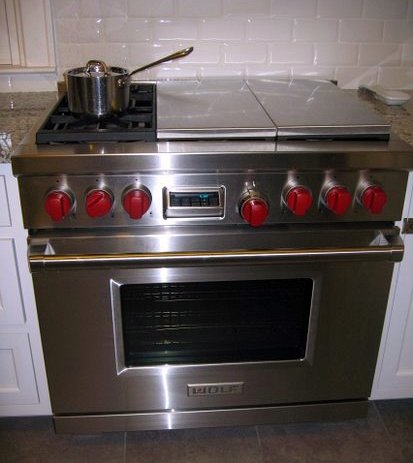
(photo: the DF366, or 36 inch, 6 burner, Duel Fuel Wolf range with custom burner lids from Uncle Frank) 

I live by the rule that you don't need fancy kitchen equipment to produce great food.  I'm also a fierce believer in kitchen tools that have multiple uses (via Alton Brown's mantra that one use tools should not have a place in a home kitchen) and I cringe at expensive home cooking machines like the Sous Vide Supreme and manual kitchen gadgets like a mandolin or pizza stone.  Of course, the three kitchen tools in the previous sentence all work and do their respective tasks well, but the question every home cook needs to ask (just like any good consumer) is: do I really need a particular tool to cook and eat well?  As an example, I turn to the many extraordinary home cooks in my family.  Specifically, I remember my well traveled grandmother who prepared all of her food via an aged 1.5 foot by 1 foot maple cutting board and small plastic handled steak knife from Italy.  She used the knife to dice, chop, and slice and pretty much utilized the "cut into your pan or pot" method of cooking (the cutting board was decorative).  My mother, for example, has never owned a dishwasher, chef's knife, Boos cutting board, All-Clad cookware, etc. and only recently converted over to using a Kitchen Aid Mixer for pizza dough.  And let's just say that the type of cuisine both women were/are producing would make even the fiercest food snob / "expert" salivate with envy. 

It's with a slightly guilty conscious, then, that I admit to owning a necessary, but highly gluttonous, kitchen product; namely, the gentrified industrial range (it's insulated and will not catch on fire randomly, so it's not truly industrial or commercial).  The product in question is the duel fuel 36 inch, 6 burner, Wolf range (model DF366, specifically).  Yes, the monstrous cooking machine that contains enough stainless steel metal to sustain 2 or 3 southern Italian provinces (a crafty Calabrian would, for example, sell the metal from the stove and live a comfortable life via the profits; this is what my father thought when I showed him the unit).  

Our Wolf stove was installed about two years ago and replaced a  25 year old four burner Thermador range top.  Our old Thermador worked but it was reaching the end of its product lifecycle and it required that we light each burner (one of which didn't work) with a match.  When it came down to selecting a new stove we turned to the so-called high end brands like Wolf, Thermador, Viking, and a few other manufactures at the local "fancy appliance" shop (like a luxury car showroom without the exhaust fumes).  


Prior to purchasing our range, I had done my research via third party rating organizations, online message boards and forums (see the GardenWeb Kitchen Forum for a great resource), and, of course, the product literature from each of the manufactures.  However, and uncharacteristically, I made my choice based on design/aesthetics and, to a lesser extent, on performance.  For example, I knew the Wolf Duel Fuel 36 inch range wasn't going to boil water faster than our 25 year old range top and, most likely, require more maintenance and possibly have some sort of reliability issue down the road (Wolf model DF366 has more electronic wizardry than my Mazda3 station wagon) but I still lusted after the large hunk of metal.   I wouldn't necessarily say I made a poor choice when it came to selecting a new stove, but I certainly didn't make the logical choice as there were plenty of smaller, and less expensive, 4 burner gas/convection type stoves on the market.  

In turn, I wanted to share some specific insight on my personal experience with a semi-industrial (insulated) "professional type" range with anyone considering the same type of product for their next kitchen renovation.  Here are my unstructured thoughts on the $7,000+ Wolf 36 inch duel fuel range (6 burner set up):

- Aesthetically, the stove looks great and when all of the stainless steel, black enamel, and burners are cleaned and polished you'll get goosebumps whenever you walk by it.  The stove resembles an Audi sedan with conservative, yet elegant, lines.  And from an build perspective, the unit is more in line with a fine watch than a box that heats things up.  Note, I've experimented with a few stainless steel cleaners and polish and only one has worked well; that is, Wolf's recommended "Signature" polish (which seems to be made specifically for Wolf).

- The stove is a royal pain in the butt to keep clean if you cook consistently.  The stainless steel attracts smudges and scratches easily.  The black enamel cook top requires daily soap and water to keep clean and if it's not buffed with a clean cotton rag you will get annoyed by all of the smudges.  

- The large, porcelain coated, grates are very heavy and difficult to move (which is required when cleaning the black enamel surface).   Further, the grates quickly turned gray due, I'm thinking, to our metal pots rubbing against the cast iron grates (this happened with our fancy Shaw's Original porcelain sink as well; note to these two manufacturers when constructing items out of porcelain please use the same material Italian porcelain tile is made out of as they are truly indestructible).  To Wolf's credit when I called to complain about the grates they simple sent out new grates.   

- The sealed burners have a grey, metal material, that quickly stained on our unit and I haven't been able to remove the brown/black spots to date.  This is annoying especially when the rest of the stove is clean, yet brown spots persist on the sealed burner material.

- The burners themselves are of high quality and 5 out of the 6 burners are capable of producing 15,000 BTUs (I know that many food "experts" will yell at me and say that the BTUs are not high enough and established a good sear, for example, is not possible; to the naysayer I say: "That's no true."  All 6 burners have a simmer setting and 1 burner is capable of a Melt feature with only 9,200 BTU.  

- The auto ignite burners have worked flawlessly and are well engineered overall.  

- The large oven takes an inordinary amount of time to reach temperature and to boot it's quite loud during operation (including venting which happens for a prolonged period of time after the oven is turned off).  We purchased a smaller Cadco convection oven and we end up using the unit more than the Wolf oven given the aforementioned issues.

- The oven has ten cooking modes but beyond the "convection" and "broil" modes I can't differentiate between the remaining eight modes, including "roast" and "bake" (for example, if I want to bake a ham is it the same as roasting it - which mode do I use?) 

- The pivoting electronic control panel is easy to use and does retract flush against the stainless front (a nice design feature which creates a very clean look when pushed closed). 

- The adjustable oven racks are well made, yet they're incredibly difficult to adjust vertically.  The three racks are very wide and you need both hands to go from one position to another (don't attempt to do this once your oven has reached temperature because once you open the oven door to perform the task you'll lose heat because it takes such a long period of time to perform the task).

- The oven cavity has dual halogen lighting so there's plenty of light to see your food. And the oven door construction, along with the oven insulation, is top notch.  The oven size is also very nice and especially handy when it comes to baking larger quantities of cookies, pizzas, etc. (of course with size comes heating time, per above bullet).

So, there you have it, overall I like my fancy Wolf range.  Would I buy a fancy range all over again if I had the choice today?  The answer is most likely no, rather I would buy a higher end version of a standard 4 burner gas range from a company like GE or Bosch (problem is I wouldn't get the same subjective warm and fuzzy feeling every time I walked by a GE Profile).  But, you know what, my pasta water would boil just as fast (somewhere a dead Calabrian relative is laughing at me and my range).    


Related Posts with Thumbnails
IMG_4732

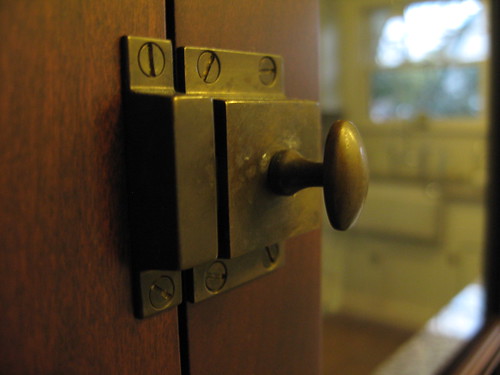
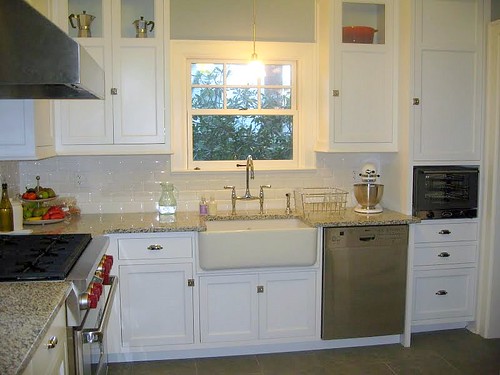
As I stated in my guide to renovating your kitchen, splurging on good quality kitchen cabinets is usually a good idea when it comes to redesigning your home kitchen (especially if you're looking to stay in your home for long term).  High quality kitchen cabinets are usually composed of solid wood cabinet faces (e.g., maple), full plywood box construction, dovetail drawers, etc.  Moreover, hiring a quality craftsmen to install your cabinets is always a good idea.  For example, during our kitchen renovation our cabinet installer Brian was meticulous when it came to hanging lower and upper cabinets, preparing for the install of our farmers sink, installing crown molding, and attaching our cabinet latches and pulls.

IMG_4729

One of the small details of our kitchen renovation that I had not given much thought to was cabinet hardware.  In fact, the only thought I had when it came to selecting cabinet hardware was to head down to the local hardware store and select a moderately priced set of pulls.  Well, as soon as I got a hold of some the "genuine brass" pulls and latches offered at the neighborhood Ace hardware store I knew they wouldn't work in our new kitchen.  The hardware store components were cheap looking, didn't function well, and were of a low quality design and construction.  That's when I stumbled upon Horton Brasses via a recommendation from the GardenWeb Kitchen Forum.  

Horton Brasses, a Cromwell, Connecticut based hardware company, produces more than 1,000+ pieces of cabinet and furniture pieces, from kitchen cabinet pulls to clock finials!  For our kitchen cabinets, we choose to go with a traditional pantry latch and drawer pull.  

IMG_4728

We ordered latches in both polished chrome and antique brass as well as pulls in polished chrome (The pulls and latches are available in seven finished).  The first thing I noticed when I received the hardware was the overall build quality of the pieces.  Each item had a high quality brass finish and the latches, specifically, had a high quality mechanism.  In fact, I had some concern about using pantry latches for our upper cabinets because I heard horror stories about the mechanism failing after prolonged use, but the customer service department at Horton assured me their latches were built to last.  And last they have for well over 3 years now!  Horton's hardware also comes with historically accurate fasteners (screws) that complete the look of the kitchen hardware.  

IMG_4730

Where Horton also shines is in the customer service department.  I spoke to Amy at Horton several times via the phone/email about both replacement parts and technical issues and she was a pleasure to work with.  Moreover, when one of the screw heads broke during a latch install because of tough hardwood and applying too much torque, a technician at Horton got on the phone with me and explained what drill bit to use when pre drilling, how to remove a broken screw head, and, generally, how to install the latch mechanism.  The people at Horton went well beyond the typical customer service support call.  What also gets me excited about Horton is how well priced their items are and, moreover, that the items are manufactured by the company in the United States.  Horton isn't a big company, but it's the type of customer experience I had that makes small companies grow and earn an outstanding reputation for both product and customer service.  Building a company is easy when you stick to the basics: great product, fair pricing, and outstanding customer service.
 
If you're looking for high quality kitchen hardware for your next kitchen renovation project check out Horton's bin pulls, pantry latches, and other fine hardware.  
Related Posts with Thumbnails
rundown

Interest rates are low these days and there's a ton of housing stock available, so, in my view, it's a great time to buy a home.  The financing part is a bit trickier these days with banks scrutinizing loan applications, but if you have a good down payment (at least 20 percent), a great credit score, ready to work at maintaining your home, and understand that a home is, first, a place to live and, secondly, possibly an investment go out and buy a home!

With the above said, there are areas in a home that are consistently neglected by homeowners. Neglecting a home repair can cost you big bucks in the long term and is just plain dumb/lazy (would you ever not feed your dog or provide fresh water for your cat?).  In turn, I've put together a top five list of areas of your home NOT to ignore!  Let's start with the often ignored, but highly functional, gutter:

1. Gutters  
When we purchased our home I asked the owner when was the last time she had her gutters cleaned.  The ex-homeowner replied by saying, "oh, I don't know, but it's not important."  If you live in a leafy neighborhood you should get your gutters cleaned twice a year (I like cleaning mine in November and May).  Allowing leaf build up and sediment to accumulate in your gutters can lean to interior and exterior water damage which can costs thousands of dollars to repair. Clean your gutters yourself or hire a crew if your gutters can't be reached safely.

2. Furnace
There are many types of furnaces used to heat homes in the US, including forced hot air, steam, and hot water.  And most furnaces are either fueled by natural gas or oil.  The typical furnace can last between 15-25 depending on the system and your tolerance for efficiency.  I've seen steam boilers with tons of sediment build up, hot water furnaces with rotting pipes, and tons of leaking radiators.  This isn't good for one of the major systems of your home.  In fact, I think most homeowner see their heating and cooling systems as pieces of machinery that run themselves without the need maintenance. Hot water furnaces should be checked and cleaned by a capable homeowner or a licensed plumber at the beginning of each heating season.  Steam furnaces require a bit more upkeep, but the maintenance routine is the same: clean pilot and burner area, keep the area around your furnace clean, check damper running into chimney, lubricate moving parts, (if steam) flush water in system to get rid of sediment in radiators and furnace. See my guide to winterizing your home!

3. Yard 
Walk by any home and the first thing you notice is the front yard and this happens well before you notice architecture style, the pretty red door, and the Lexus sitting in the driveway.  If you're a homeowner your front yard is your first shot to make impression, be it good or bad.  An unkempt lawn, big dirt patches, and overgrown hedges and trees all make for poor maintenance and upkeep and, in relation to other home improvement / maintenance projects, maintaining a green lawn and pruning your boxwood is cheap and easy.  Also, failure to maintain your exterior landscape can also lead to drainage problems and possible basement leaks as your yard can develop issues with slope and water seepage.  See my tips on how to maintain a great looking lawn!

4. Sidewalk
If you're lucky enough to live in a neighborhood that has sidewalks then you've bought yourself a lifetime membership to a great health club.  Walking around your neighborhood is great exercise and gets you interacting with the neighbors.  Unfortunately, concrete sidewalks will need some upkeep, especially if you're block or neighborhood is lined with street trees.  Large trees cause concrete sidewalks to lift and crack over time and, in many cases, the only way to repair an uplifted sidewalk is to pour a new section of sidewalk.  Many towns also have ordinances requiring homeowners to maintain their sidewalk, so sidewalk upkeep is a given.  Don't you just love homeownership!

5. Kitchen 
They say the kitchen is the new heart of the modern home and prospective home buyers look to, among other things, the size and condition of the kitchen when considering the purchase of a home. When we looked at homes for purchase a couple of years back, we fell into the same category as above and we were mostly horrified at the condition of most conditions.  Many of the kitchens we walked through had faulty appliances, cracked flooring, leaking faucets, poor lighting, and, generally, inadequate space and functional layout.  I'm not advocating homeowners build lavish kitchen with a Viking stove, soapstone countertops, and exotic wood cabinets, but I'm a big fan of keeping a kitchen up to date and renovating a kitchen once it's past its functional prime.  Plus, there's usually a decent ROI on a newly renovated kitchen.  See my guide to renovating your kitchen!
Related Posts with Thumbnails
windows

In an earlier post from December of 2008 I was contemplating replacing most of the original double hung windows in our early twentieth century foursquare / center hall colonial.  Like most decisions involving personal finance I like to make a pros and cons list.   And, at the time, I started with the cons of our old double hung windows:

- Windows are NOT efficient (they let tons of air through the bottom and upper sashes and also along the side of the unit) and are single pane (versus two and three pane for modern windows)
- Windows do not have gas filled panes which help with efficiency.
- Windows are difficult to clean.
- Storm windows are hard to operate and don't provide much functional performance
- Windows are not secure (the sash lock is original)
- Windows let in street noise
- Windows do not have a UV coating

My pros list was very short, but it included:

- Current windows do operate well
- Current windows fit with style and architecture of home

Ultimately, we decided to replace most of our old double hung windows with quality wood replacement windows.  We opted for a brand from Anderson called Eagle.   We considered quite a few windows brands included, Marvin and Anderson Woodwright.  We choose Eagle for the following reasons:

- Great value given construction and standard options (all custom sizing)
- Great U-Factor rating (the lower the better) which equaled or beat Marvin and Woodwright
- Good Solar heat gain coefficient and visible transmittance (these are essentially how much light and sun make it through the window)
- Eagle offered standard Low E / Argon filled glass at no additional charge
- Eagle offered free priming on the interior wood material (so it's much easier to paint) 
- Eagle offered a multitude of exterior aluminum cladding colors to match our house (we even had the option of mixing up to three different colors) at no additional charge
- Eagle offered a full screen at no additional charge
- Eagle offered plastic film on the glass to make painting/staining easier at no additional charge

We've been living with the new windows for a few months now and have been impressed with ease of use and how much noise the windows keep out.  We've yet to go through a winter with the new windows and we, of course, will be interested to see how well they perform in terms of keeping out cold and wind (we'll look at our heating bill closely).  From a summer season perspective, they have done well at keeping out UV rays and the strong heat here on the East Coast.  

We personally painted and stained all of our windows to match the existing window trim and that did take quite a long period of time (it took me 4 weeks).  The windows that were stained required some sanding, pre-conditioner stain, three coats of stain, and a single coat of polyurethane.  The primed windows required two coats of paint.

On the installation itself, we hired a local company that removed our old windows, installed the new windows, insulated, and mounted exterior frame expanders (essentially aluminum strips that conceal the gap caused by the outer window opening frame and window itself <even with custom windows you'll get a small gap on replacements>).  

When looking to hire a company to install windows make sure to keep the following tips in mind:

1. Ask to see examples of install jobs (note how tightly the windows appear in their opening, was the old trim damaged, what does the exterior window install look like, do the windows open and lock securely, was the crew neat, etc.)
2. Ask about warranty on work and not just the product
3. Ask who is responsible for damage to interior and exterior of home, just in case there is an issue
4. Ask if the cost of removing old windows (and storm windows) is included in the estimate.
5. Never get just one quote and don't assume lowest bid is the best
6. Ask to speak with the person who will do the actual install (see if they will be on-site during the whole project and actually working on the windows)
7. Never pay full amount before job is complete
8. Get everything in writing and have contractor sign off.
9. Don't let your contractor remove old windows unless they plan to install the new windows in the opening (they shouldn't board up openings)

From an ROI perspective we'll need to wait a bit to recover our costs, but our new windows are functional, efficient, easy to clean, and make our home feel and look great.  I think they are worth every penny!

Related Posts with Thumbnails
kitchen

Nothing makes a home more desirable these days then a new kitchen with all the bells and whistles (well maybe good schools and neighborhoods are more important!).   And most new homeowners either look for a home with a great kitchen or desire to renovate their kitchen at some point during the homeownership experience.

The kitchen home renovation process is grueling, and if done correctly, very rewarding in terms of ROI and pleasure-factor (that is to say, how it feels to spend time in a new space).  You can, indeed, avoid some of the grueling aspects of the kitchen renovation process, but there is no way to avoid feeling frustrated, defeated, and upset during some stage of the renovation project - this is just a fact.  

Here, then, are my 11 major kitchen renovation tips and advice:

1. Avoid adding square feet to your kitchen by expanding. Adding a room or even a small bump out to increase the size of your kitchen will be costly and complicated (permits, foundation work, framing, etc.)  Instead, see if you can find additional space in an adjacent closet, hallway, sun room, etc.  Large, open, kitchens are the current fad, but that may not always be the case (especially when you go and sell in twenty years).  Plus, you don't need a huge kitchen to cook great food and you'll avoid being a slave to your general contractor for 6-12 months.  Kiplinger Magazine even offers the same advice!

2. Splurge on cabinets and flooring.  If there are two elements of your kitchen that will take the most abuse it's your floor and cabinets.  Opt for solid wood cabinet faces and full plywood box construction.  Also, look for drawers that have dovetail joinery and bulky mechanical slides (I like the Blum line of mechanisms and hinges, some Ikea cabinets even use Blum hings!).  I've found that it doesn't really matter who the cabinet company is, but very important if they incorporate the above construction and design items into their product.  On the flooring side, avoid hardwood floors (it just doesn't make sense in a room that will see tons of foot traffic, spills of all sorts, water, etc.)  Instead opt for a Porcelain tile or possibly a natural stone surface (though the latter will require sealing).  Hardwood floors are nice to stand on because they give a little and help with back pain, but it's no substitute for the resilience of a solid, and indestructible, tile surface.   

3. High end appliances don't always perform better.  It's a fact that a $10,000 Viking stove will not boil water faster than a $500 Amana stove, however an industrial will often give you additional burners, beefier construction, and the looks most folks desire in a high end kitchen renovation.  We opted for a duel fuel Wolf stove (6 burner) and it has worked very well thus far, however the stove is very difficult to clean and the large oven takes a long time to reach temperature.  

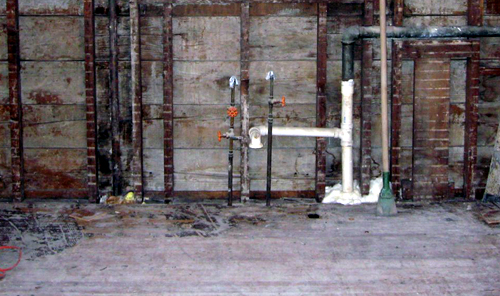
4. Gut it!  Just like I advocate in my five tips on bathroom renovations, it's best if you gut your existing kitchen so that you can re-wire, re-plumb, level the floor, look for potential problems, etc.

5. DIY within reason.  Professionals cost money and general contractors cost even more.  I would stay away from hiring a general contractor and opt for a 50/50 job where you outsource to professionals for technical tasks (new gas line, installing cabinets, etc.) and insource (i.e. DIY) for not so hard jobs like demolition, painting, etc.

6. Do your research and compare prices when it comes to cabinet makers, appliances, faucet, cabinet hardware, etc.  That is to say, make sure you visit 3-4 appliance shops and cabinet designers and get plenty of estimates on your stove, fridge, dish washer, etc. You can often receive a discount if you purchase all of your appliances from one shop.  On the research side make sure to read plenty of user reviews, read reliability ratings, and check out the manufacturer warranty specs.  Our appliances have had good reliability thus far and the only issue we're really had is with a counter depth Maytag refrigerator (Model MFC2061HE) whose water line (for interior water dispensing) stops working at random times.  On the faucet and cabinet hardware side we purchased all of our material online and saved a ton (I would opt for a high quality faucet and cabinet hardware, we purchased a Rohl Perrin and Rowe bridge faucet and bought cabinet hardware from Horton Brass <Horton has excellent customer service!>).  We also have a Rohl farmhouse sink which has worked well, but beware the surface isn't as tough as they claim and farmhouse sinks, in general, cause lots of water to splash out into your lap and kitchen floor given lower height.  The GardenWeb Kitchen forum is an excellent source for kitchen renovations in terms of asking questions and contacting folks who are going through the renovation process.  

7. Stone surfaces are nice, but require upkeep.  Shh, and don't tell anyone, but Formica countertops are great!  Formica is easy to clean and cheap, but unfortunately it gives a new kitchen a cheap kind of feel.  In turn, most high end kitchen renovations include a stone countertop surface.  Generally, granite is the best choice in terms of durability, price, and upkeep time.  Marble and soap stone require constant maintenance and can chip very easily (marble also yellows over time and it's not pretty after a few years).  We have a standard granite in our kitchen and it has been fairly easy to maintain thus far (I seal it every 6 months and wipe it down every night).

8. Lighting is important.  We live in an older type home and have original, and some replica, lighting throughout our house.  Our kitchen has replica school house fixtures from Rejuvenation Hardware and they look great, however I wish we would have gone with some additional recessed lighting.  We do have pendants over the main work surface and sink, but some general task lighting over the entire kitchen would have provided more light.  

9. Don't overlook ventilating your kitchen.  Whether you opt for an industrial-like stove or go with a traditional 4 burner model, you should overcompensate when it comes to an exhaust system (especially if you do any sort of consistent or serious cooking).  Moreover, try and get your stove installed on an outside wall so that you don't have a long run to the outside (with your vent tubing).  We have a Vent-a-Hood vent and it is quiet, easy to maintain, and very efficient and powerful.  

10. It helps if your basement is not finished when it comes to renovating a kitchen - let me explain.  When you re-wire, re-plumb, add a new gas line, etc. you'll need to access to your electrical panel, water system, main gas line, etc. and, you guessed it, all this stuff is locate in basement (specifically the basement ceiling area).  So, if you're basement is finished you or your pro is going to have a hell of a time running electrical wire, new copper pipes, etc. (this is a small example of why a plumber, for example, will charge you a ton for new kitchen work.).

11. Set up a make shift kitchen in your basement with a cooking element, sink, table, and your old fridge.  Avoid the urge to go out and eat every night and spend even more money by cooking some of your meals at home.   It's not fun eating in your basement, but your waistline and pocketbook will thank you when you're done with the project.

Related Posts with Thumbnails
renov

Do you spend hours talking to your significant other about possibly moving an interior wall to free up more space for your kitchen or what the old butler's pantry may look like if your restored the original walnut trim?  If so, you may be itching to renovate a portion of your home.  And if you live in an older home (build before 1950 or so) then you may need to renovate out of necessity.  

I've spent many hours with my super handy father renovating and maintaining our early 20th century foursquare center hall colonial and I've come up with some easy tips to keep in mind before you tackle your next big project:

1. Don't Hire Who You Don't Know (well, either directly or indirectly via a referral).  Never, under any circumstance, hire someone to work on your house if you haven't used them before, received several referrals from close friends, or seen a few examples of their work.

2. Do It Your Self Only If You or Your Help Can Do It Better and More Efficiently.  My father is very good with his hands and has helped me take on multiple home renovations (I'd argue that the quality of his work is better than most contractors).  However, a typical project does end up taking longer than if I hired a so-called Pro to complete the job.  Also, you'll need all the necessary tools (here's part II of my tools list) to do it your self (keep this mind)

3. If You Plan On Staying in Your Home Long Term, Then Buy Good Quality Material.  An example of this would be kitchen cabinets; cheap cabinets often come with flimsy bracing, poor drawer construction, and a non durable exterior finish.  Spend more on material and it will, in general, last longer.

4. Be logical About What You Renovate.  Start with the kitchen, bath, exterior landscaping (front yard), windows, heating/cooling, roof, etc. and avoid bedrooms, basement, attic, garage, etc. in the short term.

5. Avoid Trends in Design and Go For A Classic Look (or match the rest of your home).  Even if you're attracted to Modern design, for example, go for a neutral or classic look when selecting material and style for your next renovation.  If you need to unexpectantly sell your home you'll be glad you didn't paint your walls brown and invest in sheep skin blinds.
 
6. Think Green Where It Makes Sense.  Do you live in a cold climate, for example?  If so, it may make sense to spend a little extra for high quality, super insulated, wood windows when looking to replace your 90 year old, single pane, double hung windows.  Thinking about solar panels for your rooftop?  You may want to think again, considering cost and long terms ROI.

7. Establish a Budget.  I know some folks who go into renovations with an open ended budget; this is bad news considering that even well planned renovations usually go over on budget.  Track every expense and try to leave a little extra cash for unexpected re-wiring or runs to the hardware store.

8. If You Use a General Contractor Be Prepared to Pay More (lots more).  Did you know that most General Contractors don't actually do any work, but rather line up the workers you will need for your kitchen renovation, for example.  You can be your own general contractor if you take the time to find and research workers and then manage their work.  

Related Posts with Thumbnails

Welcome To Scordo.com

Follow Us:
twitter scordo facebook fan page scordo rss feed contact scordo.com more about scordo.com


Read Through Our Top Categories:
personal finance best of house and home best of italian way food and products best of how to and home improvement best of

Sign Up: Scordo.com What's New Newsletter
* indicates required
Help Keep Us Going:

Feeling generous and want to help keep Scordo.com producing fresh and original content?

Questions, Ideas, or Tips:

email scordo.com: blog at scordo.com


Shop with Us:
openbadge


Blog Flux Directory

Note: The views expressed herein are solely my own and should not be attributed to my employer in any way. This site is not maintained utilizing my employer's resources or on company time.

RSS feed graphic for scordo.com Subscribe to Scordo.com via RSS
Money Hackers Network
Frugal Hacks

CookEatShare Featured Author
view my recipes
CookEatShare Featured Author