Recently in money and kids Category

oldcalab2
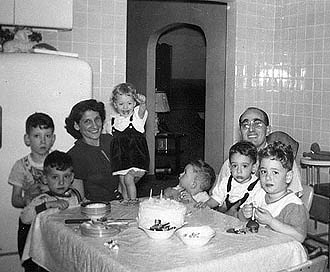
(photo: my mother, her sisters, and my grandmother on the family farm just outside of Pellegrina in Calabria <probably some time in the 1960s>)

Both of my parents were born in Southern Italy where unemployment is high and quality of life is superb. My mother, A., made it to the 7th grade and my father, T., recieved the equivalent of a technical high school diploma. Both of my parents immigrated to the US in 1975 and are currently debt free, own their own two-family home, and have plenty of cash in savings. They are, in many ways, leading the American dream - by not adopting the principles of American consumerism.

The lessons below may be be described as "old school" and overly simplistic, but the hard truth is that each tip works!  And, moreover, are used frequently by recent immigrants to the United States (and are often forgotten by the 2nd or 3rd generation):

Tip 1: "Save like you have no job and 6 mouths to feed."

For my parents, saving was akin to a religion. They didn't save 10 or 20 percent of their paycheck; rather they saved close to half of their take home pay. I suspect the urge to save is an instinctual feeling for many recent immigrants who arrive in a new country with no job and no home. The ability to save such a large percentage of what they made was dependent on controlling how much they spent each week. If you live well below your means you can save a large percentage of your weekly income.

Tip 2: "Look for non-material ways to feel rich."

My parents have never owned a fancy car or purchased luxury clothes or items. My parents hardly dine out or buy pre-cooked or packaged food. Rather, A. and T. find true fulfillment in family, great food, wine, and visiting the country where they were born. My parents appreciate nice, material things, but they are not defined or fulfilled via acquiring the aforementioned things.

Tip  3: "Use your network for help."

This means finding an uncle who does plumbing and a cousin who is a paralegal at a law firm. My parent's family network has helped me, personally, with home improvement, legal advice, emergency situations (taking care of babies or a ride to the hospital), etc. If I had to pay a stranger every time I needed something done in my life, I would not only be broke, but I would lack real friends and family. The real life lesson here is to nurture family relationships and not rush to pay someone to do something for you. (There are other ways to reward people without a large check).

Tip  4: "What's a credit card?"

If you look at my dad's wallet on a typical day it would resemble George Costanza's wallet from Seinfeld - full of notes and papers and a good amount of cash. My father pays for everything in cash, and if he doesn't have the cash, he will either not purchase the item or go to the bank and take out money. My parents have had very little credit card activity over the last 30 years, and I think it's a key component to their practical lifestyle - (that is to say, you can't buy stuff if you don't have the cash!).

Tip 5: "You can't count on your job - always have other sources of income."

My parents bought a two family home shortly after arriving in the US. The logic behind purchasing a two family home centered on having a monthly reoccurring revenue stream outside of a normal job. Sure, they would have liked a single family home with a larger yard and without constant maintenance in their rental unit, but they like the cash more! Do you have cash coming in every month outside of your normal job? If not, you may not be as financially secure as you think you are!


Tip  6: "Do it yourself."

My parents are both incredibly crafty. My dad performs his own car repairs, produces homemade wine, renovates his own home (including plumbing and electrical), cuts his own grass, and more. My mother makes all of her own food, cans tomatoes and vegetables, sews, cleans, and grows and tends a garden, among many other things. My parents have often told me that if the world were to fall into disrepair they would have no problem living their life. (They are independent and self sufficient).

Tip  7: "Trust your family, be wary of everyone else."

This may sound like a line out of the Godfather, but the fact that American society is based on a capitalist operating principle will motivate everyone from the shop owner to the general contractor to make as much money as possible from you, and there are no safety nets when it comes to preserving the wealth you've worked hard to acquire. This life lesson is akin to former Intel CEO Andy Groove's line: "Only the Paranoid Survive."

Tip 8: "You are not defined by your job or fame."

A job or career usually defines most adults in Anglo-Saxon cultures. Ask any typical American about their life, and the narrative usually centers on their work or job. If you ask the typical person from Southern Italy about their life, they'll tell you stories about their family, homeland, last name, daughters, sons, food they grow, or wine they make. (I swear this isn't connected to the high unemployment rate.) My parents are defined by who they are and not the job they do for someone else or the amount of money in their paycheck each week. This is a powerful principle to live by, and once you truly embrace it, the byproduct can be quite liberating.

Tip  9: "Think big picture."

Do you ever become overwhelmed by a problem you can't, for the life of you, see past the immediate future? Maybe you're worried about your job or if little Timmy will get accepted to Harvard in a few years, for example? These are illustrations of "small picture" thinking, and it can handicap many individuals from getting through tough moments in their life. Like many immigrants, my parents had to somehow block out the immediacy of not having much when they arrived in the US, in order think long term about the type of life they would someday lead.

Tip  10: "Ignore your neighbors."

I'm convinced that many individuals lead their life according to the goings-on of their neighbors. For example, if Doris next door leases a shiny new German sedan, you may be compelled to question the worth or legitimacy of your 10-year-old Ford sitting in the driveway. If, by the miracle of home refinancing, Doris adds another 800 square feet to her over-leveraged center hall colonial, you may all of sudden feel cramped in your tiny Cape-Cod-style home. What is my parents' opinion of neighborhood goings-on? Make friends, and be a good neighbor, but don't follow the neighbor into debt and materialism.
Related Posts with Thumbnails
IMG_5481[1]
(photo: Bok Choy with garlic, olive oil, and red pepper flakes: $2.00 for 2 pounds)

One of the critical life lessons I learned from my Italian family is how to value food. Specifically, I was taught: 

1., how to cook and the closely associated idea of, 

2., why food is important and should be taken seriously.  

My mother taught me the mechanics of making all sorts of foods from scratch, ranging from pasta to risotto and roasted baby goat to pan seared swordfish.  And at the same time, I learned how important it was to make time for preparing food and, thereafter, sharing it at a communal table with family and friends (and to repeat the process as much as possible).  I equate the latter lesson I was taught as an Italian boy to the importance of reading and scholarly endeavors in the Jewish tradition, for example.  The idea of food being important and necessary for a good quality life is in my blood and I can't imagine living any other way (I know people who place incredible value on Yankee baseball or a shiny new car every three years; misguided values or to each his own?).

In turn, it comes as a great shock and disappointment when one looks around and sees a culture of fast food, obesity, and the general lack of importance in relation to consuming homemade food in the US.  Specifically, we hear many reasons from the so-called "food experts", including the notion that buying quality ingredients to produce fresh and homemade food is an expensive endeavor in the United States (ask a European how expensive food can be and did you know that food in the US is actually cheaper than it was, say, 50 years ago <see the documentary Food, Inc.?>).  And, moreover, it's more economical for a family of four to purchase dinner and lunch from McDonald's, for example, then to go out and buy fresh food (this isn't the view of the food expert).  What the experts are implying is that poor people choose fast food and other high calorie meals because they have no choice and are priced out from shopping for fruits, vegetables, fish, meats, grains, etc.  

To the latter assertion I say, "that's nonsense!"  And, yes, I'm going to turn to the recent immigrant storybook to illustrate that one doesn't not need to spend a fortune to eat well and, moreover, that a family of four can take his or her fast food budget and prepare "from scratch" meals that are quick, cheap, healthy, and taste good (eating well doesn't equate to the need for great spending power, as the folks at SeriousEats.com seem to suggest when responding to one of Pollan's eating tips). 

IMG_5483[1]
(photo: One pound of Wild Flounder made with breadcrumbs, olive oil, and lemon zest.  The fish easily fed four people: $9.99 per pound or $10.00 for serving of four).

Let's take the price of an average meal at McDonalds for four and say that the Smith family will consume 4 medium size French fries, 3 cheeseburgers, 1 6 piece chicken McNugget, and 4 medium sizes Cokes (let's assume dinner will cost about $20; I don't have access to a menu with prices so I just estimated).  With that same $20 I can head to my local independent market (some would call it a gourmet market) and purchase the following items for dinner (I actually bought these items for dinner two days ago):

- 1 pounds of wild flounder fillet for $9.99 per pound or $10.00
- 1 box of artisan ravioli from Vitamia in Lodi, NJ (16 total ravioli) for  $4.50
- 2 medium sized Bok Choy heads (about 2lbs for 99 cents a poud) for $2.00
- 1 loaf of Sullivan Street bread (this is a large bread which will last a few days) for $3.50
- Total: $20.00

Note: I live in a region of the US where the cost of living is high.  

With the above ingredients I made baked flounder with breadcrumbs, lemon zest, and olive oil, ravioli with already prepared homemade tomato sauce, and sautéed bok choy with garlic and olive oil.  We consumed the bread with our fish and vegetable.  We did finish up our meal with two fresh pears and two oranges that were purchased during a different trip to the market.  The meal fed 4 adults (with an appropriate sized portion of fish, vegetable, and bread per person and we started the meal with 4 ravioli per serving).  

Our meal was tasty, satisfying, made with fresh ingredients, and for the exception of the ravioli and bread, prepared at home.  You could certainly make your own bread and pasta at home, and keep price down, but for a Mon-Fri type of meal this is the sort of "pre packaged" items that are ok to buy, in my view.

IMG_5480[1]
(photo: Artisan ravioli made by Vitamia in Lodi, NJ with homemade tomato sauce with mushrooms, made a few nights earlier: 1 pound for $4.50 ).

So, why is it that many poor to middle income families choose the fast food route when it comes to meal choice?  Could the families who choose prepared food not be ingrained with the idea that consuming quality food is important?  If not for my specific culture and upbringing, for example, I certainly would not consider food an important part of living in the US because it's not taught at school or praised in the media.  Therefore, a probable explanation for eating habits in the US may be cultural norms rather than income or access to fresh ingredients.  In sum, I choose to spend my twenty dollars for wild/fresh fish, greens, artisan bread, and handmade ravioli, as opposed to prepared French fries, cheeseburgers, Coke, and deep fried chicken nuggets, because I was taught from an early age to value food and make it at home.  Eating well isn't a byproduct of socio-economic factors (don't listen to the food experts), but rather how one is raised and views the preparation and consumption of food.  Being poor doesn't force you to eat at McDonald's, rather being taught that consuming pre-made food is acceptable (from an early age) and part of how one lives is the culprit.
Related Posts with Thumbnails
yuppies
(photo: cast from the film, American Psycho)

I see it all the time, twenty and thirty somethings ingrained with the idea that they deserve what they deem desirable, whether it be a new wardrobe, apartment in a trendy city, new luxury car, a monstrous new kitchen, the latest Smartphone, and/or a 6 bedroom home in a privileged suburb.  Let me break the news to you in a subtle fashion: Dear Twenty or Thirty Something, You don't deserve anything!  It doesn't matter if you've lived a privileged life in the past or attended the finest universities where high-brow culture and aesthetics are taught alongside neurobiology and philosophy, when it comes to self entitlement you might as well be begging on the street because what you desire isn't always what you should or can get!
 
I see less of the self entitlement disease in the offspring of recent immigrants and amongst the working class set, but there does seem to be a trend amongst middle class adults (whether young adults <Gen X and Y> or burgeoning teenagers) to want and acquire what hasn't been earned or deserved.

Let's look at a few examples of specific symptoms associated with the self entitlement disease and how an average, middle class, twenty something can rid him/herself of the early symptoms and, in turn, find a cure for the larger, possibly life debilitating, disease:

1.  Symptom: Yearning for gadgets and services with monthly, auto renewing, fees.  

Often the young adults will look around and notice peers with $200+ Smartphones like the iPhone, HTC, Droid, etc, and crave not only the hardware but also the data, phone, and text plans.  The same adult also needs his or her own DVR (like Tivo or add on from the cable company), unlimited cable stations, Netflix subscription, game console, and an open door policy on iTune purchases.  

How to cure the symptoms: Stick with a basic phone with a bare bones monthly plan (and use you work computer and home or office land line for calls).  Use your personal workstation for viewing free shows on the web and rent movies for free from your local library.  Your local library will also find any new music you may want to listen to, so just pick up the CD from your local library and burn it at home.

2. Symptom:  Yearning for a new car with all the bells and whistles via monthly lease.  

How to cure the symptom: The adult has to first get it in his or her mind that it doesn't matter what type of car one drives.  Thereafter, the adult should buy a use vehicle with basic safety features and good reliability and low cost of vehicle ownership.  There's plenty of time to maybe one day own a nice vehicle (if that sort of thing is important, but folks between the ages of 18-45 should focus on building real wealth and not German nameplates and leather seats).  

3. Symptom: Yearning for an apartment in a big city or big home in the suburbs.  

How to cure the symptoms: As we all now clearly see not everyone can afford a home or, more specifically, an ideal home.   If you're 25 or so and suddenly want a 5 bedroom home in a quiet street in the suburbs because you grew up in that sort of environment or because you have that image in your head, that's not good enough.  If you want to own your own home, then you'll need, at the least, a 20 percent down payment, ability to spend lots of money and time on home improvement and necessary maintenance, and the ability to build wealth along side paying your mortgage and property taxes (that is to say, if your total housing expenses exceed 20-25 percent of your take home pay, then you are in over your head and aren't doing other things with your money).

In addition to self entitlement being bad for the individual, it also sets up unnecessary desires, beliefs, and wants in the children of the self entitled class.
Related Posts with Thumbnails
kidfountain
(photo: my young uncle washing his hands in an outdoor fountain in Bagnara, Calabra - Village of Pellegrina)

One of the most important life skills you can teach your child is how to save or, more specifically, why it's important to save.   My parents would often bring me to the bank as a small child and I observed my mother writing and cashing checks, depositing money, etc.  By the time I was 7 or 8 my parents told me about a little blue passbook they had opened for me when I was born.  The passbook (or savings account) contained some regular deposits and a healthy amount of money.  I had no sense of the value of the account or what the cash really represented, but I do remember my parents telling me:

1. This is where you will (not can) save any money you come across (birthday, holiday, etc.).

2. Once you put money into the little blue book you really do not want to take it out.

3. The bank will give you some money in return for keeping a little blue book full of money.

The lesson above was very simplistic; namely, that saving is good and should be taken seriously.  Beyond setting up a savings account for me, my parents also exposed me to their financial goings-on from a very early age (I knew for example how much my father made via his paycheck, what our tenants would pay in rent each month, and how much my dad would collect for small handy-man type projects).  My parents hid nothing about our financial life or status, so I was "in the know" from a very early age.  Some experts have argued, especially in light of the recent recession, that parents should aim to shelter financial goings on from their kids given stress, anxiety, etc.  And while every parents should customize parental advice for his or her child (read: understand what type of child you have and adjust parents style), I believe in empowering children and raising smart, pragmatic, kids who will be ready to face the world!

So, when beginning your child's fiscal eduction you want to make sure you do the following:

1. Set up a savings account
 and describe what it is meant for and how you make regular deposits.

2. Expose your child to every inch of your family's financial life (in a sense treat the child as an adult and describe how much money the family makes <and the different sources of money>, what the family does with money, and what money can and cannot provide).

Start the personal finance discussion slowly and make it as easy to digest as possible.  That is to say, talk about saving money and not interest rates or how money is needed for a home, food, and security and not to buy video games, go out to eat, or impress people.  

I know of some families that never discuss money matters and this can be potentially dangerous to a child's personal finance eduction (which isn't taught in schools, unfortunately, and is the responsibility of the parent).  Money is not a dirty word nor should parents treat it as formal topic only open to adults.  The sooner a child feels comfortable dealing with money the quicker he/she can begin to see the value of money what it can and cannot provide an individual (security versus happiness, for example).  

Related Posts with Thumbnails
men_eating_front_church_pellegrina

I've often stated here and to many friends directly that recent immigrants have an intuitive personal finance philosophy that not only embraces the pillars associated with the American dream but also runs counter to the deeply entrenched, and ugly side, of modern American life: consumerism and materialism.  

Some friends get the above point quickly and agree, while others look at me like I'm an alien and think: "this guy is crazy, why wouldn't everyone want an iPhone, a shiny black German sedan, and several Coach handbags?!"   

Well, to answer the question from my skeptical friends I wrote an article for Wisebread.com entitled, "10 Life and Money Lessons My Immigrant Parents Taught Me".  Read the article and pass it along (via Digg or Tip'd). 
Related Posts with Thumbnails
hustle
(photo: child labor in the early 20th century, source of photo unknown).

Continuing on the theme of offering parents practical tips, I ask the all important question: do you encourage your children to hustle?  

Teaching your kids to hustle or instilling a good work ethic is critical to raising children, in my view.  And it seems many of today's young children are spoiled and posses a sense of self entitlement, partly because of parenting style and cultural norms.  I'm afraid that the old school mentality of not babying children may indeed be correct.   I'm certainly not advocating that parents create a "sweat shop" (per the photo above) atmosphere at home, but parents must create an environment that consists of A., love, B., compassion, C., safety, and D., the idea that working hard is important.

Here are a few tips that may instill the "hustling" mentality in your young children:
 
1. Be a role model.  Do you work hard around the house?  Children are like little scientists who observe and thereafter run tests (specifically, they're observing their parents and then mimicking what they see).

2. Talk about the value of work.  Tell your children about what hard work means and what it can provide in the way of security and rewards.  It's often a good idea to reinforce what children observe with an explanation via a conversation.  

3. Allow your child to fail, yet don't allow them to not finish a given task or chore around the house.  One of the most critical life lessons my parents taught me early on is that it's ok to make mistakes, fail, or not do something well, but it's never ok to be lazy or not complete a given project.  In turn, I think they instilled stubbornness in me (for better or worse!).  Is stubbornness a good life skill?

4. Teach your kids the value of money and that working hard can lead to acquiring money for savings and a good quality of life.  I've heard from parenting experts who advise not to teach young kids about money, but rather wait for the appropriate time period (that is, once they reach a certain age).  In my view, it's never too early to begin talking about money with children (of course the conversation should scale with the your child's age and cognitive ability, but generally the US produces young adults with a very poor personal finance IQ).

5. Point out examples of laziness or behavior that is not acceptable.  It's tough for young kids to understand theory, but they easily digest examples of bad behavior in the real world.  Here I'm not advocating a boot camp type mentality but I do believe that discipline is a good thing when raising kids.

6. Try and instill patience and the idea that work will not be enjoyable or fun all the time.  I had a hard time with acquiring the patience skill set as a child and I often wanted to finish up my homework, chores, meals, etc. in the quickest possible fashion.  In my mind if I finished something quickly I could move on to the next thing whether it be playing outside or getting to school.  Patience is a great skill set and it goes hand in hand with the idea of having perspective (or not sweating the small stuff).

7. Reward your child if they show positive behavior - including a small allowance, day at the park, a new book from the bookstore, etc.  Children need motivation just like adults!

Update February, 2010: It's interesting to look back at the above tips after having a child.  Back in Jan of 2009 we were 6 months away from having our first child and I have to say that I wouldn't change any of my recommendations.  

What I will say, however, is that I can see why I compassionate parent would want to spoil their child.  Like most good parents, you want to see your child happy and without worry, but it's important to differentiate between a child's long term happiness and the sort of quick hit happiness that comes about with spoiling your child on a day to day basis.  
Related Posts with Thumbnails
italamerfamily
(photo: thanks to the Pittsburgh Post)

I come from a very giving family, as is the case for most recent immigrants.  My mother and father, while lower middle class, have always provided their children with whatever was in their means.  As a small child, my parents purchased hi-quality clothes and shoes for us, paid for braces, prepared wonderful meals, purchased our first used car, and paid for about 2/3rds of our college educations (including our books).   My parents continue to be very giving (even as we've purchased our own homes and established our families); my mother will often pick up a few items at the grocery store if she sees a good deal and my father, as I've posted in the past, has acted as our general contractor on numerous occasions (painting, re-wiring, running copper water lines, installing windows, etc.). 

Given the above I'm wondering if it's generally a good thing for parents to help their adult children?  I know, for example, that if I had to pay contractors to do work on our home our personal savings rate would be much lower than it is today.  I also believe that if I had to foot a larger portion of my undergraduate tuition, and purchase my first used vehicle, I would not have been in a position to buy my first home in my mid twenties with a 20 percent down payment (as well as buy my first new vehicle in cash).  Some critics would argue that parents should let their adult children fend for themselves and that as soon as the child leaves the home at 18 to attend college they should provide for themselves.  Well, I think the aforementioned notion is silly and that getting ahead financially can't be done without a strong family network.

Given my experience, I think it's critical for parents to provide a stable financial foundation for their children; in fact, I think parents who force their kids to fend for themselves once they turn 18 is akin to financial child abuse!  Here are five tips on how parents can help their children/young adults get off on the right financial foot:

1.  Pay for your child's college education.  With tuition rising at 4 year colleges and universities at an astronomical rate, it's not uncommon for students to graduate with $20,000 - $30,000 in debt, not including credit card debt (see an older article from USA Today entitled, "Students Suffocate Under Tens of Thousands in Loans").  Now imagine starting your adult life (at the age of 22) in debt and with no promise of a job to pay off loans!  Don't get me wrong, I think students should hold a part time job during their undergraduate years (especially if it's related to what the student is studying) and apply for a few low interest loans, but the more a parent contributes towards tuition and living expenses, the better off the new grad will be come graduation.

2.  Help your young adult child purchase his/her first used car.  One of the best things my parents did for me was purchase a 1991 Honda Civic with about 75,000 miles on it (for about $3000).  I used the car to get to my first job after graduating from college and it was a huge relief to not have to make car payments so that I could focus on paying off my college loans.   The vehicle was reliable and bare bones and it got me where I needed to go.  I paid my parents for insurance and bought gas, but my parents did not require that I contribute towards the purchase of the vehicle.  The same vehicle was later used by my younger sister for the same purposes.

3.  Offer to house your children once they graduate from college.  Paying rent and utilities can be a huge expensive, especially if you live in or around a large city, so if you have the means to continue to allow your recent grad to live in the house it can be a huge money saver.  Some parents charge rent or even have their recent grad take care of a few of the utility bills, but if he or she is well intentioned and independent they will probably move out within a year or so (so asking him or her to contribute financially kind of defeats the purpose of living at home and saving).

4.  DO NOT offer to help pay for the young adult's first home.  Preparing to buy a home requires a great deal of discipline and sacrifice; more specifically buying a home requires, at a minimum, a 20 percent down payment and saving for a down payment is a great lesson in living below your means.   In turn, I think every parent (or close relative) should resist the urge to turn over a large sum of cash for a home purchase.  Moreover, saving for a down payment on a home is only the first step in the home ownership lifecycle, the home owner will need to save for costly repairs and maintenance, inevitable renovations, etc., so letting the young adult come up with his or her own down payment builds the necessary "saving" mentality needed for home ownership (a good general rule is that if you can't come up with the down payment then you shouldn't be a homeowner).  Plus, if you've helped by way of the three tips above your child should be in a good position to save for a decent down payment.

5.  If you have more than one child, provide the same financial help with each child regardless of financial situation.  One of the worst things any parent can do is play favorites, especially in a family with multiple siblings.  My view on parents helping their children is simple: give the same to each child regardless of need (this will keep things fair and prevent unwanted resentment).    

I want to reiterate that I'm not advocating parents support their kids outright through early adulthood, but rather strategically help with life steps that can make or break a young adult's financial foundation.  After all, once a young person accumulates debt it's very hard to get back on track.  Parents should also be very aware of the type of young adult they are dealing with; obviously, you do not want to buy an irresponsible child his or her first used car (use common sense and know your children).

Related Posts with Thumbnails

Welcome To Scordo.com

Google Ads:


Follow Us:
twitter scordo facebook fan page scordo rss feed contact scordo.com more about scordo.com


Read Through Our Top Categories:
personal finance best of house and home best of italian way food and products best of how to and home improvement best of

Sign Up: Scordo.com What's New Newsletter
* indicates required

Help Keep Us Going:

Feeling generous and want to help keep Scordo.com producing fresh and original content?

Questions, Ideas, or Tips:

email scordo.com: blog at scordo.com


Blog Flux Directory

Note: The views expressed herein are solely my own and should not be attributed to my employer in any way. This site is not maintained utilizing my employer's resources or on company time.

RSS feed graphic for scordo.com Subscribe to Scordo.com via RSS