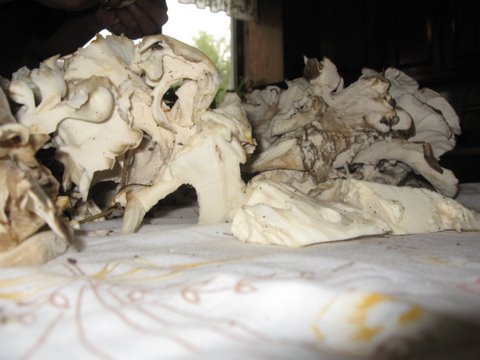
(Photo: wild picked Chanterelle mushrooms from New Jersey)
As I've suggested in a recent post, I'm a dyed in the wool country man, but I live a few minutes outside of the largest city in the US! You must be thinking: how paradoxical that this guy loves nature yet lives so close to a major urban area? Well the truth of the matter is I value the rural life in small doses at this stage of my life (given the associations I make with urban/suburban living: family, friends, work, activities, food, etc.). I am convinced, however, that at some point in my life I'd like to make a go at living the rural life. Sure, my thoughts of life in the country are more romantic than pragmatic, but there are certain country activities that I sometimes crave like raising animals, tending a large scale garden, building a barn, listening to silence, feeling isolated, walking in the woods, etc.
The walking in the woods part got me thinking about an activity that I watched my grandfathers and father (along with his friends) take part in each and every Fall; that is, foraging for wild mushrooms. My grandfather foraged in the forests of Calabria, while my father and his buddies strolled through the Palisades in northern New Jersey to find edible mushrooms for pickling and frying (the preferred methods of consumption amongst the people of Pellegrina).
Foraging for wild mushrooms can be a dangerous proposition and, like learning a trade, it takes years to get it right and the help of an experienced technician is mandatory. You can find wild mushrooms in large cities next to shade trees, suburban lawns, and the remote woods. The best season to look for wild mushrooms is in the Fall and preferably a day or two after a large rainfall. Identifying edible wild mushrooms can be tricky and that's why you should forage only with an experienced picker (they don't have to have Mediterranean blood, however!).
Many non poisonous mushroom varieties are easy to identify, such as Morel, Chanterelle, Oyster, Puffballs, and Coral Fungus (click here for some pics). You should assume that other varieties are poisonous as your safest bet is to stick with the type you've confirmed are edible and look for new types only with an expert. My father, for example, is an expert only in the wild mushrooms that he's consumed and identified here in the US and in Italy (that is to say, he sticks to looking for 2-3 basic varieties of wild mushrooms).
Picking mushrooms is fairly easy, but you'll want to bring along a good quality knife to remove and clean the 'shrooms. You'll also want to bring along a few plastic bags to store the items along with a backpack if you're taking a day hike.
Cleaning wild mushrooms is straightforward but you'll want to keep the following tips in mind:
1. Use a clean rag or small brush to remove all the dirt.
2. Look for bugs and other creatures before bringing any mushrooms into your home.
3. Mushrooms can spoil quickly so after cleaning the items store them in your refrigerator until you're ready to prepare your newfound delicacies.
Cooking your mushrooms is where the fun begins! Like any store bought mushroom, wild mushrooms can be prepared in many different ways, including fried, baked, boiled/pickled, in pasta and risotto, etc. Personally, I'm a sucker for pan fried mushrooms with lots of garlic and parsley. My mother pickles a few different varieties of wild mushrooms (especially the varieties that contain lots of water). If the family happens to find wild porcini they are excellent with penne and a quick pan tomato sauce.
My advice on how to start finding wild mushrooms: ask around and see if you have any old world Europeans living in your neighborhood, my hunch is that they have a secret mushroom foraging fetish. So, be nice to your German or Italian neighbor (maybe buy him a bottle of wine) and he'll take you mushroom picking in the Fall (I swear you'll be hooked!).
Here are some other excellent resources: