
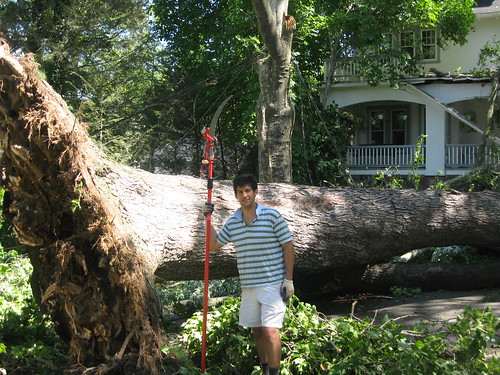
Negotiating With Contractors is in my blood and, like many first generation college grads, I come from a long line of blue collar workers (though I don’t like the “blue color” phrase as, in my experience, many old world “blue collar workers” are as capable and technical as the average college grad here in the US). My father, for example, was trained as an electrician, but has a skill set ranging from plumbing and carpentry to landscaping and roofing. Both of my father’s brothers are also skilled craftsmen and their expertise include metal working/welding and carpentry. If I extend my family connections further, the list grows to include professional landscapers, blacktop and cement experts, general contractors, finish carpenters and framers, masons, commercial and residential plumbers, etc.
My hands on skill set, however, is limited. I can count my home improvement skills on a single hand (and I include painting and mowing the lawn high on the list; not very impressive tasks). In turn, I often work with my father on running most of the home improvement projects on our 90+ year old home. And while I’ve picked up the occasional hands on skill from my father, I’ve learned to love and master the second most important home ownership skill set; namely, negotiating with contractors.
Even with a large family-based home improvement network it’s often necessary to contract out large jobs given a special skill set, piece of equipment, or simple lack of time to get the project done yourself. A necessary home improvement project you may need to outsource to an expert may include pouring a new cement sidewalk, laying a new asphalt driveway, installing a new roof, sanding and installing new hardwood floors, tiling a bathroom, or removing a large tree from your local street (see above).
When it comes to outsourcing a home improvement project and , in turn, negotiating with contractors and tradesmen here are 12 home grown tips keep in mind. By utilizing the tips below you’ll be certain to get the best price and highest quality tradesmen to work on your project:
Keep These 12 tips in Mind When Negotiating With Contractors:
1. Avoid amateurs and new businesses. Young and inexperienced individuals and businesses often charge less for a given service and while you may save a few bucks on that new exterior paint job or new furnace for example, you’ll end up paying more over the life of the service or item installed. Hire a bunch of college students to paint your home, for example, and they’ll often skimp on the preparation side of exterior painting which includes finely sanding the given surface. And if you paint on a surface not prepared correctly, you’ll need to paint again the following year.
2. Get at least three bids or estimates. If you don’t have at least three estimates for a home improvement project you’ll have no basis to compare what a job should cost. Moreover, when you talk to as many specialists as possible you’ll begin to learn what it’s going to take to build a new deck or put in a new roof (and with knowledge comes the ability to negotiate).
3. Avoid hiring a general contractor most of time. Most general contractors are not hands on and as a homeowner you’ll basically be paying a single individual to act as a glorified coordinator. You can skip the GC mark up and contact the individual tradesmen directly. Yes, you’ll need to spend some time researching who you need to call to get a particular home renovation project completed, but you’ll save big by bypassing a general contractor. I’ve often been told by general contractors when I push them on pricing that, “hey, I have to make some money here, Vince” My reply, “go and find someone else to make money on I’m not going to need your services!”
4. Avoid using “experts” or installers from big box stores like Home Depot and Lowes. It may seem convenient to hire the local carpet or window installers from Home Depot but there are plenty of horror stories I’ve heard and the expertise level is often very low with the aforementioned crews.
5. Ask folks in your neighborhood for recommendations on the top carpenters, plumbers, and electricians in your area. If you’re lucky enough to have a mom and pop hardware store in your town then ask the owner for tips on good tradesmen in the area. And don’t forget to check out completed jobs in your neighborhood (your standard for what constitutes good work may be higher than the 80 year old Mrs. Smith down the block). Also, don’t forget to check local online message boards and visit the Better Business Bearru web site.
6. Negotiate fiercely and make it a point to tell the contractor you’re not desperate to get the project done and you’re looking for the best price and a quality job. If you know you need a new roof then don’t wait until you have water coming in from your second floor ceiling to get bids and select a roofer. If you know someone more knowledgeable than yourself then have them at your house when meeting a contractor to get an estimate. And as I said earlier, prepare yourself with a bit of research so that you can talk specifics about the job you are looking to get done. If you get a strange vibe or a bid comes in too high or too low then tell the contractor to take a hike (remember this is a business transaction and you’re not looking to become best of friends).
7. When getting down to an estimate let the contractor give you a bid without much in the way of negotiations (you don’t want to reveal too much about what you’re willing to pay); at this point, you want to get a baseline price on what s/he is charging for the given service/work. Get the estimate in writing and move on to the next scheduled estimate or contractor. After going through several estimates and work samples, you’ll have a sense for who you’d like to use. Have the contractor come over again (don’t negotiate on the phone) and tell him you’d like to move forward but that his quote is beyond what you expected and can afford. Usually the contractor will reduce his estimate by about 10 percent. State that it’s still too high and that you’ve received 3-4 other estimates for similar work. The contractor will probably come down again. Next, tell him you’ll pay for the entire project in cash and also do any of the prep work or demo work necessary (if you don’t have cash to get the work done, you may want to think twice about being a home owner and maintaining a home). The contractor should come down again. Finally, tell him you’re willing to recommend his service to friends and family. His final estimate should be between 15%-30% lower than his first quote (depending on the size of the job, how much of the prep/demo work you’re willing to do yourself, and your geographic region). This particular tip has caused quite a bit of response in the comment section from general contractors who disagree with my tactics. The contractors, of course, come at my advice from their perspective and not the consumer or person who’s having the work done for him or her. Remember, you are in charge and it’s your house and money so demand a great end product/service at a great price (it’s not always true you have to pay outrageous prices for great work) .
8. Before accepting any bid check out the contractors work on at least two similar projects and, if possible have a conversation with the home owners who used the given contractor. Ask the home owner if the contractor did the work himself or relied on a crew and if they showed up on time and worked neatly. Finally, ask if the project was completed on time and if s/he met your expectations from a end product and work process perspective.
9. Put as little money down at the beginning of the project as possible. If the contractor screams desperation that he needs money to secure supplies or materials then the contractor is probably not right for you. If the job is large, then you may want to promise the contractor a small amount (maybe 10-20 percent of the total job) at some mid point milestone. Remember, you need to have some incentive so that the contractor shows up every day and finishes the job on time. My standard line to contractors who ask for money upfront is, “why should I give you money if you haven’t given my anything in return?” If the contractor insists he cannot pay for the material upfront, and you’ve thoroughly vetted the professional, then insist that you will pay for the materials/supplies once they arrive at your home and have had a chance to inspect and approve the material.
10. Get everything in writing and be compulsive about the details. Have the contractor document begin and end time (even if it’s an estimate), materials used, who will do the work, insurance, warranty on service and materials, etc.
11. If you’ve selected a contractor try to be home for at least a few hours during the first day of work and then at random times during the project lifecycle. Check the contractors work and ask questions. If the contractor is not doing something according to what you specified in the contract or what you verbally agreed to ask him or her to correct the issue. Don’t expect to have thing go your way if you don’t manage the work or contractor in some capacity. Before making your final payment inspect the work.
12. If the contractor wants to put up a sign advertising his or her work on your front lawn tell the contractor you don’t offer free marketing services so s/he can either reduce his estimate again or keep his, “another quality job done by ABC Corp.” in his pick up truck. If at the end of the project the contractor has done a great job ask for some business cards and pass around to friends and family.
Remember that most older homes in the US will need constant home improvement work (here are 5 areas not to ignore) and that learning how to complete a given job or project yourself (if done correctly and with quality) can save you thousands of dollars per year. If you must use a contractor, then treat the negotiation and the project as a sort of game where your end goal is to get the highest quality work done and the lowest possible price point (in other words, love to haggle!).


Vin: interesting article. I don’t have too much experience in this area but my parents have developed a very good relationship with a contractor who they have used to do many projects around the house. So a long-term approach to working with someone has been helpful for them.
LOL…My Mother NEVER EVER paid any contractor up front for ANYTHING until she saw the materials and inspected them, When presented with a bill and met the ENTIRE Crew and the Materials were in here garage…and she was satisfied thus far…BAM 30%…she always paid in 30% increments..and somehow she was always the first one on the block with Vynal Siding…in 1990 remember that?..how about 800 bucks for central air in 1985…remember that?…I work for an HVAC/R contractor..we paid 450 bucks for a brand new 10 yr warranty 95% furnace 2 stage ..we charged the customer 2,100 bucks for that same furnace and another 800 bucks for installation. Trample Off..ill buy it on E-Bay..Amazon before i pay 3k for a 450 dollar furnace ..OR it better have 90% pure 24 karate gold side covers…and i also saw in Lowes a 10 ton Central AC system sitting on the floor with a 800 dollar price tag on it…and another 300 bucks for installation…ALL YOU CONTRACTORS ARE RIP OFF ARTISTS. your looking at 220% profit off of a 450 dollar furnace so dont cry me a river when i say HOW MUCH?..and Yell E-Bay in yer face as i throw you out of my house on yer ass and slam the door behind you! Even Trane will sell you a system right over the internet these days and ship straight to your house for like 1200 bucks for the top of the line 95%er….so there you have it. As far as cars go for the example i was reading..you are 100% RIGHT except for the dealer incentives part..it goes like this…i used to work for a honda dealer…IF you buy 500 Accords in January and sell them all by June 1st..we will sell you 500 more accords for 800 off the invoice of the previous 500 cars, IF you manage to sell those 500 cars before September we will then sell you another 500 Accords for an additional 1200 off the original January purchase..so ..IF you buy a car in September you CAN HAGGLE for as much as 2500 OFF the dealer invoice and have the destination fee removed as well…Stupid People who pay full price for anything deserve everything they get 🙂
Then, for a $100,000 renovation project that could take about 2 months of labor, including material, Insurance + company expenses to stay in business, owners’ salary and company profit, you said we should charge a 5.6% mark-up to cover for all of those expenses? In this case 5.6% of $100,000 is $5,600. Can you Mr. Scordo or your family business cover all of this expenses with $5,600 in 2 months. Go ask someone that knows a little about this industry and see what they say. I think you wrote this to make traffic to your blog and not because you understand how the construction industry works.
The very definition of a markup is profit AFTER expenses. It makes no sense whatsoever that you ask if Scordo could “cover all of his expenses” with the markup in 2 months. That being said, a $5600 profit on a $100k job DOES seem a bit skimpy to me. But I’m really not that knowledgeable on the subject.
Go buy your next house off of ebay then hahaha…how absurd.
Loser
Repair Water Heater
This means not only considering your present income, but also what you expect to earn in the future. Before starting a home search, you should take into account any possible changes in income or employment, such as children, career changes, or job loss…
Solar
If you haven’ t already heard about some of the fantastic real estate deals that can be had in the great state of Arizona, be sure to check out luxury homes for sale in Queen Creek AZ , where you can find your own personal haven at an unbelievable pric…
If you can find a contractor that will work for you under these conditions (I don’t know of one that would) you are going to get what you pay for.
No money down – or at most 10-20%? Try 1/3rd the cost of the labor + the cost of all the materials, up front before any work begins and then sizable incremental payments. You don’t get to decide how much down you are paying me. I work with legally-binding contracts (you would be surprised how few contractors actually use legally-binding contracts) that allow me that much down, if you don’t want to pay for a job why get it done?
I mean, think about this for a minute – do you go to McDonald’s tell them you want a cheeseburger and only want to pay 10% – if you decide the burger was worth the other 90% you will come back and pay them? Yes Vince, that is how absurd your statement was.
“Negotiate fiercely and make tell the contractor you aren’t in a rush to get the job done?” Any quality contractor has walked away from you right there. You are taking this man’s time and gas-money while assuming you can push him around because “you don’t need this done.” Remember this works both ways, a good contractor doesn’t “need your job”. Some horrible amateur (that you warned against in #1) certainly does, enjoy having your house fall apart.
#7? Holy hell. I sure as hell wouldn’t come over to discuss how you “want to move forward but the final price is too much”. You are right, I wouldn’t negotiate over the phone either, as a matter of fact I wouldn’t negotiate at all – that price is the price – go with someone else.
It is so easy to go on and on here….
This is good advice for homeowners looking to get something done. Find a reputable business with good recommendations, trust they will do a good job and don’t expect something for free. With all things you do get what you pay for, if Vince is only paying 70% of the final quote, believe me – that other 30% isn’t coming out of the contractor’s pocket, he is going to make his money.
Hi Daniel,
Thanks for the comments. Here are some quick responses:
re: finding a contractor/decide when to pay the contractor.
We don’t believe in paying for anything upfront, especially if nothing is delivered from the service provider. Why should any consumer pay for a product/service upfront if the product isn’t delivered or service started? If the contractor wants the cost of the products/material, then I expect the products/materials delivered to my home prior to making a payment. After the product/material has been inspected then the homeowner should pay the contractor. I’ve never had a problem with this process.
re: negotiating
There are many, many skilled contractors, especially if you live in a fairly populated area. The way I see it, contractors are offering a commodity and the consumer is in complete control (especially if the consumer understand a bit about the work or is somewhat technical) and should take their time vetting for a service provider/contractor. If a contractor doesn’t want to negotiate or talk through a given project a few times I would never use him or her regardless of their reputation or quality of work. I’ve had plenty of contractors walk away, yell, curse, etc. during the negotiation process and I’ve had no trouble finding a quality contractor for the price I, the consumer, want and can afford. This isn’t rocket science, the contractor works for the consumer and the latter should run the show.
re: the price is the price
If you’re in a position to set a price with no back and forth negotiation then you’re fortunate. I would never use a contractor who worked/does business in this manner.
re: you get what you pay for
My general advice is to take your time finding a quality contractor at the right price. I certainly believe in the contractor making money out of a given job but the question is how much money the contractor should make and what sort of value / price the consumer is receiving for a given service/project. I also never use the person/contractor who is in highest demand because they’re going to demand the highest price. If you take your time and are not desperate you can, generally, get a very good end product/service for a very good price.
Thanks for your comments.
Oh that is all hogwash. You pay for things upfront everyday and don’t think anything of it –
Ever subscribe to a magazine?
Ever order something off of the internet?
So I am going to come stone your house, I’m bringing my crew. Do you really think I am unprofessional because I won’t front the 40k in material cost and 50-60k in labor for my workers? That is literally one of the most absurd things I have heard in a very long time. Construction companies do not ever, ever work like that – no where, not anywhere in the world.
As for negotiating… If you are going to purchase a new 50,000$ truck you might be able to get them to knock off 500 bucks (this comes directly out of the salesman’s kid’s mouths, not the dealership – so sleep well with that, anyway). That 500 bucks is 1% of the cost of the vehicle. I could knock 1% off if it would make someone sleep better – but 10, 20, 30%? Are you insane? That truck costs what it costs because of the labor, overhead of the company and cost of materials that go into the vehicle (it is no different with my company, I have all of those expenses too). The price is the price, that is why you get other bids – so you can choose to go with the cheapest and lowest quality of work.
And the consumer is not in a bargaining position at all, they never are. Sure there are lots of smartphones, but if you want an Iphone you are going to pay what Apple demands for their product, they won’t even knock 1% off. If you want a stone house you are going to pay what it costs, otherwise put up some cheap ugly plastic siding – I have other work to do.
And contractors build an extra 10-15% into labor cost for unforeseeable problems. I have never worked on a job or run a job where one of those unforeseeable problems doesn’t occur. If you are “lucky” enough to get that contractor to remove his safety-buffer what do you think he is going to do when he runs into a problem? The cheapest and most sly thing he can so he can pay all of his bills as he usually would. That is what I would do – what everyone does – that is also the reason I won’t come down in my price, so that never has to happen.
As a side note, my aunt lives in a gated community in Florida. They shopped around for contractors. They went for the same type of person you are advocating. There house is just over 10 years old… So far their roof has collapsed (oops!), their stucco is falling off and their wall-mounted China-cabinet fell out of the wall (obviously destroying all of the China). Hey, 2 inch nails are cheaper than 3 inch galvanized screws, they got what they paid for.
You seem pretty adamant about your position.
I’ve never paid for materials upfront on all of our larger projects, including paver and driveway work, 35+ window replacement, large deck/carpentry job, et. al. When the contractor delivers the material, then we pay the contractor (not before). And I’d say there’s a big difference between paying upfront for a $12 magazine subscription (from a reputable brand) and giving a contractor you never worked with $20,000 upfront to go and buy materials (that’s a huge leap of faith).
On your car example, you’re actually incorrect. The pricing breakout on new vehicles in the US includes the following factors: MSRP, dealer invoice or wholesale price, national OEM rebates/incentives, and regional OEM rebates/incentives. Car buyers/consumers, should start their negotiations at dealer invoice and work their way up. Most car buyers shouldn’t pay MSRP even on in demand vehicles. The “price is the price” philosophy doesn’t benefit anyone but the service provider/dealership/etc and isn’t consumer friendly advice.
The “consumer isn’t in a bargaining position at all” – of course the consumer is in a bargaining position! You can buy a used iPhone or buy the older model for a significant discount. My point is that all services and consumer products are commodities and the consumer can find alternatives on any product or service (viz., an Android powered smartphone to stay with your example).
Why should I pay for a “buffer” and assume and agree to an extra 10-15% into labor cost? If there’s an issue that’s not the consumer’s fault or not outlined in the contract why would you assume the consumer should eat the extra work/issue/etc.? If you’re a roofing contractor and demolish a part of my exterior sofitt when putting in a new roof do you think I’m going to pay for that (of course not, that’s the responsibility of the contractor).
I’m not advocating that folks use bad or inferior contractors, what I’m advocating is negotiating and bargaining with a quality contractor. Your making a ton of assumptions that good contractors will not negotiate or have all the bargaining power and that’s just not correct based on our experience and the experience of our close relatives all of whom are in the trades (commercial plumbing, carpentry, landscape, concrete and asphalt, electrical, etc.)
”
You can buy a used iPhone or buy the older model for a significant discount.”
All that sentence very clearly says to me is that you understand that “the price is the price” for an Iphone, if you want a different (older model) or used (which doesn’t come with a warranty and is used) you can can decide to purchase that.
If you were implying that you as a customer are in a bargaining position with Apple because you have the ability to not get the product you were hoping to get, then I suppose you could call that a “bargaining position” – I call it “shopping”.
To expand upon our phone example into the construction field – The idea that you can’t afford a stone house is fine, that doesn’t mean I am coming down in price – it just means you can only afford plastic siding.
—
Giving a licensed and insured contractor money under contract (that you have a copy of) to do a job is very far from a “leap of faith”. You have a copy of the contract and if he (after being in business for 20 years) decides to take your 20,000$ and not show up for work it isn’t difficult to get your money back.
—
“Why should I pay for a “buffer” and assume and agree to an extra 10-15% into labor cost? If there’s an issue that’s not the consumer’s fault or not outlined in the contract why would you assume the consumer should eat the extra work/issue/etc.? If you’re a roofing contractor and demolish a part of my exterior sofitt when putting in a new roof do you think I’m going to pay for that (of course not, that’s the responsibility of the contractor).”
So I had a 1700sq foot flagstone patio I installed. It turned out that during excavating that the soil was so incredibly soft we had to dig down an extra foot – that is an extra 62 yards of dirt we had to remove (about 10 dump truck loads) – we also had to put an extra 62 yards of base material down. I lost a lot of money on that job, even with my 15% buffer – at 50 dollars a yard for gravel you can see how an *extra* 62 yards would add up – those are the things that you can not foresee. I am not talking about damaging your property as we are working on it.
I have worked for a lot of construction companies, from the small 5-10 man crews to the larger 150 man union masonry companies. I also have lots of friends that own construction companies, from tradesmen to builders – this is the business, all of these companies operate the exact same way. You as the customer don’t know the intricacies of the work involved (that is why you are paying someone to do it). For a company to not go out of business that 10-15% buffer is essential. To assume an understanding of how and why multi-million dollar construction companies do things is very naive.
Construction companies still go under, even when maintaining there “safety buffer” – I just purchased hundreds of frames of scaffold as one of the largest and oldest union masonry companies in my area went under and had to sell everything they had.
—
As for the truck thing, you could be right – I don’t know that business, the same as you don’t know the construction business.
I don’t think the iPhone example is a good parallel because construction companies are providing a service along side raw material/product.
I fundamentally disagree that it would be “easy” to get your money back from a contractor even with a contract/agreement in place. The legal process to recover lost monies from a professional services agreement can take years, especially if the contractor is no longer in business.
re: flagstone patio example. Maybe that sort of thing should be written into the contract, but assuming a buffer mark up is dangerous territory and ultimately not fair to the consumer (your protecting yourself and if there’s no extra work or additional unforeseen event then you walk away with an extra 15 percent mark up correct, as you won’t be giving that money back to the consumer?).
We wrote the article to pass on the very simple idea of not being passive and ill informed when shopping for contractor services. You, as a contractor, shouldn’t assume the consumer doesn’t know your business. I’ve had many, many instances were I’ve called out contractors on things they wanted to do with projects that were completely unwarranted. Moreover, when I’ve had my contractor relatives come out with me on a bid at our home they’ve been able to help reduce costs and call out unnecessary work / mark ups.
You think “multi-millon dollar construction companies” do complicated things? Putting down a stone patio, laying tile, framing a home, et. al. is skilled work (and I have a ton of respect for the people in the trade) but it’s not rocket science and any smart, informed, consumer can understanding the process and costs. In fact, if a consumer is very motivated (and have the time) they can act as their own GC on most jobs.
In sum, It’s dangerous to assume because you’re in the “construction business” you know more (or better) than a very informed consumer who’s looking to get at the best price for a quality job. Thanks for commenting.
The Iphone was a perfect example and you felt comfortable using it until you found out that you agreed with me. Generally people purchase their Iphones from a cellular company, services are generally provided (unless you plan to just look at it) with the product.
“re: flagstone patio example. Maybe that sort of thing should be written into the contract, but assuming a buffer mark up is dangerous territory and ultimately not fair to the consumer (your protecting yourself and if there’s no extra work or additional unforeseen event then you walk away with an extra 15 percent mark up correct, as you won’t be giving that money back to the consumer?).”
Lets continue with this. Let’s pretend it was you who was getting the patio. Contractually I have written that problems like that are passed along directly to you. You figure that if something comes up it might only be an extra 2-3,000 dollars, so you are comfortable (enough) with that. I run into that problem, all of the sudden you are contractually bound to give me an extra 20,000 dollars for the extra time excavating, dumping, plate compacting of the 2A modified, and the materials themselves. Is this a business practice you feel comfortable recommending to your readers?
When I first said that you put a 10-15% buffer into jobs because something unforeseeable always happens (it is yet that I have been on a job that it does not). This isn’t a way that I gouge customers for more money this is an experienced and methodical way of bidding jobs that allows contractors to stay in business and do quality work. Yes, it would be fantastic to walk away with an extra 15% occasionally to make up for all of the money that gets lost on some jobs – however that very rarely happens.
So I can pass along a slightly higher number (that generally results in me making the amount of money I bid per sq ft, even when something bad happens); or, I can tell someone once or twice a year that they owe me an extra 20,000 dollars and they are contractually obligated to do it – they can fight it in court and lose – the whole time their house/yard is sitting semi-demolished.
Oh and I have had “knowledgeable people” tell me that some of the things I do are not needed – 6 inches of concrete with a higher PSI blend? He is just gouging you for more money – and he is using stainless rebar as well? What is this “Acryl 60” mortar additive he is charging you more to use – I’ve never heard of that, he just wants you to give him more money.
And all of the years I have been doing this I have not found one customer that understands the business, the work, why we do it and how it is done. Half the time other masonry contractors don’t understand – but their work falls apart and I get called to replace it. I have run across a lot of people that *think* they understand – because their cousin has been a carpenter for 25 years.
“You think “multi-millon dollar construction companies” do complicated things? Putting down a stone patio, laying tile, framing a home, et. al. is skilled work (and I have a ton of respect for the people in the trade) but it’s not rocket science and any smart, informed, consumer can understanding the process and costs. In fact, if a consumer is very motivated (and have the time) they can act as their own GC on most jobs.”
Again, this shows how very little you understand. So you understand (and stay current with) all of the trig, algebra and civil engineering that is required of these companies? You understand that when they are hiring a “skilled tradesman” to run jobs that he has to have a fairly intricate knowledge of these subjects (that is of course on top of his years of learning his craft)?
Yep it is that simple, we just come in pour some concrete, throw the flagstone down and gouge the customer – no skill, mathematics or engineering is involved there.
I have to have at least as good a knowledge of structural engineering as architects – because they make mistakes, when I am reading blueprints I have to catch the mistakes that they make (good thing the GC built an extra 15% into the contract or the homeowner would be getting a bad product). I have to have a good knowledge of trig for laying out complex angles and radius walls (I know, I am only a craftsmen). On top of all of that I have to have the knowledge of how to run a business (while staying in business).
As I said earlier, I have never run into a customer that has any idea what is involved with this business.
We are a GC Company specializing in Residential Construction. I stumbled on your website while looking for something. I read your tips on negotiating with contractors and had to smile. Then I read the comments and this has turned into a very interesting discussion.
the tips. I think your tips are great. As with any product the more negotiating you do the lower the price you will end up with. We negotiate projects all the time but the negotiated price has to come out of the fit and finish of the project. No other way. If we remove money off the top without concessions from the customer we devalue the project and our company. This in turn hurts both parties. To stay successful in any business you have to keep your bids/prices real. This in turn creates successful projects for the clients and profitable projects for the business. We want to do your next project and your neighbors, if we treat you poorly we wont be doing either.
Another note on negotiating, I am working on a kitchen project for a customer who wont tell me what the budget is. I just had an inside meeting with one of our staff. I stated I would like to do the job but if I present the project designed for a higher budget than the client is willing to spend we have a very low probability to get the work. (We are a design built company). Designing without a budget is as hard for us to do as designing a house for you without telling us what you want in it. This is a frustrating project for me.
Response on no money down…. this is a two way street. Most legitimate contractors will be very alarmed if you tell them to come to work without money down. A well written contract, scope of work, full set of plans and payment schedule is standard. This is not set up to take advantage of the homeowner, it is set up to protect both parties. I think the extreme views you have put forth are based in common sense, but don’t push it.
Note on not hiring a GC. for turnkey projects ie, flooring, siding, roofing, painting, electrical and h vac maintenance a general contractor is a poor choice. But on larger projects a general contractor who truly has his or her customers best interests at heart is your advocate to create the home or structure you have set out to build. A company which has successfully built many project has honed their skills set and does not make mistakes as much as they did on the first project they built. A customer who decided to build their own home or building will make mistakes. Some mistakes are minor some are major. Which type of mistake will you make on your first project? A general contractor has a liability to build what he is contracted to build for the price set forth in the bid. If he cannot do that he is in breach of contract.
a last note, I built a beautiful kitchen for a customer in our area last year. The customer failed to pay us about 2,000 dollars. I could have sued for the remaining amount but I am loathe to have to admit if a customer asked if we have ever been involved in a lawsuit with a customer that we have. So I wrote it off as a poor decision to work with them and left it at that. The same customer just called to place a warranty claim. I asked if she stole a car would she bring it back to demand warranty work done on that. She couldn’t believe I would speak to her like that. Our business gets a lot of flack as a dishonest and opportunistic area. But many times to situation is created by poor planning at the beginning and customers who negotiate a hungry contractor into doing a project for a price not feasible. Be careful what you wish for, your 30k dollars you just got knocked off the price of your 100k addition may be the money intended to pay the heating and cooling contractor. Now you have a project that is underfunded. Who loses here? (we did the warranty work for the non paying customer, viral negative reviews are judge, jury and executioner for small businesses)
note to the person who has the 160k dollar project. +/- jobs? You need to hire a good General Contractor who can nail the price down to a fixed cost. if you have one area or another which cannot be determined this area alone can be +/-. This is what I was talking about with the bad planning. You will set yourself up for disappointment if you cannot establish a good cost for construction.
I feel compelled to respond to many of my fellow contractors’ responses. This guy has NO CLUE and is leading his readers towards the bottom of the barrel contractors.
Ive just gotta say.. you are equating your business with that of Apple and that is absolutely ridiculous. There is only one Apple and there are thousands of you. Apple offers something different i.e. iOS. If you want to equate your business to a cell phone do it with android since any phone manufacturer that wants to use Android can which creates the same thing the author is talking about…. the ability to negotiate price! You are quite possibly the most arrogant, Ill-informed, and irrational person I have ever heard on this subject.
Daniel,
I actually disagreed with Vincent on his negotiating techniques above but I will tell you that as a roofing contractor, we get money down for about 30% of our work. If I am comfortable with the customer and have vetted them well, I will use AIA payment procedures for the project which helps eliminated some of my competition. Those are legal contacts as well, puts the customer at ease if you are new to them and if explained correctly….shows them why they should do things this way. If a contractor has to have money down to do a job then I would wander how financially stable they are….you would be surprised as to how much work gets done with no money down. A legal binding contract works both ways….not all customers are NOT going to pay so having the money down requirement is only to help your cash flow. If you prove to a customer that you don’t need that…..you will get more jobs.
Vince seems to believe that all contractors are out to screw consumers. In order to be a successful contractor one have to be profitable or it will be a very short lived career ( average profit margin in my industry is 5.6% ). Vince are giving advice when in reality he needs to learn what he is talking about and how he is misguiding many consumers who know as little about life as he does
Hi Ken,
We advocate being very cautious when dealing with contractors and never stated contractors are out to “screw consumers” Rather, our position is actually based on empowering the consumer.
I agree that contractors must make a small profit in order to stay in business (5.6% percent is actually a nice profit when compared to the automotive business for example where empowered consumers can often haggle for pricing well below invoice pricing; in turn you’re seeing dealers make much less than the 5.6% profit on a new car sale).
We stand behind our advice when negotiating with contractors.
I think you are missing the point here Daniel. Contractors DO inflate their pricing beyond just making a reasonable profit (after all, I realize that they are making a living like everyone else). Your example of paying beforehand for a product or service does NOT fairly compare to buying a burger at Mickie D’s…the burger is a set price. Unlike contractors, Mickie D’s doesn’t raise or lower the cost of that burger depending on the consumer who walks through their door. In all our years of home ownership, we have most definitely experienced contractors giving us outrageous bids b/c we live in a certain city (like twice the amount or more than a friend who had the same work done by the same contractor). We are not wealthy by any means! Vincent makes a very valid point about commodity and what the market will bear. With all this said, I do believe that contractors should ask a fair and reasonable price for their work but it is rather surprising that even in a depressed economy and many contractors desperate for work, they continue to shovel out outrageous bids that go beyond fair and reasonable. So, yes, consumers have every right to question too high bids and bargain for more fair pricing. And no more than 10% down, is the law in our state.
If you live in an area where the cost of living is high, and the contractor is from the same area…..why wouldn’t he charge a rate that would allow him to pay his bills? Nobody is holding a gun to your head to hire a particular contractor. But no contractor should give his work away for free because there are lowball, get-the-job-no-matter-what contractors happy to be able to pay for their motel room either. There is an old saying….”pay peanuts, you get monkeys” and I have fixed MANY a monkeys work….which is way more expensive than me starting and completing the job professionally and to my customers’ satisfaction.
This guy is the type of customer that any reputable contractor will usually walk away from. He writes an ill-informed blog that, allegedly, wants to direct consumers towards reputable, professional contractors…..yet he would charge the contractor to place a business sign in his yard by wanting a reduced rate? What a clown!
Any contractor that is willing to drop his price 30% from his original estimate is the one you should watch out for.He or she is either going to recoup the percentage by doing faster and lousier work or is so desperate for work that I would be afraid they are about to go out of business. A material deposit at the very least to start the job is standard. In my case with higher end kitchens, I won’t even start the design process without a deposit. My time and expertise is worth money period. I grew up in the trades and have worked in them for 18+ years including many of them as a business owner. I don’t know if that qualifies me as too new school but it makes me really good at what I do. Your kind of negotiating encourages people to hire cheaper less skilled labor over time. You are exactly what is leading to the decline of skilled tradesmen and quality work in our country. You said yourself Vincent that you respect the “old school” blue collar
worker as being more capable than the average collage grad.Would you want anyone of your tradesmen family members to cut their income 30% just because their customer read an uninformed blog.
Daniel I second pretty much everything you said.
Hi Chris and thanks for your message. It seems like all contractors are beginning to hate us! On a serious note, you need to understand our perspective and where we are coming from; namely, a family who has a deep understanding of most of the work that goes into maintaining, renovating, and keeping up with a home. Our family experts comprise of carpenters (framing, rough, and finish work), plumbers (commercial and residential), electricians (commercial and residential), masons, landscapers (commercial and residential), asphalt and concrete contractors, painting contractors, etc. In turn, we understand mark up, labor prices, material costs, etc.
Our advice is fairly aggressive and we stand by what we recommend. Specifically, on your point about your 18+ years of experience and “skilled tradesman” is to be very careful about making assumptions about what you should charge and what the market will pay. As one of my uncles stated a while back, all trades people (irregardless of how good they are and how much experience they possess) play in a commodity based field (that is to say, they are not providing a service that is unique in any substantive way). So, if a customer does his or her research and spends time vetting contractors they will certainly be able to find someone who is willing to work on most of the terms documented in the article above (especially, if they live in a major metro area).
We humbly disagree that our article is uninformed (and so do most of our readers).
All the best.
Hi Chris,
Thanks for your comment. We’ve gotten some heated responses, mostly from contractors, and it’s expected. We come from a long line of contractors and specialists (plumbers, carpenters, electricians, etc.) so we have a good grasp of mark up model (at least in our area of the country, which is just a few minutes outside of New York City).
One thing you mentioned that caught my eye is that your “expertise is worth money period” This is a very dangerous assumption to make in a commodity business, viz., there are a ton of great carpenters, for example ,who can build fantastic custom cabinets (so your expertise is really worth what the market is willing to pay). In our experience, we’ve been able to use our tips to get the best price on the best possible service or end product.
I think our kind of negotiating encourages homeowners to be very savvy about the work they’re getting done and to search for value when getting work done (one dangerous assumption is that the most expensive person is the best skilled person). We’ve hired carpenters from central america and south america with new businesses that did better work than our Italian family members who have been in business for 30 years and charge double what younger, more motivated, workers are charging.
We’re sorry you think our blog is “uninformed”
Thanks for reading!
Best,
Vincent
Once again, you prove yourself to be less than knowledgeable. There are “a ton” of great carpenters who build fantastic custom cabinets? I don’t think so. Perhaps you have a lower expectation or just want to justify NOT paying a true professional for their work. All I can say is this….I pity the person who does work for you. You sound like you wouldn’t be happy until the contractor bled out of his eyes. Being the cheapest is a function not of quality, professional work, but of the ability to subtract. Whoever takes you seriously is in for a disappointing experience.
Stick to writing about food, your a little off subject and wow this is really off base. Only way a contractor can drop a price by 30% is if he was overcharging to begin.. you are saying a bid of 30,000 if you are savvy then the contractor will do it for 20-23,000??? lol Contruction business has a pretty low markup and a lot of overhead and running around. It’s a service based business. Profit margins are not that high in most service based business. LOL Bill gates has a great profit margin on his software how come you done go to bestbuy and tell them to drop the price by 30% off the top. Microsoft can still survive unlike a service based business that works on lo profit margin + sweat and blood of the owner.
Better advice in dealing with a contractor is to due your homework, get referrals and be honest. Forget about these games and trying to out smart the contractor. Brutal honesty all the way even down to the price and what you can afford which is key. If you tell the contractor you can not afford it and he sees you aren’t lying, trust me you will get the best deal if he sees you are truly incapable of closing the deal monetarily.
Vincent I’ve done my homework by living what you write about everyday of my life and you are misleading in your numbers the rest is good advice but what gives you the right to cite these percentages?? FYI I have a 15% markup on cost to keep my lights on which leaves a 0% profit on the sales price and 0 commissions I shoot for a markup on that number that will bring me to 15% profit margin the sales price to stay competitive 30% profit margin would be high and as per your advice would get thrown out. So lets do the math I put in a bid for 20% profit margin, my break even is at 24,000. you are telling the home owner to push me down so it leaves the construction company in an unhealthy state suffocating for money and time while the firm is conducting work ,on the most important asset in most people’s life, THEIR HOUSE!
On top of that you want to contractor to float the bills of material and laborers? they are already floating the overhead and have no investment in the property being worked on! again profit margins are not their to put money out of pocket on every property.
What degree in business do you have or what other special training and experiences give you the authority to write this article?? I wouldn’t even say you are a good writer, if you were you would have been more careful in citing specific numbers with no reference material and then blowing off just about everyone who is trying to open your eyes and educate you to your error.
You are like the coyote in The Road Runner cartoon, you haven’t realized you ran off a cliff and have no wings. Wait for it, wait for it ….. you feel that sinking feeling in your stomach that you might be wrong?? hope you do, i know it hurts your ego but it’s okay we are all human get over it!
I commend you on 90% of the article but the other 10% needs revision. Please look into it, maybe research “selecting bids” and “negotiating tactics” for reference, this is where your knowledge is lacking and you are coming off as arrogant.
http://www.ehow.com/info_10016904_normal-profit-margin-construction.html
http://images.businessweek.com/slideshows/20110118/most-and-least-profitable-business-types#slide6
One problem I’m finding right now in these Post-Sandy times–if there’s enough business in the area, contractors won’t negotiate, they’ll just move on.
Do the work yourself. Or try….most people find out the hard way, the value of a professional contractor.
If you have an estimate that is +/- based on the quality of items you select after you sign the contract, should you worry? 1st estimate was $160,000 then delete some work and 2nd estimate $130,000. This is for a replacement driveway (~50 yards of concrete). Existing has dropped 2 feet and has large cracks. Scope also includes new hardwood floors throughout, new kitchen, remove walls between kitchen & diningroom. New stairs for a split foyer house. Houses in my neighborhood sell @ $200,000 once remodeled.
Vince, you sound like a total douche. With your methods, all you’ll get is the most desperate contractors, definately not quality if you think it’s ok to haggle on pricing, i’d gladly tell you to take do it yourself if you pulled that. You sound like a problem customer, all the way.
My thoughts exactly. I would charge him extra just to deal with him…I’m a stained concrete/overlay/epoxy contractor. I’ll charge 20-30k on something that the material cost is only 6-7k. I won’t even take a job without 50% cleared in my business account, and i could easily afford to front the whole job. 10% down at some point?! Hahaha this guy is amusing….
If you asked for a discount twice, i’d tell you to take a hike. Then you will see what kind of “quality” contractor you get for your l”owest price”.
If a customer talks me down on a price, I let them know that they’re going to receive less for that price. A few things I’ve learned is to treat people in the service industry right for a job well done. The same people who talk contractors down to a skimpy price are the same folks who stiff waitresses at restaurants. They have money because they constantly screw other people over.
BINGO!!
hi dear
Excellent tips.. really a useful information. but sometimes in a hurry we can’t pay attention on all those things.. all we do know that how can we fix things faster..
I have to agree with most of the advice here. I can understand why some contractors do not, but why should I pay for materials upfront when they have a 30 day payment period AFTER delivery. I am happy to pay promptly, but I want to see the goods and the invoice first.
If a project is correctly milestoned the contractor will not carry an excessive salary risk, as he will be paid at the end of each milestone. Why should I pay him weeks ahead of when he even turns up on site.
When I order products through the internet I am protected by my credit cards insurance, no such protection exists with paying 30% to a contractor for a job he has not even started.
I understand that quality must be paid for, and am not against paying a reasonable price promptly. I work to contracted milestones and get paid after the work is approved, I do not understand paying up to 30% upfront, is ‘good business’ as the contractor is paying 30 days later for his materials on account. I will not employ any contractor that cannot get an account. If the suppliers do not trust him, why should I?
No such protection? Have you ever heard of A CONTRACT?!?! Everybody wants something for nothing nowadays. Contractors have to protect themselves from scammer homeowners just as much as the opposite is true. The article and some of the comments on here go to show…
Thousands of customers are left in the dust every year by contractors that take money up front and never even start work (or start it and walk off before completing). It is incredibly difficult to recoup that money even with a contract and the legal process is long, costly and arduous.
A “contract” is no protection unless it is well-written, and more importantly only if the homeowner has the time, money, and will to sue the contractor. If the contractor owns no assets, then it is an exercise in futility.
..and you should understand that just because a contractor demands a 30-50% deposit, it does not mean that they cannot afford materials or open an account. If you won’t pay a portion up front, then why should a contractor trust you to begin work? Works both ways…
Half up front?! HAHA! Ridiculous. I’d never hire you. Massively shady. State trade regulatory committees advise against an excess of 15% up front (in my state it is only 10%).
This is terrible and manipulative advice. If everyone did this There would be no contractors of any kind.
We respectfully disagree. We’re not advocating being manipulative but rather getting the best price for the best work.
Getting the right contractor is better since whatever will happen while doing the work is liable to the contractor and it’s you who will be using whatever is fixed or worked by the contractor and it should be according to how you want it to come up.
Contractors Pittsburgh
HOw much of a disount for a yard sing that has been in front of my house for a month after roofing construction?
Wow, so much hostility against Vincent’s advice. Yet, those ‘against’ his advice do not acknowledge that there is a HUGE difference between charging a fair and reasonable price and overcharging. Having the ability to provide a service does not give you Carte Blanc to charge consumers what you think THEY can bear either.
Very nice and informative post thanks………
Nice one…
Vincent, great advice. I’ve been doing most of the things you are suggesting here. Of the four GCs I’ve talked with, not a single one has objected to payment after delivery or work, not a single one has done any push back on committing to invoices and copies of subcon prices. These are the top people in our area, and all have a sterling reputation. I found them after about 3-4 months of asking around. They all know that I’m shopping around for the best fit and are Ok with it.
I’m focusing more on the process they use for estimating rather than the number itself. This is a big job ($400k – $600k) and I know the numbers will change, but I figure if we understand how the numbers are calculated – then there should be no friction or issues. One major open issue is markup on pass through – e.g. Appliances, my wife and I have already selected the appliances, the store and negotiated the installation – approximately $30k.While I appreciate that the GC might spend an hour or two scheduling the install and/or communicating the installation specs to the plumber/elect/framing subcons, I don’t see why there should be a $4000 markup on the appliances. The store installs, warrantees, and services the appliances. The GC can charge for the time – but I certainly don’t see $4000 worth of value from the GC. I explained this to the GCs, and they agree – but say this is the “standard” in the industry – anyway, we’re trying to work out a solution. Perhaps categories such as appliances where we don’t pay the markup, vs. categories where we do.
My explanation to them is that this pass through markup creates a big incentive for me to hollow out their job by taking appliances, countertops, painting etc. out of the scope in an attempt to save the GC markup and bid them out independently – turning their share of the job into a 300k job instead of a 500k job.
Any thoughts or ideas?
4K standard mark up on appliances sounds absurd. There will be cost to install (have the GC do it versus the store you are buying from) but the mark up seems high. If you’re spending over 500K on a job with this GC he shouldn’t object to this negotiation.
holy cow…you literally dont want people to make money
“Make money” is 50% markup on appliances? Pfft. Maybe I should just become an “appliance purchaser” seems like I’m in the wrong industry… [rolls eyes]
A half-million dollar job, and you are willing to piss off the GC, hollow out the contracts, and causing this over $4k on a markup? Why did you not get your own license and take on the project by yourself if you didn’t want to pay for it?
I just want to ad, that a lot of this is lousy advice. Some of it is good advice, such as getting multiple bids, if you can. But it seems that everyone wants something for nothing. Carpenters and contractors need to make money too, and if EVERYONE followed your advice there would be NONE in business. Laborers work EXTREMELY hard for their money as well. Also the new businesses “amateurs” as you call them, that are out there will NEVER become experienced if you don’t give them the chance to work, making any new carpentry, electrical, concrete, plumbing etc. companies extinct in the future. This will decrease anyone’s odds to even get a good deal. If everyone took your advice here this is what would happen, and believe me I KNOW because it’s how it is where I live: because there is only one or two carpenters in the area, guess what? You have a monopoly, and you are NOT going to be able to try to get any type of deal WHAT SO EVER, they rule this area and know it. They will flat out tell you, if you don’t like it, go elsewhere or do it yourself, AND they won’t have to worry about getting business because they are the only ones in this area, and are already overworked, and it takes a TON of money for them to run the business. Also it is not good advice to wait until your work is done, AFTER already telling them you will not purchase your own supplies up front (everyone should have to, why should someone else have to pay for YOUR supplies?) AND THEN when they completed all of the hard work for you, ask them for a discount even though they did a good job? THOSE are the types of things that MAKE a carpenter REQUIRE the supply costs up front and usually around 25% of the labor down! BECAUSE it shows that a customer WILL pay for your hard work, and isn’t going to screw you over! Your advice would be like me going into the local diner, and ordering off of the menu, THEN when the bill comes, asking them how much they pay for their meat and buns to make my burger, then telling them I only think it was worth $3.00 not the $5.00 that they charged me! HAHA, how well do you think that would work out?
I did not state you should renegotiate price after a price has been agreed to in the initial contract.
You made a reference to why should you give a contractor a deposit, “why should I give you anything, you haven’t given me anything”? When the contractor walks into your house with 1500 worth of materials he is, in essense, lending YOU money unless he’s gotten the 1,500 (plus his mark-up) in advance. And when he is three or four days into the job, and hasn’t taken a nickel, he is once again lending you money (his currency is his TIME) that he’s not charging interest on. A reputable contractor will want the total amount for materials, as long as the materials show up on starting day, and 1/3 of the labor cost. And the second 1/3 of the labor cost should be negotiated at a certain point in the project. Trust is a 2 way street and any smart contractor should NEVER stick his neck out too far financially with a customer that he’s not familiar with. I have found that customers that are hyper vigilant and super concerned about getting burned, are most likely to burn you when it comes time to pay the balance. I used to come across this when I waited tables in college…everything was just peachy throughout the meal…until he end, when it came time to pay, and most importantly, leave a tip. Their are people who will decide not to pay you “just because” with no explanation. And as far as not allowing a contractor to put up a sign on your lawn? You don’t seem like the kind of person that any decent contractor would want to work for, that’s just creepy. Good, diligent customers ask questions and show interest during the progression of the project. And a certain amount of caution is vital until you are comfortable with the contractor. My customers and I aren’t adversaries, and this article almost promotes an adversarial relationship between contractor and customer.
Some responses :
– most professionals professionals get paid at the end of a job: lawyers, doctors, freelance consultants, etc. I’d recommend giving a contractor between 10-20 percent at the midway point of a large project (and full amount at the end, if satisfied). If the contractor cannot buy material without a deposit, I suggest homeowners do not use the given contractor. Most homeowners do not buy materials, they materials and service/installation (I’ve seen plenty of contractors walk away from jobs after being paid for materials by the homeowner)
– Customers should by hyper aware of being burned; i find the dishonesty usually comes from the contractor and not the homeowner.
– A “sign in your lawn” is a marketing / promotional item (if the contractor wants to advertise his services on my property then they should pay for that in some way – maybe a small discount on the job, for example). Why should homeowners let a contractor advertise their services / brand for free?
– I’m not advocating an adversarial position, I’m advocating that consumers be diligent about contractors.
You say most professionals get paid at the end of the job. Try hiring an attorney without giving him a bi, fat retainer. You don’t seem know very much about business, do you? You DO seem to think every contractor is coming to rip you off. My experience with customers like that has been this, THEY are usually the ones who try to knit-pick at the end of the job, to save a few bucks. Why should a contractor front a homeowner money for material? You are, I repeat, in essence, loaning them money. I won’t begin a job unless I get 1/3 of the money up front, which covers materials and the first few days of the project. Then, when the project is completed to an agreed upon point, I get a 2nd 1/3. When the project is completed to the customers satisfaction, I get my balance. Now, you think a homeowner should get a price reduction for allowing the contractor to put a sign on the lawn, correct? Then why shouldn’t the contractor charge interest for fronting the homeowner possibly thousands of dollars of material? You seemed to think most contractors are thieves, why would you allow the good ones to put up a sign? It will help them gain customers and weed out the bad ones. You sound like a real pip. Would you charge them to use you as a reference too? If a contractor walks away after being given a deposit (you say plenty, I don’t know where the hell you live) it’s a crime and can be prosecuted. I would say, if a homeowner doesn’t have the funds to purchase the materials for their home, I would be careful about working for that client. Do you have ANY statistical proof that homeowners get burned more than contractors? I think you should learn a bit more before making such outrageous comments and demands.
Plenty of professionals get paid at the end of a job.
I’d argue that if there is any dishonesty between contractor and customer, it’s most likely occurring on the contractor side (I don’t have data on this, but it’s a hunch).
I’m OK with paying for materials once they arrive on site, never before the material arrives (if customers pay for material before they see it / receive it, they are taking a big risk). If the contractor cannot pay for material with their own funds then my recommendation would be not to use the contractor.
Receiving a good quote on a job is a matter of negotiating, if the homeowner can get a better price by bargaining on the free advertising then I’d recommend not giving it away for free but rather using it as leverage.
Just the fact that you feel that the consumer usually gets the shaft explains your uneducated, and obviously slanted, approach to hiring a contractor. If your goal is to direct the public towards good, honest, professional contractors….why would you discourage the business from hanging a sign on your lawn by charging them for the privilege? Wouldn’t you want to promote the business, that you bled dry and bargained to the basement, to your interested readers? I’m sorry, but you aren’t doing your readers a service. And you sound like a nightmare to work for….the desperate and cheapest contractor is the one for you, huh Scordo?
What a child you are, I have had ten really awful clients, and one – a drug dealer who wouldn’t pay up who was threatening hit men et al- the drug dealer paid up and the other 10 skipped town, and fifty years later we are still going strong. Why because apart from being relentlessly friendly with clients we do a great to excellent job, and our Nett profit is 13%. I regret we never had the opportunity to drive away from you, and you’re cheapskate attitude to people, we are workers we do a blue collar job wearing white shirts and know when to say Goodbye. For what its worth New Yorkers are fine people to deal with, you appear to be an exception. A bad exception.
Thanks for the opinion. We think we’re offering sound advice.
“If the contractor cannot pay for material with their own funds then my recommendation would be not to use the contractor.”
– Exactly! If the contractor cannot manage a line of credit from suppliers, then that tells me that he’s not very stable, or has burned his suppliers in the past.
ALSO, homeowners need to be aware that some contractors will have materials delivered to the job site (your home) and if they fail to pay their supplier for them, then the homeowner can be held responsible for paying the supplier, or risk having a material/mechanical lien filed against their property. So you may end up paying twice for the same material.
Only pay for materials when you are provided with a materials list, PAID receipt from the supplier, and a lien waiver from the contractor. I would also recommend calling the supplier on the phone immediately and confirming that payment had indeed been made.
13,000 people filed complaints with the Federal Trade Commission in 2011 against contractors who have walked off of jobs. The legal process to recover funds paid to a contractor who has not completed a job or walked off is staggering and often just as costly in legal consultation fees (meaning you don’t really get your money back, you just hand most of it to a lawyer). In fact, it is far easier for a contractor to sue a customer that hasn’t paid their bill unless the customer goes off-grid or leaves the country (highly unlikely in the case of homeowners looking for home improvements).
Regarding signs on the lawn, I have yet to have a contractor complain about asking for a small discount for this kind of advertising. In fact, more than one has directly offered a small discount to put the sign up (IE we never had to ask). To match your comment regarding “why should contractor front you materials without being paid”, then why shouldn’t customers get paid for letting you use their property as advertising? Seems a bit naive and judging from my experiences with the contractors we have hired, they would likely agree with me.
You, as the contractor, know the breakdown of your pricing structures. You can choose to provide the customer with this breakdown if you want. However, as the customer, I’m not concerned with how much is material and how much is labor. Nor am I likely to pay you individually for any of your breakdown. As the consumer, I’m going to get several estimates and compare the contractors’ work, history, and reputation with their estimates. I’m not going to look at material costs vs. labor costs etc. That being said, I’m not paying for the materials. You are. I am paying for the job. You recoup your money spent on materials by charging me for the job. Besides, it is more than likely that the contractor is getting a discount for buying materials wholesale (or having a contract or some other deal with a vendor) and add on a markup to profit from materials as well. Having some $ paid before the job begins IS fair and SHOULD be done but only after the materials have been delivered and can be inspected by the customer. What’s stopping a contractor from taking money BEFORE material is ordered and simply keeping it? Once again, the legal recourse for consumers is both time intensive and often more expensive than it is worth.
Additionally, there are usually laws or guidelines provided by each state on how much $ should be paid before a job is actually started. In many states, it is suggested that no more than 10% of the total contract price be paid before work begins. Personally, I would set up an escrow with the contractor so that they KNOW the money is there and for them. Funds would then be dispersed according to a contracted & agreed upon schedule subject to a reasonable job progress inspection. It seems like this would be the most amicable solution.
I don’t start work without 50% down….period. I don’t get involved in bidding wars either. If you want my work, you pay for it. Plain and simple. If it’s too much, call somebody else. If you called me, and acted how you explain in this article, I will increase the price, just for the extra aggravation and future headaches (because you will be a nightmare) of working with you, IF I will even take the job. Good luck finding quality work. Low-balling contractors is not a very good idea for something your are going to live with every day. I guess there are reasons there are Rolexes AND Timexes, but I assure you will never find a Rolex for a Timex price. You seem to be quite stubborn about finding one….
Hi Anon,
Thanks for the note. 50 percent down is a very large amount, we would never recommend working with a contractor with that requirement. We’ve found plenty of high quality tradesmen willing to work with our terms. Moreover, we don’t recommend using a GC because of added costs.
We are very stubborn consumers and proud of it!
You mean you want lobster but only have the money for fish sticks right Scordo? Idiocy can be on both ends of the spectrum…and you hit the bottom.
My state’s trade commission suggests never paying more than 10% up front for a job. It is suggested that contractors demanding cash or hefty % up front are a heavy scam/walk off risk.
In many states, 50% down is not legal. This is done to protect the consumer.
“When the contractor walks into your house with 1500 worth of materials he is, in essence, lending YOU money unless he’s gotten the 1,500 (plus his mark-up) in advance.”
If he walks onto the project with $1,500 worth of materials, he is loaning you nothing until those materials have been transformed through labor into something of use to the homeowner. I have some horror stories of working with contractors in the past and paying in advance.
That being said, I have no issues handing over a check AS SOON AS the contractor shows up with the materials ON SITE, presents me with a material list and receipt, and signs a lien waiver for said materials not disputing that they (and any leftovers) are now the property of me and me alone.
It’s no wonder the author hasn’t used the same contractor more than once for anything. if some poor contractor worked for this guy then he’s probably only make that mistake once.
Can you imagine the headache when a change order arises?! just thinking about it gives me nightmares.
This author reminds me of a famous Homer Simspson quote. “The roofing contractor expects me to pay for labor AND materials? sheesh.”
anyway, after reading the first few “tips” i just assumed this guy is trolling.
“tell the contractor you don’t offer free marketing services so s/he can either reduce his estimate again or keep his, “another quality job done by ABC Corp.” in his pick up truck”
That’s so cheap
Not really. It is considered advertising. Additionally, several contractors we’ve worked with have offered this up front. Meaning, we didn’t even have to ask, they suggested a discount for this form of advertising. Seems amicable.
I just had moss stone installed over the front of my home. There is a lot of left over stone and the contractor said he would have someone pick it up. I let him know that I paid for the stone so I want to keep it. What do you think?
If you paid for the stone then you should be able to keep it.
Vincent you had written in number seven…
“The contractor will probably come down again. Next, tell him you’ll pay for the entire project in cash and also do any of the prep work or demo work necessary (if you don’t have cash to get the work done, you may want to think twice about being a home owner and maintaining a home).”
What do you mean by cash? Is there someone in their right minds going to give you a bag of cash for a big project?
“If you dont have the cash to get the work done”…
Vincent, people fall on hard times, they are forced to get certain work done. Storms and disasters do occur and sometimes the government helps sometimes they do not. Sometimes even established and hard working bread winners are themselves begging for bread.
Do you have children? Can you go back on this and decided not to be a parent later? Things happen. One has to muddle through circumstances and situations and make the best of this.
I had thought about this years ago and couldn’t take the gamble with someones life. This just goes to show that my own strong CWA 1109 union whom I have sacrificed tens of thousands of dollars in union dues and forfeiting salary and time in order to be on their picket lines for the aspect of job security – They are the ones who sent me to the guillotine of an outside agency to chop of source of living!
I had literally saved many lives – because this I could not gamble with. Things one would never believe would happen sometimes do. You must be aware of whom you are writing to and who will read.
Thank you Vincent. I bid you all of the best.
Sincerely.
Ed
I assume you’re speaking about Sandy (government relief comment). Insurance generally covers any emergency work that needs to be done on your home (which is why you pay for it in the first place). This article is specifically speaking about elective improvements (expansions, renovations, etc) NOT emergency or disaster recovery work. Vincent is simply stating that it is a bad idea to go into debt to make improvements to your home. I’m not sure I’d entirely agree with that statement as a home equity loan is often a good way to increase home value and improve it (say before selling). But, generally speaking, you should probably refrain from serious contractor work if you don’t have the cash to pay for it.
Additionally, paying cash doesn’t mean handing greenbacks to the contractor (this is an extremely bad idea). He probably means paying by check.
I’ve read your blog, and as a consumer I disagree with you. I pay for most things up front, so it only makes sense to pay a contractor some money up front. Have you heard of TIPS? To Insure Prompt Service. I pay for many things first, so why should this be any different. And if a contractor is short on money doesn’t mean he’s bad. I know someone who is sooooo good but doesn’t know beans about marketing, or business or charging correctly. I think it is wrong to encourage consumers like myself to barter down. I expect a fair price, and I get what I expect. I wouldn’t want to rip off someone whom I’m going to trust to come into my home, and do work that could fall to pieces later, or who could steal from me, when I’m at work… really? your viewpoint is not fair, or considerate to the worker and I would expect fair and considerate for both parties.
Thank you Erin
Erin, we’re not encouraging customers to rip off contractors, but rather negotiate with them on price and service. We disagree that you should pay for anything up front with a contractor; if the contractor needs a small down payment to secure material that is acceptable. If the contractor needs a large amount to purchase material, then tell him/her as soon as the material arrives at your home you will pay him for the material.
We encourage consumer to be smart about negotiating and working with contractors.
If you have paid up front for a contractor (more than 10-20%) and haven’t been burned, then you are lucky. Statistics say that over 13,000 complaints in 2011 alone were filed with the FTC regarding contractors that walked off the job (or never showed up in the first place). 10% is a fair upfront contribution. Paying incrementally as the job is completed is also fair. The idea of “TIPS” is based on a system of trust. Giving a garage attendant a $20 bill before he parks your car means you assume he will take extra care not to ding your car and park it so it is available very quickly when you pick it up. However, this is by no means guaranteed. You may find you just spent $20 on an advanced tip only to see a ding, scratch, or wait 15 minutes for the guy to get your car when you pick it up.
Now extend this example to a job that spans 2 months and costs several dozen thousand dollars. Your idea of “TIPS” is sort of goofy in that case. Paying a standard percentage upfront charge is fair and smart. Paying 50+%? Well… now you’re looking at the possibilities from the garage attendant example…
Worst customer ever!
I am looking for a contractor at a good price and found some of these tips helpful. I think that just because some of the contractors who commented would not accept the terms in the article doesn’t mean others won’t. I agree with Chris in that if the contractor drops the bid by 30% he was trying to cheat you from the beginning, not good. I think that instead of trying to get them down a certain percentage, you should concentrate on being honest about what your budget is up front and asking if the chosen contractor has suggestions on how to get the job done within the price range you set. In my experience, being firm on your budget but honest up front about what you are willing to spend lets contractors know you want something fair for them and yourself.
Wow this guy is really smart he compares a finish tradesmen (painter) to mowing the lawn. Only an idiot wouldn’t ask for half up front being thats the only protection you have. Even with a license if you don’t get your money as you go and wait till the end you could be out of luck. The client may not pay you on completion and then you have to collect a judgement that can take years! HAHA what a WOP!
Do you realize that most contractors only have a profit margin of 10 percent or less? That means if they go down to 20 or 30% they have to cut corners to make anything, Usually on materials or labor which equals poor craftsmanship. Plus many contractors like roofers or concrete or masons have seasonal work and they also need to factor that into the price just to make through each winter. Most of the contractors your low balling are middle class Americans just trying to make it like everyone else. Maybe you should go down to Home Depot or lowes and haggle over materials? Who’s profit margin by the way is 17 to 20+ percent. I’m pretty sure they won’t budge, but hey go after the little guy who’s just trying to make it. It’s no wonder the construction industry has seen a huge decline in its labor force, generational tradesmen are fed up with breaking there back just to be nickled & dimed to death. If you respect “blue collar” workers , like you say, then honor their craft and pay what they are worth. I’m all for some negotiation, but you will get what you pay for. ” I don’t offer marketing services” -awesome I don’t work for free so expect to be back charged for my time in estimating your project. Horrible!
I realize this post is probably old, but I would like to throw my two cents in there anyways.
I have been in the repair and remodel biz for a long long time. Homeowners should do due diligence. (period). They should get multiple bids. Not doing this is just plain lazy and economically stupid. That being said, I wont touch a hammer until the client is willing to put up for materials. I have been burned only a few times, but it only takes a few times to sour the builder on providing materials and labor up front. There are just too many folks that have the idea in their heads that a reputable and stable contractor should just do the work on the premise that the homeowner has the means and ability to actually pay for the work. The threat of Leins on the property means little to the builder if the homeowner doesn’t ever sell the house.
I may be able to eat the labor in the end, but if I am fronting the materials and have to eat both due to a shifty homeowner flagrantly faking “ability to pay” I may as well have gone fishing instead and would be better off doing so. Your advice about not paying anything up front may sound good to some desk jockey, but in the field, it doesn’t work.
Thanks for the response, Brad. Homeowners should pay for materials but only when they are delivered not before.
10% up front regardless of material costs. For big jobs, I’d set up an escrow account with the contractor so they **know** that the money is there and that it is set aside for them. That being said, I’ll never pay specifically for materials. I pay for a job. I’ll pay a % up front (like I said in my first sentence) and that can be agreed up on between myself and the contractor.
#6,7,12, is poor advice and unethical. This advice is why some contractors inflate there price from the start. They know a consumer is going to use these tactics to try and “negotiate” lower prices. These tactics also closely resemble bid shopping which is unethical and looked highly down upon by major trade associations. The reason to solicit three estimates is to compare apples to apples and get the best value for the money. In order to do this correctly, the consumer should only be getting three bids from qualified contractors and the scopes of work being bid on must be the same. The consumer should then accept the best bid and not negotiate on price. If every homeowner were to follow this advice then estimates would not be inflated, they would be extremely competitive. Most good contractors will bid on a job with there lowest number from the beginning because they understand that they are competing against other contractors prices.
After
several days of negotiations, a homeowner wrote to a plumber: “Will pay you
$3,000 if you will install new plumbing in my home according to the
specifications I have sent you. I must have your reply by March 30.” The
plumber replied by a letter that the homeowner received on March 15: “Will not
do it for less than $3500.” On March 20, the plumber wrote to the homeowner:
“Have changed my mind. I will do the work for $3,000. Unless I hear from you to
the contrary, I will begin work on April 5.”
The
homeowner received this letter on March 22 but did not reply to it. The
plumber, without the homeowner’s knowledge, began the work on April 5.What
opinion you have according to the above scenario based according to Contract
act. List down all possible solutions in your mind.
After all of this time I just read that you expertise is Italian food? I hope you know more about that than you do hiring a contarctor you cheapskate! You admit your “skill set”, a very trendy term, is next to ZERO, and I agree. Do you make meatballs with SPAM? It’s cheap and kinda looks like ground meat, right? How about frozen pizzas? They are really cheap but kinda look like real pizza, right? Stay within your skill set, which is borrowing money from Daddy.
It is essential to select guaranteed roofers who will be good to go to honor their warranty sometime later. There are an extensive number of material builders who are not guaranteed and have both low quality establishments and poor workmanship. The normal start-up business is generally shut inside three years, and may be bankrupt when potential
material issue could emerge.I remember only one roofing company – http://baytobayroofing.com . They’ve got awesome skilled technicians which can perform maintenance & repairs on all types of roofs. Highly recommended!
Chiseling the contractor down again and again is bullshit . if you can’t afford to have the work done then do it your damn self, asshole.
Hey. I’m 26. Young, but a highly skilled stone mason. I was browsing comments after the article was read. My skills and work provided are unique. Aesthetically speaking, every stone masons work is different. Customers will pay more for quality work from a reputable contractor. In my humble opinion your advice, while some of it valid, isn’t when taken into account the size or scope of some jobs. We recently completed a two year contract. Probably pushing a million dollars worth the stone work. Our quality and reputation is what lands us the work, and quality is directly correlated to labor price in stone work. We can’t accept low labor prices if you’d like master level craftsmanship. Nor can we accept 10% down on material if ordering thousands of sq. Ft of granite patio material or hundreds of tons of fieldstone. I don’t run the company. Merely a foreman. Just assuming even successful companies of an average size just don’t always have the cash readily available to buy upfront, all the supplies or material needed, in addition to the workers salary.
I’m not sure comparing a huge commercial job with a home improvement job is really fair given the article. If 10% of the overall job cost isn’t enough up front for the contractor, I’m immediately wary of their reputability.
One of my problems with this is your saying avoid new businesses well how the hell do you expect to a business to thrive and grow and gain that experience if you tell everyone to not use them if things were your way there would be no experienced businesses out there to begin with.
This is possible one of the worst articles I have ever read. There are so many issues I actually don’t have the time to go item by item…terrible advise.
When you hire a reputable company which has been in business for longer than 5 years, you are paying for all of that: great reputation, warrany support, insurance, and credibility which has been built over time.. If you want to get the lowest price, you should do your homework on the company before they arrive for the appointment, and have some “quotes” from smaller newer companies. When you have your appointment with the reputable company, you should buy from them on the initial visit. This will always get you the best price for your project. It works everytime for me.
What a cheapskate you are, you want to earn top dollar but heaven forbid anyone should have an even break or good deal with you. I’ve met hundreds of cheapskates, building sales since 1964, once I know the score, I simply look at my watch and tell them I’ve another appointment and leave, they invariably ring me to ask me when I’m coming back, I get GREAT pleasure in telling them we are fully booked (in reality we may have no work, or could do with a few extra jobs – but not for them) life gets better when we hear they’ve dropped a real clanger and the guy they hired abandoned the job and walked out on them. I know someone local to me whose well researched hired contractor was a deadbeat, it took him 12 weeks to do a 10 day job for us, and this is a fact. Another lady rung us up crying and begging us to re-do the job the person they hired had slipped up on. Meet me over an estimate and if I don’t like your cocky attitude watch me leave, do it yourself and save big bucks as they say.
This is exactly what I needed to read! We were considering getting a contractor for our home renovation but we’re having a hard time selecting one. Thanks to your article we know how to choose the right contractor for us! 🙂
Scordo given us all a lot of fun laughing at him and his stock replies “I think we’ve given everyone good advice”. The only problem I would have dealing with him would be thinking up a really good excuse to get away, but NO I wont, lets say it is a $25000 dollar job, I would quote him $11,350 dollars, knowing full well that because he’s a cheapskate we can predict with some certainty he will ask can we agree on $10 000.dollars cash ! , my reply to this would be “Let me think it over, I must go. I’ve got 3 more quotes to see too today- so ring me when you’ve given it more thought, then I’d leave, ” You can guess the rest, Cheapskate will be on the phone for weeks trying to set up another meet, which will never happen … (Non de plume Trilby Hat)
My husband and I just bought a new piece of property, and we want to start building a house. However, before we start, we need to find a contractor. I love what you said about negotiating, and not sounding desperate to get the job done. That way, you can get a better price, and not have to pay so much up front.
http://www.advancedgutteronline.com