Recently in Italy Category

IMG_3475.JPG

There's been a ton discussion over at thekitchn.com recently about fritatta (the omelet like dish popular in many European countries).  As a small child my mother prepared a fritatta as a quick weekend meal, and now as an adult I make frittata about every week (it's nourishing, full of flavor, and can usually be prepared with whatever leftovers one has in the fridge).  I've used left over spinach, zucchini, asparagus, sausage, fried potatoes, roasted vegetables, salmon, thinly sliced beef, etc.  My favorite is the onion and potato version!

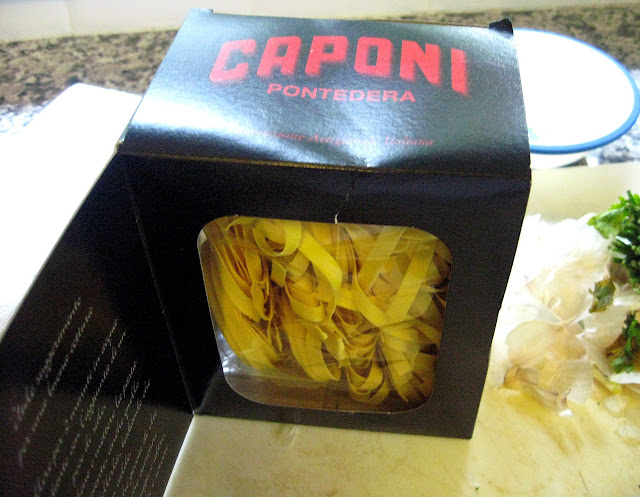
The frittata discussion on thekitchn.com has focused on pasta frittata, which from my understanding originated in Sicily (at least that's what my Sicilian-born Aunt has told me).  You can use any leftover pasta you have for this egg dish, but it should be plain pasta which you'll jazz up a bit before adding to your mixture, but it shouldn't be covered in tomato sauce, for example.  I prefer angel air (capellini) or small bucatini (spaghetti with a hole in the middle).   

IMG_3472.JPG

Here's the recipe:

Heat up a Teflon or stainless steel pan with about a tablespoon of olive oil.  Because you are going to have to put it in the oven to finish cooking you will need an oven proof pan. Place the left over pasta in your pan with a dash of olive (you're looking to re-heat the pasta). Once you have your pasta nice and hot add two-three dollops of fresh ricotta and a bit of salt and pepper.  Thoroughly mix the ingredients and remove from the pan.  Next, beat two eggs and two egg whites together with salt and pepper (you can of course use 4 whole eggs but I don't like the extra cholesterol and the flavor isn't compromised buy using some egg whites).  Place the pasta mixture back in the pan and pour the beaten eggs on top of the pasta.  Cook for about five minutes.  To finish cooking the top of the frittata, put it under the broiler but keep a close eye on the pan.  It is done when the frittata is browned nicely on top.  Sprinkle a generous amount of Parmigiano-Reggiano on the top if frittata and enjoy hot or cold.

IMG_3474.JPG

You can cut the frittata into slices and serve it with home-made roasted red pepper (recipe coming soon)!

IMG_3478.JPG

auntg.jpg

Is there any food better than pizza?  I'll go out on a limb and posit that pizza may be the best food type on the planet.  Pizza has everything: incredible texture, rich flavor, it's cheap to prepare, it's filling, and, in general, is one of the rare food types that contains both complexity and simplicity.

My beloved Aunt Giovanna (pictured on the left) owns a small wood fired bakery in Calabria and both the bread and pizza she bakes each day is the best I've tasted.  The bread is airy with incredible texture and flavor.  My favorite daily ritual, when in Calabria, is to head to the bakery early in the morning and enjoy a breakfast of fresh baked bread with extra virgin olive oil.  Aunt Giovanna's pizza contains the same properties of her bread, but with traditional Calabrian toppings (including olives, sardines, sea salt, basil, grated Pecorino Romano, and coarsely chopped plum tomatoes).  One of the wishes I have is to reproduce My aunt's pizza here in States, but it would be nearly impossible given that I lack the wood fired oven, high quality and ultra fine Italian flour, and the water from the region.  So, what's a pizza loving guy to do - adapt of course! 

In turn, here's my classic, homemade, pizza dough recipe (and, please, stop giving your hard earned cash to the local Pizza guy who drives the fancy imported car, you deserve better pizza!):

Ingredients

- 1 cup of warm water

- 1 tablespoon active dry yeast

- 3 cups of all-purpose (or unbleached) flour (you can also try Molino Caputo Tipo 00 Pizza Flour, imported from Naples, Italy)

- 1 tablespoon olive oil

- 1 teaspoon of salt

- 1 teaspoon of sugar

Mix the "wet ingredients", including the water and olive oil with the dry yeast (you're looking to dissolve the yeast).  Thereafter thoroughly mix the remaining dry ingredients and combine with the wet ingredients.  Place the mixture in a Kitchen Aid and mix for 2-3 minutes.  Remove the dough and knead with your hands for 4-5 minutes; you're looking for a fluffy/not too dense dough.  Remember to make sure your workspace has plenty of flour so the dough does not stick when kneading.  Form the dough into a ball and coat the exterior with a bit of olive oil and place in a large bowl, covering the bowl with a kitchen towel.  The dough should sit (I like to place the bowl in my oven, with no heat of course) for 30-45 minutes or until it doubles in size.     

Next, add a tablespoon of olive oil to a 10 by 15 inch cookie sheet and thoroughly coat the bottom with the oil. Take your dough and cut it in half and stretch the dough on your cookie sheet.  Add a bit more olive to the dough and spread it with your hands.  You're now ready add your toppings!

My favorite type of pizza is the "Pizza Margherita" which is comprised of tomato sauce, fresh mozzarella, and fresh basil.  Start with the sauce and then add shredded mozzarella. 

Preheat your over to 400 degrees F. and bake your pizza for 20-25 minutes depending on how thin or thick your dough is.  Once you're ready to remove the pizza lift one side of the dough and make sure you've got a nice brown color (the cheese should be bubbling as well).  After removing the pizza, add the hand shredded basil and a bit of olive oil.  If you have some Parmigiano-Reggiano you could also grate a bit ontop of the pizza!

Some of my other favorite toppings include:

1. Sautéed red onions, black pepper, and Parmigiano-Reggiano
2. Sautéed mushrooms and Parmigiano-Reggiano
3. Dried rosemary, seal salt, red pepper flakes, Parmigiano-Reggiano, and extra olive oil

Here are some other pizza recipes on the web:

cacio.jpgUnlike other parts of the world, Italy is blessed with varied micro-environments.  The micro-environments help preserve the varied culture, foods, and traditions of the 107 provinces or regions of Italy.  

Cheese is an ideal example of how each Italian region produces it's own version of a basic food commodity.  The region of Calabria, and the birthplace of my parents, produces some great cheeses, here are the top 8, in my view:

1. Pecorino.  Pecorino is the king of Southern Italian cheeses (specifically, Calabria).  Pecorino is made from sheep's milk and some varieties are aged (such as the type used for grating).  My grandafather produced a version of Pecorino with his 20 or so sheep.  Most folks know Percorino Romano which can be sharp and tangy.  Buy the imported kind.  

2. Provolone.  Another Calabrian favorite, Provolone can be eaten young or, like Pecorino, it can age and become more flavorful.  Provolone is readily available in the US and can be used in sandwiches and antipasti.  Buy the imported kind.

3. Caciocavallo.  The horse cheese - don't ask me why.  Caciocavallo is a cross between provolone and gouda.  Caciocavallo goes well with fruit or can be grated.  The pic above is of Caciocavallo.

4. Incanestrato.  This is the cheese you see hanging in a basket at Italian specialty shops.  Incanestrato is a spicy cheese and can be grateed (when aged) or eaten fresh.

5. Mozzarella.  The best Mozzarella in the world comes from Naples (sorry, Calabria).  Mozzarella is a semi-soft cheese made from water buffalo milk.  If you can find imported Mozzarella from Italy, it is a grand treat (especially when eaten raw with extra virgin olive oil, a ripe tomato, and some basel).  Fresh mozzarella can be found in the US and the quality has become quite good (but note the cheese is made with cow's milk).  Provola is similar to mozzarella, but is a bit firmer.

6. Ricotta.  Ricotta is one of my favorite cheeses. Ricotta means "cooked twice" or re-cook.  Ricotta is made with cow's milk and is very creamy and smooth.  Ricotta can be used as is with a drizzle of olive and spread on toast or you can combine linguine, olive oil, and freshly grated Parmigiano Reggiano to make one of the loveliest pasta dishes on the planet.  I don't recommend buying the supermarket variety (as it is tasteless and often lacks consistency and texture), rather go to a local Italian speciality shop and ask for the fresh variety.  My mother makes a version of Ricotta in her New Jersey kitchen, I'll post the recipe soon!  

7. Scamorza.  A cow's milk cheese shaped like a pear with a dark yellow exterior. Scamorza is a soft cheese and is usually eaten on its own.

8. Gorgonzola.  A blue cheese, but usually a bit milder and sweeter.  Gorgonzola does not contain a high level of salt and I especially enjoy it in salads.  Buy the imported kind.
bread_toasts.jpg
I've often mentioned here that one of my secrets to leading a happy life is by way of food.  Specifically, I enjoy the hundreds of Italian specialty products that are now available in the US, including panettone, polenta, anchovies, lupini beans, tuna in olive oil, arboria rice, etc.  My mother tells me that when she first came to the States in the 1970's she often could not find the products that were readily available in her native Calabria in the Northern New Jersey area (and if she did manage to find extra virgin olive oil or capers from Siciliy, the prices were often extremely high).  

Buying a few specialty items and having them readily available in your pantry can put a smile on your face each and every day.  Just imagine brewing a pot of rich, velvety, espresso in the morning or making a quick afternoon snack with bruschetta from Puglia.  Sure, good food costs a bit more than the latest Kraft special at your local supermarket, but at the end of the day spending more on special items can help bring a little happiness into your life.  Leading a good life is not about living like a peasant (and even Suzie Orman will tell you this!)  Here, then, are some of my favorite Italian specialty products:

Alps's Dry Sopressata. Sopressata is an Italian salame cured with spices and salt.  Importing pork from Italy is currently illegal, so you'll have to shop for US salame or take your own risk with Customs.  While the US versions aren't as good as the products from Italy, there are some good producers (especially coming out of California, I think Michael Chiarello sells some good salame via his shop NapaStyle). 

Boninelli Camomile Tea.  As far as calming and relaxing teas go, you can't beat a cup of Camomile.  This particular brand is whole leaf tea and imported from Italy (the flavor is outstanding) 

Caffe Kimbo White.  Unless you own an expensive burr grinder that can grind coffee beans at a very fine level, then you're best bet for espresso is to buy pre-ground cans.  One of my favorites (beyond Ily which tends to be expensive) is Caffe Kimbho White. 

Panettone.  Many Italians have this sugary bread on New Year's Eve, but it's also wonderful in the morning (toasted with butter) with a cup of coffee. You can also make French Toast with it!

Pastene Tuna in Olive Oil.  I've written about Italian tuna in olive oil in the past and the Pastene brand is my all time favorite. 

Lupini Beans.  My grandparents used to soak their own Lupini beans and they make a great snack.  

Instant Polenta.  I like making polenta in the winter with a bit of butter and lots of grated Parmigiano Reggiano (the king of cheeses). In general flour/wheat/corn products from Italy are of a superior quality and much better then you can find in the US (corn meal from Italy is no exception). 

Arborio Rice.  This is the rice used to make risotto.  The rice has a high starch content and it's what gives risotto it's creamy texture, if prepared correctly. 

Effervescent.  The Italian Version of Tums - it's wonderful!

Anchovies in oil.  You can use anchovies as a pizza topping, standalone with a piece of fresh bread, or for a salad dressing. 

Red Wine Vinegar.  There is a big difference between mass produced red wine vinegar and the specialty stuff. 

Capers.  The caper capital of the world is in Southern Italy. Capers can be used to make sauces for fish, chicken, veal, etc. 

Cookies and Biscotti. When it comes to cookies and pastries I don't think any region or country can top Italy, here are some of my favorite packed varieties.  Let the French keep their fancy pastries! 

Toast / Dried Breads.  I use these products to create appetizers with olives, salame, diced tomatoes, cheese, etc.


stovetop.jpgIn my view, espresso is the greatest representation of coffee on the planet.  I do enjoy a cup of French Press coffee each and every day but when I crave pure coffee taste, I brew up a batch of stovetop espresso.  True espresso aficionados head for a coffee bar or own their own equipment, but I can't justify both the cost of a high end espresso machine and grinder nor the daily expense of buying from a bar or café.  In turn, I've been using a 4 cup Bialetti stovetop espresso maker since my college days.  The stovetop machine is inexpensive (about $25.00) and produces a good cup of espresso (it's not a true representation of espresso but it's just fine given time to brew, cost, and clean up time).  Here's a quick description of how to use your Bialetti stovetop espresso maker:

- Unscrew the top portion of the espresso maker from the bottom portion and remove the metal filter/coffee ground holder.

- Fill the bottom of the unit with fresh, filtered, water (to the top of the bolt on the inside of the base).

- Fill the metal filter with ground espresso, making sure not to pack the grinds but simply filling the filter with enough ground coffee where a small mound is produced.

- Insert the metal filter into the base and tightly screw the top unit to the bottom portion of the maker.

- Place the maker on your stovetop and set on a low burn (it's important not to use a high flame).

You'll begin to hear the espresso come up in about 8-12 minutes depending on the size of the Bialetti unit you've purchased.  And you'll know that the espresso is done when no more espresso is coming out of the top unit (simply open the hatch and have a look inside).  I like to stir the espresso in the maker before serving. 

A note on espresso beans: like any type of coffee preparation the fresher the bean the better tasting your coffee will be.  So, you can buy beans and grind them per use, but it can be a labor intensive and messy affair (espresso beans need to be ground very fine).  If you're going to go the "grind every day method", you'll need a high end burr grinder.

My preference is to buy pre-ground espresso from Illy or Kimbo.  After all, espresso is meant to be a "quick" cup of coffee and not a labor intensive process.

xmas_food.jpg

"The significance of seven types of fish has yielded numerous theories, including a correspondence to the number of sacraments in the church, the seven days of creation, the seven virtues of Christian theology, and a reminder of the seven deadly sins. Families have their own interpretations, perhaps based on the region from which their ancestors came; and the number of dishes prepared can vary widely -- from 3, representing the number of wise men, to 13, signifying Jesus and the apostles."  

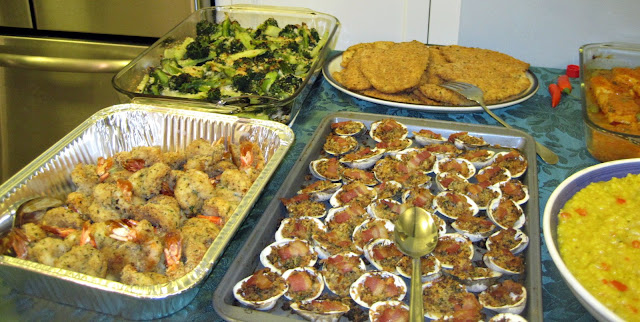
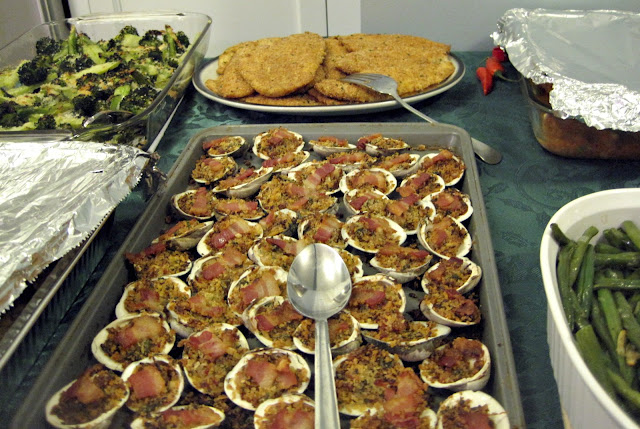
Like Laurino, I easily identify with eating fish during the holiday.  Ever since I can remember, my own Italian born parents/family have prepared the following type of fish on Christmas Eve:

1.  Baked shrimp with breadcrumbs.
2.  Bacala (or salt cod) mixed with olive oil, red onion, and parsley.
3.  Seafood salad with fresh sconciglio (or scungelli in Italian-American parlance), scallops, shrimp, calamari, celery, and onion.
4.  Baked flounder.
5.  Pasta with clam sauce.
6.  Raw clams.
7.  Shrimp cocktail.
8.  Fried calamari
(there is an 8th!).

In addition to the fish above, our family fries fresh zeppoli for Christmas Eve dinner.  There are also a few vegetables that make an appearance (baked broccoli with red pepper flakes, sautéed string beans with garlic, and a tossed salad), but they are really afterthoughts as the fish take center stage.

Laurino's article reminds me of an important personal finance tip: good food can quell material desire.  That is to say, if you fill your belly with good food on a consistent basis (along with a nice glass of wine) you are all of sudden really satisfied with life and can maybe even get away with not having a 42 inch flat screen TV, a gas guzzling SUV parked in the driveway, and the desire to head to the mall every weekend to buy stuff.  Try eating really well for a month and see if your life satisfaction level goes up!
sauce.JPGAlong with making our own wine, my family also cans fresh plum tomatoes every August.  The canned tomatoes are used mostly for making tomatoe sauce.  Canning your tomatoes produces a better tasting tomato sauce and, of course, saves you money over the long term (especially after you've owned the canning equipment for several years).  

Tomato canning should be done outdoors and with a large group (you'll want to set up stations to work efficiently).  Pasta with tomato sauce is probably one of the most popular dishes made at home in the US, so you'll definitely go through the jars you produce.  Let's get into the details:

grapes.jpgMy parents emigrated from Italy in the early to mid 1970's.  My father has the equivalent of a technical high school education and my mother finished her formal education in the 7th grade.  Yet my parents are one of the most financially savvy couples I know, often making smarter economic decisions then their US-born Boomer peers (with BAs and Master's Degrees in hand).  How do they do it, here's a quick list:

  • My parents spend much less then they make and live below their means. 
  • My parents do not eat out regularly, go to the movies, or buy fancy cars.
  • My parents are incredibly crafty and skilled: they can make their own home repairs, make their own food (including food from scratch and canned tomato sauce, pickled vegetables, homemade pasta, homemade wine, etc.), iron and repair their clothes, grow their own fruits and vegetables, landscape, etc.
  • My parents are always saving
  • My parents are not slaves to their paycheck, they have other forms of income.
  • My parents own a two-family home and are landlords
  • My parents do not panic and are level-headed about financial decisions and the economy, in general.
  • My parents own a single car
  • My parents live in a solid, blue collar, middle class neighborhood, in a comfortable but mid-sized home.
  • My parents do not feel a sense of entitlement from a material perspective. 

Mom and Dad also have their financial house in order because they realize that life is about being fulfilled and fulfillment doesn't come via a big screen TV or a fancy vacation home, it comes by way of:

  • Being with family and friends (my parents social network is very larger and they're always out visiting people or having folks over for dinner or espresso).
  • Traveling and vacationing in smart ways (my parents visit their families in Italy every summer and they don't pay for restaurants, hotel, or souvenirs).
  • Helping their immediate family (kids, brothers, fathers, etc.) with home renovation, home health care, decision making, etc.

So, if you're looking for your own personal finance bail out program just look at the habits of folks who didn't start with much and had to build wealth on their own terms.

25golden600_1.jpgOK, so I just updated my Facebook status to read, "Vincent is feeling Old World" and I need to explain the thinking behind the status:

I just finished watching Emanuele's Crialese's The Golden Door and it was truly magnificent.  Crialese tells the story of a Sicilian's family voyage to the US in the early 20th century.  The film is simplistic in story, but very rich in language and meaning.  The language component is remarkable in that Crialese manages to accurately reproduce the Calabrian/Sicilian dialect.  The film has rich dream sequences and true to life depictions of the immigrant experience at Ellis Island (psychological tests and all - looks like the Soviets weren't the only ones trying to create a perfect society).

The film had tremendous meaning to me as I'm a first generation American - my parent's immigrated to the US in the early 1970's (from the same environment that Crialese depicts in his film).  However, you don't need to be an immigrant's son to appreciate the film, so go out and find the DVD or purchase it on Amazon.

Here's the trailer:

eggplantgrilled.jpg
Like most Italian dishes in the US, Eggplant Parmigiano (American-style) is a gross misrepresentation of the authentic dish from the mother country.  Here's a simple Eggplant recipe that will give you the essence of eggplant and cheese:

  • 2 medium sized eggplants (they can be your typical supermarket type, but make sure they are free of any blemishes)
  • 1/2 cup of freshly grated Parmigiano-Reggiano (buy the real deal and grate it fresh before each use, pre-grating kills flavor)
  • 1/2 cup of extra virgin olive oil
  • 1 bunch of fresh parsley
  • salt and pepper

Cut the eggplant into circular (quarter inch) slices and toss in an extra large bowl with salt, pepper, and about 1/4 cup of olive oil (don't skimp on the salt and pepper).  Get your outdoor grill set up and produce a nice hot fire.  Grill the eggplant slices for 15-20 minutes in total, continually flipping to prevent burning; the trick is to nicely char the eggplant and produce a meaty/soft flesh. 

Begin layering the eggplant on a large serving fish, with each layer getting (in this order) a drizzle of olive oil, Parmigiano-Reggiano, finely diced parsley.  2 eggplants will probably yield 3-4 layers of eggplant. Enjoy hot or cold!

Every once in a while I have a realization about how well, for the most part, we live as American citizens.  Sure, I understand that the rich are getting richer and the poor are getting poorer (with the income gap growing each year) and that wages adjusted for inflation haven't grown in well over 30 years, but when compared to other countries living in the good old U--S--of--A ain't so bad.  I was reminded of my situation when I came across an old photo of my grandfather along with my father and uncle somewhere around 1961 or so:

italy2_vineyard.jpg

My grandfather Vincenzo is the dark skinned man in the middle while my father Tommaso is on the right; my uncle Francesco is to the left of my grandfather.  Keep in mind that my grandfather is probably around 35 in the photo, but he looks much older (a sign of the hard work and struggles of living in post War Italy).  The photo was taken in Calabria.

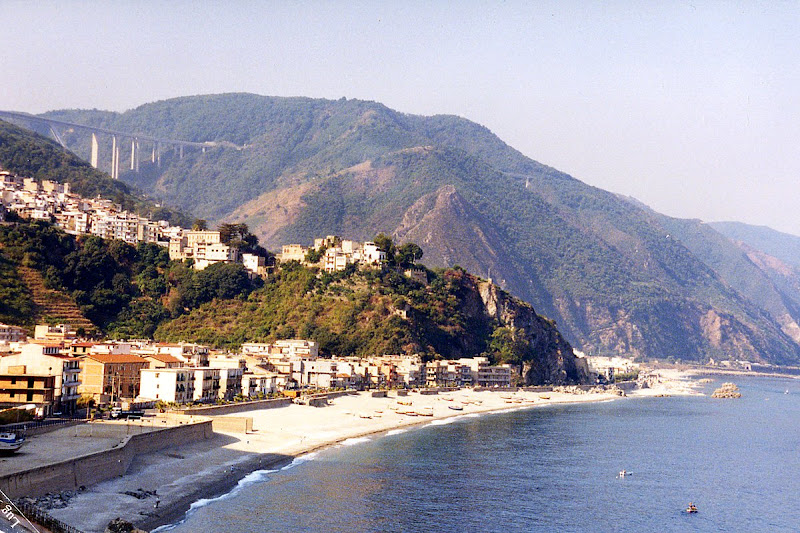
italy_wedding.jpgI recently went through a stack of old photos my mother had laying around and scanned a few to post. The photos are all taken in the Province of Calabria (Southern Italy)

Calabria was, and continues to be, a poor region (by northern Italian standards), however the people tend to lead happy lives.  From a culinary perspective, Calabrians tend to consume:

  • swordfish
  • sardines
  • cod (Baccalà)
  • pork
  • lamb
  • goat
  • eggplant
  • chili pepper
  • Lemon
  • Fruit (pears, peach, cactus pears, mulberry, etc.)

From a production and economic perspective, there's not much going on.  Tourism, however, is a key industry as is the production of pottery.

Photos of Calabria One

Photos of Calabria Two


I can't say enough about Mary Palmer's excellent cookbook, "Cucina Di Calabria" which, in an elegant manner, documents the many simple dishes of the most southern province of Italy (at least on the mainland). 

Palmer's recipes, like all Italian cookbooks published for a US audience, are a bit more on the "Italian-American" side, but she does hold true to many longstanding Calabrian dishes, including a few of my favorites.

  • Squash flower fritters
  • Roasted rabbit
  • Swordfish with onions and lemon
  • Pastina

In addition to the recipes in the book Palmer gives the reader a primer on espresso, wine, and even the history of Calabrian province. 

Welcome To Scordo.com

RSS feed graphic for scordo.com Subscribe to Scordo.com via RSS

Scordo.com is a weblog about living a practical life, including tips and thoughts on "how-to" and saving money. Scordo.com is run by Vince, a regular guy who, raised by immigrant (Italian) parents in the US, saw first hand how to live a frugal life, save money, and not live like everyone else. You can read more about me here.

Follow me on social network sites:

twitter.png
Twitter Scordo.com
facebook.png
Facebook Scordo.com
stumble.png
StumbleUpon Scordo.com

Contact me at:

email scordo.com: blog at scordo.com
Money Hackers Network
Frugal Hacks

Note: The views expressed herein are solely my own and should not be attributed to my employer in any way. This site is not maintained utilizing my employer's resources or on company time.