Recently in fish Category

 
(photo: ingredients for our mafalde fish pasta include wild or standard dandelion greens, garlic, onion, salmon, and grouper)

When I speak to my mother on the phone each night (yes, don't snicker there's no way around avoiding your Italian mother) she inevitably asks me, "so, what did you make for dinner?"  And while I often answer back with a southern Italian classic such as roasted eggplant and pasta XXX, there are nights when I mention an improvised dish inspired by what was available at the market. 

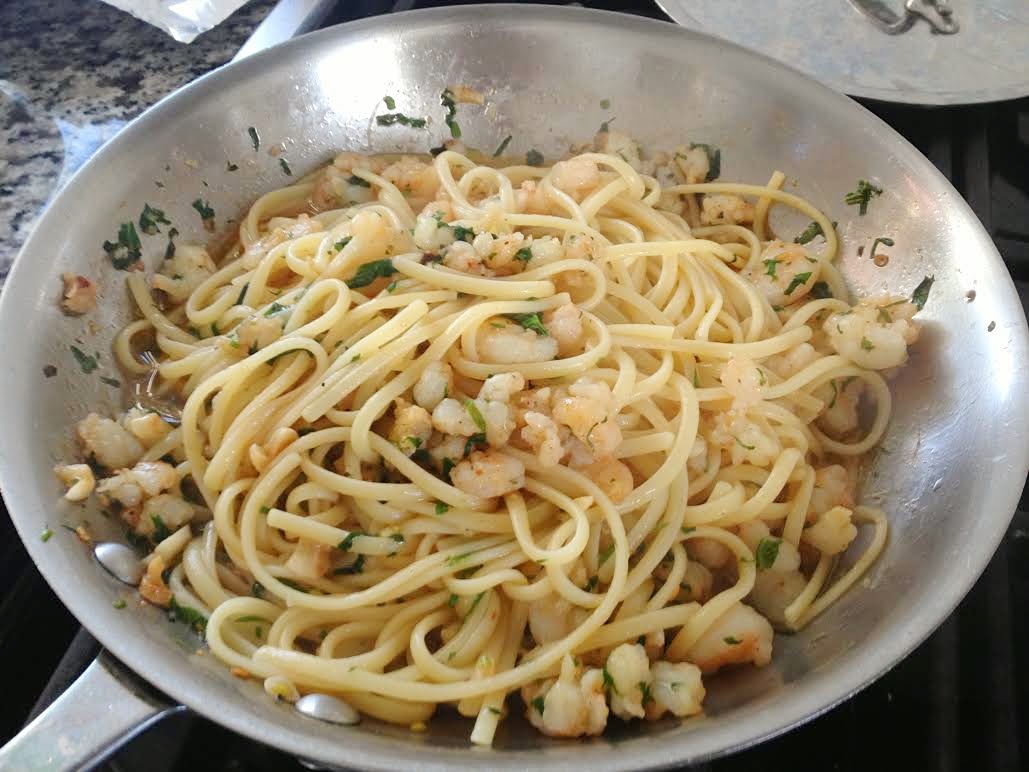
The other night I responded to my mother's question by stating that I cooked mafalde (a wide flat pasta shape with ruffled edges and shape #77 in the Scordo Pasta Challenge) with wild dandelion greens, onion, garlic, cubed salmon and black grouper, and extra virgin olive oil.  My mother's response went something like this, "ah, typical Vinny dish" meaning while I respect classic dishes I often improvise with weekday meals where I'm driven by 1., what's available at the market and in our pantry and 2., time! 
 
(photo: pesce stocco prepared with green olives, wedges of potatoes, and cod)

There are certain foods that stimulate the brain like a night in downtown Tokyo (with it's neon glitter and masses of humanity).  For us, stockfish or pesce stocco, the native Calabrian dish (specifically from the region around Cittanova) triggers tremendoud food memories of my grandmother Rosa and her basement kitchen in New Jersey.   

Pesce stocco, the dried not salted cod fish, is often confused with baccalà which is dried salted cod fish.  The Normans brought both variants of preserved cod fish to southern Italy by 1130 and they've remained popular food items to this day.
 
(photo: courtesy of JS, completed monkfish braciola)

One of our favorite TV food personalities is Jacques Pépin.   We enjoy and appreciate Jacques' culinary skills, love for European cuisine, and on-air modesty.  In fact, beyond the great cooks in our family, Jacques Pépin is the cook we've often tried to emulate (although our cuisine is firmly situated in the Italian tradition).

(photo: baked salmon with parsley, lemon juice, onion, and garlic).

This is a very simple recipe and takes advantage of a wonderful species of fish; that is, salmon.  If you can find, and afford, wild salmon then use it but well managed, farm raised, salmon has an appealing fatty component that most consumers enjoy over the wild variety.  Both farmed and wild salmon have challenges in relation to environmental issues, my advice is to do your research and think before you eat.  
(photo: oven roasted broccoli with baked flounder with breadcrumb topping)  

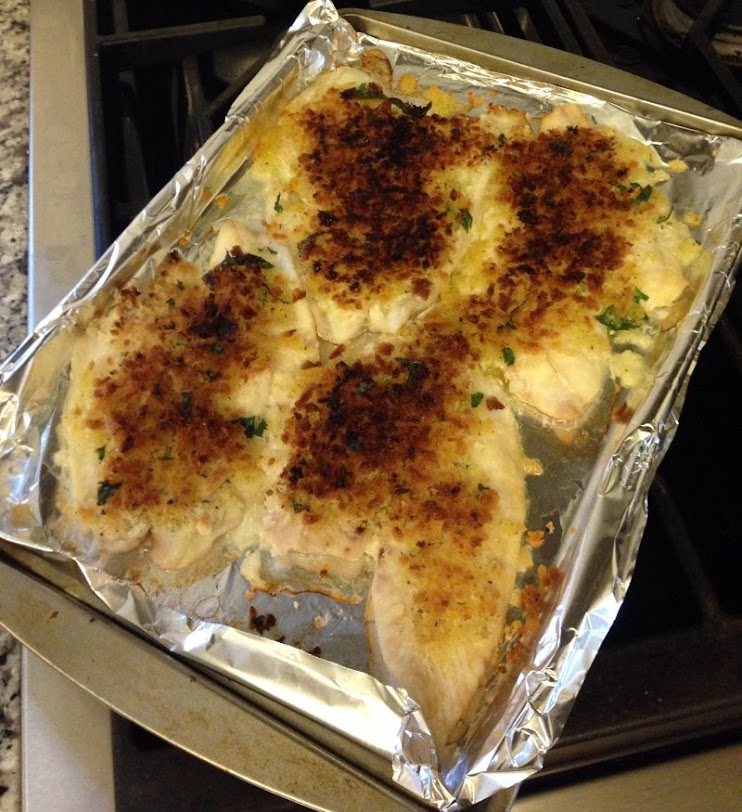
Like our recent orecchiette recipe this Italian style flounder recipe with roasted, spicy, brocolli can be prepared in under 30 minutes.  Moreover, the toppings used for both the fish and vegetable are nearly identical making this meal very easy to prepare.  A breadcrumb topping is a universal flavor enhancer that can be added to certain types of fish, meats, and vegetables which are lacking in inherent flavor (for example, zucchini, lemon sole, squash, etc.).  The key to the topping is that you make your own seasoned breadcrumbs and never purchase the pre-made variety.  If you're looking for a generic homemade breadcrumb recipe click here.  
 
(photo: note the wonderful golden brown color of the Colatura di Alici)

What takes 12 months to age and is extracted during an age old curing process, hint it's not a pork product (cue the Jeopardy music).  The answer is Colatura di Alici or anchovy syrup and is produced by Ittica Alimentare Salerno, located in the small village of Cetara, south of Naples, on the Amalfi coast.  Note, not all anchovy sauces or syrups age for 12 months; in fact, most only age about 6 months.  

Colatura di Alici is essentially an Italian fish sauce, though much richer and aromatic than typical Asian fish sauces, that is made by capturing anchovy juice during the curing process (there are no additives or preservatives, though salt is present given the curing process).  Colatura di Alici is Italy's answer to umami.
(photo: fried sardine fillets or sarde fritte with lemon wedges)

You really can't go wrong with fried fish and every important food culture in the word has variations of frying creatures from the sea in a lipid like oil.  We have two primary methods for frying one of the most common, and tastiest, Mediterranean fish; viz., sardines.  The two methods incluide:  whole (covered in an earlier recipe) or filleted and breaded.  Here's our recipe for fried sardine fillets
 
(photo: marinated anchovies in lemon juice, sea salt, garlic, black pepper, red pepper flake, and parsley).

Walk down any street in the seacoast town of Bagnara Calabra during the summer months and you'll encounter women dressed in black screaming their lungs out!  No, the ladies aren't auditioning for a new Jean-Paul Sartre play about existential angst, rather they're selling fish.  The ladies set up shop early in the morning, usually during outdoor "market day" on Tuesday and hold court over passers-by with screeching annunciations such as" "pesce fresche" (fresh fish), "alici" (anchovies), "anguilla" (eel).  

Click here for all of our fish recipes.

The female fish mongers usually carry a selection of 1-2 fish and the quality and freshness isn't up for discussion.  One can, of course, bargain with the ladies and if you're nice enough they'll even gut and descale your anchovies, as they did for me on an early August morning. 
(photo: mussels in spicy tomato wine sauce with parsley)

Mussels in red or white wine sauce is an Italian restaurant stand-by and one of my favorite seafood dishes.  The dish, however, can be easily ruined with foul seafood, thick sauces, and overcooking.  Mussels should not be rubbery, smell bad, or be covered in gelatinous "sauce."  Our version of mussels starts with the highest quality seafood you can find, so develop a relationship with a local shop and get to know the person serving you fish.  After the courting period, your fish person will reveal deep secrets about what you ought to buy and the meaning of life (and after a prolonged period of time you'll be an expert yourself and marry his first born female child).  In terms of the dish itself, keep the condiment or sauce very simple; for example, our sauce includes 6 ingredients (not including the mussels):


(photo: Fish Sauce dish with squid, scallops, and clams awaiting pasta)

Mention pasta to me and my mind drifts to fresh parsley, sliced garlic, dried red chillies, and high quality extra virgin olive oil.  In my view, the four aforementioned ingredients make up the world's best pasta sauce or condiment.  Sure, one can argue that a well executed tomato sauce (with or without braised meats) or even a sauce comprised of wild mushrooms would present great competition for parsley, garlic, hot pepper flakes, and olive oil but I'm not entirely convinced.

In the event that a worthy enough competitor arose to challenge the simple sauce above it would most likely be some variation of a fish sauce.  And any fish sauce, in my view, is an extension of parsley, garlic, red hot pepper flakes, and extra virgin olive oil; kind of like an older brother who has seen the world.  
(photo: farmed salmon with arugula salad)

Like many folks, one of my favorite fish on the planet is salmon.  The wild variety is divine however I do enjoy the high quality, and sustainable, farmed type which has a fattier texture and composition.   

I prepare salmon with our breadcrumb topping (see recipe here), olive oil, black pepper, and Kosher salt.  Thereafter, I use our trusty toaster oven and 10-15 minutes later I have perfectly cooked salmon (which is tender and never overcooked).

I like to pair salmon with a wild arugula salad and balsamic vinaigrette (see our recipe here) and brown rice.   

(photo: farmed salmon with breadcrumb topping)

(photo: arugula salad with balsamic vinaigrette )
 
(photo: an Italian tuna sandwich with tomato salad prepared with Pace da Poggio Etrusco extra virgin olive oil) 

As many of you know we keep plenty of high quality tuna in olive oil in our Italian pantry at all times!  And we usually prepare our tuna in two ways: 1. as a stand alone salad to be consumed with olives, cheese, and salumi or 2. as a simple Italian tuna sandwich combined with high quality bread.  

Ingredients:

Process:
(photo: clam sauce in pan including chopped clams, garlic, olive oil, red pepper, and parsley)

Why I Would Want to Be Reincarnated as Pasta and the Scordo Pasta Challenge.

In many Indian religious traditions, such as Hinduism, Jainism, and Sikhism, it is believed that when a human dies s/he is reborn into a new body.  You'll also find the same concept in Greek philosophical thought.  In my view, the idea of reincarnation sounds pretty damn good, but I'd certainly wouldn't want to come back as a living and breathing thing (certainly, not a human being with all of the complexities associated with consciousness and morality - one lifetime of figuring out what to believe in, what is right and wrong, and how one ought to live is plenty for me ).  Rather, I'd want to come back as a perfect representation of food (to serve a single function and then expire <read: be eaten!>).  Some of the examples I've been thinking about include the tomato, the fig, cured pork, and pasta.  Just think: coming back as a pasta shape to be made into a wonderful dish that is consumed by a hungry Italian who would be instantly satisfied (how's that for a fulfilling, yet short, existence).
(photo: some of the top tuna in olive oil brands: Cento, Pastene, Genova, and Ortiz, As do Mar)

Canned Tuna, Really?

As Suzzane Hamlin points out in her well written 1997 article for the New York Times, canned tuna is the best selling seafood in the country.  And your first reaction may be something akin to, "what, canned tuna, why don't American's buy fresh fish?"  Well, high quality fresh fish is, indeed, best but if you don't have access to a great fish market and regularly buy gifts for the owner and/or fishmonger, then your best bet is high quality canned fish.  I'm not talking about tasteless tuna packed in water, but tuna (or tonno in Italian) packed in oil, sardines that are oil or salt cured, canned oysters and clams, etc.  The aforementioned fish are prized in Italian and Spanish cultures, for example, and are often more desirable and expensive than fresh fish.

My favorite canned fish is tuna and I've been eating the Italian variety packed in olive oil since I can remember (in fact, it was the cause of much stress during lunch time at my grammar school and you can imagine the flack I received for eating "fancy food")  Tuna is a saltwater fish and the largest member of the mackerel family; the genus is Thunnus with 13 species or so. Most canned tuna is made from albacore, yellowfin, skipjack, and/or bluefin.
(photo: thanks to howtoeatlikeabird.com for providing the image)

Fresh fish requires very little manipulation and (quality) whole fish can be roasted in the oven with olive oil, Kosher salt, and freshly cracked pepper (you can stuff the cavity of the fish with parsley and lemon slices if you want to get fancy).  Firm fleshed fish like cod, red snapper, sole, halibut, and hake can also be steamed in a large pan with lemon juice, water, salt, and pepper. 

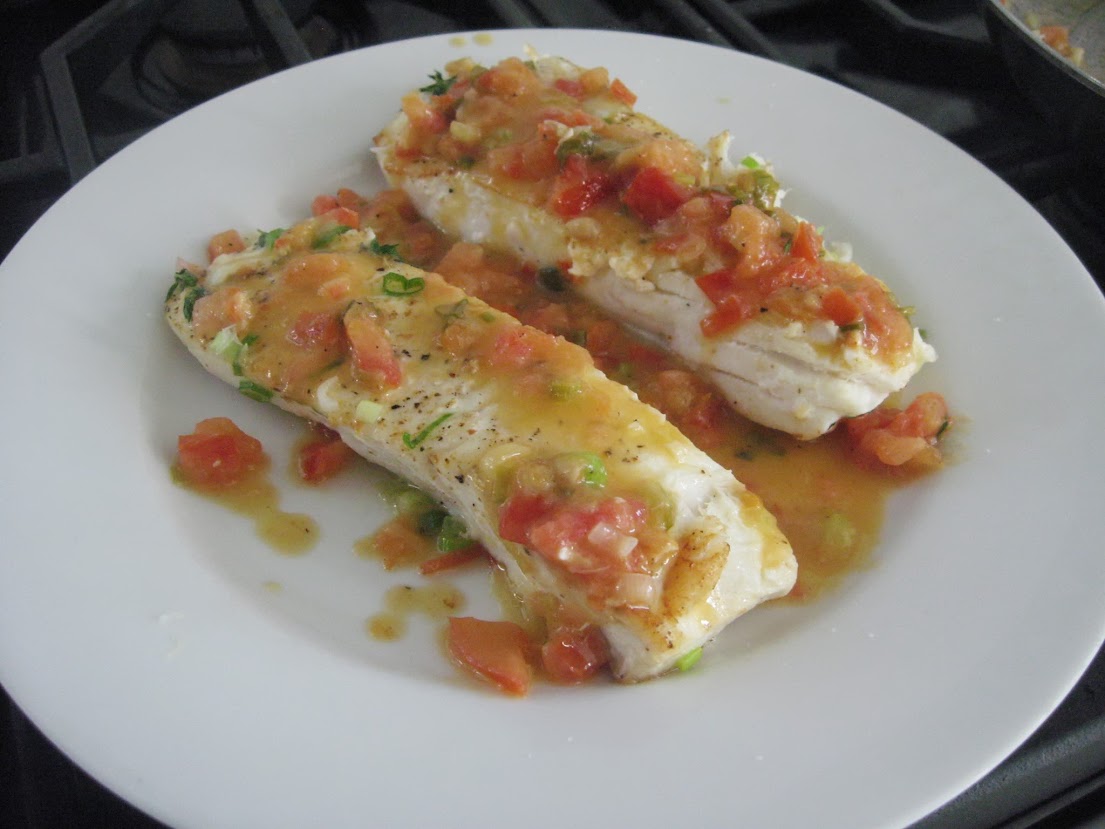
However, when I want to add a complimentary flavor to a firm white fish I almost invetibaly turn to tomatoes; specifically, a type of fresh passato that can be cooked with or separate from the fish.

Recently, I added tomato to a few pan seared scallops and the results were wonderful; namely, the contrast of sweet scallops with slightly acidic tomato tasted great.  Here's the quick recipe: 

Like many of the kitchen tools we recommend, we like foods and ingredients that are versatile and when it comes to fish there's no more versatile type than Hake.  Hake has a delicate and almost sweet flavor profile (a little bit like crab or lobster) with thick firm white meat. Hake can be grilled, baked, poached, roasted, or sautéed.

Hake is in the same family as cod and there are over 10 species.  In Europe, specifically in Basque country (Spain) there's a very famous Hake recipe called "Koskera" made with lots of vegetables including peas, asparagus, etc.
(photo: chickpea and scallion soup close up, can you tell who the star of this dish is?)

We had a simple, yet satisfying, dinner last night consisting of chickpea and scallion soup, Perch with savory Italian breadcrumbs, baked French fries, and arugula salad.

The breadcrumb mixture for the Perch consisted of:

  • lemon zest
  • homemade breadcrumbs (which are simply any plain bread we have around the house
  • parsley
  • dried oregano
  • freshly ground pepper
  • Kosher salt

(photo: the final dish including clams, parsley, garlic, olive oil, and red pepper flake)

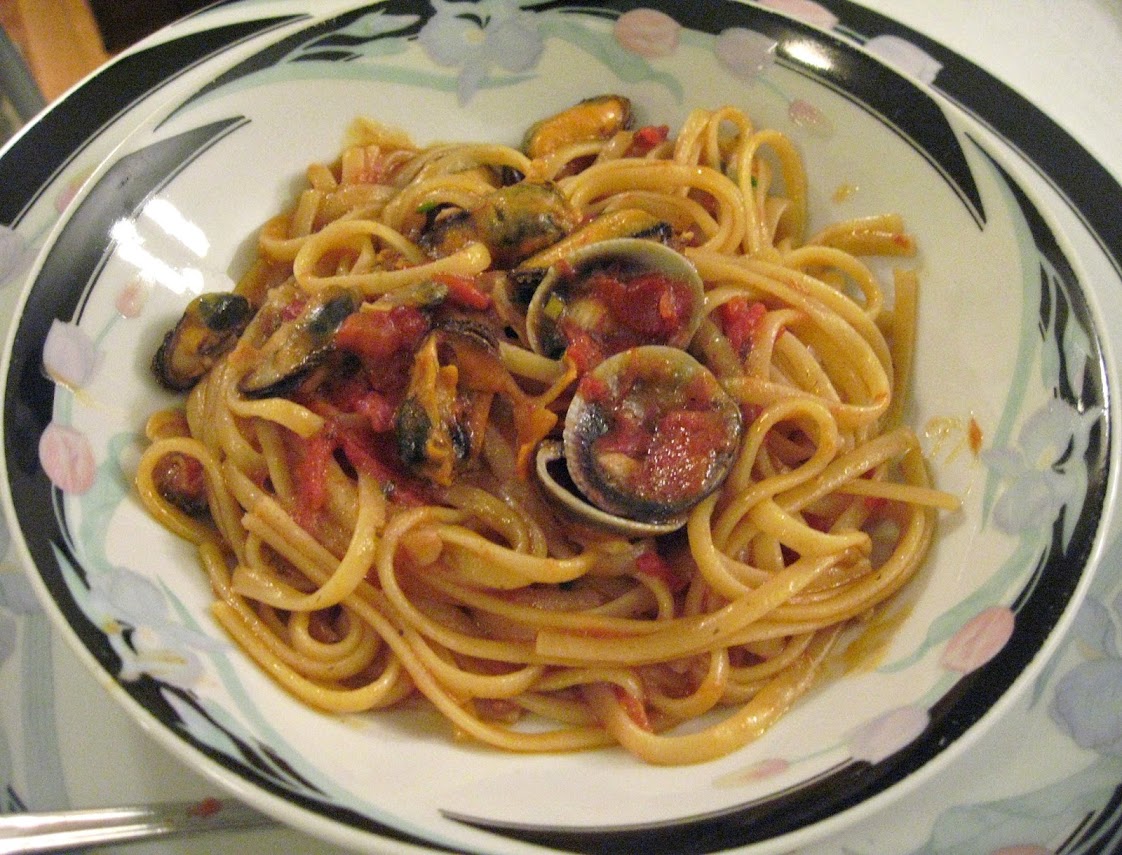
The following linguine with clam sauce recipe is basically pasta alio e olio (garlic and olive oil) with the addition of minced clams (I like the brand "Snows").  Note: you can use fresh clams but I recommend steaming the clams and shucking them, as opposed to making the sauce with whole clams (you can save a few of the clam shells as a garnish but who wants clam shells in their pasta bowl!).  You can also skip the butter, white wine, chicken stock, etc. as the ingredients are completely unnecessary and get in the way of the clams, garlic, and parsley which are the real stars in a great linguine with clam sauce dish.
We covered lots of food here on Scordo.com, including some not so healthy, everyday type of, dishes or recipes (salami, cheese, fried rice balls, etc.).  In turn, I've searched the archives of the site and found 9 healthy, and Italian inspired, recipes that you can make every week and feel both satisfied and good about what you're putting into your body (and remember "feeling satisfied" is the number one key to not gaining weight; more on this below).


One of the world's super fish in terms of nutritional content; mackerel is easy to prepare and super tasty, in my view.  The fish also leaves you feeling full and satisfied.

2. Minestrone


Minestrone is truly a peasant dish and in the old days it was made as a Spring soup with whatever vegetables the cook had in his or her home.  Romano beans have a nice amount of protein and if you sprinkle a bit of grated cheese prior to consuming you'll need to look hard to find a better soup.

3. Pesto Tuna Salad

tunapesto

Pesto tuna truly explodes with flavor and protein.  I like to consume it as a main course when I'm feeling lazy and don't want to do more than open up a can of good imported tuna in olive oil. Click here for my pesto recipe.


 roastedeggplant2 
We get a lot wrong about Italian food in the US and it often leads to a huge consumption of calories (to make up for lost flavor).  In my view, one of the keys to loosing weight (or more importantly not gaining it!) is eating super flavorful foods (if you do this you will not consume excess calories because you'll feel full and satisfied).  Try roasted eggplant parmigiana.
 
5. Pea Soup

peasoup

Another soup packed with flavor and protein that will leave you feeling full - pea soup deserves your attention!

6. Italian Beef Stew
 
IMG_5295[1]

Everyone should aim to limit their consumption of red meat in my view but if you like your beef than this Italian beef stew is a must try. 

7. Skirt Steak

  
OK, ok, I just told you to limit your beef consumption but I couldn't help include my Argentinian-Italian inspired skirt steak recipe (plus sides).

8. Wild Cod Risotto


Repeat after me, "risotto is not hard to prepare"  Good, now try my recipe and you'll be amazed at how quickly you can make wild cod risotto and feel as though you've eaten a dish made for a king.


meal

Wild salmon is a favorite of mine and I consume it once per week; in this iteration I paired it with couscous, rainbow chard, and a yogurt sauce.  Super good, clean tasting, and healthy.
(photo: linguine fine tossed with tomato sauce and grilled calamari)

I bet you thought the Scordo Pasta Challenge lost a bit of steam during the late summer!  You shouldn't, however, fear because we're back with shape #72A, the extraordinary linguine fine (a variation of the standard linguine shape that's quick cooking <4 minutes!> and wonderful with delicate sauces such as calamari in tomato sauce.).


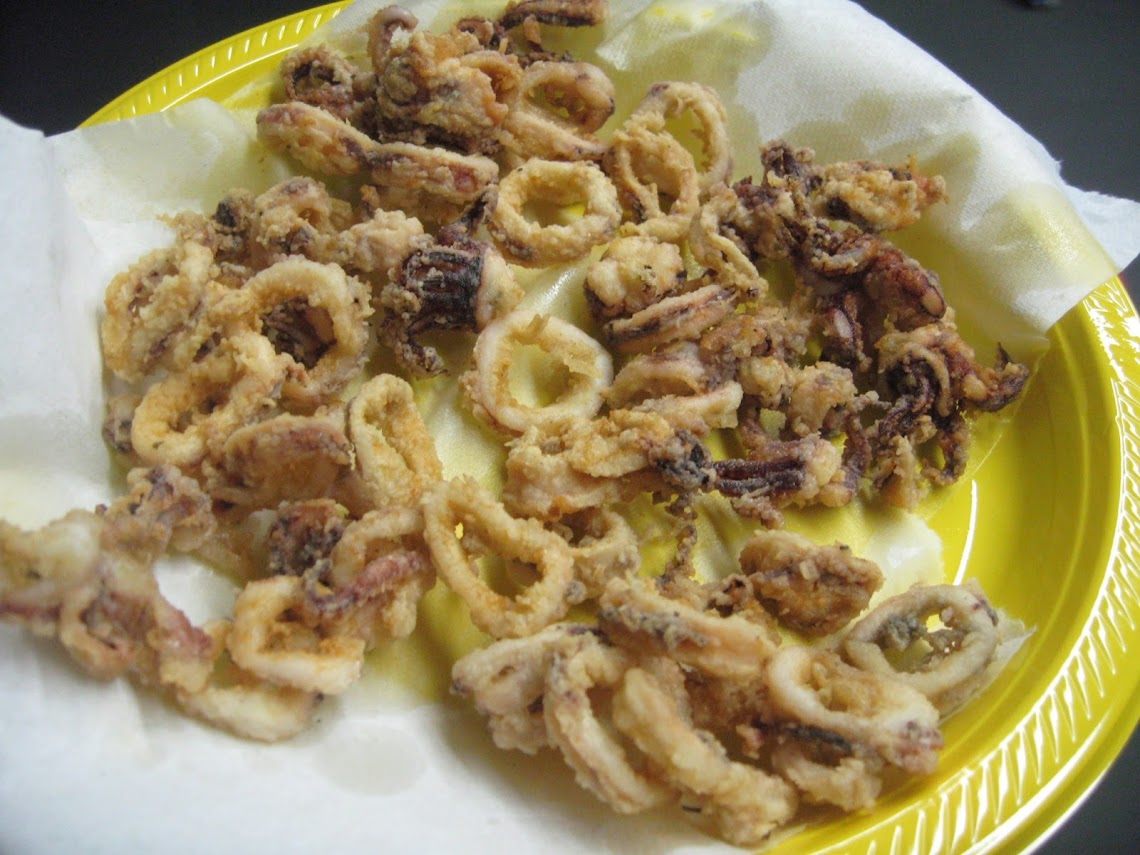
(photo: the calamari are first grilled and tossed with olive oil, parsley, and lemon juice)

(photo: the calamari are then stewed in tomato sauce for about 10 minutes)

(photo: just out of the oven baked mackerel)

I've written about my love of fish on multiple occasions here on Scordo.com, expounding on sardines, smelts, tuna, branzino, and salmon.  Yet I was sad to discover that while I hold all of the aforementioned fish in high esteem, I've only written about fresh mackerel on one other occassion (leaving one of my favorite fish with a single entry!).


(photo: baked mackerel with olive oil, salt, and pepper)

Mackerel is an ideal fish, in my view, because it has a wonderful texture, oily composition, and includes a meaty flavor profile which is akin to good canned tuna in olive oil.  The fish has a firm flesh and is extremely high in vitamin B 12, Omega 3 (a type of fatty acid), and Phosphatidylserine (linked to positive brain function, especially in folks suffering from dementia, for example).  In fact, Mackerel has twice the amount of Omega 3 than Salmon.  Mackerel is also low in mercury and the Atlantic variety is in good shape (from an over-fishing perspective).

I recently prepared a baked version of mackerel with a vinegar based sauce comprising of fresh mint, salt, pepper, red wine vinegar, dryed oregano, and garlic.


(photo: Calabrian vinegar and mint sauce referred to as Sermoglio)

My mother refers to the sauce as "sermoglio" and is typical in Calabria and used with many fish dishes, including swordfish. 

I served the mackerel with a split pea soup and sauteed broccoli rabe.
 

(photo: split pea soup with carrots, garlic, and fresh parsely)


(photo: brocolli rabe)


(photo: freshly made croutons to accompany the split pea soup)


(photo: vinegar and mint sauce with baked mackerel) 
meal
(photo: wild salmon, couscous, rainbow chard, and yogurt sauce)

There are some terrific fish on our little planet and while we are, indeed, overfishing our seas , I constantly marvel at how delicious certain varieties of aquatic vertebrates are, including mackerel, sardines, cod, swordfish, trout, branzino, striped bass, salmon, etc. (click on the links for a few fish recipes).  Much of the overfishing talk centers on Tuna, which is a large industry in Southern Italy, especially near Sicily (where the world's best tuna is caught and sold to the highest bidders).  The Mattanza (or spiritual fish harvest) take place in May and June and used to be centered on catching bluefin tuna with nets, but the tuna industry has become huge and the traditional manner of catching tuna has given way to massive harvests with modern techniques.   

rainbowchard
(photo: organic rainbow chard with garlic)

Salmon, of course, is not native to the waters surrounding Italy and consumption of salmon is low as opposed to other fish species in Italy, especially in relation to whitefish from the Mediterranean (e.g., seabass and seabream) to coldwater fish.  Salmon is consumed in some parts of northern Italy and in the larger cities (including smoked salmon on toast during the holiday months).

couscous
(photo: couscous with feta, cucumber, parsley, and lemon juice)

We consumed a 1 pound piece of wild salmon prepared with freshly ground pepper, kosher salt, olive oil, and lemon zest.  I baked the salmon at 350 degree for about 10-15 minutes.  I like to sear salmon to develop a crust and then place the fish in the oven to complete the cooking process, but who wants to spend time cleaning the stove (especially during the summer).

salmon
(photo: wild salmon with lemon zest)

I included a bowl of sautéed rainbow chard as well as a dish of couscous with garden cucumber, whole chickpeas, feta, and parsley.  The couscous was seasoned with fresh lemon juice, kosher salt, and freshly ground pepper.  We also had some Greek yogurt in the fridge so we made a quick sauce for fish with chopped basil, coriander, cummin, lime zest, sugar, Kosher salt, and freshly ground pepper.  Finally, we had some Jersey peaches which had been sitting in lemon juice. 

IMG_6314
(photo: Jersey peaches in lemon juice)

IMG_6311
(photo: a glass of white Lillet with ice, lime, and a piece of fresh Jersey peach)
Anchovies2

Like any controversial figure, the mighty anchovy is a highly misunderstood food type.  In the US, unfortunately, preserved anchovies have a bad reputation and are seen as a bad smelling (and overly salty) fish.  The reputation, however, is undeserved and the tiny dynamo of a fish should be consumed with pleasure and as often as possible!

sard
(photo: my favorite brand, Scalia; thanks to Dr. K for picture)

For most Italians, and especially the Italians of Southern Italy, the Acciughe (anchovies preserved in salt) and alici (fresh anchovies) are a staple food.  Anchovies are often eaten on toast with good olive oil, fried, baked, added to sauces, etc.  Anchovies are a wonder food and high in antioxidants and low in mercury.  The best anchovies come from the Mediterranean (near Sicily) and the North Atlantic.  You can find Anchovies packed in salt or oil or sold in good markets by the pound (fresh or salted, per the above picture).  

Salad Nicoise_anchovy

I usually serve Anchovies in an impromptu weekend lunch, alongside a salad of tomatoes with basil and red onion, good bread, oil cured olives, and a bit of cheese and salumi (you could also include anchovies in a salad Nicoise).  If you're feeling particularly adventurous and want to de-head, gut, and remove backbones, you can deep fry a batch of fresh anchovies and let your significant other do the clean-up!  Fried anchovies are particularly good with fresh lemon and a very cold glass of beer / lager or white wine (here's my post on fried sardines and smelts).    

scordo on twitter scordo.com on facebook become a fan stumble scordo rss feed for scordo

Scordo.com Free Newsletter - Sign Up Today
* indicates required

BECOME A FAN OF SCORDO ON FACEBOOK:


GOOD READING:


MORE ABOUT US:


FEATURED STORIES:


Homemade Sun Dried Tomatoes in Olive Oil Recipe
Don't settle for the canned varieties found at supermarkets; find out how to make your own [+]


How to Make Authentic Tomato Sauce
This is the authentic Scordo family recipe - straight from Calabria. You'll be amazed at how simple the recipe is to make [+]


Guide to Italian Extra Virgin Olive Oil
My grandfather produced his own extra virgin olive oil in Italy and I've put together an olive oil buying guide just for you [+]


How to Make Rice Balls or Arancini At Home
The ultimate Italian street food - these fried treats are great for the holidays or for any lunch or dinner; try them with your kids [+]


Guide to Making Espresso at Home
Making good espresso at home isn't easy but once you master a few easy tips you'll never settle for the junk served at most cafes in the US, including Starbucks [+]


Why You Should Not Eat Out
My argument on why eating out doesn't make sense [+]


Guide to Italian Meats: Salame, Capicola, Prosciutto, etc.
Learn all about the great "deli meats" and authentic cured specialties from Italy [+]


Scordo Pizza Recipe
Who doesn't love pizza, but did you know it's real easy to make at home [+]


English to Italian Translation Powered by
Grab this Widget


SPONSORS, AFFILIATES, SUPPORTERS:

Italian Food and Life Site


mymelange
Independent Budget Backpacking Travel Tips

Advertise with Scordo.com


DONATE AND HELP KEEP US GOING:


Feeling generous and want to help keep Scordo.com producing fresh and original content?


QUESTIONS, IDEAS, TIPS:


email scordo.com: blog at scordo.com


Note: The views expressed herein are solely my own and should not be attributed to my employer in any way. This site is not maintained utilizing my employer's resources or on company time.


RSS feed graphic for scordo.com Subscribe to Scordo.com via RSSBlog Flux Directory