Recently in Italy Category

pastascale

I woke up this morning and had a revelation!  Well, it wasn't exactly a revelation of grand proportion like when Einstein told Newton he was all wrong about the physical world back in the early twentieth century rather my revelation was epicurean and it concerned my favorite food on the planet; namely, Pasta!  

Like Julie Powell's idea of cooking through all the recipes in Julie Child's Mastering the Art of French Cooking, I wondered this morning if it was possible for one individual to prepare and consume every conceivable (and available) commercial pasta shape ever produced?    

A quick search reveals well over 150 (158 to be exact) pasta shapes - click here for a visual look at most of these shapes.  Attempting to cook and consume one's way through 150+ pasta shapes would be quite the challenge; after all, one couldn't make a different pasta shape each night because of issues with weight and general diet (and this is coming from an Italian-American with the metabolism of a humming bird).  But what if we took the Italian-American tradition (at least the one I grew up with in Northern New Jersey) of only consuming a starter (or primo) portion of pasta every Thursday and Sunday night?  If two unique pasta shapes were cooked twice a week then one could get through about 100 pasta shapes in one year and 158 shapes in about one and half years (this is assuming the pasta shape world ends at about 158 unique shapes).   Thus, one could complete the above project in about 547 days!  

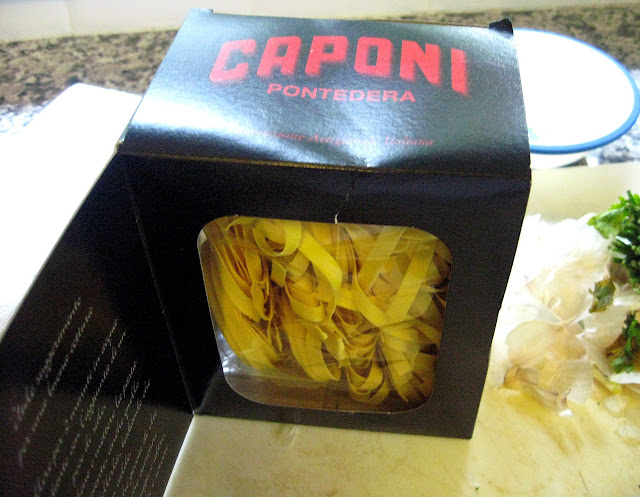
Today is, indeed, Thursday and I'm eating pasta tonight!  The shape will be Trenne and the sauce will be comprised of peas, butter, olive oil, red onion, garlic, and grated Grana Padano.  

So, let the challenge begin!  I'll check off "Trenne" tomorrow from the list of 158 pastas (see below) and in turn reach my goal by, roughly, September 9, 2012.

IMG_5310
(Little Tommaso says, "Dad, you can do it!"  Big Tommaso is a little more skeptical and says, "You're crazy!") 

I've set up some rules and guidelines for myself:

1. Any claims of consuming a specific shape will be accompanied by photos of me in my home kitchen, along with said pasta shape in at least one photo!  Ordering a pasta shape at a restaurant will not count.  

2. I hope to include a recipe with each pasta dish, but I don't expect to be able to come up with 158 unique sauces (don't push your luck).

3. There may be times when said pasta shape will be difficult to secure, in that case I may need to either, 1. get on a plane to Italy and conduct a search for the missing pasta shape 2. make the shape at home (if possible) or 3. do a pasta shape substitution.  I'm hoping to avoid #1 and #3!

That's it; if you can think of another guideline just let me know and I'll include it above.  I'll be updating the list below by simply adding the date of pasta consumption and a strikethrough on the given pasta shape (as well as a link).  I'll be posting individual entries with pasta photo and recipe (hopefully each Friday and Monday).  

Oh, if you'd like to contribute photos of you and your family cooking you favorite pasta shape then please send pics via email and I'll be sure to post them!

List of 158 Pasta Shapes (let me know if I've missed any):
 
1. Acini di pepe
2. Agnolotti
3. Alfabeto
4. Anelli
5. Anellini
6. Barbina
7. Bavette
8. Bavettine
9. Bucatini
10. Calamarata
11. Calamaretti
12. Campanelle
13. Cannelloni
14. Capelli d'angelo
15. Capellini
16. Capunti
17. Casarecce
18. Casoncelli or casonsèi
19. Casunziei
20. Cavatappi
21. Cavatelli
22. Cellentani
23. Cencioni
24. Chifferi
25. Ciriole
26. Conchiglie
27. Conchigliette
28. Conchiglioni
29. Corallini
30. Corzetti
31. Couscous
32. Creste di galli
33. Croxetti
34. Ditali
35. Ditalini
36. Ditalini
37. Elicoidali
38. Fagioloni
39. Fagottini
40. Fantolioni
41. Farfalle
42. Farfalline
43. Farfalloni
44. Fedelini
45. Fettuccine
46. Fettuce 
47. Fettucelle
48. Fideos
49. Fideuà
50. Filini
51. Fiorentine
52. Fiori
53. Foglie d'ulivo
54. Fregula
55. Funghini
56. Fusilli
57. Fusilli Bucati
58. Fusilli lunghi
59. Garganelli
60. Gemelli
61. Gigli
62. Gnocchi
63. Gomito
64. Gramigna
65. Israeli couscous
66. Lagane
67. Lanterne
68. Lasagne
69. Lasagnette
70. Lasagnotte
71. Linguettine
72. Linguine
73. Lumache
74. Lumaconi
75. Macaroni
76. Maccheroncelli
77. Mafalde
78. Mafaldine
79. Maltagliati
80. Maltagliati
81. Mandala
82. Manicotti
83. Marille
84. Marziani
85. Mezzani pasta
86. Mezze Penne
87. Mezzelune
88. Mezzi Bombardoni
89. Mostaccioli
90. Occhi di Lupo
91. Occhi di pernice
92. Orecchiette
93. Orzo
94. Paccheri
95. Pagliaioni
96. Pappardelle
97. Passatelli
98. Pasta al ceppo
99. Pastina
100. Pearl Pasta
101. Penne
102. Penne lisce
103. Penne rigate
104. Penne Zita
105. Pennette
106. Pennoni
107. Perciatelli
108. Pici
109. Pillus
110. Pipe
111. Pizzoccheri
112. Quadrefiore
113. Quadrettini
114. Radiatore
115. Ravioli
116. Ricciolini
117. Ricciutelle
118. Rigatoncini
119. Rigatoni
120. Risi
121. Rotelle
122. Rotini
123. Sacchettini
124. Sacchettoni
125. Sagnarelli
126. Sagne 'ncannulate
127. Scialatelli of Scilatielli
128. Seme di melone
129. Spaghetti
130. Spaghetti alla chitarra
131. Spaghettini
132. Spaghettoni
133. Spätzle
134. Spirali
135. Spiralini
136. Stelle 
137. Stelline
138. Stortini
139. Stringozzi
140. Strozzapreti
141. Tagliatelle
142. Taglierini
143. Tarhana
144. Torchio
145. Tortellini
146. Tortelloni
147. Tortiglioni
148. Trenette
149. Trenne
150. Trennette
151. Tripoline
152. Trofie[2]
153. Tuffoli
154. Vermicelli
155. Vermicelloni
156. Ziti
157. Zitoni
Related Posts with Thumbnails
vineyards1
(photo: Nonno Scordo's vineyard overlooking the sea near Bagnara Calabra) 

Ciro is the most well known Calabrian wine here in the US and it's for good reason.  The region of Ciro is situated on the eastern tip of Calabria, about a 4 hour trip north from Reggio Calabria.   Ciro is designated a DOC wine or Denominazione di Origine Controllata, DOC is basically a fancy label meaning that any particular wine from an officially recognized region of Italy must be produced in specific well-defined regions, according to specific rules designed to preserve the traditional wine-making practices of the individual regions.  Other, more famous, DOC wine regions include Chianti Classico and Barolo.  There are three other labels you may see on wine bottles from Italy including Vino Da Tavola (table wine) , Vino a Indicazione Geografica (IGT), and Vino a Denominazione di Origine Controllata e Garantita (DOCG) - just think of all these classifications as standards for wine making (with DOCG being the strictest standard).  Here's a nice map that points out both DOC and DOCG regions in Calabria.

Back to Ciro, there are three standard types produced including a rosso (or red) made from the Gaglioppo grape, rosato (rose), and biano (white) made from the Greco grape.  Some rosso wines also contain a mixture of Greco and trebbiano white grapes, but it must be less than 5 percent to meet DOC standards.  Like most wines produced throughout the world, Ciro is meant to be consumed 3-4 years after production, but some Ciro Rosso can be aged 10+ years.  

vineyards2
(photo: Nonno Latella and my father at the vineyard)

As the UndertheGrapeTree states,  The Gaglioppo grape is usually left for blending, giving its blend a softer edge. Ciro Rosso is like Beaujolais or red Bourgogne (both from Fance), with soft red fruit, allspice and cinnamon flavors, notes of walnuts, and a bright, acidic stricture that matches up nicely with spicy meats, stuffed peppers, and pizza, lamb, and even fish like swordfish and sardine.  If you've come across any Calabrian wines in your local wine shop, it's probably Librandi Ciro Rosso, which is a fine representation of the Gaglioppo grape (read on for a great, exclusive offer on Calabrian wines from Winechateau) 

Another DOC zone in Calabria is Melissa (about a 30 minutes drive south of Ciro).  The region of Melissa produces Ciro-like wines (mostly from Gaglioppo and Greco Nero) but doesn't have the same reputation (at least outside of Calabria) as Ciro.   

Calabria has 12 DOC regions and they include:

- Ciro
- Bianco
- Bivongi
- Donnici
- Isola di Capo Rizzuto
- Lamezia Terme
- Pollino
- San Vito di Luzzi
- Savuto
- Scavigna
- Verbicaro
- Melissa

There are other wine producing regions in Calabria, but they all have the lesser IGT label which, in my view, doesn't take away from the quality of the wine produced in these areas.  For example, near my parents place of birth in the province of Reggio Calabria there are many IGT zones including Arghillà, Costa Viola, Locride, Palizzi, Pellaro, and Scilla   Given the intense regionalization in all of Italy it's common for locals to drink wines only from their specific micro-regions (hence the wine world's golden rule of drinking wines associated with a given regional cuisine; this rule is flexible, but I think drinking wines from the Costa Viola region along the western Calabria seacost with Swordfish and goat dishes for example is a great way to map foods with wine).Made In Italy also has a nice overview of wines from Calabria as well as Italian Made

Finally, in honor of Calabrian wines, I've partnered with the good folks at Winechateau.com to offer free shipping on any wine in their online shop to one lucky Scordo.com reader, including some great Calabrian wines such as Librandi Ciro Duca Sanfelice Riserva and the Librandi Ciro Rosso Classico

Here's what you'll need to do:

-  1. leave a comment on your favorite Italian wine (doesn't need to be from Calabria)  and 2. sign up for the Scordo Facebook Fan page or Scordo.com newsletter, it doesn't need to be both).  If you've done both already, then I'll ask you if you can please re-tweet the article on Twitter and include the article URL: http://bit.ly/ae4RqH and @scordo in your tweet)
 
- Only one entry per person please and only to US residents.

- The contest is open until 12 midnight on 3/13 and a single random user will be picked via Random.org.  The winner will be announced immediately on Twitter (so please follow me) and on Scordo.com by 5PM on Monday, 3/15.

- Please use a valid email address when leaving a comment so I can contact you just in case you're the lucky winner (I'll need your email address to email you the free shipping code). 

- You'll select and order your wine and enter your free shipping code at http://www.winechateau.com/ .  Wine Chateau reserves the right to limit the amount of bottles ordered via the free shipping code promotion. 

Related Posts with Thumbnails
italy2_vineyard 
(photo: the backdrop isn't New Jersey but rather Nonno Scordo's farmland in Calabria.  Nonno is in the center while my father is on the right and my Uncle is positioned on the left.  All three men are/were excellent pasta eaters and the photo above is one of my favorites <as my father often says, life in Post War southern Italy was difficult, but the quality of life, including food, was wonderful.>) 

Growing up in Northern NJ on a densely packed block full of immigrant families (mostly from Calabria) both Thursday and Sunday were special days.  That is to say, for many of the families on our tiny New Jersey block from Pellegrina, Bagnara Calabra, Grimoldo, and Ceramida Thursday and Sunday were designated as pasta days!  My mother, from Pellegrina, would often make pasta with Tomato sauce on Sunday and then a more exotic pasta condiment on Thursday (maybe a ragu of rabbit with Pappardelle, for example).  And I'm convinced our New Jersey block had a higher relative humidity on the aforementioned days because of of all the pots of boiling water going at once (ever notice why Italian kids have great skin!).  

Here, then, are eight pasta tips gathered from the many Calabrian women on Oregon Avenue (from, say, 1979-1994) in New Jersey.  Oh, enjoy your pasta today!

1. Buy the best possible dry pasta on the market.  Like fine dress shoes, you get what you pay for in terms of dry pasta.  Good dry pasta usually comes from Italy and is made with 100% semolina (Durham wheat) flour and spring water.  The better Italian products are also made by hand. De Cecco is a fine readily available pasta brand.  Rustichella d'Abruzzo uses slightly better ingredients for a nicer end product and is usually sold at Italian specialty shops. 

2. Use lots of fresh boiling water.  I have a dedicated pot when it comes to boiling water for pasta and I always overcompensate when it comes to the amount of water needed.  You want lots of water so that the pasta doesn't stick during the cooking process. 

3. Salt the water right before adding your pasta and as soon as you have a good, rolling, boil going.  Not including a healthy amount salt in your pasta water is the equivalent of eating a tomato without salt, so please use plenty of it!

4. Once you add your dry pasta to the pot stir often and don't walk away from the pot.  You don't need to nurse a pot of cooking pasta like risotto, but you should certainly stir every 2-3 minutes.

5. Most brands include cooking times depending on pasta shapes so it's important to time when you add your pasta to the boiling water.  Al dente (or to the tooth) is the golden rule, but I know plenty of dyed-in-the-wool northern and southern Italians who go well beyond the al dente cooking time period,  Nonno Scordo, for example, preferred rigatoni and penne at 1-3 minutes over al dente.  Like finding your niche in the wine world, you should cook pasta to your taste, but please don't turn it into mush (just keep in mind there should be some give when chewing pasta).  Finally don't add olive oil (or any oil for that matter) to your pot.

6. Add your drained pasta to your hot pan containing the condiment or sauce and never vice versa.  Adding your pasta to the hot pan containing the sauce will allow you to cook through the pasta for an extra 30-90 seconds.  You should also save some of the starchy pasta water just in case you're looking to change the consistency of your sauce.  You don't always need to add pasta water to your sauce, as many FoodTV personalities do.  Moreover, do not rinse your pasta after the cooking process (again because the pasta contains a coating of starch that allows your condiment to adhere to the pasta).

7. Finish your pasta with a bit of olive oil (I almost always add a bit of olive oil to my completed pasta dish).  The oil gives your pasta dish an additional fresh oil component and just finishes the dish.  You can add grated cheese to your pasta during the mixing of pasta and sauce in your pan and then again at the table.  You can use Parmigiano-Reggiano, Grana Pa'dano (a great substitute for the more expensive Parmigiano-Reggiano) , or Pecorino Romano (note Pecorino Romano is not a substitute for Parmigiano-Reggiano)

8. Watch your portions.  Most Italians have pasta as a starter for any given dinner or lunch and not as the main dish.  A quarter pound of pasta for two people, for example, is deal.   

Related Posts with Thumbnails
bagnara
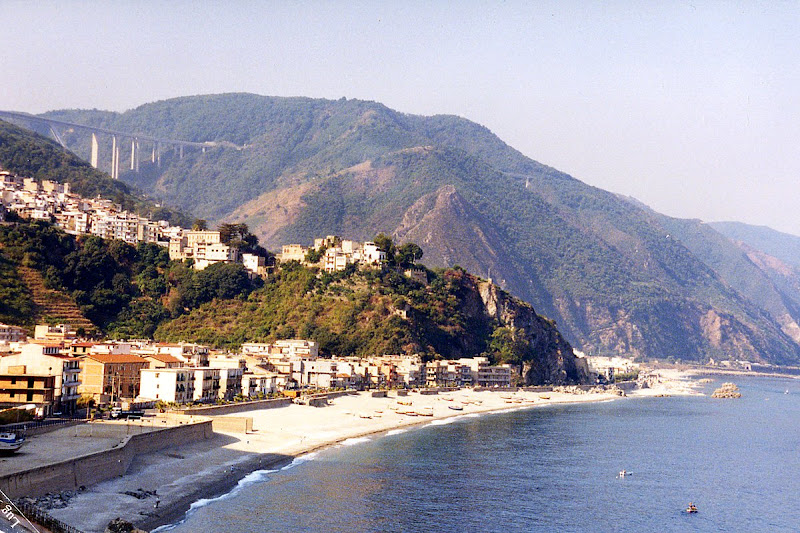
(photo: the picture is taken from Pellegrina looking down on the seacost <Mediterranean Sea> town of Bagnara Calabra.)

As many of you know, my parents (and extended family) were all born in the southern Italian province of Calabria (specifically in a tiny hilltop village called Pellegrina).  The region of Calabria is comprised of mountains, multiple seas, farms, small and large towns, and even a few urban centers.  The history of Calabria is tumultuous and is part of why the Italian region has been so underrepresented in the Italian storybook (afterall, you don't hear tourists talking about their trip to Reggio or their recent wine and food tasting tour of the Calabrian country side <this is changing, however, and the secret may be getting out!>).  

pellegrina
(photo: the village of Pellegrina and associated villages.)

If you're interested in reading more about Calabria you can quickly read a history of Calabria via Michelle from Bleeding Espresso.  Michelle also has a great book resource page where she highlights books about the Calabrian region (make sure to sort the books by "southern Italy").

In terms of an accessible cookbook on the food of Calabria, I really like Mary Palmer's Cucina di Calabria.  Not only is Palmer's book full of easy recipes, there's also some great content on the history of Calabria, the story of immigration, and the beverages and wine of the region. 
Related Posts with Thumbnails
(Photo: Espresso machine meets the Star Trek Enterprise)

I was a big fan of the Sci-Fi series Battlestar Galactica.  Battlestar, as it was known to series insiders, was serious science fiction that was elegantly produced with big ideas, a great script, and blissful (almost film noir) type visuals.  The central plot of Battlestar centered on man made machines called Cylons that evolved into sentient and free will-laden beings that ultimately destroy all of humanity (this is why we shouldn't train primates) except, of course, for a few interstellar space ships and it's human inhabitants (I forget how much of humanity was left, but I think it was under 500 and it didn't include Joan Rivers). 
 
The very first iterations of the Cylon machines were robot-looking with lots of shiny stainless steel, curved surfaces, and proportions that weren't exactly right (kind of like an Audi TT).  The Cylons evolved and eventually came to look like humans, but it's the first iteration of the Cylons that I immediately thought of when I layed eyes on the MyPressi Twist portable espresso machine by Espressi, Inc.  No, I didn't think the MyPressi espresso machine was going to obliterate New Jersey and most of my Italian friends and family, but the large circular head and sleek curved handle somewhat mirrored the Cylons or better yet the StarTrek Generations version of the space ship Enterprise.
 
I can assure you after using the MyPressi Twist for a few weeks that the machine has only one major existential goal, namely, to produce world class espresso at home.  And produce quality espresso the Twist surely does!


(photo: packaging is nice, but Handpresso had nicer packaging materials ala Apple)

Here are the produict details: The MyPressi Twist is comprised of aluminum (I'm making an assumption) and plastic components and weighs about 38 ounces (or a little over 1 kilogram).   The unit measures in at less than 11 inches in length and is capable of producing 135 psi or 35 bars of pressure (this is important).  The unit comes with a ton of accessories including a carrying case, tamper, drip catcher coaster, o-ring replacement kit, and baskets for both fine espresso and more coarse espresso used in a stovetop espresso unit like the Bialetti.  The pressure is derived from N20 gas cartridges which are recyclable.  One gas cartridge will produce 8 single or 4 double shots of espresso.   The Twist handles freshly ground espresso or ESE pods and a typical extraction lasts about 25 seconds.  The unit requires hot, boiling, water.  The unit retails for $169.00 (you can find it for $149.00 at OpenSky and help support Scordo.com!) and comes with 5 N2O cartridges; you can purchase additional cartridges for $15.84 (24 pack). 
 
(photo: all the parts!)


(photo: group head)


(photo: closeup of water chamber, where's the water line? took some time to find)

I used my Twist in a home environment with fresh boiling water produced via a Krups water kettle.  I used both illy fine grind coffee and Lavazze Crema e Gusto Ground coffee, 8.8counce brick.  I didn't use freshly ground coffee with the Twist because I don't think most users purchasing the unit will be grinding their own beans via a burr grinder (unlike say a coffee enthusiast purchasing the Rancilio Silvia).  Twist espresso was sampled by 6 individuals (including yours truly, my Italian born father/mother/aunt/uncle, and US born cousin (all are avid espresso drinkers and have experience drinking coffee in Italy and the US <at cafes, via semi and full automatic machines at home, and standard Bialetti stovetop espresso>).  Here are my wholly unscientific observations:
 
1. The Twist produces semi-automatic type espresso at home, meaning the coffee is similar to espresso brewed in units costing between 4X-8X more than the $169.00 Twist.  And even with pre-ground coffee, the Twist produced a lovely crema head that hung to the side of the espresso cup.  The espresso itself had complex notes of chocolate and almond.  The espresso had a nice consistency and was very "clean" tasting but maybe a little "bright" as other reviewers pointed out.  Twist espresso is no where near a ristretto type of espresso, even when pulling a single shot.  The Twist easily produces a better cup of coffee than most mediocre semi and fully automatic home machines and in terms of coffee quality beats both the Handpresso Wild Domepod and Wild ESE.


(photo: required top water lid)


(photo: pulling a shot, took a couple of trials to learn the machine)


(photo: with my third pull I was finally producing good crema)

2. The Twist is a cumbersome and a bulky son-of-a-gun to use.
 The unit is comprised of a group head, handle, water container, water container top, basket, and diverter lid (which funnels the coffee into a one or two cups).  It took me multiple times to learn how to assemble the unit and moreover align both the group head and diverter lid to the handle set (even with clear indicator marks visible).  Moreover, filling the water container and thereafter the basket with coffee can get messy so it's best to do this over a large kitchen towel.  Unscrewing all the components after use was also messy and I had to use a dish towel to unscrew the group head from the handle because some of the part stuck.  Dumping the coffee grounds from the small basket required the use of a spoon to dig out the grinds.   In terms of ease of use I'd opt for the Handpresso Domepod.
 
3. It's no secret the Twist produces great espresso because of the use of N20 cartridges, the cartridges produce the necessary pressure but there are two huge drawbacks to this system: 1. cartridges are expensive and yet another required accessory and 2. a single cartridge only lasts 3-4 (double) shots.  A single shot was not enough coffee for an individual, in my view (and my guests agreed).  A single shot is appropriate when drinking authentic ristretto or corto because of the richness of the end product, but in all other espresso drinking cases a long or double is the appropriate amount of coffee for a single person (or an almost full standard espresso cup).

(photo: you need N02 cartridges for the MyPressi)

4
. The temperature of the espresso was not adequate.  I used boiling water (seconds after coming to a boil) and also preheated my espresso cups with boiling water for several minutes and all my guests had the same reaction: the coffee is excellent but the coffee temperature is not correct or appropriate (this equivalent to making a wonderful tomato sauce and buying imported dry pasta from Italy only to bite into your first forkful of linguine and realize you undercooked the pasta and it's incredibly crunchy, it just ruins the whole experience).

5. The Twist uses a considerable amount of coffee.  The standard basket uses 21 grams of ground espresso or almost 4.5 teaspoons of coffee for a double shot.  The unit is designed for single coffee drinker so don't plan on using the Twist for a dinner party.    

6. From an industrial design perspective, and like the Chemex drip coffee maker, the Twist is a nice piece of consumer gadgetry and design and all Sci-Fi analogies aside it looks nice and will easily impress your techie and art scene friends, if that's your goal in life. 
 

Overall, the MyPressi Twist surprised me immensely as I didn't expect the unit to pull the quality shots it did and when compared to some semi-automatic home machines it's a steal in terms of price and size (there's no bulky machine sitting on your counter top, just slide it into your kitchen drawer).  

However, only single cup espresso drinkers should purchase the Twist because it's really designed for single use and moreover requires additional components to work (namely, the purchase of N20 cartridges on a consistent basis which makes my frugal alter ego cringe).  

If you're willing to sacrifice how your espresso tastes and want ease of use without the additional expensive of buying cartridges (including easy clean up) then opt for a Handpresso Wild Domepod for $88.95 (non ESE pod version).  If you're the occasional, single dose, espresso drinker and value quality over an easier use experience go and get yourself a MyPressi Twist!

Related Posts with Thumbnails
eggspars
(photo: poached eggs with parsley and onion)

My mother can pretty much make a fabulous meal out of anything she has laying around the house (her culinary skill set constantly amazes me).  Here's a classic example: uovo rotto al aqua con cipolla e prezzemolo, literally translated from the Calabrian dialect, "egg broken over water with onion and parsley" or poached eggs with parsley and onion. 

My mother's recipe is not technically a variant of poached eggs but rather a type of gently fried egg.

Let's start with what you'll need:

- 4 large eggs (buy good eggs as they're the king of the show)
- 2 tablespoon of olive oil
- 2 tablespoons of water
- 1 large onion finely diced
- Bunch of parsley fined diced
- 2 teaspoons of dried oregano
- Kosher salt and freshly ground pepper

Start by sautéing the sliced onion in 1 tablespoon of olive oil (add salt and pepper to taste).  Once the onion has become softened and slightly caramelized add the chopped parsley and stir well.  Next add the remaining olive oil and water and crack 4 eggs into your sauté pan (in separate parts of the pan).  Sprinkle the eggs with the dried parsley and a bit more salt and freshly grounded pepper.  Cover the sauté pan with a lid and gently cook for 5-10 minutes depending on how cooked you like your eggs (I prefer my egg yolk runny).

You can serve uovo rotto al aqua with some good wheat bread, cured green olives, and some simply prepared risotto, and an arugula salad with vinaigrette.  Serve the eggs with a bottle of Sauvignon Blanc from Marlborough in New Zealand.
Related Posts with Thumbnails
photo
(photo: thanks to Dr. K, Chemex in action during brewing process)

I was flipping through the latest issue of the New Yorker and an article by Malcom Gladwell caught my eye, as it usually does whenever I see his name in the table of contents.  Gladwell writes clearly and as deeply as a popularizer of big ideas can so I look forward to his articles (you'll never get all the details with writers like Pinker, Dennett, and Gladwell because they often write for a mass audience - this is just a small critique).

Gladwell's piece was on the drinking habits of two distinct people; the Cambra of Bolivia and the Italian-Americans of New Haven, CT (circa mid 1940's).  The reference to the latter group caught my eye and I read intently as Gladwell points out that for both the Bolivians and Italian - Americans a great deal of alcohol is consumed on a day-to-day basis, but unlike many other ethnic groups, the propensity for alcoholism is low (versus the Irish - American class in New Haven, CT of the same generation, for example).  Gladwell attributes the idea of "drinking responsibly" to cultural norms in the aforementioned groups that don't tell it's members: "drink and get loud or violent", "drink until you can't stand up", or "drink when you have a problem" as is the case for some college students, tailgating sports fans, or unhappy suburban dads.  

photo 3
(photo: thanks to Dr. K; close up of "bloom" during brewing process)

The New Yorker got me thinking about other positive habits that Italians and Italian-Americans take part in on a daily basis (I'm not talking about watching the Jersey Shore on MTV).  And like having a daily glass of wine or aperitif, many Italians begin their day with coffee (usually in the form of a single espresso or a cappuccino <if you want to stand out as a tourist in Italy just order a cappuccino after 10:30 AM; it's not accepted for most natives>).  

I witnessed the coffee ritual first hand growing up in NJ, as the first thing my parents did in the morning was reach for the Bialetti stovetop espresso maker.  I should also say that the second thing they both did was kiss their kids (bad breath and all, sorry ma/papa').  For Italians in Europe the morning coffee ritual often takes place at the local bar (short for café) with customers ordering a short or single espresso and consuming it quickly (while standing) at the bar).  The process is usually repeated again after lunch.  

photo 2
(photo: thanks to Dr. K; part of unit that collects coffee)

I've expressed my love for all types of coffee here on Scordo.com, including stovetop espresso, French press, handheld espresso, single cup Americano, etc.  And all for good reason, I truly love coffee and I couldn't imagine not taking part in my twice a day coffee ritual (either a latte or Americano in the AM and a single shot espresso after lunch; caffeine after 2PM doesn't work for me).  Recently, I've shared my love of coffee with Dr. K. from Philadelphia (Dr. K is married to my wife's college roommate and we've gotten to know each other over the last couple of months).  And one recent discussion centered on how difficult it's been to find an easy to use, drip style, coffee maker for larger amounts of coffee (read more than a few cups).  Being self described coffee aficionadas we shied away from plug in drip style machines (which are often expensive, yield bland brown liquid, and consume a ton of counter top space) and messy French press machines (which yield a good cup of coffee but often include sediment and are finicky with bean grind).  Just as our quest for a simple drip style seemed futile, Dr. K. stumbled across the Chemex filter drip coffee maker from his favorite online shop Sweetmarias.com.

IMG_5404[1]
(photo: with the first pour of water using my trusty Krups electrical hot water kettle, a must have for any kitchen)

The Chemex is an elegant coffeemaker made out of glass and natural wood and has been produced for forty years (the product is made from International Housewares Corporation in Pittsfield, MA).  The 10 cup model I used basically looked like an oversized science beaker (Chemex was started by a Chemist!) yet with a lot more style.   The Chemex works with a proprietary bonded coffee filter (available in both natural, non dyed, brown and regular, bleached, white).  The square shaped brown filters can be used in a compost and are relatively cheep ($7.50 for 100).  At the heart of the Chemex is the aforementioned paper filter which according to the company is 20-30 percent heavier than standard filters.  The Chemex filters brew coffee slower than most drip style machines but do not let any nasty sediment or paper taste come through.  And brewing via a longer time period is something you want in a drip style machine, as the grinded coffee bean has more time to "sit with" the hot water and creative flavor. 

The process for brewing a pot of Coffee is fairly straightforward with the Chemex unit.  You start with hot water at 200 degrees F. and thereafter  place the custom paper filter over the opening of the unit.  Next, you place one tbsp of coffee per 5 oz cup (grind it fresh please, preferably with a burr grinder, but if you have a traditional blade grinder the Chemex filter is pretty forgiving)  - you can add more or less to suit your taste.   The trick with the Chemex coffee maker is to add just enough hot water (with the first pour) to allow the coffee to "bloom" or develop that nice crema (you'll see it when it happens).  Thereafter, you keep on adding water and stop just before reaching the top (you'll need to do this several times if you wan to brew the full 10 cups).  That's it for the process.  

IMG_5401[1]
(photo: close up of glass and wood/leather handle)

Here are my quick observations on the Chemex unit and the coffee it produces:

- It's incredibly easy to use and clean up is quick (as you just throw away the filter with grinds and wash out the glass container and let dry).

- The coffee is very good and it does exhibit some nice complexity.  The coffee flavor is, indeed, better than a standard drip style coffee maker, but I do find a French press or Aeropress cup of coffee to have more complexity and richer overall flavor.  The coffee is incredibly "clean" with the Chemex; that is to say, there is no harshness or bitterness but it does lack a depth of flavor that I've found with other manual type machines.  I may need to try adding more coffee grinds than the 5 oz per cup recommended by the company.

- The coffee does not remain hot for a long period of time after the brew period.  As Dr. K recommends, it's best to have a large stainless carafe ready so you can move the contents of the Chemex to an insulated container as quickly as possible.

- From an industrial design perspective, The unit is well executed.  The wood and leather used in the middle of the unit serves as a handle and from an ergonomic perspective is almost perfect (think of Oxo products without the plastic).  The model I used was made with machined glass, but there are more expensive models made with hand blow glass.

- The unit is inexpensive and requires no electricity.  The 10 cup (50 oz) model I tried retails for $37.50 at Sweetmarias.com  

IMG_5399[1]
(photo: packaging has an Apple-like feel, very simple and elegant)

- Like any glass coffee maker you do need to be careful when washing / cleaning the unit.  I have friends who have broken countless Bodum glass French press coffeemakers. 

- The unit requires proprietary filters and is akin to a vehicle needing premium gasoline to run (yes, in some cases, an engine will yield more power or run more efficiently, but at a higher price point).  The filters, as I said, are not expensive, but you need them in order for the unit to work the correct way (trust me, I tried using a regular paper coffee filter as a test)  

- The unit is perfect for a large dinner party when you want to brew up a large batch of quality drip style coffee (just make sure you have an insulated carafe waiting and your guests will not be disappointed).

Related Posts with Thumbnails
IMG_5414
(photo: Scordoni awaits grapefruit juice and a quick stir)

I didn't always like Campari; in fact, I thought the liquor was bitter, fowl, and just unappetizing.  I remember ordering a Negroni (made with gin, sweet/red vermouth, Campari, and bitters) at a fancy New York restaurant and thinking this drink is strong, but it's really not doing much for me on the flavor / experience side of things.

Fast forward a couple of years to present day and I love most Italian amari and/or digestivos.  The "loving" part came about slowly and I still prefer to mix a liquor like Campari with other ingredients to create the perfect cocktail.  One recent cocktail experiment yielded what I believe is the definitive pre-dinner drink or apéritif; namely, the "Scordoni"

IMG_5413
(photo: Scordoni ingredient from left to right: red vermouth, Campari, St. Germain, and unsweetened white grapefruit juice)

Here's what you'll need to create the Scordoni:

- 1 tumbler glass filled with 5-6 ice cubes (or about half way up the glass)
- 1 ounce of Campari
- 1 ounce of red vermouth (Martini and Rossi is fine)
- 1 ounce of St. Germaine (a French liquor made from elderflower blossoms)
- 2-3 counces of unsweetened white grapefruit juice

IMG_5412
(photo: the ingredients and tumbler glass chilling)

Add the ingredients to your glass and stir well; you can add a twist of lemon, if you'd like.    I like to serve the Scordoni as an apéritif (you can whip up a pitcher and serve it before a large dinner party; I guarantee it will stimulate everyone's appetite!).  The cocktail is also very refreshing and especially tasty during the summer months.   

IMG_5418
(photo: mixed Scordoni)

IMG_5417
(photo: mixed Scordoni in tumbler glass)
Related Posts with Thumbnails
IMG_5391[1]
(photo: tarallini made with red pepper flake)

I'm going to ask the inevitable question; how many bags of chips did you consume this weekend?  And did you include some dips like sour cream and chives or salsa to go with the multiple bowls of corn and potato chips?  Well, I'm not going to scold you because it was Super Bowl weekend and what better to go with a cold beer than some salty chips (my favorite beer/chip combo is Brooklyn Lager with Cape Cod Chips; don't tell any of my foodie buddies!).  Oh, burgers go great with beer as well; here's my recipe!

When I'm not consuming chips and beer, however, my favorite all time snack food are taralli (sometime called tarallini or Italian pretzels).  Tarallini are very popular in Southern Italy and go well with wine.  Tarallini are formed into tiny rings and baked and have a crunchy texture and the better varities are made with wine, olive oil, and any number of fresh spices (including red pepper flakes, fennel seeds, and black pepper).  

Like buying a good quality extra virgin olive oil, the selection process for finding a good quality Taralli can be hit or miss (unfortunately, this is the case for many Italian specialty products).  Most Italian specialty shops carry a local product, probably made from a near by bakery (this is the case in my area) or have the bread snacks imported from Italy.  Most of the Taralli that I've tried in the NYC/NJ area have been poor representations of the original product that I first tasted in Calabria.  Taralli should have a crunchy and flavorful consistency and the olive oil and wine components should be nicely pronounced.  Moreover, the bread flavor shouldn't be stale or flat.  When Taralli are made with a particular spice, such as fennel seed, then the spice should be baked throughout the taralli and really stand out as the main flavor component.

IMG_5393[1]
(photo: Aroma Antico tarallini and aroma stix <or bread sticks> made with red pepper flake, sesame seed, and fennel seed)

Recently, I had the chance to sample some taralli made by a Lynbrook, NY company called Aroma Antico (translated as "traditional flavor").  Aroma Antico makes a wide range of products, but their bite size, and flavored, tarallini (branded as Rallini) stand out as one of the better Italian bread snacks I've tried in the US (and believe me my mother kept a well stocked Italian pantry!).

Aroma Antico's Rallini are made without preservatives, artificial flavorings, and GMOs.  Aroma Antico also uses real extra virgin olive oil, NY Finger Lakes region white wine, and unbleached Dakota wheat flour to make their product. The spices used in the Rallini are also top notch and include red pepper flake, black pepper, garlic, and fennel seed.  

IMG_5392[1]
(photo: tarallini made with black pepper)

I sampled all four of the spiced Rallini and each tarallini had the spice baked all the way through the product and the flavor component was huge. The red pepper flake Rallini was nice and spicy and you could see how the olive oil and red pepper flake baked into the product when examining the Rallini closely.  The black pepper variety had a pronounced flavor and was quite good, but my favorite, slightly ahead of the red pepper flake flavor, was fennel seed.  Like the Columbus' Artisan Finocchiona salami), the Rallini fennel tarallini had great fennel seed flavor and were nutty, vibrant, and slightly tart.  I went through a bowl of the Fennel Rallini within minutes; they were that good.    

On a separate occasion I had my parents over for a quick taste and we consumed the remaining Aroma Antico Rallini with some cacciatore, extra sharp provolone, and a bottle of Morellino di Scansano.  My father enjoyed the fennel variety while my mother was impressed with both the garlic and red pepper flake flavors.   We also sampled the Rallini without meat or cheese.  Rallini are especially good as a sort of wine cracker.

IMG_5390[1]
(photo: aroma stix made with extra virgin olive and tons of sesame seeds)

Aroma Antico also produces Aroma Stix, Pastelle - tea cookies, and Friselle.  Without sounding overtly bias, I didn't try a product that I didn't think was well made and incredibly authentic (in relation to the same varieties made in Italy).  The sesame seed Aroma Stix were particularly good (and full of sesame seeds!) and both my mother and wife enjoyed the tea cookies (and commented how "home made" the product tasted).  

You can order Aroma Antico products via their web site or via Amazon in 6 pack bundles (at a great $16.00 price).

Related Posts with Thumbnails

IMG_5364
(photo: incorporating olive oil, garlic, and parsley with spaghettini)

Update: Congrats to Susan for winning the contest.  The giveaway is closed.

Back in September of 2009, in my overview of dried pasta entry, I made the claim that dry pasta is NOT inferior to freshly made pasta (this is the type of pasta which I often make at home with my classic, hand cranked, Imperia pasta machine).  Don't get me wrong, I love homemade pasta, especially ravioli, but I don't exactly look forward to the work effort involved to make it at home.  There's the making of the dough, the flattening of the dough into sheets, cutting the pasta, and finally flowering and air drying the product.  The process is messy and unless you make large quantities it's tough to justify making pasta at home on a consistent basis (this is just one home cook's opinion, of course).  

Enter the revolutionary idea of dry pasta.  OK, maybe the idea of pre-packaged pasta isn't revolutionary but it's one of those food products that actually makes sense to acquire in an already completed fashion (read: not making it at home from scratch).   

Dry pasta has it's origin in 8th century southern Italy; specifically, in Palermo, Sicilia.  The most accepted theory of pasta being introduced in Italy is not via Marco Polo and China, but rather in Sicilia via one of the many Arab conquests of the 700's (this was a time period when the Middle East, part of North Africa, and the Iberian Peninsula all came under Arab rule).  Moreover, as the web site LifeinItaly.com states:

Like so much of southern Italian life, the Arab invasions of the 8th century heavily influenced the regional cuisine and is the most accepted theory for the introduction of pasta. The dried noodle-like product they introduced to Sicily is most likely the origins of dried pasta and was being produced in great quantities in Palermo at this time. The modern word "macaroni" derives from the Sicilian term for making dough forcefully, as early pasta making was often a laborious daylong process. How it was served is not truly known but many Sicilian pasta recipes still include other Arab gastronomic introductions such as raisins and spices like cinnamon. This early pasta was an ideal staple for Sicily and it easily spread to the mainland since durum wheat thrives in Italy's climate. Italy is still a major producer of this hard wheat, used to make the all-important semolina flour.

By the 1300's dried pasta was very popular for its nutrition and long shelf life, making it ideal for long ship voyages. Pasta made it around the globe during the voyages of discovery a century later. By that time different shapes of pasta have appeared and new technology made pasta easier to make. With these innovations pasta truly became a part of Italian life. 

IMG_5367
(photo: Rustichella pasta line up)

Fast-forward 700 years or so and there are an abundance of dry pastas on the market in both the US and in Italy/Europe.  The very best dry pastas are manufactured in Italy and are made with locally grown Durham wheat.  The hard Durham wheat is what yields semolina flour, which is used in all types of quality dry pastas.  In the US, the most common pasta brands are Ronzoni, Barilla, Colavita, De Cecco, etc.  Of the brands found in the typical US supermarket, De Cecco, in my view, is the best choice.  You can see De Cecco's quality via it's color and firmness out of the package and once you cook up a batch of linguine fine, for example, you can taste the quality in the semolina flour used.  

One readily available "luxury" pasta found at most Italian specialty shops (as well as Whole Foods) is a brand called, Rustichella d'Abruzzo. Rustichella sits along side other premium pasta brands such as Martelli, Latini, Benedetto, and Setaro.  The premium pasta brands command prices as high as $8.80 for 18 ounces (Bendetto), for example. Rusticella pasta commands a price of about $6.60 per 18 ounces (a little over a full pound) and is priced in the middle of the luxury pasta segment.  

I, along with various relatives from Calabria and Sicilia, had the pleasure of tasting 10 distinct Rustichella d'Abruzzo pastas, including Bucatini, Trofie, Cencioni, Paccheri, Linguine, Spaghettini, Penne, Rigatoncini, Trenne, and Farafalloni.   All of the Rustichella products are handmade and use Italian Durham wheat and spring water.  And according to Rustichella bronze moulds are used during the extraction process yielding a pasta with a course exterior texture (the logic here is that the condiment or sauce can better adhere to the pasta).  Another product differentiator according to Rustichella is that their "drying process is slow and takes place at a low temperature (up to 50 hours and at temperatures of around 35 degrees) which is the opposite to the industrial process, mass produced pastas, of 4/5 hours at 90 degrees."

IMG_5354
(photo: getting ready to chop garlic and parsley)

IMG_5355
(photo: raw garlic)

IMG_5356
(photo: parsley ready to chop)

IMG_5359
(photo: slowly frying some sliced garlic and red pepper flakes with extra virgin olive oil)

The first pasta I tried was spaghettini with a simple alio e olio sauce (olive oil, garlic, and parsley).  I choose a simple sauce because I wanted the pasta to be the star and the Rustichella spaghettini didn't disappoint.  Unlike mass produced pasta brands, the Rustichella spaghettini had a wonderful texture and had none of the "cardboard-like" taste found in brands like Ronzoni.  The spaghettini also had some wonderful nutty and malty flavor components, especially when sampling it without the sauce or condiment.  When I did mix the alio e olio with the spaghettini the pasta quickly absorbed the extra virgin olive oil and the tiny bits of parsley, garlic, and red pepper flakes hung closely to the pasta.  The idea of the sauce "sticking" or melding with pasta is a key concept and I look for this trait in any pasta.  A high quality pasta should also allow for the sauce to integrate into the overall texture of the product (think of those nasty cream cheese and celery appetizers you may have consumed at cocktail parties; the celery, however unfortunate, is a vessel for cream cheese, just like a good pasta, fortunately, is a vessel for the sauce or condiment).

IMG_5353
(photo: adding salt to pasta water at the boil)

IMG_5351
(photo: measuring pasta)

IMG_5360
(photo: drain pasta and save some of the starchy water for the condiment)

IMG_5361

IMG_5362

Next, I sampled the Paccheri (smaller, and plain, rigatoni - no ridges) with a tomato sauce and again the pasta shined.  I was looking for the tomato sauce to slide off the pasta or for a little more blandness because of the larger size of the Paccheri, but the flavor was tremendous (kind of like a clean and crisp Sauvignon Blanc).  

IMG_5368

My extended family sampled the rest of the Rustichella pastas and all but a few of the pasta critics enjoyed the high quality and texture of the product.  Some of the more critical comments from family members centered on price point and similarity to De Cecco pasta.  More specifically, one Uncle couldn't justify price versus flavor (he was hinting at value and while he thought the product was of high quality he had concerns about why it was priced 2-3x that of other, typical, Italian brands like De Cecco).    

IMG_5308
(photo: do you think he will grow to like pasta?)

Pasta Content Giveaway!

As with any food experience the ultimate judgment comes by way of the consumer of the product and his or her relation to other, similar, products they've sampled.  So, Scordo.com has teamed up with Rustichella d'Abruzzo to offer one lucky Scordo.com reader a pasta sampler gift package consisting of 1 package each (4 total) of the following pastas: Linguine, Spaghettini ,Penne, and Paccheri.  I'm looking for you, the "end pasta user", to be the ultimate critic!  Here are the details on the pasta package giveaway contest:

IMG_5366
(photo: end product!)

- What you need to do to enter: 1. leave a comment under this post on a favorite pasta brand and shape (no, it doesn't need to be Rustichella!) and 2. sign up as a fan of Scordo.com on Facebook here or Scordo.com newsletter, it doesn't need to be both).  If you've done both already, then I'll ask you if you can please re-tweet the article on Twitter and include the article URL: http://bit.ly/ceTiVa and @scordo in your tweet)
 
- Only one entry per person please.

- The contest is open until 12 midnight on 2/6 and a single random user will be picked via Random.org.  The winner will be announced immediately on Twitter (so please follow me) and on Scordo.com by 5PM on Monday, 2/8.

- Please use a valid email address when leaving a comment so I can contact you just in case you're the lucky winner (I'll need your shipping address). 

- Manicaretti Italian Food Imports will send out the pasta package to the single contest winner during the week of 2/8.

That's it, so please sign up for a chance to win a sampler package of, quite possibly, one of the best food products on the planet (i.e., pasta)!  If you can't wait to sample Rustichella pasta you can buy it online here!

Also, be sure to search Scordo.com for a ton of pasta recipes!
Related Posts with Thumbnails
pot2
(perfectly fried crocchette and ready to consume)

Don't tell my wife but I had a secret lover on my wedding day.  That's right, in addition to my beautiful wife I secretly adored the Crocchette di patate that were being served at our party!  The potato croquettes were made with a mashed potato filling, stuffed with cubes of fresh mozzarella, and breaded with fresh breadcrumbs, dried oregano, and finely chopped parsley.  Thereafter, the croquettes were deep fried and served piping hot.  The restaurant where we held our wedding reception served the crocchette as a side to the main course, but I would have had 6-7 of the delicate croquettes with a few glasses of Ciro as my main meal.  

While I adored the crocchette made for our wedding, I always prefer making the real deal at home (even if it does include frying and messing up the kitchen; I'm with Jacque Pepin here, the only thing I hate about cooking is the cleanup!).  The following is my crocchette di patate recipe.  Serve the crocchette as an appetizer with a few cocktails or as a side with wild salmon of dry aged sirloin.  Let's start with the ingredients:

- 2lbs of Idaho Potatoes (you'll be baking these as the process nicely eliminates the moisture in the potatoes and makes for a better frying experience)
- 1 bunch of parlsey
- 1 cup of grated Parmigiano-Reggiano
- 2 eggs
- Salt and pepper to taste
- 2-3 cloves of garlic (crushed and minced finely)
- 2-3 tablespoons of fresh breadcrumbs

pot1
(photo: notice the crunchy exterior without using too much breadcrumb; the potato should be king here and not the breadcrumb)

women
(photo: three generation of crocchette makers: from left to right, my mother, great grandmother, and grandmother.  the photo was taken on Via Nazionale in the early 1960's)

Bake the potatoes at 400 degrees for 20-25 minutes.  Next, scoop out the interior of the potatoes and mash them with a potato masher (don't use an electric mixer as you'll develop too much gluten in the potatoes).  Move the mashed potatoes into a bowl and add Parmigiano-Reggiano, eggs, 1 tablespoon homemade breadcrumbs, and salt and pepper to taste.  Mix the ingredients and scoop approximately 1 tablespoon of the mixture into your hand and shape the potatoes into an oblong shape (similar to the photo above); you can add some cubed Mozzarella at this point, if you'd like).  Finally, role the individual croquettes in the remaining breadcrumb (very lightly) and fry your croquettes in your preferred oil (I use canola).  You can season the remaining breadcrumbs with a bit of salt, pepper, and dried oregano prior to rolling your crocchette.   You can also use a deep fryer to cook the crocchette, but I simply fill a large sautee pan with about an inch of olive oil (just enough to cover the crocchette).  Fry the croquettes until golden and serve hot!  

Related Posts with Thumbnails
08SlowFood
(photo: couch's whiting or blue whiting with red onion, peppers, and tomatoes)


(UPDATE 1/31/09: Contest is closed.  The winner is Evan Lucas!  Thanks to everyone for participating.)

In Elena Kostioukovitch's preface from the book, "Why Italians Love to Talk About Food" Elena asks, "And why is that you identify particular historic moments with references to food?"  The "you" Elena is referencing are the intelligentsia of the Italian landscape (i..e, scholars, journalists, historians, political figures, etc.) but she might as well be talking about the seamstress from Naples or the fisherman from Calabria.  You see, for most Italians, food is the identifier of moments (hence the phrase, "Parla come mangi" or Speak the Language of Your Food); it bonds Italians, allows them to experience pleasure, and defines what it means to lead a good life.  In America, we consume material or money, while in Italy its inhabitants eat wonderful foods to "live well and soundly" (and it's the most basic and pure form of consumption).  

18Pasta 
(photo: is that drying pasta or makeshift window curtains?)  

21Marches
(photo: the long process of harvesting saffron)

I have to confess, I was fascinated with Kostioukovitch's book well before I sat to read through the 450 pages.  My fascination wasn't, of course, centered on how a people could disregard economic or material status for the sake of food, but, rather, why anyone would want to chase the good life in any other manner beyond eating well.   You see, I learned early only to associate both important events in my life, as well as the mundane, with wonderful food.  For example, I associate my first trip as a boy to Italy with the taste of cold pressed extra virgin olive oil from Nonno Latella's small olive orchard outside of Bagnara Calabra.  The olive oil was different from the corn oil my Italian family consumed in the States (we couldn't afford olive oil in those days) and I quickly identified our trip to Calabria with the green nectar from many years to come.  And it wasn't just olive oil that formed strong references to key events in my life.  I still associate, vividly, the smell of frying dough with Christmas Eve (zeppola), boiling pasta water with Sunday mornings (linguine with a rabbit ragu), sun dried tomatoes , provolone cheese, and salami to my parent's Saturday evening dinner parties, and strong stove top espresso with my mother's breath.    

Kostioukovitch does a great job of documenting the same sort of food associations I mention above in her 19 chapters on Italian regions, history, and folklore.  I was particularly interested in her chapter on Calabria and it didn't disappoint.  Here are some interesting food and cultural tidbits on the southern Italian province of Calabria from Kostioukovitch:

24Mediterranean Diet
(photo: I'll take the zucchini blossoms!)

1. In some parts of Calabria, "farmers still read omens from a pig's entrails when it is taken to slaughter, as the Etruscan haruspices did."  I remember when Nonno Latella used to slaughter a given pig from his stock (about every 2 years or so) and the ritual was very solemn (he didn't do much reading or perform any rituals; rather he was focused on slaughtering the pig).

2. Calabrian women danced and shouted incantation to drive away evil spirits while kneading dough.  Both my Calabrian born grandparents kneaded plenty of dough and I don't remember them shouting, unless of course I came into the kitchen with dirty hands.  However, I do remember Nonna Scordo telling me I had very poor hip movement when I kneaded (she said I had no rhythm or style and she was right).  

03Veneto 
(photo: grilled seafood in Veneto)  

3. The sign of the cross is traced on loafs of bread before they enter the oven.  I'll have to ask Zia Giovanna if she performs this ritual in her bakery each morning.  My hunch is that she may on occasion trace a few crosses, given her belief that one can make major life decisions by placing a single drop of extra virgin olive oil in a bowl of water and then asking the oil to move in a certain manner (when she did this for me as a small child I thought we were playing the Oiju board game; I was slapped quickly and told to sit still).

4. Calabria was part of Magna Craecia (or "Greater Greece" from the eight century B.C. until the third century.  The Romans arrived in Calabria 500 years after the Greeks and loved the local wines!  After the Roman empire fell, "Calabria was ruled by the Germans, the Goths, the Lombards, the Byzantines, the Normans, the Franks, the Swabians, the Saracens, the Spanish, and the French."  The 'ndrangheta (Calabrian mafia) begin flexing it's muscle from 1850 onwards and some say they've never loosened their vice grip on the region (a sad fact for the people of Calabria).  

5. Cistercians monasteries dominated much of Calabria and their traditions continue to this day, such as practicing an ascetic way of life and deep reliance on agriculture.

6. An annual swordfish sagra (festival) is held on the first Sunday in July in Bagnara Calabra.  The sagra features wonderful food and is best known for the blessing of the ontre or traditional fishing boats used to spear swordfish.  The is one cool event and it takes place only 10 minutes outside of Pellegrina (Pellegrina has it's own sagra focused on wheat)

7. Calabrians are famous for the diversity of their eggplant crop as well as reliance on fava beans, broad beans, and white beans.  Many fish are consumed from the Tyrrhenian and Ionia seas including swordfish, tuna, sardines, and herring.  See my article on 10 Ways to Cook Like An Italian here.

09ValleAosta
(photo: boar head next to boar salami?)

Contest / Book Give Away

In order to spread the concept of leading the good life via food (or at least talking about it!) the folks over at Farrar, Straus, and Giroux hava agreed to send a free copy of Why Italians Love to Talk About Food to one lucky Scordo.com reader !  Here's how you can enter the Why Italians Love to Talk About Food book giveaway contest:

- Prize Giveaway includes one (1) copy of Why Italians Love to Talk About Food.

- What you need to do to enter: 1. leave a comment under this post on a favorite food memory (from any region of the world) and how you indentify it to a major life moment or event (or even an important person or relative) and 2.sign up for the Scordo.com What's New Newsletter here (if you're already a newsletter subsriber than you'll need to sign up as a fan of Scordo.com on Facebook here).
 
- Only one entry per person please.

- The contest is open until 12 midnight on 1/30 and a single random user will be picked via Random.org (sorry contest only open to folks from the US given shipping logistics).  The winner will be announced immediately on Twitter (so please follow me) and on Scordo.com by 5PM on Monday, 2/1. 

cover
(photo: book cover)

- Please use a valid email address when leaving a comment so I can contact you just in case you're the lucky winner (I'll need your shipping address). 

- Farrar, Straus, and Giroux will send out the book to the single contest winner during the week of 2/1.

Finally, Elena was nice enough to answer a few of my questions on Italians and food.  You can find the full interview below and also purchase the book via Amazon:

1. How did you first get interested in the relationship a typical Italian has with his or her food?
 It was soon after I began my formal study of Italian language and culture in the University of Moscow. Suddenly I realized that there's a multitude of topics, either abstract or practical, which are closely linked to a food themes of in the mind of Italian people (and of people of Italian origins of course). An Italian says about his or her mother that 'she's as gentle as a bread', about a friend: 'we're like mac and cheese' ('cacio con i maccheroni'), and about a nasty person: 'his pumpkin (head) obviously lacks salt (brains)'. So the more I've been reading Italian journalism, poetry, novels, even philosophy and academic books, the more obvious it was: in order to understand Italy and Italians, one definitely should familiarize herself with secrets of their culinary code.
 
2. What surprised you the most about how Italian interact and relate to food?
I just love their comprehensive approach to food! A dish can't be 'delicious' or 'bad' per se, it's to be evaluated in context of the entire feast menu. To really enjoy spaghettis, one should take into account a dish that was served before it (antipasto), what was a main dish, and what followed (a dessert). Such an approach suppose that a customer is not only able to evaluate a palatability of every single dish, but also understands what sequence/combination of dishes might be considered prefect, good, adequate, bad, or disastrous. I should affirm that literally every adult Italian has got - subconsciously in the majority of cases - this culinary culture, that he or she has adopted from the very childhood, both in family and in social institutions (kindergarten, school, college etc.)

Yet to say that Italian teenagers today - and especially in big cities - gradually absorb an American-style eating traditions: hamburgers, French fries, hotdogs, Coca-Cola. It is possible that in a decade or two Italian culinary rituals and traditions will sink into degradation and will be swept away by a globalization.
 
3. Americans get a bum wrap for their relationship with food (not to mention the typical American diet); are things changing in the US? Will we ever see regional cooking make a comeback in the US?
 Well, you tell me! I strongly hope that there's a possibility for that in the US, but let your readers express their own judgments. I will enjoy reading them.  (Scordo comments: well, what do you think of Elena's question, will American ever be food obsessed in the way Italians live and eat?)
 
4. Your book is not a typical cookbook; was it difficult to talk about food with no references to recipes?
The main subject of my book is not a food in itself, but what Italians SAY about it. To a certain degree, my book is a systematized collection of testimonies of Italians who cook, sell, describe, picture, enjoy and eat Italian food. To put it the other way, my book's main focus is not on recipes, but on existing general concepts and their roots.
 
5. Is there a particular regional, Italian, cuisine that you like best?
 My favorite regional Italian cuisine is definitely that of beautiful Toscana (Tuscany). Its food is full of energy and dynamism essential for Tuscan character. I adore the taste and look of fresh Tuscan products: vegetables, bread, fish, meat, and not to forget about its inimitable wine. I would highly recommend a freshly-made fiorentina beef stake (only a couple of minutes on grill), a cazzimperio salad made of fresh vegetables and special seasoning (vinegar, olive oil, local spices). Tuscan bread is in the base of the world-known bruschettes. As for a local fish courses, made of Tuscan fish, so rich in flavor, my favorite is a delicious cacciucco soup, which according to a local tradition should be prepared of at least five different kinds of fish (as many as Cs in its name, cacciucco), though the more the better.
 
6. Of the southern regions of Italy, is there a dish or food philosophy that you enjoyed researching or were surprised by?
As almost every newcomer, I was amazed by a practice of  meridionale (southerners) to eat a wet uncooked fish or seafood just from the net, seasoning it only with salt and lemon juice and washing it down with chilled white local wine. This viand turned to be just as tasty, nutritious and delightful as French oysters accompanied by Chablis wine or Japanese fugu sushi with Japanese beer; the only difference is that the last two are world-famous luxury food, while only few connoisseurs outside Italy know the divine taste of a freshly caught octopus, sea urchin and frutti del mare accompanied by chilled Fiano wine (brought to Apulia by Angevins some 800 years ago). To tell you all the truth, I believe that one should try these delicacies only in Italy, combining a joy of gourmet with other esthetic pleasures Apulia with its magnificent seashore and plenty of old Norman castles offers.
Related Posts with Thumbnails
riceballs
(thanks to mondo del gusto for the photo)

One of my favorite dishes at a local trattoria in New Jersey is an appetizer consisting of potato croquets, mozzarella in Carrozza  (mozzarella sticks), calzoncini (friend pockets of dough), and arancini (rice balls).  All of the items in the dish, officially called frittura Napoletana, are expertly fried and generally well executed.  However, it's the arancini that stand out and remind me of the fried treats I consumed on the Violet coast (in Bagnara Calabra) as a child (usually from street vendors or small pizzerias) during my summer vacations.    

Arancini are traditionally prepared with Arborio rice, tomato sauce with ground beef or pork, peas, and mozzarella (or another local cheese that melts well), coated with an egg wash, breaded, and finally deep fried until golden and the cheese is melted.   The arancini of my youth were especially delicious after a day spent swimming in the Mediterranean with my cousins Vice, Maria, and Giuseppe.  And while the grown ups scolded us for consuming "vile", and fried, street food I wondered how they could compare melted cheese and creamy Arborio rice to the swordfish and roasted goat dishes they would later have for dinner (I later learned to love both swordfish and goat, of course!).  

riceballs3
(thanks to stefaniav for the photo)

My mother Annunziata continues the fried rice ball tradition in her New Jersey kitchen, though it's become a once a year thing as the work to prepare arancini becomes more daunting with age (don't tell my mother I said that).  Annunziata's State-side arancini do not differ widely from the Italian variant in both size and flavor (a rare happening when trying to replicate Italian dishes in the US) as she uses good ingredients, is meticulous about preparation, and most importantly, is an expert fryer.

Here's Annunziata's rice ball or arancini recipe (call them Calabrian or Sicilian in origin - it doesn't really matter once you take your first bite):

Ingredients:

- 2 cups of plain arborio based risotto (there's no substitute for arborio rice)
- 3 cups tomato sauce with ground beef or pork
- 1 cup of peas 
- 2 ounces of cubed mozzarella  
- 1 ½ cups of plain breadcrumbs
- 2 large eggs
- salt, pepper, oregano to taste
- ½ cup of finely chopped parsley
- vegetable oil for frying

rice5
(thanks to yosoynuts for the photo)
  
Process:

- Make plain risotto and proceed to scoop out a healthy amount into the palm of our hand (you're looking for baseball size arancini; note they don't need to be perfect spheres, in fact, I'm used to seeing arancini with a more oblong shape versus something perfectly round).  Make sure to wet your hands with some fresh water prior to handling the rice (this will prevent the rice from sticking)

- Make an indentation in the middle of the rice and proceed to fill the ball with a little tomato sauce, 3-4 cubes of mozzarella, and peas

- Next, close the rice around the filling and seal the ball by shaping the rice into a ball.

- Beat a few eggs and season them with a bit of salt and pepper.  Next dip the rice ball into the egg mixture and then in a bit of flour.  Thereafter, dip the ball back into the egg mixture and then into fine breadcrumbs (buy fresh breadcrumbs from a local shop that are not seasoned; you can season your own breadcrumbs with salt, pepper, oregano, and finely chopped parsley).  

- Begin heating your vegetable oil in a large pot (no need to use Extra Virgin Olive Oil as Mario Batali used to do on his FoodTV cooking show, as it's a royal waste of money).  The ideal frying temperature is between 350 and 375 degrees Celsius.  You can invest in a thermometer like this, but after several frying sessions you'll get a sense of when your oil is ready.  

- Gently place the balls in the hot oil and fry for about 4 to 4.5 minutes (depending on the size of the ball itself).  You're looking for a golden exterior appearance but ultimately you want the mozzarella to melt well and achieve "gooey" consistency; I've had very bad rice balls in the US that appear golden and perfectly cooked only to have barely melted cheese in the ball center)

Enjoy the rice balls right out of the fryer (you need to consume this product right away).  You can reheat rice balls but they often become dry.  

Related Posts with Thumbnails
IMG_5295[1]

Cold temperatures and bitter winds have parked themselves here in the Northeast over the last 4-5 days and with cold weather comes an increase in the consumption of comfort foods for yours trully.  Comfort foods mean different things to different folks; for example, I'm comforted by the following food items: fresh bread, cheese, olives, salumi, pasta, rice, and stew!  

Specifically on beef stew as a comfort food, I especially enjoy slow cooked beef with nice chunks of carrot and petite peas.  My wife's beef stew includes rosemary (fresh or dried), oregano (dried), and Chianti (hence the Italian moniker.  Here's the quick recipe:


beefstew

- Season one pound of chuck beef with salt, pepper, garlic and oregano. 

- Dredge the meat with ¼ cup of flour and shake off any excess.  

- Heat 2 tablespoons of olive oil in a large pot. 

- Brown the meat on all sides.  

- Remove meat with a slotted spoon and all but about 2 tablespoons of oil (add more if necessary).  

- Add 4 carrots and one onion cut into large chunks.  Cook for about 5 minutes or until the vegetables start to soften.  

- Add the meat back to the pot.  

- Cover the meat with 1 cup of water and 2 cups of a good red wine. 

- Add two sprigs of fresh rosemary.  

- Bring to a boil and then simmer for about two hours until the meat is fork tender.  

- After the two hours, add salt and pepper to taste and one can of petite peas.  Enjoy with mashed potatoes.  

IMG_5296[1] Related Posts with Thumbnails
Pge 191
(photo: via the Italian Farmer's Table, rye bread)

(UPDATE 1/10/09: Contest is closed.  The winner is SimplyForties!  Thanks to everyone for participating.)

If you've read any of my articles focused on Italian living and lifestyle over the last 6 months, then you've probably come to the conclusion that my Italian roots (and those of my parent's) are firmly situated in the mezzogiorno (the word mezzogirono references the southern region of Italy, including the regions of Basilicata, Campania, Calabria, Apulia, Molise,  Abruzzo and the islands of Sicily and Sardinia ).  In turn, I often shy away from writing about northern Italy because I'm both unfamiliar with the region and also because so much has been documented and said about areas/cities such as Toscana, Roma, Sienna, Genoa, etc.  But when a good friend forwarded me an article from a local newspaper in Connecticut I know I stumbled upon something special, namely, a new book by husband and wife team Matthew Scialabba and Melissa Pellegrino entitled, The Italian Farmer's Table, Authentic Recipes and Local Lore from Northern Italy (see the accompanying website here!).  

0-7627-5264-5
(photo: via the Italian Farmer's Table, cover photo)

Like the movie Julie and Julia, Matt and Melissa ate, worked, and lived their way through every region of northern Italy by way of agriturismi (subsidized, working, family farms that provide lodging and meals to travelers).  The couple also documented 150 northern Italian recipes from the farms, including many dishes I've never read or encountered in Italian cuisine.  The 150 recipes are translated with great care and they can, for the most part, be easily adapted for the American kitchen.  In addition to the recipes, the book also include tidbits on local traditions, events, and, of course, food items (for example, in the the chapter on the Casa Al Campo farm we learn about the Dolomite Mountains and the hunting rituals surrounding deer and chamois).  The Italian Farmer's Table also features great photography, especially photos taken with the farm owners and their local products.  

Pg 5
(photo: via the Italian Farmer's Table, making pasta)

I loved the Italian Farmer's Table so much that I asked Matt and Melissa if they were willing to offer a free copy of their book to a lucky Scordo.com reader and, echoing the generous spirit of the Northern Italian farmers referenced in the book, they agreed!  Here's how you can enter to win a free copy of The Italian Farmer's Table:

- Prize Giveaway includes one (1) copy of the The Italian Farmer's Table

- What you need to do to enter: 1. leave a comment under this post on your favorite Italian region or city that you've visited (if you haven't been to Italy which region would you like to visit?) and 2. sign up for the Scordo.com What's New Newsletter here.
 
- Only one entry per person please.

- The contest is open until 12 midnight on 1/10 and a single random user will be picked via Random.org (sorry contest only open to folks from the US given shipping logistics).  The winner will be announced immediately on Twitter (so please follow me) and on Scordo.com by 5PM on Monday, 1/11. 

- Please use a valid email address when leaving a comment so I can contact you just in case you're the lucky winner (I'll need your shipping address). 

- Globe Pequot Press will send out the book during the week of 1/11.

Finally, Matt and Melissa were also nice enough to answer a few of my questions on local versus organic food, the agriturismo industry, why Italians place so much emphasis on eating well, etc.  You can find the full interview below and also purchase the book via Amazon.  

1. What inspired you pick up and leave the US and live in a foreign country.  Was it difficult to adjust and handle the practical elements of living a foreign country.
We had been toying with the idea to write a cookbook about the Italian agriturismo for about six years.  After numerous rejection letters from publishers, we decided to do the trip ourselves.  We knew that the whole agriturismo system was practically unknown to the American tourist and that as the farm to table mantra began to pick up steam here in America, the timing was right for a book of this nature.  We had both lived in Italy before so being there again was not that big of an adjustment.  I think the hardest part was living out of a suitcase for four months and changing farms every 5th day.
 
Pg 94
(photo: via the Italian Farmer's Table, fennel)

2. There's been lots of talk in the media surrounding organic and local foods.  Should shoppers concentrate on buying local versus organic?
Hopefully if it's local, it's also seasonal and not shipped across the country or from another country.  While we commend organically grown food we are not that big on its status symbol and government approved stamp.  There is nothing better than eating ingredients that are in peak season and harvested close to where they are sold.  Many of the farms we visited considered themselves "independently" organic, farming naturally without pesticides or chemicals, but perhaps lacking an official organically grown certificate. Hopefully, most locally grown food available to consumers are adopting a similar philosophy.
 
Pg 68
(photo: via the Italian Farmer's Table, harvesting grapes)

3. How do Italian shop for food and is there a big emphasis on organic or local foods?
 Italians shop for the day, often going to the markets every day to seek out what's fresh and looks the best.  Kitchens often have much smaller refrigerators than we have in the US and they eat far less processed foods and snack food.  

4. What's an agriturismo?
An agriturismo, is a working farms with accommodations and restaurants, where everything grown and raised on the farm are served to guests.  The system was formed in the eighties to help preserve small family farms.   By allowing them to open their doors to overnight guests, farms were able to supplement their incomes by providing food and lodging.  They have experienced tremendous success, and there has been a huge movement throughout the country as crumbling farms are being renovated and revitalized.  There really is no better way to experience rural Italy than to stay at an agriturismo and soak in some local culture and eat and drink like a real Italian.  
 
5. What makes local Italian food taste so good and is it really possible to recreate the dishes in your book here in the US?
Prime ingredients that haven't traveled hundreds of miles.  We have adapted all recipes for the American home cook
 
6. What's your favorite northern Italian region?
Too difficult a question - each region has its own personality and charm
 
7. You mention the "Italian countryside lifestyle" - what exactly is this?
Living sustainably and with the seasons consuming what one can grow and raise locally.  
 
Pge 91
(photo: via the Italian Farmer's Table, fresh ricotta)

8. Why do Italians put so much emphasis on eating well and how does good food contribute to such a high quality of life in Italy?  
Eating well means everything to Italians.  Eating means so much more than consumption, but rather, a time to be with friends and family and to sit down and enjoy company and conversation united by food.  This all contributes to a high quality of life focused on more intrinsic values with less emphasis on material objects.  
 
9. What's your favorite, local, Italian dish to prepare in the US?
For us, in CT, we love linguine with clams.  Fresh local little necks, garlic, hot pepper, white wine, and lots of parsley.  Summer or winter, the briney salty flavor is a classic Italian (southern) favorite.

10. How is local farming set up in Italy and how can this system of food production feed a large western country and is it possible to replicate this system in the US?
The Italian agriturismo can prove to be a model example of how small farms can succeed and operate.  As more and more Americans are shopping at farmer's markets and becoming interested in learning about where their food comes from, smaller, family run farms have begun to experience success and economic sustainability.  While we are moving in the right direction, there is still much to change about American's eating habits.  The White House's first garden is symbolic of more awareness about the importance of eating well, and there's hope on the horizon for a better and healthier American diet.
   

Related Posts with Thumbnails


Here's a goodie from the Scordo.com archive and a recently highlighted post in the What's New Newsletter (sign up if you haven't done so already):


Have a great holiday!

Best wishes,
Vince
Related Posts with Thumbnails
IMG_1065_web
(photo: Creminelli owner Cristiano with his artisan salami)

Two weeks ago I had the pleasure of tasting and reviewing a wide variety of Creminelli salami, including Cacciatore, Sopressata, and Piccante and the salami was some of the best I've tasted (and I've consumed a ton of both US and Italian salami).  In fact, I was so excited about the Creminelli salami I asked both the company President Chris and head salami maker and owner Cristiano if we could somehow let folks taste artisan salami at its finest.  What we all came up with is a Salami Holiday Giveaway!

Here are the details:

IMG_1143_landscape_web
(photo: Creminelli salami developing it's unique flavor)

 - Prize Giveaway includes a sampling of Creminelli's finest salami, including: 1 piece of White Truffle Salami, 1 piece of Wild Boar Salami, 2 pieces of Salami Barolo, and 2 pieces of Salami Piccante (note by pieces these are whole salami!!)

- What you need to do to enter: 1. leave a comment under this post on your favorite Italian salami or how you like to consume salami (for example, in a sandwich, with wine, with cheese, by itself, etc. and 2. sign up for Creminelli's fan page on Facebook here.

- Only one entry per person please.

- The contest is open until 12 midnight on 12/19 and a single random user will be picked (sorry contest only open to folks from the US given shipping logistics).  The winner will be announced immediately on Twitter (so please follow me) and on Scordo.com on Sunday 5PM EST, 12/20

- Please use a valid email address when leaving a comment so I can contact you just in case you're the lucky winner. 

- Creminelli will send out the salami package on 12/21 via 2nd day air so you can enjoy the product during the holiday season / Christmas! 

Just think how impressed your family and friends will be if you come out with a dish of expertly crafted, artisan, salami during one of your holiday parties!  

Good luck and spread the word!  Read more about the products in the Creminelli contest here!

Update: The lucky winner (picked via Random.org) is Luanda!  Congratulations and thanks to everyone for participating. 
Related Posts with Thumbnails
IMG_5060
(Photo: Tommaso staring down a fried sardine: this is one metaphysical moment)
 
A simple rule for buying fish goes as follows: buy what's fresh, as opposed to what you want.  The idea may sound counterintuitive but freshness is king when it comes to seafood.  I'm mentioning the whole buying fresh seafood concept today because I headed to my favorite fish shop thinking salmon for dinner and I came home with whole sardines and smelt.  I've become friendly with my local fish monger and given that he 1. told me about the fresh sardines and smelt that just came in and 2. that the wild salmon wasn't looking superb I opted for the fish monger's suggestion as opposed to the salmon I was craving.

IMG_5049
(photo: closeup of a close friend: Sardine Scordo - notice his great eyes and skin))

IMG_5050
(photo: beheaded smelts waiting for flour and the frying pan, notice the beautiful skin)

I grew up with smelts as they are a favorite amongst Calabrians especially during the winter months and, at times, during the traditional Christmas Eve fish fest.  Smelts are small, fresh water (native to New England as well!), fish and are best prepared whole and fried with a light coating of flour (I like mine with lots of kosher salt and a splash of red wine vinegar).  While smelts were common during my childhood, we consumed sardines mostly via the salt or oil packed variety.   And I do love canned sardines, but the fresh variety (again, lightly floured and fried) is fish nirvana!  Fresh sardines have an oily and firm texture and are high in omega acids.  Fresh sardines do contain many small bones, but part of the eating fun is using your hands and finding nuggets of steaming white meat and crispy skin!

IMG_5055
(photo: sardine nirvana)


IMG_5056 
(photo: post fry sardines. notice the very light flour coating, you're not making Kentucky Fried Chicken here)  


IMG_5053 
(photo: post fry smelts, salted heavily with kosher salt)


IMG_5059
(photo: our simple dinner table)

Our sardine and smelts dinner included wild dandelions and brown jasmine rice.  The dandelions were sautéed with garlic, olive oil, and some red pepper flakes.  The brown rice was tossed with olive oil and lots of fresh ground pepper.  We had a bottle of Altos de Luzon 2003 Jumilla (a Spanish wine consisting of 50% Monastrell, 25% Cabernet Sauvignon, and 25% Tempranillo).  Admittedly, I thought the wine wouldn't pair well with fish, wild greens, and nutty brown rice, but I was shocked at how well it tasted with our meal.  Proving again that consuming wine is about drinking what you like (or at least what your mouth tells you it likes with the food you are consuming).
Related Posts with Thumbnails
calabria
(Photo: that's my mother, grandmother, and aunts leaning on an Oxen in rural Calabria)

If you haven't noticed, Scordo.com has been posting on all things Italian as of late (salami, mushroom hunting, espresso, Italian cocktails/Amari, Italian immigrants and money, dry pasta, pesto, cheese, etc.) and I wanted to reassure my readers that while the editorial theme of Scordo.com will not move away from practical living, home & garden, personal finance, and food I will be dedicating a bit more space to Italian living content.  What this means is that you'll continue to see the same great content on past topics such as remodeling your kitchen, making your own tomato sauce, and saving money, but you'll gain new entries on Italian culture, products, and lifestyle (from the perspective of a first generation Italian-American!).  

With the above said, here's a list of three Italian-themed sites and blogs I recently stumbled upon; if you have others that should be on this list drop me a note and I'll review them and add if appropriate:

Written by Joe from MA. Joe writes on Italian-American traditions and his food, culture, and living experiences both in the States and in Italy.

Bleedingespresso.com
Michelle is a former attorney from PA whose family is originally from Calabria.  A couple year's ago she picked up and moved to Calabria full time!  Michelle is basically living my dream; go and read all about her adventures!

Ciao Chow Linda
A food blog with tons of great photos!  Linda was born in the States, moved to Italy, and now write about Italy and food from the US!
Related Posts with Thumbnails
campari-aperatif

Do you do bitter?  No, no I'm not asking you if you like to complain or wake up each morning looking for a fight with the world (or worse your spouse)!  What I'm asking is if you've ever had the pleasure of experiencing what the Italians refer to as Amari?  Amari are traditional digestivos or spirits (read post dinner drinks or liquids that will help you digest your massive meal).  Amari are made by distilling a wide variety of herbs and spices - no one Amari shares the same makeup or ingredients.  For example, Amaro Averna from Sicily is comprised of citrus, herbs, roots, and caramel and Fernet-Branca includes aloe, gentian roots, rhubarb, galangal, red bark, etc. (Fernet-Branca keeps most of the ingredients a secret).

Generally speaking, and as Eric Asimov explains in a recent "The Pour" article, bitter drinks aren't exactly the rage in the US and, moreover, Americans haven't yet reached the ephemeral state of post digestive bliss.  That is to say, Mr. Smith could care less about how his stomach is doing after a large meal, conversely, in Italy, the digestive system is taken more seriously than Catholicism, hence the fascination with post dinner Amari designed to soothe both the stomach and the soul (don't worry I'm not a Cartesian).   Also related to post meal digestion, the Italian tradition of fruit after lunch and dinner is also meant to cleanse the palate and help the stomach do it's thing. 

I grew up with a few basic Amari including Campari (which is made from cascarilla bark and the insect Dactylopius coccus which gives the liquor it's distinctive red color) and Vecchio Amaro del Capo (an herbal and minty amaro made in Calabria).  My parents served Amari before and after lunch or dinner.  In terms of consuming fruit after a meal, it was a given that we had a virtually fruit stand at our dinner table every night, including two types of pears, a couple of varieties of apples, oranges, cactus pears, grapes, peaches, plums, etc. (all according to the correct season).  I still consume tons of fruit after dinner, but I can't peel a pear like my father or grandfather.

The following is a wholly non comprehensive list of Italian Amari (thanks to both Asimov <NY Times> and Weber <San Francisco Chronicle> for doing all the heavy lifting; let's start with Weber's list (quotes are straight from his wonderful article, That's amari: Italy's traditional bitter liqueurs find new life with American consumers):

amaro_nonino1

Amaro Nonino (about $42).
  "A lighter style of amaro made in Friuli at the Nonino distillery. Its flavors are warm, with a gentle spiciness and smooth texture. The spice character lingers on the finish, proof that Nonino is one of the more elegant amari on the market. Contains a portion of ÙE Grape Distillate, a proprietary aquavit aged in small barriques of nevers, limousin and sherry woods, plus an infusion of herbs. It is best enjoyed as a digestivo or as an aperitivo with ice and orange peel."

AMARO_AVERNA

Amaro Averna (about $35).
  "A sophisticated and complex amaro that hails from Sicily. The addition of blood orange and lemon peels to the aromatic herbs used to make this amaro adds a bright and refreshing character. Averna is widely considered to be one of the most versatile Italian amari."


capo

Vecchio Amaro del Capo.
 An herbal and minty amaro made in Calabria, my parents place of birth.  Capo is excellent when served on the rocks or ice cold from the freezer.  

cynar

Cynar (about $22).
  "The earthy flavors in this herbal amaro are enhanced by the flavors of the artichokes used in its production. Cynar also has a relatively low alcohol level (16.5 percent), making it a popular amaro for cocktails, as well as a style of amaro that's enjoyable as an aperitivo."

fernet-branca

Fernet-Branca (about $30).
 "A pungent and black drink made in Milan and considered by many to be the benchmark Italian amaro. Flavors of anise and saffron add complexity to this forceful drink."

mariaal

Santa Maria al Monte ($38).
 "This shows an engaging herbal complexity that recalls fresh basil and spearmint. Its strength and power are similar to Fernet-Branca, while the vibrant finish feels spicy and rich." From the Valle d'Aosta, Santa Maria al Monte is a digestivo that uses bitter orange peel and ginseng among other flavoring agents.  Menthol presence is heavy.

ramazzotti

Ramazzotti ($24).
  "One of the more popular Italian amaro brands, Ramazzotti is made in Milan. The balance between bitter and sweet in this aromatic amaro feels almost seamless, while the snappy flavor of fresh ginger lingers on the finish."

Other brands mentioned in Asimov's article:

12campari

Campari (about $26).
 Originally produced in 1860 by Gaspare Campari in Milan.  As stated above, Campari is made from cascarilla bark and the insect Dactylopius coccus which gives the liquor it's distinctive red color (note: as of 2006 insects are no longer used to give Campari it's red color; a red dye is now used).  I like Campari via the Negroni, Americano, or with grapefruit juice and a splash of red vermouth)
luxardo

Girolamo Luxardo of Veneto.  A pleasant aperitif liqueur obtained by the infusion of several herbs and fruits such as: sweet oranges, bitter oranges, rhubarb, mint, marjoram and thyme.

brancamenta

Branca Menta (about $27.50).
 As one online reviewer put it, "Deep chestnut, mahogany. High toned, mineral, alpine herbed, licorice aromatics. Rich texture. Wild, intensely concentrated palate - like liquid Ricola. Very fresh, minty and clean with a powerful infusion of spice. For all its presence, it retains nice balance. Use this in winter - should cure anything."


mioamaro

Inga Mio.  More info to follow.

Chinati.  Made from wine with the addition of herbs
Related Posts with Thumbnails
IMG_3134
(Photo: wild picked Chanterelle mushrooms from New Jersey)

As I've suggested in a recent post, I'm a dyed in the wool country man, but I live a few minutes outside of the largest city in the US!  You must be thinking: how paradoxical that this guy loves nature yet lives so close to a major urban area?  Well the truth of the matter is I value the rural life in small doses at this stage of my life (given the associations I make with urban/suburban living: family, friends, work, activities, food, etc.).  I am convinced, however, that at some point in my life I'd like to make a go at living the rural life.  Sure, my thoughts of life in the country are more romantic than pragmatic, but there are certain country activities that I sometimes crave like raising animals, tending a large scale garden, building a barn, listening to silence, feeling isolated, walking in the woods, etc.  

IMG_3132
(Photo: mushroom prep: first cutting into larger chunks)

The walking in the woods part got me thinking about an activity that I watched my grandfathers and father (along with his friends) take part in each and every Fall; that is, foraging for wild mushrooms.  My grandfather foraged in the forests of Calabria, while my father and his buddies strolled through the Palisades in northern New Jersey to find edible mushrooms for pickling and frying (the preferred methods of consumption amongst the people of Pellegrina).

Foraging for wild mushrooms can be a dangerous proposition and, like learning a trade, it takes years to get it right and the help of an experienced technician is mandatory.  You can find wild mushrooms in large cities next to shade trees, suburban lawns, and the remote woods.  The best season to look for wild mushrooms is in the Fall and preferably a day or two after a large rainfall.  Identifying edible wild mushrooms can be tricky and that's why you should forage only with an experienced picker (they don't have to have Mediterranean blood, however!).

Many non poisonous mushroom varieties are easy to identify, such as Morel, Chanterelle, Oyster, Puffballs, and Coral Fungus (click here for some pics). You should assume that other varieties are poisonous as your safest bet is to stick with the type you've confirmed are edible and look for new types only with an expert.  My father, for example, is an expert only in the wild mushrooms that he's consumed and identified here in the US and in Italy (that is to say, he sticks to looking for 2-3 basic varieties of wild mushrooms).  

Picking mushrooms is fairly easy, but you'll want to bring along a good quality knife to remove and clean the 'shrooms.  You'll also want to bring along a few plastic bags to store the items along with a backpack if you're taking a day hike.  

IMG_3133
(Photo: mushroom prep: cutting into finer pieces)

Cleaning wild mushrooms is straightforward but you'll want to keep the following tips in mind:

1. Use a clean rag or small brush to remove all the dirt.
2. Look for bugs and other creatures before bringing any mushrooms into your home.
3. Mushrooms can spoil quickly so after cleaning the items store them in your refrigerator until you're ready to prepare your newfound delicacies.  

Cooking your mushrooms is where the fun begins!  Like any store bought mushroom, wild mushrooms can be prepared in many different ways, including fried, baked, boiled/pickled, in pasta and risotto, etc.  Personally, I'm a sucker for pan fried mushrooms with lots of garlic and parsley.  My mother pickles a few different varieties of wild mushrooms (especially the varieties that contain lots of water).  If the family happens to find wild porcini they are excellent with penne and a quick pan tomato sauce. 

My advice on how to start finding wild mushrooms: ask around and see if you have any old world Europeans living in your neighborhood, my hunch is that they have a secret mushroom foraging fetish.  So, be nice to your German or Italian neighbor (maybe buy him a bottle of wine) and he'll take you mushroom picking in the Fall (I swear you'll be hooked!). 

Here are some other excellent resources:

Related Posts with Thumbnails
pigs2
(Photo: Nonno's pigs on his working farm in Calabria)

One of the highlights of my summer trips to Calabria as a small child included spending time on my grandfather's working farm.  Nonno Vincenzo's farm was a 10 minute drive north of the small village of Pellegrina on Via Nazionale.  Nonno would wake me up early in the morning and we'd jump into his white Fiat 500; while sitting in the passenger seat I anticipated a ride on his red tractor, visiting with the many roaming goats, and running through the olive tree orchards.  However, I was secretly looking forward to one thing above all else: lunch!  

Lunch included the typical pasta starter, green, roasted meat, and tons of figs, peaches, wild berries, and cactus pears, but it was the cured meats that we ate before lunch that I enjoyed most. You see, Nonno was an expert salumi maker and he kept his best products hidden the entire year for his American grandkids to enjoy (at least that's what he told me though my Italian cousins Vice, Maria, Vincenzo, and Giuseppe all had that "salumi glow" about them!).

Nonno produced wonderful cacciatore, capocollo, salt pork, and Soppressata.  The cured meats represented the ideal combination of salt, red pepper, herbs, wine, and intoxicating flavor and I often filled up on the meat and homemade bread and had no use for lunch.  Salumi antipasto equaled lunch for me and a bit of frustration for my grandmother who didn't appreciate the fact that nonno tempted his grandson with some "vile" salted pork!

My love of cured meats continues to this day, but nonno has stopped running his farm and there are no pigs left to make capicollo, so we're left to buying our cured meats from a salumeria (an insult and something that is looked down upon if you're used to producing your own meats; Rhulman makes his own cured meats and has a wonderful book called  Charcuterie: The Craft of Salting, Smoking, and Curing).  It's even harder to find good cured meats in the US, but the situation is changing with many local, artisan, salami makers sprouting up in places like California (see my recommended online shops below).  It's also technically illegal to import Italian cured meats into the US, so outside of Prosciutto di Parma (which is allowed) finding good Italian cured meats can be a challenge outside of large, ethnic, cities like New York, Boston, Chicago, etc.  

What follows are my personal favorites in terms of salumi and a small description of how to consume and enjoy the cured meats.  Look for a more detailed review on specific salumi makers in US in next couple of months.

Capicola or Capocollo

capo

My all time favorite cured meat and apparently Tony Soprano enjoyed it as well (though his pronunciation of the delicacy wasn't exactly grammatically correct).  Capo means head in Italian and the capicola is made from the neck or shoulder of a pig.   Capicola has a tender texture and usually smoked and prepared with a variety of spices, herbs, and sometimes wine.  I enjoy capicola in a sandwich made from fresh baguette.  I usually don't include any condiment or cheese as I don't want to mess with the flavor of the meat.  

Cacciatore

cacc

Literally means hunter and the folklore states that hunters used to carry this small salami in their pack and eat several pieces for sustenance during the hunt.  Cacciatore is usually 6-7 inches in length and cured with the usual spices, wine, and herbs.  Cacciatore tends to be a bit tougher than Capicola or Prosciutto.  I love cacciatore with sharp Provolone and good bread.  You could use the meat for a sandwich but the small pieces aren't ideal.  

Soppressata

sopp

Like cacciatore, Soppressota is made from pressed pork belly, tongue, stomach and other parts of the pig.  Again, spices and herbs vary by region and preference.  Soppressota can be spicy and is an excellent meat for sandwiches.  If you want to try and make your own see Michael Rhulman's recipe on his exceptional food blog.  Soppressata is less chewy and compacted than cacciatore and has the consistency of sausage. Generally speaking it's important to note that most salumi are either categorized into products made from ground pig parts or from whole sections of the pig (for example, sopresseta versus prosciutto).  
 
Salt Pork

salt

Most salumi affeciondads have a love hate relationship with salt pork; I happen to love this fatty, bacon like, salumi but it tends to be very salty.  Moreover, I don't particularly like cooking with salt pork, thought most folks use it as a fat for sautéing.  I enjoy salt pork cut very thin with chunks of parmiggiano reggiano and a glass of homemade wine (I think the juxtaposition of the complex and creamy parmiggiano goes will with the simple, salty, and earthy flavors of homemade wine and salt pork).   Salt pork is made from the pig's belly and is not smoked.

Pancetta

pancetta

As you probably guessed, Pancetta is another salt cured and spiced salumi.  Most folks know pancetta and fry it to use in varied dishes.  Pancetta when done is small batches is usually produced in a flat manner with the fat located on one side (unlike the rolled kind you will find in most shops in US).  I've had both varities and it's not one of my favorites.   See Rhulman's recipe if you want to try and make pancetta at home

Speck

speck

Speck is a type of Prosciutto made with the hind leg of a pig, however the bone is usually removed with this kind of salumi.  Speck is usually cut thin and served with bread.  The flavor is robust and the texture a bit chewy.  Speck is also a smoked product.  I'm not a big consumer of this cured meat, but it is tasty.

Culatello

cul

Culatello is a special type of Prosciutto made via larger pigs.  Culatello is a prized cured meat and extremely flavorful.  Here's a nice write up on Culatello as I don't have too much experience with the product (it's a bit expensive).

Also, see La Cucina Italiana's salumi FAQ as well as their Oct, 2009 article on artisinal salumi makers in the US.

Finally, here's a list of where to purchase artisanal meats online (also, if you're looking to buy me a Christmas present a couple of pounds of soppressata would do nicely!):

Related Posts with Thumbnails
IMG_4464

I love pasta; in fact, I'd venture to say it is a glorious food product!  And it doesn't really matter how it's prepared (condiment or sauce-wise, that is); I'll eat penne rigate with good olive oil (recipe) and freshly grated Parmigiano-Reggiano, Bucatini with a fresh, tomato, pan sauce (recipe), or linguine fine with a homemade pesto sauce (recipe).  The condiment for any pasta is important, but what's key is that the pasta is not over or under cooked and that the water used to boil the pasta is both salted and abundant (don't crowd your pasta during the cooking process).  

You'll also hear the word al dente thrown around a lot but it's the food equivalent of drinking only Bordeaux; that is to say, you can cook pasta al dente most of the time (and be happy), but all pasta does not need to be cooked, "to the tooth" at all times (large rigatoni is a good example). 

Moreover, dry pasta is not inferior to fresh pasta and, in fact, the very best dry pastas are superior to average, fresh made, pasta.  I always aim to keep, at the least, 5 varieties of dry pasta in my pantry, including:

The pasta cooks very fast and is great for loose sauces like tomato or cream based sauces, like the ubiquitous Alfredo.  I also use linguine fine when I cook up a batch of super simple Aglio e Oli pasta.

The fastest cooking dry pasta on the market.  You need an abundant condiment for this type of pasta or you'll get lumpy bundles of thin pasta.  My mom used to make angel hair for me during the school year (with plenty of tomato sauce and freshly grated cheese); in fact, every time I have Angel Hair I'm brought back to lunch time during my elementary school years.

Another pasta staple that goes well with pesto or baked in the oven with fresh mozzarella, ricotta and a bit of tomato sauce.

Ah, this was the go to pasta for Nonna Rosa.  Nonna Rosa preferred the large type rigatoni and she would often serve the pasta with a ton of olive oil (mixed with a bit of corn oil because she liked to save money) and freshly grated Pecorino Romano.  Large rigatoni is also the base for my white wine dark turkey meat Bolognese sauce (pictured above).

5. Bucatini  
This is a thick spaghetti with a hole in the middle.  Bucatini is a hardy pasta that, because of the hole at the center of the pasta, takes any sauce surprisingly well.  I like bucatini with anchovy, hot peppers flake, garlic, freshly chopped parsley, and olive oil.

Pasta is a wonderful food ingredient.  It gets a bum wrap in the US because most Americans tend to have pasta as a main dish when having dinner (this will lead to you getting fat!).  Pasta, if proportioned correctly, can be used to start a meal 2-3 times a week (as they do in Italy on most nights).  The correct portion is about two ounces.  And if the condiment or sauce is made well (and used sparingly) you will feel very satisfied (the problem occurs when there's no taste in your sauce and you look for additional pasta to make up for the lack of taste).  Good pasta also needs two key ingredients to thrive: olive oil and Parmigiano-Reggiano.  Moreover, don't forget to save some of the golden water used to cook your pasta (you may want to add a little bit with your condiment/sauce when mixing it with pasta) and always bring your pasta to your pan containing your condiment/sauce (never the other way around).

Finally, you may want to know which dry pasta brand is best.  In terms of large, well known, and readily available brands I like De Cecco.  I also think Colavita makes a good dry pasta.  I used to consume Barilla but I think their quality has suffered a bit in the last ten years or so (I'm not sure what it is but De Cecco pasta tends to have more flavor and a better consistency). There are also tons of small production type dry pastas from Italy (such as Rustichella), but you really just need to try them and stick with what you like (many are also outrageously priced and, in my view, not worth the extra money).

Related Posts with Thumbnails
pestofinal

Growing up in New Jersey I was surrounded by people from all over the world (on my block alone I remember families from Italy, Egypt, Lebanon, England, Spain, etc.); needless to say, the aroma of food hovered on Oregon Ave like haze hovers over Los Angeles.  

One of my favorite food smells came from my next door neighbor Amelia.  Amelia worked in the New York City garment district as a dress designer, but her real passion was food (and the occasional Americano cocktail in the afternoon).  Amelia was also born in Genoa, Italy - the Pesto capital of the world. You see, in Genoa (given it's geographic position), basil grows like wild flowers.  And the basil in Genoa isn't the metallic, bitter herb you find in your run of the mill supermarket in the US, rather it's sweet, aromatic, and more equivalent to a succulent peach then an herb.

I was lucky enough to watch Amelia make pesto on several occasions as a teenager and to this day I still use her traditional Genovese recipe when I make pesto at home.  The following is Amelia's recipe with a few caveats:

1. Try to find "young" basil; that is to say, first picked basil usually tends to be sweeter and less bitter.  Growing basil is fairly easy and I would recommend purchasing seeds from Europe.  

2. Amelia included a bit of parsley in her recipe and while it's not usually called for in most Pesto recipes it adds another layer of complexity to mixture, which I highly recommend.

Ingredients:

- 1, large, bunch of basil leaves (washed and dried very well - no water)
- 1 handful of Italian parsley (washed and dried) - you can leave some of the parsley stem, but make sure to cut off about half the stem.
- 1 cup of Parmigiano-Reggiano (grated on a box grater) - see my guide to Italian cheese
- 3-4 tablespoons of cream cheese (yes, yes, don't laugh!)
- Handful of pine nuts
- Salt and pepper to taste
- 4-5 tablespoons of olive oil
- 2-3 cloves of garlic

You can combine the above ingredients via several tools, namely, 1. food processor, 2., mortar and pestle, or 3. chopping with a large chef's knife or mezzaluna.  Amelia used a mortar and pestle, but you can use a food processor (it does take a little bit away from the flavor of the pesto given the strength of the blade/machine, but, to be blunt, it's tough to get the right consistency with a mortar and pestle set up unless you're accustomed to the tool). 101 Cookbooks swears that a mezzaluna is the best tool, but I think if you use a knife for pesto you're getting more of an alio e olio type of pasta condiment.  

If you're going to use a food processor, start by adding the garlic and pulsing.  Thereafter, add your basil, parsley, and pine nuts.  Let the machine process the ingredients and slowly add your oil, salt, and pepper.  Thereafter, add your cream cheese and pulse again.  Finally, add the Parmigiano-Reggiano and the remaining olive oil.  You are looking for a consistency just before the mixture turns into a paste.

I like serving pesto with thin linguine (or linguine fine) and tend to add a splash of fresh olive after plating and, of course, more Parmigiano-Reggiano. A dry red wine like Aglianico from Basilicata (southern Italy) goes well with pasta pesto
Related Posts with Thumbnails
breaditaly
Photo: Zia Gianna making bread in her olive/chestnut wood fueled oven in Calabria.

Everyone loves "Italian food" and it's many authentic and inauthentic variations, but many people (including chefs at top restaurants) get Italian food wrong.  

In turn, here are ten ways to cook like an Italian (without being a Foodie):

1.  You hear it all the time, but ingredients are key.  Buy fresh and local whenever possible (it's ok to spend money on food; you shouldn't let a coupon drive what you eat at the dinner table).  Organic is good, but don't go out of your way to purchase organic items over locally grown and fresh items.  Also, learn to love food shopping and find the best shops in your area (selecting and finding ingredients is part of the cooking process).

2.  Use tons of olive oil.  I use a good olive oil for sautéing, pan frying, sauces, etc. and extra virgin olive oil for dressing tomatoes, finishing selected dishes, and with plain bread.  

3.  Find good bread and buy it every other day (for the rest of your life).  Italians consume bread like it's water.  And most Italians begin their day with an espresso at the local bar and thereafter visit the local baker for a loaf of bread.  I buy bread every other day and on the second day I re-heat it to bring back the texture and crunch.


5. Find Time to cook and eat.  Cooking takes time and eating the food you prepare shouldn't be a sprint.  I don't buy the argument that families are too busy to cook these days and can't find the time to sit and enjoy a homemade meal.  If mom or dad can find the time to shuttle little Timmy to soccer, violin, and karate practice (as well as stop by Starbucks for an overpriced coffee-like drink and check their blackberries 20 times an hour) then parents can spend an hour at the dinner table together enjoying food, catching up, and relaxing (with a glass of wine).

6. Incorporate wine into your diet. Yes, I'm recommending wine as part of any balanced, healthy, diet!  Wine, of course, is made to be consumed with food and it also has the ability to calm nerves and put people in better moods (and isn't life about finding happiness).  Buy wine or make it yourself .

7. You don't need William Sonoma.  Skip the fancy stove, marble countertops, $150 chef's knife, and pizza stone.  Good equipment is NOT a prerequisite for preparing good food (15,000 BTUs doesn't boil water faster than your run of the mill GE stove).  I can't tell you how many Nonnas I know that prepare out of this world food over a 4 burner, propane fueled, stove - cutting fresh ingredients with a plastic handled serrated knife.  Nonna Rosa would have laughed at the FOOD TV Network.  Click here for what you need.

8. Eat lots of the right fish, skip the beef, and fall in love with pork and chicken.  OK, there are some areas in Northern Italy where beef is king, but for the most part fresh fish, pork, and chicken rule in Italy.  Fish can be prepared in a simple manner with olive oil, kosher salt, and lemon.  Chicken can be roasted, stewed, pan fried, etc.  Pork requires a little more skill to prepare, but when done correctly is probably the tastiest flesh on the planet.


10. Don't become a foodie, just let food become part of your lifestyle.  That is to say, keep it simple, resist the urge to complicate a dish, just enjoy food (without turning it into a career or obsession).
Related Posts with Thumbnails
sundriedtom2.jpg

One of my favorite, all purpose, condiments on this little planet is sun dried tomatoes preserved in olive oil.  Authentic sun dried tomatoes capture the essence of the tomato and can be enjoyed year round.  

As a young boy, one of my first vivid memory includes large outdoor tables lined with hundreds of thinly sliced tomatoes laying in the Calabrian sun.  My grandmother would dry the tomatoes outdoors for days until the slices turned a deep red color and shriveled beyond recognition.  The sun was of the southern Italian variety, of course, and the tomatoes heirloom and nurtured, by most standards, better than most small children.  The combination of dry/intense Mezzogiorno sun and superb tomatoes yielded a product that didn't need much sprucing, but leave it to Nonna Vincenzina to preserve the tomatoes and add even more flavor.

The following is Nonna Vincenzina's sun dried tomato recipe:

sundriedtom.jpg

Ingredients:

- 3-4 cups of olive oil depending on the size of canning jar
- Fresh basel (you'll need a good amount of leaves to include in each layer, more on this below)
- 4-5 cloves of minced garlic
- ½ cup of dried oregano 
- Kosher salt 
- 3-5 pounds of sun dried tomatoes (try and find the imported variety; here's a link to some organic sun dried tomatoes just in case you can't get them from Italy)

Start by finding a large, wide mouth, mason jar; pint size is fine, but if you can find larger jars they'll store more tomatoes.  Wash your mason jar very well and you can even go as far as sterilizing the jar.  Next, begin layering your unseasoned sun dried tomatoes in the jar in the following order:

- layer of tomatoes
- sprinkle of kosher salt
- pinch of garlic
- pinch of dried oregano
- and a layer of fresh basel leaves

Repeat the above layering process until you're nearly at the top of the jar (don't over stuff the jar because your last step includes filling the jar with olive oil).  Finally, fill the jar with the layered tomatoes with olive oil, making sure that the tomatoes are completely submerged.  Screw on the lid tightly and store the jar in a cool, dark, closet or cupboard.  You'll need to let the tomatoes sit 6-8 days before consuming them (the oil needs to soften the tomatoes and you also need to let the garlic, basel, and oregano do it's thing).

Some of my favorite uses for sun dried tomatoes include:

- lazy weekend lunch with sharp cheese, good bread, and wine
- in any type of sandwich
- as a side dish with roasted pork chops, grilled chicken, or simple white fish (e.g., flounder, cod, etc.)

Sun dried tomatoes go well with a crisp white wine to off-set the sweet and rich flavor of the cured tomato; try a nice Chenin Blanc from South Africa (yes, I know it's not a southern Italian wine, but, hey, it pairs nicely!)

Note: It's vital when you cure vegetables in olive oil that you thoroughly clean the jar itself as well as all the ingredients and utensils used in the preparation.  My family has been curing and pickling vegetables (as well as tomatoes for tomato sauce) for well over 50 years and we haven't had any health issues.  Also, I've tried drying my own tomatoes and I haven't had any luck, the best sun dried tomatoes are truly "sun dried!"

Related Posts with Thumbnails
IMG_3475.JPG

There's been a ton discussion over at thekitchn.com recently about fritatta (the omelet like dish popular in many European countries).  As a small child my mother prepared a fritatta as a quick weekend meal, and now as an adult I make frittata about every week (it's nourishing, full of flavor, and can usually be prepared with whatever leftovers one has in the fridge).  I've used left over spinach, zucchini, asparagus, sausage, fried potatoes, roasted vegetables, salmon, thinly sliced beef, etc.  My favorite is the onion and potato version!

The frittata discussion on thekitchn.com has focused on pasta frittata, which from my understanding originated in Sicily (at least that's what my Sicilian-born Aunt has told me).  You can use any leftover pasta you have for this egg dish, but it should be plain pasta which you'll jazz up a bit before adding to your mixture, but it shouldn't be covered in tomato sauce, for example.  I prefer angel air (capellini) or small bucatini (spaghetti with a hole in the middle).   

IMG_3472.JPG

Here's the recipe:

Heat up a Teflon or stainless steel pan with about a tablespoon of olive oil.  Because you are going to have to put it in the oven to finish cooking you will need an oven proof pan. Place the left over pasta in your pan with a dash of olive (you're looking to re-heat the pasta). Once you have your pasta nice and hot add two-three dollops of fresh ricotta and a bit of salt and pepper.  Thoroughly mix the ingredients and remove from the pan.  Next, beat two eggs and two egg whites together with salt and pepper (you can of course use 4 whole eggs but I don't like the extra cholesterol and the flavor isn't compromised buy using some egg whites).  Place the pasta mixture back in the pan and pour the beaten eggs on top of the pasta.  Cook for about five minutes.  To finish cooking the top of the frittata, put it under the broiler but keep a close eye on the pan.  It is done when the frittata is browned nicely on top.  Sprinkle a generous amount of Parmigiano-Reggiano on the top if frittata and enjoy hot or cold.

IMG_3474.JPG

You can cut the frittata into slices and serve it with home-made roasted red pepper (recipe coming soon)!

IMG_3478.JPG

Related Posts with Thumbnails
bread_italy
(photo: my two aunts on the left and grandmother on the right, baking bread and pizza in a wood fired oven)


breaditaly

I'll go out on a limb and posit that pizza may be the best food type on the planet.  Pizza has everything: incredible texture, rich flavor, it's cheap to prepare, it's filling, and, in general, is one of the rare food types that contains both complexity and simplicity.

My beloved Aunt Giovanna (pictured on the left) owns a small wood fired bakery in Calabria and both the bread and pizza she bakes each day is the best I've tasted.  The bread is airy with incredible texture and flavor.  My favorite daily ritual, when in Calabria, is to head to the bakery early in the morning and enjoy a breakfast of fresh baked bread with extra virgin olive oil.  Aunt Giovanna's pizza contains the same properties of her bread, but with traditional Calabrian toppings (including olives, sardines, sea salt, basil, grated Pecorino Romano, and coarsely chopped plum tomatoes). 

One of my simple wishes is to reproduce my aunt's pizza here in States, but it would be nearly impossible given that I lack the wood fired oven, high quality and ultra fine Italian flour, and the water from the region.  So, what's a pizza loving guy to do - adapt of course! 

vinbread
(photo: that's me kneading some bread dough at nonna's house; as nonna would say, I really don't have the kneading touch)


In turn, here's my classic, homemade, pizza dough recipe adopted for us transplanted Europeans  (and, please, stop giving your hard earned cash to the local Pizza guy who drives the fancy imported car, you deserve better pizza!  Make it at home.):

Ingredients:

- 1 cup of warm water

- 1 tablespoon active dry yeast

- 3 cups of all-purpose (or unbleached) flour (you can also try Molino Caputo Tipo 00 Pizza Flour, imported from Naples, Italy)

- 1 tablespoon olive oil

- 1 teaspoon of salt

- 1 teaspoon of sugar

Mix the "wet ingredients", including the water and olive oil with the dry yeast (you're looking to dissolve the yeast).  Thereafter thoroughly mix the remaining dry ingredients and combine with the wet ingredients.  Place the mixture in a Kitchen Aid and mix for 2-3 minutes.  Remove the dough and knead with your hands for 4-5 minutes; you're looking for a fluffy/not too dense dough.  Remember to make sure your workspace has plenty of flour so the dough does not stick when kneading.  Form the dough into a ball and coat the exterior with a bit of olive oil and place in a large bowl, covering the bowl with a kitchen towel.  The dough should sit (I like to place the bowl in my oven, with no heat of course) for 30-45 minutes or until it doubles in size.     

Next, add a tablespoon of olive oil to a 10 by 15 inch cookie sheet and thoroughly coat the bottom with the oil. Take your dough and cut it in half and stretch the dough on your cookie sheet.  Add a bit more olive to the dough and spread it with your hands.  You're now ready add your toppings!

My favorite type of pizza is the "Pizza Margherita" which is comprised of tomato sauce, fresh mozzarella, and fresh basil.  Start with the sauce and then add shredded mozzarella. 

Preheat your over to 400 degrees F. and bake your pizza for 20-25 minutes depending on how thin or thick your dough is.  Once you're ready to remove the pizza lift one side of the dough and make sure you've got a nice brown color (the cheese should be bubbling as well).  After removing the pizza, add the hand shredded basil and a bit of olive oil.  If you have some Parmigiano-Reggiano you could also grate a bit ontop of the pizza!

Some of my other favorite toppings include:

1. Sautéed red onions, black pepper, and Parmigiano-Reggiano
2. Sautéed mushrooms and Parmigiano-Reggiano
3. Dried rosemary, seal salt, red pepper flakes, Parmigiano-Reggiano, and extra olive oil

Here are some other pizza recipes on the web:

Related Posts with Thumbnails
cacio.jpgUnlike other parts of the world, Italy is blessed with varied micro-environments.  The micro-environments help preserve the varied culture, foods, and traditions of the 107 provinces or regions of Italy.  

Cheese is an ideal example of how each Italian region produces it's own version of a basic food commodity.  The region of Calabria, and the birthplace of my parents, produces some great cheeses, here are the top 8, in my view:

1. Pecorino.  Pecorino is the king of Southern Italian cheeses (specifically, Calabria).  Pecorino is made from sheep's milk and some varieties are aged (such as the type used for grating).  My grandafather produced a version of Pecorino with his 20 or so sheep.  Most folks know Percorino Romano which can be sharp and tangy.  Buy the imported kind.  

2. Provolone.  Another Calabrian favorite, Provolone can be eaten young or, like Pecorino, it can age and become more flavorful.  Provolone is readily available in the US and can be used in sandwiches and antipasti.  Buy the imported kind.

3. Caciocavallo.  The horse cheese - don't ask me why.  Caciocavallo is a cross between provolone and gouda.  Caciocavallo goes well with fruit or can be grated.  The pic above is of Caciocavallo.

4. Incanestrato.  This is the cheese you see hanging in a basket at Italian specialty shops.  Incanestrato is a spicy cheese and can be grateed (when aged) or eaten fresh.

5. Mozzarella.  The best Mozzarella in the world comes from Naples (sorry, Calabria).  Mozzarella is a semi-soft cheese made from water buffalo milk.  If you can find imported Mozzarella from Italy, it is a grand treat (especially when eaten raw with extra virgin olive oil, a ripe tomato, and some basel).  Fresh mozzarella can be found in the US and the quality has become quite good (but note the cheese is made with cow's milk).  Provola is similar to mozzarella, but is a bit firmer.

6. Ricotta.  Ricotta is one of my favorite cheeses. Ricotta means "cooked twice" or re-cook.  Ricotta is made with cow's milk and is very creamy and smooth.  Ricotta can be used as is with a drizzle of olive and spread on toast or you can combine linguine, olive oil, and freshly grated Parmigiano Reggiano to make one of the loveliest pasta dishes on the planet.  I don't recommend buying the supermarket variety (as it is tasteless and often lacks consistency and texture), rather go to a local Italian speciality shop and ask for the fresh variety.  My mother makes a version of Ricotta in her New Jersey kitchen, I'll post the recipe soon!  

7. Scamorza.  A cow's milk cheese shaped like a pear with a dark yellow exterior. Scamorza is a soft cheese and is usually eaten on its own.

8. Gorgonzola.  A blue cheese, but usually a bit milder and sweeter.  Gorgonzola does not contain a high level of salt and I especially enjoy it in salads.  Buy the imported kind. Related Posts with Thumbnails
bread_toasts.jpg
I've often mentioned here that one of my secrets to leading a happy life is by way of food.  Specifically, I enjoy the hundreds of Italian specialty products that are now available in the US, including panettone, polenta, anchovies, lupini beans, tuna in olive oil, arboria rice, etc.  My mother tells me that when she first came to the States in the 1970's she often could not find the products that were readily available in her native Calabria in the Northern New Jersey area (and if she did manage to find extra virgin olive oil or capers from Siciliy, the prices were often extremely high).  

Buying a few specialty items and having them readily available in your pantry can put a smile on your face each and every day.  Just imagine brewing a pot of rich, velvety, espresso in the morning or making a quick afternoon snack with bruschetta from Puglia.  Sure, good food costs a bit more than the latest Kraft special at your local supermarket, but at the end of the day spending more on special items can help bring a little happiness into your life.  Leading a good life is not about living like a peasant (and even Suzie Orman will tell you this!)  Here, then, are some of my favorite Italian specialty products:

Alps's Dry Sopressata. Sopressata is an Italian salame cured with spices and salt.  Importing pork from Italy is currently illegal, so you'll have to shop for US salame or take your own risk with Customs.  While the US versions aren't as good as the products from Italy, there are some good producers (especially coming out of California, I think Michael Chiarello sells some good salame via his shop NapaStyle). 

Boninelli Camomile Tea.  As far as calming and relaxing teas go, you can't beat a cup of Camomile.  This particular brand is whole leaf tea and imported from Italy (the flavor is outstanding) 

Caffe Kimbo White.  Unless you own an expensive burr grinder that can grind coffee beans at a very fine level, then you're best bet for espresso is to buy pre-ground cans.  One of my favorites (beyond Ily which tends to be expensive) is Caffe Kimbho White. 

Panettone.  Many Italians have this sugary bread on New Year's Eve, but it's also wonderful in the morning (toasted with butter) with a cup of coffee. You can also make French Toast with it!

Pastene Tuna in Olive Oil.  I've written about Italian tuna in olive oil in the past and the Pastene brand is my all time favorite. 

Lupini Beans.  My grandparents used to soak their own Lupini beans and they make a great snack.  

Instant Polenta.  I like making polenta in the winter with a bit of butter and lots of grated Parmigiano Reggiano (the king of cheeses). In general flour/wheat/corn products from Italy are of a superior quality and much better then you can find in the US (corn meal from Italy is no exception). 

Arborio Rice.  This is the rice used to make risotto.  The rice has a high starch content and it's what gives risotto it's creamy texture, if prepared correctly. 

Effervescent.  The Italian Version of Tums - it's wonderful!

Anchovies in oil.  You can use anchovies as a pizza topping, standalone with a piece of fresh bread, or for a salad dressing. 

Red Wine Vinegar.  There is a big difference between mass produced red wine vinegar and the specialty stuff. 

Capers.  The caper capital of the world is in Southern Italy. Capers can be used to make sauces for fish, chicken, veal, etc. 

Cookies and Biscotti. When it comes to cookies and pastries I don't think any region or country can top Italy, here are some of my favorite packed varieties.  Let the French keep their fancy pastries! 

Toast / Dried Breads.  I use these products to create appetizers with olives, salame, diced tomatoes, cheese, etc.


Related Posts with Thumbnails

Welcome To Scordo.com

Follow Us:
twitter scordo facebook fan page scordo rss feed contact scordo.com more about scordo.com


Read Through Our Top Categories:
personal finance best of house and home best of italian way food and products best of how to and home improvement best of

Sign Up: Scordo.com What's New Newsletter
* indicates required
Help Keep Us Going:

Feeling generous and want to help keep Scordo.com producing fresh and original content?

Questions, Ideas, or Tips:

email scordo.com: blog at scordo.com


Shop with Us:
openbadge


Blog Flux Directory

Note: The views expressed herein are solely my own and should not be attributed to my employer in any way. This site is not maintained utilizing my employer's resources or on company time.

RSS feed graphic for scordo.com Subscribe to Scordo.com via RSS
Money Hackers Network
Frugal Hacks

CookEatShare Featured Author
view my recipes
CookEatShare Featured Author