One of the first things I learned to make from scratch was salad dressing. Our family, of course, always made a simple red wine, olive oil, salt/pepper salad dressing, but the proportions and blending of the simple ingredients remained a mystery to me for a very long period of time. In fact, it wasn't until I moved away to attend college that I learned to make salad dressing that wasn't too oily or too acidic. My salad dressing epiphany occurred when I learned that while olive oil is the predominant ingredient in a standard dressing, vinegar is the true star!
When I began to see the power of the acid in salad dressings they began to come together in a more natural fashion. I'd first add the vinegar and then the freshly ground pepper and kosher salt and, thereafter, whisk the items (to allow the vinegar to dissolve the salt and distribute the pepper flavor more evenly). Next, I'd slowly add olive oil and whisk until I reached an emulsified state.
My salad dressing today comes more naturally and I stopped measuring ingredients a long time ago. However, I do still recognize that the vinegar is king in a good salad dressing and, In turn, I was especially happy to try some outstanding vinegars this past month including the balsamic vinegar producer Acetaia Leonardi and the red and white vinegar producer Castello di Volpaia. Let's start with the red wine vinegars!
Castello di Volpaia is produced in Siena and is actually home to a facility that is more famous for wine than vinegar! In fact, by law, all vinegars made in Siena must be produced no less than 1 kilometer from the nearest wine cellar (in order to protect the wines from fermenting acids of the vinegar. However, with the above said, both the red (aged 12 months) and the white (aged between 2-3 months) are some of the best aged wine vinegars I've ever tasted. Volpaia's vinegars are made from Chianti wine and exhibit great floral notes (it has a wonderful aroma much like wine and unlike the mass market vinegars found in super markets). The production process at Volpaia is fascinating I couldn't explain it better than the producer:
"After a great deal of research we decided to use a traditional artisan method to produce our vinegar. It's known as the "truciolo" or wood shavings system and it's great advantage is that it manages to maintain the original quality of the wine used.
Although only very good quality wine must be employed, an alcohol content of over 10% would interfere with the vinegar bacteria's action.
In order to preserve the wine's bouquet, for each new batch a specific bacterium has to be selected. Once chosen the bacteria are reproduced by gradually adding wine up to a maximum of 300 litres. This process takes from 20 to 30 days. At this point the vinegar is moved to a 2000 litre tank containing 3 stainless steel perforated baskets covered in freshly chopped shavings from well seasoned oak and chestnut.
A slowly rotating arm stirs the wine very slowly over the shavings where the vinegar bacteria develop. The wine percolates through the shavings and falls to the bottom of the tank. It is then pumped to the top to percolate again. This process is repeated until all the wine has fermented and turned into vinegar. The rate at which the transformation takes place is governed by the amount of air into which the bacteria come in contact and the temperature. The longer the process takes, the better the vinegar will be. And that is why we only allow very little air to enter the tank and keep the temperature constantly below 27°C. We take between 20 and 25 days to transform wine into vinegar, thus safeguarding both the original scent and that of the fermentation."
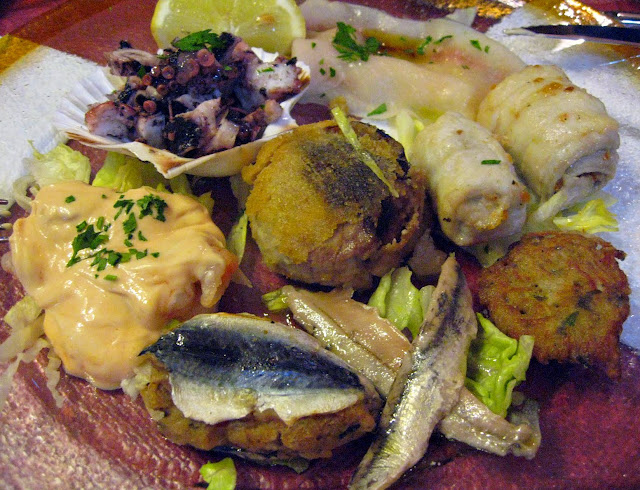
The red wine vinegar is terrific, of course, in salads, but my favorite use for red wine vinegar is as a condiment for fried fish such as sardines or smelts. My vinegar fish sauce consists of fresh garlic and parsley that is heated through in a pan with the vinegar. The white vinegar I sampled was a bit crisper than the red and was made from Trebbiano and Malvasia win. I could see using the vinegar to wake up a sauce or maybe even in a marinade (but I preferred the red wine in my salad, for example).
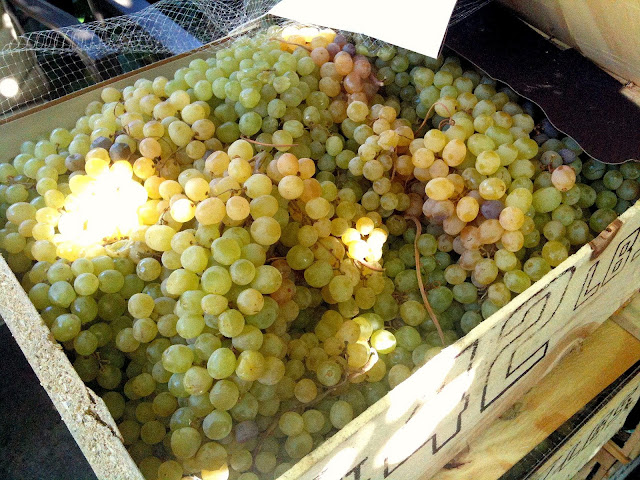
Balsamic vinegar differs from standard red wine vinegar in that the former is aged for a longer period of time as well as made from the white, Trebbiano, grape. Balsamic vinegars are generally more complex than their red wine vinegar counterparts and have a rich and sweet flavor component. True balsamic vinegar must also be aged for 12+ months, with the world best aging as long as 90-100 years. Cheaper, super market, balsamic vinegars are comprised of caramel and sugar as well as mixture of grape juice and standard vinegar.
.

I tried both 3, 5, and 10 year old, Acetaia Leonardi, balsamics and they all varied drastically in flavor and application. I used the 3 year old vinegar mostly for salads and it had a rich, true, caramel flavor with some suggestion of other fruit (maybe dried fig, for example). The 5 and 10 year old vinegars were light years ahead of the 3 year old, especially the 10 year old which approached the flavor components of a fine wine (with lots of oak and varying levels of flavor). Where the 5 year old shined was on it's fruit flavor component; I consumed the balsamic with a salad of freshly roasted beats, walnuts, and feta and the match was perfect.
I like to keep both a good bottle of red wine vinegar and 3-5 year old aged balsamic in the house at all times (especially for salads where alternating vinegar use is a nice way to keep salads appealing). Click here to find the products online.