
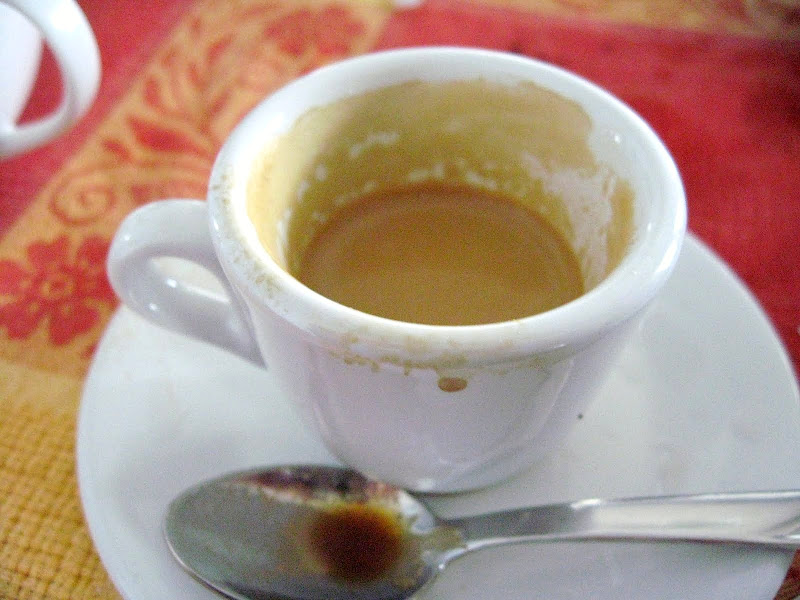
What is Good Espresso and Can You Make it at Home?
Over the last few weeks or so I’ve been giving some serious thought to purchasing a semi automatic espresso machine. My rationale for buying a home machine (including a burr grinder) includes two premises: 1. it’s very hard to find quality espresso at cafes (even in major cities like New York with a large European population) and 2. I love and crave espresso on a daily basis.
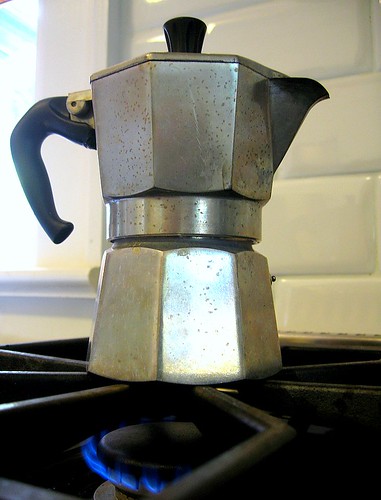
As I’ve said in the past, and like most frugal (and lazy) Italians, I use my army of Bialetti stove top espresso makers to satisfy my craving; however, stove top machines do not produce true espresso (I’ve also tried single cup or handheld espresso devices,such as the Handpresso and the MyPressi Twist). A “proper” espresso has an orange/brown color, a good crema head (though this is an overrated quality in my view), and the right balance of nutty, sweet, and slightly acidic and tart flavors. Most espresso made in the US (including both Starbucks and high end cafes) make espresso that is either overdrawn (that is to say, too watery) or underdrawn (that is to say, too thick and syrupy). Specifically, by over and underdrawn I mean the amount of time the barrista allows the pressurized water to run through portafilter (that is, the portion of the espresso machine that holds the ground coffee, see the Espressoguy.com for a great diagram). Allowing the water to run through the portafilter too fast produces too much espresso that is often watery, bitter, and full of way too much caffeine (you’ve probably had this experience at a restaurant when the waiter returns with a “coffee mug” full of “espresso” or when you ask for a single shot and they return with the equivalent of 4-5 proper, single, shots). Conversely, when the barrista runs water through the portafilter at a slower rate you usually end up with a muddy and overly thick espresso (Italians do have a word for a portion of espresso smaller than a single shot; namely, ristretto, but this is almost impossible to find in the United States).
Can You Make Good Espresso at Home?
Producing top quality espresso is about understanding how your specific semi automatic machine works, grinding beans to the proper consistency, getting the boiler in your espresso machine to the correct temperature, and getting the right amount of water through the portafilter. Sounds complicated, right? Well, good espresso does require: 1., good equipment, 2. good coffee beans that are ground appropriately for each serving, and 3. good technique.
Equipment, Beans, and Technique
On the equipment side, you have the choice of a 1. manual, 2. semi automatic, and 3. fully automatic machines. Manual machines require that the end user produce his or her own pressure (usually via a lever) and are, generally, fairly difficult to use and, in turn, produce an inconsistent and mediocre cup of espresso (at least in my experience, but I’m sure you can get good results). Semi automatic machines (such as the Silvia Rancillo or the Le’Lit PL041) have a built in boiler (the good ones include a brass boiler for heat retention), water tray, a few thermostats, and the ability to steam and froth milk for other espresso based drinks. A fully automatic machine (such as the Jura Capresso Impressa C9) will basically make a cup of espresso for you and also wash your car (just joking!); specifically, a fully automatic will grind, tamp, pull, serve, and clean all via the push of a button. The consensus in the espresso industry is that semi automatic machines produce the best shots, but they also require the most skill and prep work (as I said above, including grinding your own beans to the right consistency, tamping the ground espresso with the correct pressure, properly heating all of the machine components, and pulling the correct shot).
Like any type of coffee, your cup is only going to be as good as the beans you purchase and grind yourself. If you’re seriosly considering getting into making quality coffee at home (whether it’s the French Press variety or espresso) you should probably get the idea of pre-ground coffee out of your head. And if you’re very serious about coffee you may want to roast your own beans as bean freshness is tied to quality (almost 1:1). Grinding coffee beans just before use is also critical as well as getting the correct grind given the application (course for French Press for example and fine for for Espresso); burr grinders such as the Rancilio Rocky produce great results but are expensive. By the way, espresso beans are no different than normal coffee beans, they’re just roasted to a darker stage and ground to a fine state. Fresh and filtered water is also important for good quality coffee.
On the technique side you can read about and aim to perfect pulling the perfect espresso shot over a lifetime or two. And even with the best semi-automatic machine pulling a good shot will most likely entail a huge learning curve. So, while I mentioned that I’m currently considering purchasing an espresso machine and grinder for home use, you can probably tell by now that both using and acquiring such machines would require a big investment (and not just financial). In turn, I’ll most likely hold off on mastering the art of espresso at home (looks like the Italians who use their Bialetto stovetop device at home have the right mindset after all).
Don’t forget our reviews of:


I had to smile – I have been looking at espresso machines for 20 years, then put on some “black” coffee in my old stove-top espresso coffee pot that I’ve had for 30 years!
Vin, Excellent post and I sympathize with your frustration. As a home roaster, I’ve gotten to the point where I can hardly drink coffee away from home or the office. If the beans are not freshly roasted, freshly ground (just before brewing), and properly brewed at the correct temperature (forget drip makers unless you’ve got a TechniVorm), it’s not worth drinking. With all the added technical difficulty of brewing espresso, the situation is even worse.
As you astutely pointed out, you can’t have good coffee without good, fresh beans, and proper grind consistency. So my recommendation: take the $440 you would have spent on the Lelit PL51. Use $300 to get a home drum roaster that can roast up to a pound of green coffee beans at a time.
http://www.sweetmarias.com/sweetmarias/coffee-roasters/drum-roasters/behmor.html
If you buy the roaster at Sweet Marias, they throw in an 8 lb sampler of green coffee beans.
Take another $90 and buy a quality conical burr grinder like this one: http://www.amazon.com/Capresso-560-01-Infinity-Grinder-Black/dp/B0000AR7SY
Now you’ve still got $50 left. If you’ve already got your electric kettle, a french press, and a mug, you’re good to go. You won’t have espresso, but you’ll have the freshest, best-tasting coffee every day of the year (and what comes out of your Bialetti will be much better than before — remember that a fine espresso grind is actually too fine for the Bialetti; it needs to be fine, but not very fine so the pre-ground espresso coffee is actually not a good fit for the macchinettas). You can use the $50 left to buy another ten pounds of beans to roast throughout the year, or save it as a deposit on your semi-automatic espresso maker when you’ve decided that you can’t live without it. Or you can use it to buy 15 shots of lousy espresso at your local coffee joint! Andrew
I kicked my $$$$ coffee habit by going back to my old, stove top coffee maker. $.55/per cup – are you kidding?
As to coffee, I like Lavazza from Italy.
Hi Andrew,
I like your suggestion. I’m now officially a coffee snob (due in part to your home roasting passion) and hence the espresso machine research (however, I think I’ll probably end up researching for life and never buying).
So far my $20 blade grinder has been ok for my french press, but I think a burr grinder is a good idea (for espresso and, probably, for French Press )
Great tips!
Thanks,
Vince
Espresso Guide
[…] eshly ground (just before brewing), and properly brewed at the correct temperatu […]
Review: Gargiulo Sorrentolio Venus Organic Extra Virgin Olive Oil 2009
(photo: great, bright, yellow color in the Gargiulo oil)There are a few Italian food products that take a bit of getting used to; I would include items like amari or digestivi, authentic espresso, meats such as rabbit and goat,…
Easy Espresso at Home: MyPressi Twist Review
(photo: very good crema and taste profile, including notes of chocolate and hazelnut with very little bitterness) When it comes to making great food at home you have two options in my view; namely, 1. try and replicate the sam…
Do You Eat Your Oatmeal: Guide to the Italian Breakfast
(photo: Typical Italian breakfast, brioche with gelato. Image courtesy of THE MUESLI LOVER)Italians Love Coffee and Sweats for Breakfast!News break: if you’re Italian, you can have cookies for breakfast. Seriously, cake is a tradition…
How to Make Iced Espresso or Cafe Shakerato Recipe
(photo: iced espresso made with stove top espresso, thanks to slowtrav.com for the photo on right)Growing up as an Italian America boy on the periphery of New York City iced espresso was a rite of passage, at least for the…
Recipe For Homemade Frappuccino and My Rant Against Fake Espresso
(photo: the ScordoFrappuccino)I’m not a big fan of Starbucks, but I do respect the chain for promoting the concept of a “cafe” or, as Europeans say “bar” experience in the United States (the “bar” experience in Italy isn’t, of cour…
I purchased a Sylvia/Rocky combo last year, took a level 1 barista course, read all the blogs and my wife and I have been enjoying the espressos and cappaccinos ever since.
We are both very pleased with the purchase and the quality of coffee.
Great combo grinder/semi auto. How long does the machine take to warm up on first use, I’m just curious?