Recently in House and Home Category

retrokitch

Back in February I wrote a short article on how to clean your kitchen and touched on hot topics such as floor washing, stainless steel polishing, and granite cleaning (I'm sure you're thinking: riveting subjects!).  On the topic of cleaning granite, I suggested folks use a white vinegar/water solution to clean their granite, but I'd like to now officially retract my suggestion.   After a few months of consistent use, I have started to see some very light etching take place.  The etching is minor and I may have overdone the percentage of white vinegar to water ratio, thus causing a bit of etching.  Moreover, I have started to use a small microfiber towel and regular dish soap to wash and sanitize my granite on a every other night basis (this is a three step process: washing, remove soap, and dry).  The dish soap does a great job of cleaning the granite, so long as the granite is free of debris (i.e., no crumbs, ground coffee, etc.) before washing.  The dish soap cleaning method also does not cause any etching.  

What my new method does not do well, however, is polish granite.  Our granite has been fairly shiny and new looking, but now that we're entering year three with our countertop I'm craving that new granite look again and rethinking the idea that you do not need specialty products to clean a kitchen well.  Enter Goddard's, a 170+ year old brand that earned it's reputation on silver cleaning products.  Nowadays, Goddard's produces a whole range of cleaning products, including a granite polish, stainless steal cleaner, and appliance and countertop polish.

IMG_4744
 
Stainless Steel Polish and Cleaner

I recently sampled the three Goddard products mentioned above in my own kitchen (partly out of pure necessity given that our metal and stone surface were a big old mess and also because of a sample pack). My black/white granite was dull and fading fast and my stainless steel appliances were full of smudges, micro-scratches, and very dull looking overall.  The first Goddard product I tried was the stainless steel cleaner.  The cleaner had a watery consistency and came in a spray bottle.  I sprayed my fridge and dishwasher twice and proceeded to remove the excess liquid with a microfiber clothe (I did this in two distinct stages).  I was also careful to wipe with the grain of the steel.  Overall, the stainless steel cleaner did not do a good job removing smudges or provide any sort of polish or shine to the metal.  The product did remove some of the contaminants on the surfaces of my fridge, stove, and dishwasher, but overall I was disappointed with the product and, to be perfectly honest, the cleaner gave me the same end results as using hot water and dish soap.  

I've had much better success with Signature Polish, which is recommended by Wolf / Sub Zero and acts as both a cleaner and polish.  I received a sample bottle with my Wolf stove purchase and it has outperformed all of the stainless steel cleaners that I've applied to my appliances in three plus years.  The Signature Polish provides a deep shine, removes small scratches, and cleans exceptionally well.  Moreover, the polish/cleaner goes a long way and only a small amount of liquid is needed to clean a large area.  Overall, when it comes to cleaning stainless  and getting that great, smudge less shine, I think it's always best to go with a thicker, polish type, solution versus a water based product.  

IMG_4778


IMG_4780

Granite Polish and Cleaner

I also tried Goddard's granite polish and without jumping the gun the spray solution was outstanding.  I applied the polish with a paper towel and removed excess with a microfiber cloth.  The solution gave my granite an exceptional shine and provided an ultra smooth feel to my countertop.  In fact, my wife thought our granite felt just like the day we installed it some 3 years ago.  The only two compliant I have are that the solution is a bit oily, in turn leaving some swirl marks and a bit of elbow grease is required to get the stone dry and free of any polish.  The bottle also doesn't state whether the polish is food safe (i.e., whether you can place fruit, vegetables, etc. directly on the stone).

Finally, I tried the much thicker Goddard's Appliance and Countertop Polish on our granite only and compared to the granite polish it did not provide the same sort of shine and feel.  The solution was also much thicker and more difficult to wipe up.  There may be a better application for the appliance and counter top polish (such as a glass stove top), but it was only average on our granite countetops (the solution provided decent cleaning power, but it did not produce a superb shine).  The product would be better labeled as a cleaner versus a true polish.  On the positive side, Goddard's Appliance and Countertop Polish is labeled food safe and is also a certified Kosher product. (UPDATE: I tried the Appliance and Countertop Polish on black, stove top, enamel and the result was very positive.  The polish did indeed provide a nice, deep, polish and cleaned the enamel quite well.  The polish did require a bit of work in terms of removal (it was a little oily) and to get a true shine, but it seems the mirror like finish will last a bit.  I'm curious to see how the polish holds up to spills, oil, heavy cooking, etc.)

So, yes I do recommend a good stainless steel polish and granite/stone cleaner for your home kitchen, as well as a basic cleaning kit including white vinegar (floors), Murphy's Oil (wood cabinets), Pine Oil, dish soap (granite, stove burners and top), and Soft Scrub with bleach cleanser (porcelain sink).   What are you waiting for, get out there and go clean those hunks of steel and stone in your kitchen!

Related Posts with Thumbnails
IMG_4732

As I stated in my guide to renovating your kitchen, splurging on good quality kitchen cabinets is usually a good idea when it comes to redesigning your home kitchen (especially if you're looking to stay in your home for long term).  High quality kitchen cabinets are usually composed of solid wood cabinet faces (e.g., maple), full plywood box construction, dovetail drawers, etc.  Moreover, hiring a quality craftsmen to install your cabinets is always a good idea.  For example, during our kitchen renovation our cabinet installer Brian was meticulous when it came to hanging lower and upper cabinets, preparing for the install of our farmers sink, installing crown molding, and attaching our cabinet latches and pulls.

IMG_4729

One of the small details of our kitchen renovation that I had not given much thought to was cabinet hardware.  In fact, the only thought I had when it came to selecting cabinet hardware was to head down to the local hardware store and select a moderately priced set of pulls.  Well, as soon as I got a hold of some the "genuine brass" pulls and latches offered at the neighborhood Ace hardware store I knew they wouldn't work in our new kitchen.  The hardware store components were cheap looking, didn't function well, and were of a low quality design and construction.  That's when I stumbled upon Horton Brasses via a recommendation from the GardenWeb Kitchen Forum.  

Horton Brasses, a Cromwell, Connecticut based hardware company, produces more than 1,000+ pieces of cabinet and furniture pieces, from kitchen cabinet pulls to clock finials!  For our kitchen cabinets, we choose to go with a traditional pantry latch and drawer pull.  

IMG_4728

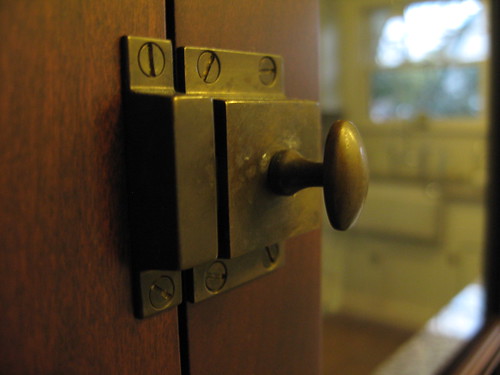
We ordered latches in both polished chrome and antique brass as well as pulls in polished chrome (The pulls and latches are available in seven finished).  The first thing I noticed when I received the hardware was the overall build quality of the pieces.  Each item had a high quality brass finish and the latches, specifically, had a high quality mechanism.  In fact, I had some concern about using pantry latches for our upper cabinets because I heard horror stories about the mechanism failing after prolonged use, but the customer service department at Horton assured me their latches were built to last.  And last they have for well over 3 years now!  Horton's hardware also comes with historically accurate fasteners (screws) that complete the look of the kitchen hardware.  

IMG_4730

Where Horton also shines is in the customer service department.  I spoke to Amy at Horton several times via the phone/email about both replacement parts and technical issues and she was a pleasure to work with.  Moreover, when one of the screw heads broke during a latch install because of tough hardwood and applying too much torque, a technician at Horton got on the phone with me and explained what drill bit to use when pre drilling, how to remove a broken screw head, and, generally, how to install the latch mechanism.  The people at Horton went well beyond the typical customer service support call.  What also gets me excited about Horton is how well priced their items are and, moreover, that the items are manufactured by the company in the United States.  Horton isn't a big company, but it's the type of customer experience I had that makes small companies grow and earn an outstanding reputation for both product and customer service.  Building a company is easy when you stick to the basics: great product, fair pricing, and outstanding customer service.
 
If you're looking for high quality kitchen hardware for your next kitchen renovation project check out Horton's bin pulls, pantry latches, and other fine hardware.  
Related Posts with Thumbnails
leaves

(The following is a guest post from Adrienne Carlson; who regularly writes on the topic of criminal justice.  See Adrienne's
related article on DIY ways to protect your home.)

Your home is probably the greatest asset you own, and when you let it run to ruin you are wasting your money in the worst way possible. A home that is clean and well maintained is worth more than one that is dirty and run down, even if the latter is bigger than the former. And when it is the place where you live on a regular basis with your family, your motto should be the clichéd proverb, "Cleanliness is next to Godliness." 

There are cheap and easy ways to clean your home, even if you've neglected cleanliness for some time now:

Be organized: Have a plan to clean your home. Don't try to do it all in one day, because it is going to take forever. Start with one room at a time, and when you're done, move on to the next one. Keep the bathrooms and kitchen for last, as they have the most stains and dirt. 

Remove clutter: A place for everything and everything in its place is a wonderful and easy way to keep your home clean. If you avoid throwing things around the house, you don't have to spend time picking them up later.  

Don't neglect the outside: Ensure that you keep your lawn and driveway neat and tidy at all times. The outside is what most people see, so make sure your paint is fresh and that your windows are washed and sparkling. 

Rope the entire family in: If you make cleaning a family affair, it's easier on all of you. It's not an easy job to keep cleaning up after messy children and spouses, so enforce cleanliness as a rule in your family from the time your kids are very young. Hold them responsible for keeping their rooms clean and reward them for neat and tidy rooms. 

Quick Tips:

- Use toothpaste to get your taps and other chrome fixtures shining.

- Use newspaper when cleaning mirrors, windows and other glass surfaces. It does not leave behind ugly streaks like cloth does.

- Do your laundry once or twice a week, but allocate storage space and enough baskets for your family's dirty clothes. Train your kids and spouse to separate laundry before they put them in the baskets. 

- Make your bed as soon as you get up. It's a routine that saves a lot of time. 

- Empty your garbage regularly; and invest in a garbage can with a closed lid so that the odor does not permeate your entire house. 

- Keep your windows open to let in fresh air and remove the smell of staleness that hangs around closed homes. 

- Never keep your dirty dishes for later. A sink full of stinky dishes can cause slime to build up and also create an unpleasant odor in your kitchen.

- Keep an eye out for cobwebs and dust bunnies - they can crop up at any time, so get rid of them instantly. 

Cleaning your home should be an everyday process, not one that you adopt once a year or when the mood strikes. When you do a little each day, the entire process is more manageable and seems like less of a chore. So get into the habit of cleaning everyday as part of your routine, and you can save yourself a huge amount of time, effort and money in the process.

For more in depth tips on cleaning your home see the following Scordo.com articles:


(The following is a guest post from Adrienne Carlson; who regularly writes on the topic of criminal justice.  See Adrienne's related article on DIY ways to protect your home.)
Related Posts with Thumbnails
IMG_4334

We've had a cold and wet summer in the Northeast this year, so I'm not sure what the Fall and Winter seasons will bring us in terms of temperature, snow, wind, and rain.  However, I do know that a good looking garden (including grass, shrubs, and flowers) starts as soon as everything begins to die or go dormant.  Here are some basic Fall gardening tips that will make your green space look great come the first couple of warm days in the Spring:

1. If your garden includes a lawn then the early Fall time period is the best time to re-seed, fertilize, and add lime.  I tend to fertilize in the early Fall and early Spring time periods and I usually use my soil sample numbers to guide the type of fertilizer I buy.  A soil sample analysis will tell you how to amend your lawn's soil and whether it needs more or less potassium, nitrogen, etc. I like to test my soil every 5-8 years.  It's important that you follow the instruction on your spreader when adding fertilizer and lime and amend your soil according to whatever nutrients you need to put back into the ground.  Re-seeding your lawn with new grass seed is fairly simple and can be done by hand if your lawn is not too large.  I re-seed any bare spots in my lawn every October.  

2. Don't forget that your plants, shrubs, and bushes can also benefit from an application of fertilizer.  Use a slow release fertilizer and apply the correct amount according to the bag instruction.  Over fertilizing can be an issue for any plant, so it's always best to under fertilize if you're unsure.  

3. October is a good time to prune shrubs and bushes and ensure that the plants will come back healthier and fuller in the Spring.  Every bush or shrub has a slightly different pruning method so it's best to do a little research on how much material to cut off and where in the branch formation you should cut.  October is also the best time to plant new shrubs and bushes.  Visit the GardenWeb forums for specific advice on trees, shrubs, and just about any plant.

4. If you have any hardscapes in your garden such as pavers, natural stone, etc. the Fall is a good time to apply a sealer to help protect your surfaces.   For example, I seal my concrete paver walkway every other year so that the pavers do not shift or come loose.  I also add new play sand in between the pavers to keep water from reaching underneath the walkway (you'll want to add your sand first, with a large broom, and thereafter add your sealer to bind the sand).  While not necessarily tied to your garden, resealing your asphalt driveway is also a good idea if the current surface is cracked, crumbling, or is in general disrepair.  I'll be applying a blacktop sealer for the first time this Fall and I'll let you know how involved the process after the project is complete.

5. I happen to live in a town with an active Shade Tree Commission and a recognized Tree City USA program - this means our community takes maintaining and planting new trees pretty seriously.  The commission prunes street trees, plants new trees in the Fall, and removes any dead or almost dead trees.  The Fall is a great time to plant a new street tree!  Planting a tree near your home increases property value, shades your home during the summer months, and just makes for a better quality of life.  Most plant centers have crews available to plant street trees, but you can plant your own tree with a little bit muscle and a few friends on a crisp Fall weekend.  
Related Posts with Thumbnails
IMG_4168

Back in October of last year I wrote about essential kitchen tools and kitchen simplicity.  The article attracted a few comments from readers stating that my list was too extreme and left out some key tools and items.  So, I've decided to take another look around my kitchen and update my essential kitchen tool list (sorry still no pizza stone):

1. CuisinArt Food Processor and Kitchen Aid Stand Mixer
OK, I'm going to start off by saying that both my grandmother and mother never used or owned the above tools and they both made/make fantastic food.  In fact, I remember trying to convince my grandmother to let us buy her a large stand mixer so that her weekly bread making would be a little easier for her (she of course said no).   

I use our CuisinArt Food Processor for making hummus, slicing onions for French Onion soup, and, when I'm lazy, pesto. Our Kitchen Aid Stand Mixer is used for pizza dough, bread, and countless cakes. Both products are very well built and should last a lifetime.

2. Krups Hot Water Kettle
Boiling water takes time, not a whole lot of time, but just enough minutes to annoy me at certain key moments (for example, waiting for boiling water in the early morning for your French Press Pot).  We picked up a Krups electric kettle two years ago and it's been a terrific, time saving, device.  We use our kettle for tea, coffee, pasta water, etc.  Plus, it actually saves energy when you consider that the device boils water faster than our fancy Wolf, 18,000 BTU, gas stove.

3. Microplane Grater
For citrus zest and emergency cheese grater.

4. Kitchen Shears
For emergency tasks, quick herb mincing, etc.

5. Large Grater
For the best way to grate most soft cheeses.
 
6. Serrated Bread Knife
The best knife to cut fresh bread.

7.  Locking Tongs
Tongs are essential and most are made in an inferior manner.  Buy two , well made, products (one with metal pincers and one with rubber) - All-Clad makes a pricey, but well built, all metal version.

8. Vegetable Peeler
Pepin used a paring knife, for everyone else get a vegetable peeler.

9. Instant Read Thermometer
You'll throw this out after becoming a competent cook, but you should have one in your kitchen for the early years.

10. Peppermill
You'll use this every day and there' a big difference with freshly ground pepper (same difference with freshly ground coffee).  I own a French made, Prefex, that's compact and very functional.

11. Salad spinner
If you eat tons of greens then you need to dry most of them before cooking or consuming, the salad spinner is a revolutionary product and you should have one.

12. Colanders
You should have about three of these for draining pasta, cleaning vegetables, etc.  

13. Toaster Oven
This will cause some debate, but I could not live without our small toaster oven.  I used out tiny DeLonghi toaster oven to broil thin white flesh fish and salmon, heat up pizza, toast bread, etc.  The device cooks food in no time and unlike a microwave it perfectly toasts and browns food for tremendous flavor.  The device also does not use as much energy as our larger Wolf or Cadco ovens. 
Related Posts with Thumbnails
rundown

Interest rates are low these days and there's a ton of housing stock available, so, in my view, it's a great time to buy a home.  The financing part is a bit trickier these days with banks scrutinizing loan applications, but if you have a good down payment (at least 20 percent), a great credit score, ready to work at maintaining your home, and understand that a home is, first, a place to live and, secondly, possibly an investment go out and buy a home!

With the above said, there are areas in a home that are consistently neglected by homeowners. Neglecting a home repair can cost you big bucks in the long term and is just plain dumb/lazy (would you ever not feed your dog or provide fresh water for your cat?).  In turn, I've put together a top five list of areas of your home NOT to ignore!  Let's start with the often ignored, but highly functional, gutter:

1. Gutters  
When we purchased our home I asked the owner when was the last time she had her gutters cleaned.  The ex-homeowner replied by saying, "oh, I don't know, but it's not important."  If you live in a leafy neighborhood you should get your gutters cleaned twice a year (I like cleaning mine in November and May).  Allowing leaf build up and sediment to accumulate in your gutters can lean to interior and exterior water damage which can costs thousands of dollars to repair. Clean your gutters yourself or hire a crew if your gutters can't be reached safely.

2. Furnace
There are many types of furnaces used to heat homes in the US, including forced hot air, steam, and hot water.  And most furnaces are either fueled by natural gas or oil.  The typical furnace can last between 15-25 depending on the system and your tolerance for efficiency.  I've seen steam boilers with tons of sediment build up, hot water furnaces with rotting pipes, and tons of leaking radiators.  This isn't good for one of the major systems of your home.  In fact, I think most homeowner see their heating and cooling systems as pieces of machinery that run themselves without the need maintenance. Hot water furnaces should be checked and cleaned by a capable homeowner or a licensed plumber at the beginning of each heating season.  Steam furnaces require a bit more upkeep, but the maintenance routine is the same: clean pilot and burner area, keep the area around your furnace clean, check damper running into chimney, lubricate moving parts, (if steam) flush water in system to get rid of sediment in radiators and furnace. See my guide to winterizing your home!

3. Yard 
Walk by any home and the first thing you notice is the front yard and this happens well before you notice architecture style, the pretty red door, and the Lexus sitting in the driveway.  If you're a homeowner your front yard is your first shot to make impression, be it good or bad.  An unkempt lawn, big dirt patches, and overgrown hedges and trees all make for poor maintenance and upkeep and, in relation to other home improvement / maintenance projects, maintaining a green lawn and pruning your boxwood is cheap and easy.  Also, failure to maintain your exterior landscape can also lead to drainage problems and possible basement leaks as your yard can develop issues with slope and water seepage.  See my tips on how to maintain a great looking lawn!

4. Sidewalk
If you're lucky enough to live in a neighborhood that has sidewalks then you've bought yourself a lifetime membership to a great health club.  Walking around your neighborhood is great exercise and gets you interacting with the neighbors.  Unfortunately, concrete sidewalks will need some upkeep, especially if you're block or neighborhood is lined with street trees.  Large trees cause concrete sidewalks to lift and crack over time and, in many cases, the only way to repair an uplifted sidewalk is to pour a new section of sidewalk.  Many towns also have ordinances requiring homeowners to maintain their sidewalk, so sidewalk upkeep is a given.  Don't you just love homeownership!

5. Kitchen 
They say the kitchen is the new heart of the modern home and prospective home buyers look to, among other things, the size and condition of the kitchen when considering the purchase of a home. When we looked at homes for purchase a couple of years back, we fell into the same category as above and we were mostly horrified at the condition of most conditions.  Many of the kitchens we walked through had faulty appliances, cracked flooring, leaking faucets, poor lighting, and, generally, inadequate space and functional layout.  I'm not advocating homeowners build lavish kitchen with a Viking stove, soapstone countertops, and exotic wood cabinets, but I'm a big fan of keeping a kitchen up to date and renovating a kitchen once it's past its functional prime.  Plus, there's usually a decent ROI on a newly renovated kitchen.  See my guide to renovating your kitchen!
Related Posts with Thumbnails
rod

The following is a re-post form February 2009 and I thought it was appropriate given the gloomy and cold weather here in the northen New Jersey area.  The post includes two great dip recipes, my favorite potato and tortilla chip brands, and 23 movie recommendation by genere and actor.  

The upcoming Oscars Award show always gets everyone in the movie-going spirit and why not it's fun to plan a night at your local theatre taking in a good movie followed by a late night meal and a glass of good Zindfandel!  But wait, hold on, are you really going to spend $20+ dollars for tickets, $15+ dollars on snacks, and then $75-$100 dollars on dinner and a decent bottle of wine?  The answer is an obvious no and not just in the current economy; I find many of our friends who consistently do dinner and a movie to be amongst the cash-strapped crowd.  Don't get me wrong I love film, I just don't like spending my hard earned cash on overpriced tickets and snacks.  What I do instead is plan movie night at home and head to my local library for DVDs.  Yes, some local libraries lack a decent film collection, but our town library happens to have a nice assortment of films.  I'm also an on and off subscriber to Netflix, but I never keep the service running for more than 4-6 months (I essentially exhaust the movies I really want to see and then cancel my, auto renew, subscription - Try This Tip!).  

Either way you get your films, you'll need some snacks to go with your movies!  Here's a list of some of my favorite chips and dips, as well as a list of some great movies by category!

Potato Chips 
There's something about thinly friend potatoes with copious amounts of salt that gets me excited!  Potato chips are one of my all time favorite foods and please don't let my mother find out.  I can enjoy potato chips during a late night rummage through the pantry or, in this case, with a good movie.  My all time favorite potato chips include:

1. Cape Cod Potato Chips (Classic and Salt & Vinegar are my favorite) 
2. Kettle Chips (any flavor, they're all great!)
3. Lay's Classic Potato Chips 
4. Terra Chips (Original) 

Tortilla Chips
Corn chips exploded into the US marketplace in the early to mid nineties and they've become a staple (any one know why?) of informal get togethers and parties.  There are many tasteless, and overly salted, products on market, such as Tostitos, Santitas White Corn chips made by FritoLay, and TraderJoe's house brand.  You can of course make your own Tortilla Chips, however there are also some good brands on the market and I prefer the following products: 

1. Green Mountain (great combo of salt and corn taste)
2. Garden of Eatin Blue Chips
3. Doritos (yes, I like Doritos!)

Guacamole
Next to the egg, the avocado would be one of those food items I would want with me if I were stranded on a remote island (it has good fat content, nice texture, and pretty versatile).  

Mix in fresh lime juice and cilantro and mashed avocado becomes an exquisite tortilla chip accompaniment; here's my recipe:

- 2 large, very ripe, Hass avocados
- 1 large lime (keep out of the fridge for a few hours and roll on cutting board before juicing)
- 1 bunch of fresh cilantro (I know cilantro is a love/hate type of herb, but I happen to love the flavor)
- ¼ finely diced red onion
- ½ finely diced plum tomato
- Salt and pepper to taste

Mash the avocados with a fork and add your lime juice (click here if you've never sliced an avocado before).  Stir the two ingredients and the cilantro, onion, and tomato. Next, add salt and pepper to taste and give the mixture a final stir.

Sour Cream Dip
Potato chips, in my view, really don't need a dip, but that's not to say that I don't enjoy dipping my perfectly salted chips into a nice white mixture of sour cream!  Here's my favorite recipe for Sour Cream and Onion Dip:

- 1 pt of sour cream
- 3-4 finely diced green onions
- Salt and freshly ground black pepper to taste
- 1 teaspoon garlic powder or 3-4 cloves of mashed caramelized or roasted garlic 

Combine all the ingredients in a medium sized bowl and mix very well.  

Movies
A movie critic will tell you that one can, objectively, rate and talk about a given movie.  In my view, however, deciding on whether a movie is good or bad can often be a very subjective experience and depdendent on how many other films one has watched, personal history, ethnicity, education, mood, etc.  So, I recommend the following "movie night" movies based solely on the fact that I liked them all!  Most of all, however, each one of the movies below (categorized by actor, genre, or style) made me feel as though I was totally submerged in the plot and the story the director wanted to convey.

1. Woody Allen
Match Point
Vicky Cristina Barcelona

2. Bill Murray
Lost in Translation
The Royal Tenenbaums

3. Johnny Depp
Finding Neverland
What's Eating Gilbert Grape

4. Sean Penn
Mystic River
Carlito's Way

5. Foreign 
The Son's Room
Y Tu Mama Tambien
La Strada
Respiro

6. Engrossing
The Shipping News
Pollock
Mulholland Drive

7. Classics
The 400 Blows
Odd Man Out
The Bicycle Thief
Sudden Fear
Notorious

8. Western
The Magnificent Seven
High Plains Drifter
The Three Burials of Melquiades Estrada
Related Posts with Thumbnails
windows

In an earlier post from December of 2008 I was contemplating replacing most of the original double hung windows in our early twentieth century foursquare / center hall colonial.  Like most decisions involving personal finance I like to make a pros and cons list.   And, at the time, I started with the cons of our old double hung windows:

- Windows are NOT efficient (they let tons of air through the bottom and upper sashes and also along the side of the unit) and are single pane (versus two and three pane for modern windows)
- Windows do not have gas filled panes which help with efficiency.
- Windows are difficult to clean.
- Storm windows are hard to operate and don't provide much functional performance
- Windows are not secure (the sash lock is original)
- Windows let in street noise
- Windows do not have a UV coating

My pros list was very short, but it included:

- Current windows do operate well
- Current windows fit with style and architecture of home

Ultimately, we decided to replace most of our old double hung windows with quality wood replacement windows.  We opted for a brand from Anderson called Eagle.   We considered quite a few windows brands included, Marvin and Anderson Woodwright.  We choose Eagle for the following reasons:

- Great value given construction and standard options (all custom sizing)
- Great U-Factor rating (the lower the better) which equaled or beat Marvin and Woodwright
- Good Solar heat gain coefficient and visible transmittance (these are essentially how much light and sun make it through the window)
- Eagle offered standard Low E / Argon filled glass at no additional charge
- Eagle offered free priming on the interior wood material (so it's much easier to paint) 
- Eagle offered a multitude of exterior aluminum cladding colors to match our house (we even had the option of mixing up to three different colors) at no additional charge
- Eagle offered a full screen at no additional charge
- Eagle offered plastic film on the glass to make painting/staining easier at no additional charge

We've been living with the new windows for a few months now and have been impressed with ease of use and how much noise the windows keep out.  We've yet to go through a winter with the new windows and we, of course, will be interested to see how well they perform in terms of keeping out cold and wind (we'll look at our heating bill closely).  From a summer season perspective, they have done well at keeping out UV rays and the strong heat here on the East Coast.  

We personally painted and stained all of our windows to match the existing window trim and that did take quite a long period of time (it took me 4 weeks).  The windows that were stained required some sanding, pre-conditioner stain, three coats of stain, and a single coat of polyurethane.  The primed windows required two coats of paint.

On the installation itself, we hired a local company that removed our old windows, installed the new windows, insulated, and mounted exterior frame expanders (essentially aluminum strips that conceal the gap caused by the outer window opening frame and window itself <even with custom windows you'll get a small gap on replacements>).  

When looking to hire a company to install windows make sure to keep the following tips in mind:

1. Ask to see examples of install jobs (note how tightly the windows appear in their opening, was the old trim damaged, what does the exterior window install look like, do the windows open and lock securely, was the crew neat, etc.)
2. Ask about warranty on work and not just the product
3. Ask who is responsible for damage to interior and exterior of home, just in case there is an issue
4. Ask if the cost of removing old windows (and storm windows) is included in the estimate.
5. Never get just one quote and don't assume lowest bid is the best
6. Ask to speak with the person who will do the actual install (see if they will be on-site during the whole project and actually working on the windows)
7. Never pay full amount before job is complete
8. Get everything in writing and have contractor sign off.
9. Don't let your contractor remove old windows unless they plan to install the new windows in the opening (they shouldn't board up openings)

From an ROI perspective we'll need to wait a bit to recover our costs, but our new windows are functional, efficient, easy to clean, and make our home feel and look great.  I think they are worth every penny!

Related Posts with Thumbnails
fire

Have you noticed the days getting shorter and the local kids walking to get to their first day of school?  Or that the temperature has dropped a bit and you can actually sleep with a breeze coming through your bedroom at night?  Well, if so, you've picked up on the fact that September is here and in turn the perfect time to get a good fire going in your fireplace!  

I actually like to make fires when it's between, say, 55 - 60 degrees because, in most cases, you don't need your central heating system to be on and you can enjoy a fire without it sucking all of the warm air from your home.  You can start a fire when it's warmer, but I don't think you'll enjoying the experience as much.

Contrary to what most people think, fireplaces don't provide much heat outside the area immediately in front of the hearth and a roaring fire actually robes the rest of your home of warm air (basically, the fire is looking for oxygen and grabs it from every room in your house).  There are some exceptions; for example, a wood stove is an excellent, and highly efficient, wood burning machine! 

So, when the outdoor temperature is right and you don't have your heat running, keep the following 11 tips when creating that perfect roaring fire:

1. Open your damper (this is straightforward but you would be surprised how many people actually forget).

2. Use good firewood.  According to the US Forest Product Lab, Locus, Ash, and Beech are the best varieties.  However, the most important attribute of firewood is that it is seasoned or dried for at least a year (this will allow the wood to burn cleanly and without any smoke; seasoned wood also burns hotter).

3. Get a hold of some fatwood.  Fatwood catches fires very quickly and stays lit long enough for your starter wood to get going.  LL Bean sells fatwood, but you can probably find it locally for a better price/

4. Get a hold of some starter wood (I usually walk around my yard and try to find some old, small, branches that have fallen and have become naturally seasoned).  You can also ask your local wood delivery guy to supply some starter pieces for your stove or fireplace.

5. You'll need some old newspaper and matches, I like burning Ed-Ops I disagree with...

6. Once you have the "ingredients" it's time to build the fire.  Start by crumpling 5-6 pieces of newspapers and placing it under your grate (don't crumble the pieces to small or tight as they will not burn right).  Next, place 6-7 pieces of firewood on top of your metal grate.  Your smaller starter wood goes on top of the fatwood (don't skimp here, try to include 8-10 good pieces), followed by 1-2 pieces of your regular firewood (look for the smallest pieces in your pile).  Light the newspaper and watch the magic happen!

7. The key to maintaining a fire is to produce red, glowing, embers that pile up underneath your grate.  As soon as you have a good pile of embers you'll be able to add new firewood and it will catch immediately. 

8. Poking the fire every 30 minutes or so will also feed new air into the wood pile and you'll notice the flame picking up, as well.

9. Whenever I plan to light a fire I make sure that we do not have any major plans for the day, so we do not need to, unexpectedly, leave the house for long periods of time.

10. About 2-3 hours before you plan to leave the fire unattended, make sure you stop adding wood to the fire.  This will ensure that the fire has some time to die down (NOTE: the fire and embers will still be extremely hot).  You should make sure that your fireplace screen is on securely and at all times (except for when you are adding would of course), I've seen sparking embers fly 3-4 feet.

Enjoy the fire and make sure you have a good book, glass of wine, or the wife/husband with you!

Related Posts with Thumbnails
kitchen

Nothing makes a home more desirable these days then a new kitchen with all the bells and whistles (well maybe good schools and neighborhoods are more important!).   And most new homeowners either look for a home with a great kitchen or desire to renovate their kitchen at some point during the homeownership experience.

The kitchen home renovation process is grueling, and if done correctly, very rewarding in terms of ROI and pleasure-factor (that is to say, how it feels to spend time in a new space).  You can, indeed, avoid some of the grueling aspects of the kitchen renovation process, but there is no way to avoid feeling frustrated, defeated, and upset during some stage of the renovation project - this is just a fact.  

Here, then, are my 11 major kitchen renovation tips and advice:

1. Avoid adding square feet to your kitchen by expanding. Adding a room or even a small bump out to increase the size of your kitchen will be costly and complicated (permits, foundation work, framing, etc.)  Instead, see if you can find additional space in an adjacent closet, hallway, sun room, etc.  Large, open, kitchens are the current fad, but that may not always be the case (especially when you go and sell in twenty years).  Plus, you don't need a huge kitchen to cook great food and you'll avoid being a slave to your general contractor for 6-12 months.  Kiplinger Magazine even offers the same advice!

2. Splurge on cabinets and flooring.  If there are two elements of your kitchen that will take the most abuse it's your floor and cabinets.  Opt for solid wood cabinet faces and full plywood box construction.  Also, look for drawers that have dovetail joinery and bulky mechanical slides (I like the Blum line of mechanisms and hinges, some Ikea cabinets even use Blum hings!).  I've found that it doesn't really matter who the cabinet company is, but very important if they incorporate the above construction and design items into their product.  On the flooring side, avoid hardwood floors (it just doesn't make sense in a room that will see tons of foot traffic, spills of all sorts, water, etc.)  Instead opt for a Porcelain tile or possibly a natural stone surface (though the latter will require sealing).  Hardwood floors are nice to stand on because they give a little and help with back pain, but it's no substitute for the resilience of a solid, and indestructible, tile surface.   

3. High end appliances don't always perform better.  It's a fact that a $10,000 Viking stove will not boil water faster than a $500 Amana stove, however an industrial will often give you additional burners, beefier construction, and the looks most folks desire in a high end kitchen renovation.  We opted for a duel fuel Wolf stove (6 burner) and it has worked very well thus far, however the stove is very difficult to clean and the large oven takes a long time to reach temperature.  

4. Gut it!  Just like I advocate in my five tips on bathroom renovations, it's best if you gut your existing kitchen so that you can re-wire, re-plumb, level the floor, look for potential problems, etc.

5. DIY within reason.  Professionals cost money and general contractors cost even more.  I would stay away from hiring a general contractor and opt for a 50/50 job where you outsource to professionals for technical tasks (new gas line, installing cabinets, etc.) and insource (i.e. DIY) for not so hard jobs like demolition, painting, etc.

6. Do your research and compare prices when it comes to cabinet makers, appliances, faucet, cabinet hardware, etc.  That is to say, make sure you visit 3-4 appliance shops and cabinet designers and get plenty of estimates on your stove, fridge, dish washer, etc. You can often receive a discount if you purchase all of your appliances from one shop.  On the research side make sure to read plenty of user reviews, read reliability ratings, and check out the manufacturer warranty specs.  Our appliances have had good reliability thus far and the only issue we're really had is with a counter depth Maytag refrigerator (Model MFC2061HE) whose water line (for interior water dispensing) stops working at random times.  On the faucet and cabinet hardware side we purchased all of our material online and saved a ton (I would opt for a high quality faucet and cabinet hardware, we purchased a Rohl Perrin and Rowe bridge faucet and bought cabinet hardware from Horton Brass <Horton has excellent customer service!>).  We also have a Rohl farmhouse sink which has worked well, but beware the surface isn't as tough as they claim and farmhouse sinks, in general, cause lots of water to splash out into your lap and kitchen floor given lower height.  The GardenWeb Kitchen forum is an excellent source for kitchen renovations in terms of asking questions and contacting folks who are going through the renovation process.  

7. Stone surfaces are nice, but require upkeep.  Shh, and don't tell anyone, but Formica countertops are great!  Formica is easy to clean and cheap, but unfortunately it gives a new kitchen a cheap kind of feel.  In turn, most high end kitchen renovations include a stone countertop surface.  Generally, granite is the best choice in terms of durability, price, and upkeep time.  Marble and soap stone require constant maintenance and can chip very easily (marble also yellows over time and it's not pretty after a few years).  We have a standard granite in our kitchen and it has been fairly easy to maintain thus far (I seal it every 6 months and wipe it down every night).

8. Lighting is important.  We live in an older type home and have original, and some replica, lighting throughout our house.  Our kitchen has replica school house fixtures from Rejuvenation Hardware and they look great, however I wish we would have gone with some additional recessed lighting.  We do have pendants over the main work surface and sink, but some general task lighting over the entire kitchen would have provided more light.  

9. Don't overlook ventilating your kitchen.  Whether you opt for an industrial-like stove or go with a traditional 4 burner model, you should overcompensate when it comes to an exhaust system (especially if you do any sort of consistent or serious cooking).  Moreover, try and get your stove installed on an outside wall so that you don't have a long run to the outside (with your vent tubing).  We have a Vent-a-Hood vent and it is quiet, easy to maintain, and very efficient and powerful.  

10. It helps if your basement is not finished when it comes to renovating a kitchen - let me explain.  When you re-wire, re-plumb, add a new gas line, etc. you'll need to access to your electrical panel, water system, main gas line, etc. and, you guessed it, all this stuff is locate in basement (specifically the basement ceiling area).  So, if you're basement is finished you or your pro is going to have a hell of a time running electrical wire, new copper pipes, etc. (this is a small example of why a plumber, for example, will charge you a ton for new kitchen work.).

11. Set up a make shift kitchen in your basement with a cooking element, sink, table, and your old fridge.  Avoid the urge to go out and eat every night and spend even more money by cooking some of your meals at home.   It's not fun eating in your basement, but your waistline and pocketbook will thank you when you're done with the project.

Related Posts with Thumbnails
lawnfix
Photo: Our front yard used to be covered in ivy, we dug it up and seeded a lawn.

Many homeowners are intimated with the prospect of taking care of their own lawn.  They fear cutting, fertilizing, and watering their lawn and year after year are disappointed with the way their lawn looks.  In turn, many homeowners hire a landscaper with no formal training and who charges an arm and a leg to take care of what most people see first when they come to your home (would you let anyone pick your clothes and dress you?). 

So, I'm here to tell you to fire your landscaper (that's right call him tonight) and read the following 6 lawn maintenance tips.  If your lawn doesn't looks great after a year, I'll come over and give you a lawn care tutorial (provided you don't live in sub Saharan Africa).

1. Keep your grass tall or mow high.  You know how your local golf course keeps their lawn (kind of like a green crew cut), well that will kill your lawn at home.  Keeping your lawn between 2-3 inches will allow it to retain moisture, fend off disease/blight, and give the appearance of a lush and healthy lawn.  Get to know the height settings of your lawn mower and use those setting to control grass height (especially during the late summer months).

2. Test your soil.  Contact your local cooperative extension at your local college or university and they'll mail you a soil testing kit.  A soil test will tell you how to fertilize come the Spring and Fall.  Don't just run to the local Home Depot and guess which number fertilizer you need, let a soil test tell you how to amend your soil (including lime).

3. Don't water at night or in the afternoon.  The best time to water your lawn is in the early morning, so that 1. your lawn has an opportunity to absorb the water and 2. it doesn't develop any blight due to watering too late in the evening. If your lawn is large water in stages and let the water soak in for 30-45 minutes.  You should only be watering once a week, even in extreme weather.

4. Don't hire a landscaper.  Taking care of your lawn, once you have the right equipment and know-how, is super easy and also provides an immediate pride of ownership type feeling that can motivate you to take on other projects at home.  Plus, you're saving money by cutting your own lawn and are getting exercise.

5. Detach and aerate your lawn in the Spring (once per year).  If you don't complete these two tasks you'll have a compacted, hard, lawn surface that won't allow for water and nutrients to get down into the soil (and detaching gets rid of any dead grass come the end of winter).  I detach with a rake (it's tough work), but I recommend renting an aerator from the local home center. 

6. Get the right equipment.  With any project, it's difficult to do a job well unless you have the right equipment.  In turn, make sure you purchase a quality mulching mower and sharpen the blade regularly (personally, I don't mulch because it tend to suphicate my lawn, but other folks I know have had success with mulching).  You'll also need a quality rake, fertilizer spreader, edger, and lawn shears.  I love power tools, but I don't own a string trimmer and the 5 year old electric blower gets minimal use because I prefer sweeping/raking (given the exercise).

Finally, and this isn't really a tip but rather a fact, grass will NOT grow where there is shade.  And no matter how desperately you want grass you really do need lots of sunshine for a lawn to flourish.  If you have areas where the sun only shines for 2-3 hours a day, you may want to consider other grand covers like ivy, pachysandra, etc.

vinwater
Photo: You need to spend time on your lawn (no way around that), so you might as well enjoy it!
Related Posts with Thumbnails
chick3

(The following is a guest post from Wendy Thomas at SimpleThrift ; Wendy is also a Journalist for the Nashua Telegraph)

As a writer of a weekly newspaper column on thrift, the author of a blog on the same subject, and a mother of 6 children I consider it my responsibility to continually try out different ways of being thrifty.  

Which is how we came to be chicken owners.  

How tough can raising a bunch of cute adorable chicks be? I asked the family.  

Surprisingly, the answer is it's not tough at all.  

We got our first set of chicks from a reader of my blog who knew I had been thinking about the idea. Well what's thriftier than free chickens?  She gave us 8 brown chicks with the understanding that she would take back any that turned into roosters (our neighbors were happy to hear about that part).  

The chicks came with a 25 pound bag of food and all we had to add was a food and water feeder. They lived happily in our garage for a few weeks. When the youngsters got their feathers it was time to move them outside. Here is where we had our first and only problem with the chickens - where would we keep them? 

We looked for hen-house plans on the internet and in books and while some were very creative (the cab of a truck was used for one and an igloo made out of hay bales was used for another) we decided to have a local builder make one for us.  

Although we could have made it ourselves, or even jury-rigged something for less money, we live in the woods of New Hampshire where we have raccoons, coyotes, and fisher cats. In the long run for the safety of the birds (and my piece of mind) we got a professionally made hen-house that is so sturdy it could survive a nuclear attack.  

Once we got the chickens in the hen house, the daily care was minimal. Each morning we let them out of the hen-house into the pen. If someone was going to be around during the day, we herded them into the fenced-in dog area where they spent the day eating grass and bugs.  

Other than checking on food and water, that's it for the daily care. At night, we don't even have to herd them into the hen-house anymore - when the sun goes down, they automatically go inside.  

We don't have eggs yet and with the cost of the hen-house we figure we'll need to sell 6, 723 eggs to break even. Is it worth it? You betcha, the kids are being incredibly entertained and are learning about taking care of animals. They are seeing where food comes from, the work that goes into it, and how people handle that food. There is a new appreciation for what they eat.  

Having chickens will eventually give us those thrifty eggs but those birds are also making us all better global citizens with respect to food.

Related Posts with Thumbnails
renov

Do you spend hours talking to your significant other about possibly moving an interior wall to free up more space for your kitchen or what the old butler's pantry may look like if your restored the original walnut trim?  If so, you may be itching to renovate a portion of your home.  And if you live in an older home (build before 1950 or so) then you may need to renovate out of necessity.  

I've spent many hours with my super handy father renovating and maintaining our early 20th century foursquare center hall colonial and I've come up with some easy tips to keep in mind before you tackle your next big project:

1. Don't Hire Who You Don't Know (well, either directly or indirectly via a referral).  Never, under any circumstance, hire someone to work on your house if you haven't used them before, received several referrals from close friends, or seen a few examples of their work.

2. Do It Your Self Only If You or Your Help Can Do It Better and More Efficiently.  My father is very good with his hands and has helped me take on multiple home renovations (I'd argue that the quality of his work is better than most contractors).  However, a typical project does end up taking longer than if I hired a so-called Pro to complete the job.  Also, you'll need all the necessary tools (here's part II of my tools list) to do it your self (keep this mind)

3. If You Plan On Staying in Your Home Long Term, Then Buy Good Quality Material.  An example of this would be kitchen cabinets; cheap cabinets often come with flimsy bracing, poor drawer construction, and a non durable exterior finish.  Spend more on material and it will, in general, last longer.

4. Be logical About What You Renovate.  Start with the kitchen, bath, exterior landscaping (front yard), windows, heating/cooling, roof, etc. and avoid bedrooms, basement, attic, garage, etc. in the short term.

5. Avoid Trends in Design and Go For A Classic Look (or match the rest of your home).  Even if you're attracted to Modern design, for example, go for a neutral or classic look when selecting material and style for your next renovation.  If you need to unexpectantly sell your home you'll be glad you didn't paint your walls brown and invest in sheep skin blinds.
 
6. Think Green Where It Makes Sense.  Do you live in a cold climate, for example?  If so, it may make sense to spend a little extra for high quality, super insulated, wood windows when looking to replace your 90 year old, single pane, double hung windows.  Thinking about solar panels for your rooftop?  You may want to think again, considering cost and long terms ROI.

7. Establish a Budget.  I know some folks who go into renovations with an open ended budget; this is bad news considering that even well planned renovations usually go over on budget.  Track every expense and try to leave a little extra cash for unexpected re-wiring or runs to the hardware store.

8. If You Use a General Contractor Be Prepared to Pay More (lots more).  Did you know that most General Contractors don't actually do any work, but rather line up the workers you will need for your kitchen renovation, for example.  You can be your own general contractor if you take the time to find and research workers and then manage their work.  

Related Posts with Thumbnails
tub.jpg

Next to renovating your kitchen, a bathroom renovation can, in most cases, provide outstanding ROI for a homeowner.  Beyond ROI, a newly constructed bathroom can also provide a homeowner with years of leak-proof functionality and enjoyment.  If you're considering renovating the one room in your house that can make you look pretty, here are some quick tips:

1. Porcelain is king!  
Porcelain tile is easy to clean and practically indestructible.  Moreover, Porcelain tile is not porous so it's a natural fit in a room filled with water and moisture. Personally, I would stay away from marble (it's porous, chips easily, and tends to turn yellow with time), granite (needs to be sealed), and ceramic (chips and not as strong as porcelain) when deciding on tile choices for a bathroom renovation.

2. Light is important when you are trying to get clean.  
I like to include lighting in or near the shower/tub area, wall mounted lighting above a mirror, and adequate overheard lighting.

3. Exhaust the room.  
An average shower produces a ton of steam, so be sure to adequately vent your bathroom with a recessed bath fan.  Also, if you have a window in your bathroom, be sure to open it during your shower (and try not to scare the neighbors)!

4. Replace the pipes, sheet rock, and plywood!  
I recommend doing a gut renovation when it comes to bathrooms.  A gut renovation will allow you to replace old and possibly faulty copper pipes, old concrete board and sheetrock (which may or may not have had water damage), and properly level and stabilize the floor and shower area with new plywood.  

5. Expect the project to take longer than you imagined.  
Renovating a bathroom includes tile work, electrical, sheet rock, concrete board, framing, plumbing, etc. and, in some ways, is a more complicated project than a kitchen renovation.  

Are you looking for more information on bathroom renovations?  If so, check out the GardenWeb Bath forum (the message board has tons of enthusiastic members who will answer your questions, Garden Web also has an excellent forum on kitchen renovation).  

BONUS TIP
Don't purchase a rain shower shower head (they use tons of water and lack proper pressure), instead purchase this inexpensive shower head from Kohler (thousands of guests at the Holiday Inn can't be wrong)!

Related Posts with Thumbnails


sweating.jpg

Apparently the Spring season has decided to bypass the East coast this year as the temperature today is expected to reach a record high of 90 degrees!  I broke a sweat just climbing our stairs this morning; ok, I was doing some early morning work but it's not fun to sweat especially if you have Mediterranean blood in you!  

Sweating is actually your body's way of keeping cool, so it's not a bad thing outside of feeling uncomfortable.  So, you may be asking yourself how one can keep cool during a stretch of extreme temperatures?   Well, I'm glad you asked because I have 7 tips for you:

1. Dress appropriately - this means loose fitting clothes and no socks or shoes (if possible).  I aim to wear sandals outside of the office during the Spring and Summer months.

2. Take a shower - taking a shower will give you immediate relief from a hot and humid day.  And the cooling sensation should last about an hour!

3. Draw the blinds in your home and shut all your windows during extreme heat (open windows actually let hot air into your home and a good set of window blinds should block the sun).

4. Run your AC on medium to low along with ceiling fans.  Running a ceiling fan along with your AC can help you conserve electricity and also make your home feel cooler.

5. Drink, drink, and drink some more (cold water is best, but so is sparkling water or mineral water)!

6. Eat spicy foods!  Ever wonder why folks in other parts of world consume spicy food (especially in hot areas like India, Mexico, etc.)?  Well, it's because spicy foods increase perspiration, thus leading to a cooling effect on the body!

7. Mind over matter - If you think hot then you'll feel hot.  Humans have dealt with hot weather for thousands of years (and well before AC), so try to focus on the fact that the sun is shining and it's not the middle of winter!  Personally, I love playing a couple sets of tennis in extreme heat (provided I can rest in the shade between games and have access to plenty of water)! 

Related Posts with Thumbnails
firstime.jpg

(The following is a guest post from David at Pimp Your Finances - click here to subscribe to his blog)

I'm new to the world of home ownership, but I've already learned a lot. I'm big on doing things myself. It's incredibly satisfying, and I like the idea of saving money.

Here are some of the projects I've worked on so far: built a 200 foot retaining wall (with french drain), installed a screen door, installed a storm door, installed two ceiling fans, dug a garden, grown grass from seed, built a 400 foot fence, and wired my living room walls for surround sound.

It's been a lot of work, but it's also been fun, and I've learned a lot too. Here are 14 home improvement lessons I've learned.

1. Make a plan

Before you so much as pick up a hammer, you need to have a plan - and not just for the current project. It should include at least the next few years of projects. There are a few reasons why.

First, if you don't have an over-arching vision, you'll end up with a bunch of projects that look good individually, but don't tie together at all.

And second, if you don't do your projects in the right order, you may end up having to redo previous ones.

As an example, I built a retaining wall beside my driveway. Then I had the driveway paved a few months later. The company that did it ended up hitting the wall, so now I'm stuck with a crooked wall in a few places.

I should have paved the driveway first, then built the wall.

2. Add one-third onto your material estimates, one-half onto time estimates

As obsessive as I am with planning and numbers, none of my initial estimates are ever accurate.

I've found that if I add one-third onto all of my material estimates, it gives me enough to finish most projects. I'd rather have too much than not enough.

You can always take extras back to the store later. Plus running  to the store in the middle of a project is frustrating, and a waste of time.

On the time side, I've found that everything always takes longer than you think. Nothing ever goes according to plan.

If I add one-half to all of my time estimates, it makes things more reasonable, and prevents me from taking on too much at a time.

3. Make sure you get irrigation right

Irrigation is by far one of the most destructive problems you can have with your property. If you don't get it right, water will run towards your house. This can be disastrous, as it can lead to foundation problems, which are among the most expensive and difficult to fix.

Do yourself a favor, and fix the irrigation on your property first and foremost. Water should be channeled away from the house, and the ground should slope upward anywhere it touches your home.

4. Recognize your limits

As much as I like to pretend I'm superman, there are some things I just can't do. Take irrigation for example.

I managed to successfully direct water away from my driveway, but now it just goes straight into my backyard. I've tried two or three times to correct it, but it's just not working.

At this point, I'm ready to pay someone to do it for me. It's getting so bad that water is running towards my house (and basement walls), and I'm not going to put my foundation at risk.

For me, it's worth it to hire someone to do it. After the irrigation is taken care of, I can the rest of the landscaping myself. But until then, it doesn't make sense to do anything because the water is so destructive.

5. Buy supplies from local, independent companies when possible

I found a great landscape supply company just a mile or two from my house. I can buy dirt, gravel, etc... by the ton for much cheaper than I could get at the big chain stores.

As an example, dirt normally runs $2-$5 for 40 pounds at Home Depot.  I can buy a ton of the same quality dirt for $30 from the local store. That's a savings of at least 70%.

You'll need to have a truck to really take advantage of it, but the prices are so good that it would be worth it to rent a truck from Home Depot for an hour.

6. Consider renting tools you'll use infrequently

As fun as it is to have a big tool collection, sometimes it's a waste of money. If you're only going to need tools once or twice a year, it may make more sense to rent them from hardware stores. You can rent tools for between $40-$100, depending on the tool and how long you need it.

If you're going to use a tool infrequently, it doesn't make sense to buy it. You've got to store it, maintain it, and pay to fix it if something goes wrong.

A good example - I needed an auger to dig holes for fence posts. Instead of buying one for at least $300-$400, I just rented one for the day for $60.

7. Don't forget regular maintenance

Make sure you take the time to do regular maintenance after you finish big projects.

I spent a lot of time last spring working on growing grass from seeds. It took about 4 or 5 months, but I finally had a healthy looking yard.

Then I let the grass grow too long. When I finally cut it, the yard was shocked.

Then a drought hit, and most of the grass completely died.

I lost six months worth of progress because I didn't spend two hours mowing the yard. It's an awful feeling.

8. Do it right the first time

With most things in life, it doesn't matter if you get it exactly right. I've heard some people say that you really only need to do something 85% of the way to get the benefits of it.

Home improvement isn't one of those things.

You have to live with your work for years. Take the time and effort to do things right the first time.

You don't want to have to redo it later (wasting your time), and it could bug you for years if something isn't quite right. Parts of my retaining wall aren't straight, and it absolutely drives me crazy.

9. Don't put off projects until you're getting ready to sell

I've seen people that put off home improvement projects until they're getting ready to sell their house. As a result, they never get to enjoy it.

Their house is actually at its best right before they move out. It just doesn't make sense.

Make sure you get to enjoy your improvements... do them for yourself, not the next owner.

10. Make improvements because they're important to you. Not because of what it will do for the value of your home

If the recent housing bubble has taught us anything, it's that you can't count on your house always increasing in value.

When you make improvements to your house, you should do it because it's something that's important to you and will make your life more enjoyable. You shouldn't do something just because you think it will increase the value of your house.

I'm not saying that you shouldn't be aware of how projects could affect your property value... just that it shouldn't be the deciding factor. If you choose projects that are important to you, you won't regret them later.

11. Choose plants that makes sense for your climate

When you landscape, choose plants that make sense for your situation. Don't just choose something that looks pretty. Your first criteria should be what makes sense for your:

>> average rainfall
>> temperatures
>> directness of sunlight

Too many people choose plants by their looks, and try to force it to work in their climate. It ends up wasting time, energy, and water.

You'll be much better off choosing plants that naturally thrive in your situation.

12. Most of the real yard work is done in the fall and winter

The most important yard maintenance is done in the fall and winter. This includes things like aerating, fertilizing, repair, and reseeding. By the time you get to the full heat and sun of the summer, it's too late to grow anything from scratch.

13. When you hire contractors, get estimates and references. Also, pay them in cash for a discount.

There are times when you have to hire outside help, but that doesn't mean you have to pay an arm and a leg for it.

When you hire contractors, get estimates from at least 3-5 people. Also, ask for references! You want to make sure that they actually see jobs through to completion, and take care of any customer concerns.

Don't forget to ask if contractors offer a discount for paying by cash (or check) instead of credit card. In my experience, many offer a 2-3% discount. This is especially true if you work with independently owned businesses.

14. Have fun, and take pride in your work

Home improvement is hard work. It's time consuming, and it can be expensive.

But that doesn't mean it can't be fun. Try to enjoy the work you do. Take pride in it, and try to think about how your home will be more enjoyable after you're finished with the project.

You'll enjoy yourself more, and the quality of work will improve if you keep a good attitude.

Even though I'm busy every weekend with one project or another (and a to-do list in case I finish early), I still love working around my house.

I love knowing that I'm making my home more enjoyable (and hopefully more valuable). I also love that I'm saving money - and maybe doing a better job - by doing it myself.

About the author: David writes at Pimp Your Finances, a personal finance site aimed at young adults, but full of information that everyone can use. He tries to keep things fun and informative. If you like this post, subscribe to his blog to read more.
Related Posts with Thumbnails
tools.jpg

When I first purchased my 80+ year old home I had countless, uncontrollable, urges to renovate every square foot of the house; I wanted a period kitchen with white, maple, cabinets, a claw tooth soaking tube with 1inch hexagon tile, and new cedar clapboards for the outside of the house with luxurious copper gutters.  When I explained everything I wanted to do to my master-renovator father, he almost strangled me.  His advice was to take a deep breath and figure out what I could live with and which items in the house needed immediate attention and would return the most benefit to our family.  I took his advice to heart and I learned to live with the many flaws of an older home.  

What we did decide to work on has, indeed, provided the most comfort and benefits to our family: we put in new kitchen cabinets along with new, modern, appliances, a new, super efficient, furnace and central air condenser, re-finished all of the white oak hardwood flooring, painted each room, insulated, planted grass, installed a paver walkway, re-graded the property to avoid water getting into our basement, and installed a new garage door.  

parents.jpg

Photo: my mom and dad - the inspiration for much of the content on Scordo.com!

There's plenty of work to still do and I suspect we'll never get done with all of the items on our master punch list, however it's been both a gratifying and eye opening experience working on a older home!  In turn, I wanted to share a few quick tips with folks who are overwhelmed with all of the constant work older homes require, including the best renovation tip of all: don't look for problems, renovate smartly!


The Kitchen Comes First
The first room we tackled after purchasing our home was the kitchen.  You should consider renovating your kitchen if you lack cabinet space (or have poorly functioning doors and drawers), have 15+ year old appliances, lack adequate lighting, receptacles, and electrical current.  Most wood kitchen cabinet doors can be repainted, but it does require a considerable amount of time (you'll want to apply several coats of high quality, kitchen-use, paint).  Your kitchen floor is also important given the wear and tear it will go through, so you should evaluate the condition of tiles, hardwood, or linoleum in your kitchen.  A major kitchen renovation can be costly, especially if you choose to use high-end materials and appliances.  Go for good quality cabinets with all wood construction and a tough exterior finish, reliable appliances, and solid flooring (porcelain tile is the best choice in my view).

Cooling / Heating / Insulation
Our old steam furnace had been in use for 25+ years and we sensed that the unit would go at any time.  So, as if on cue, when we fired up the unit on the first cool October day one of the main pipes leading into the unit failed (and when we inspected the unit itself there was corrosion everywhere).  We had the same experience with our Central AC condenser (which looked like it was in good shape during our inspection, but we couldn't test because of the ambient air temperature).  Good, efficient, heating/cooling systems are vital to a comfortable home, so don't skimp on furnaces and cooling units.  In terms of insulation, everyone should conduct an energy audit and see where you can insulate and save money.  High quality windows are expensive and the ROI, at least to me, is uncertain (unless of course energy prices soar well beyond what most homeowners are paying currently).

Bathrooms
Our bathrooms are circa 1975, but they're all functional and have no leaking pipes (I know, it's a miracle), so we haven't done any major work.  However, if you're bathroom leaks, has cracking tiles and mold, and poor ventilation and lighting, you may want to consider a full renovation.  It's almost always a good idea to get down to the studs when renovating a bathroom so you can properly fix old pipes, run new electrical wire, put in new blueboard for tiles, etc.

Re-finishing Hardwood Floors / Painting
These two tips are no-brainers and should be done before moving into your new home.  Choose a good quality polyutherine finish (as opposed to water based alternatives which do not protect your floor as well) and sand down to bare wood.  We hired a professional to refinish our floors and I think it was well worth the money.  Painting, on the other hand, is an easy DIY given you prepare your surfaces well and give yourself plenty of time to complete the task.  It took us 3 weeks (with a two man crew) to paint the interior of our home (including all the trim).

Landscape
Your first urge when you move into your new home may be to rip up all of the ugly ivy and cut down every bush and small tree, but I'm advising you wait!  In the grand scheme of things, the landscape can wait until you've completed all the necessary interior items on your checklist.  In our case, we had a grading issue and needed to level certain portions of the property within the first year of ownership, but we waited about a year before we trimmed bushes, put in a lawn, etc.

Roof / Siding / Gutters / Soffits & Facia 
You can usually tell if your typical asphalt roof is need of a repair / replacement if the shingles crack easily or if you bend a particular shingle and it does not bend back.  Asphalt shingles also show their wear, so make sure to inspect your roof often (especially if it's older than 15 years; most asphalt roofs last anywhere between 15 - 25 years).  If you have a natural surface exterior (like cedar) then you'll need to paint or stain the surface every 8-10 years depending on climate conditions or inspect the cedar for insect/water damage if left natural.  There are some nice man-made materials that look like natural clapboard or cedar shakes and they do not require as much maintenance.  Your gutters are critical to keeping water away from your house, so get them cleaned twice a year (if you can't do it yourself) and watch for areas in your gutter system that do not function correctly (like an avalanche of water coming off your roof during a rain storm!).


Related Links:


Related Posts with Thumbnails
IMG_3480.jpg

Every person has a series of products that they can't live without when it comes to their home.  For many, it's a flat screen TV or a backyard Jacuzzi, but being the practical guy that I am my list includes a stainless steel stove and fleece blanket!  Don't laugh because I can hear you, have a look at my top ten list and then let me know what I've missed:

These things rock and do a great job of keeping our hardwood floors clean and shiny.  I also use the swifters to dust our furniture, light fixtures, and molding around doors and windows.  They are not exactly cheep, but you can buy them in bulk and one does go a long way (and both sides can be used).

IMG_3481.jpg

I've been using a Krup's electrical tea kettle for about two years and it's become invaluable.  I can get 4 cups of water to boil in about 2 minutes, which is faster and more energy efficient than a traditional tea kettle used on your gas or electric range.  Not only do I use the kettle for tea and French press coffee, but I boil water for pasta in the kettle and then transfer the water to a pot (no more waiting 15 minutes to get my pasta pot water to boil).

3. Mini-Vacuum
I use a mini-vac to clean underneath cabinets, the refrigerator, and the upholstery and carpet in my car.  I purchased our Dirt-Devil Scorpion at Wal-Mart about 4 years ago and I think I paid about $12 and it's still going strong (the new model has been redesigned).  However, there are plenty of models on the market to choose from, including the Shark Bag less cyclonic hand vac.

IMG_3484.jpg

4. Fleece Blanket
In case you haven't noticed it, heating your home is very expensive (I won't tell you how much our heating bill was last month and I'd like to think I've done a good job of winterizing our home).  Needless to say, try turning down the thermostat at night and getting under a high quality fleece blanket.  Land's End makes a nice product.  

IMG_3483.jpg

5. Portable heater
If the fleece blanket is not enough on a cold February evening, then you may want to use a safe, portable, ceramic heater.  I've been using a Lasco for 2 years and they are amazing little machines.  The Lasco heater I own is compact, has an anti-tip mechanism, is fairly quiet, and very efficient.  We can keep a large room very warm with all the doors shut and the house thermostat turned down to 60 degrees. 

6. Paint Kit
If you live in an older home, you know that painting cracking walls, ceiling, and molding is inevitable.  In fact, I'm retouching parts of our interior, at the least, every 6 months or so.  Arm yourself with high quality paint from Benjamin Moore, primer, Purdy brushes and rollers, and plenty of sandpaper, plaster of Paris for crack repair, drop cloths, and clean up supplies

7. Baking Soda and White Vinegar
Baking soda deodorizes, can be included with your washing machine load, cleans Formica counter tops, cleans stainless steel pots, polishes silverware, keeps drains clean and free flowing, removes odors from hands, etc.  A white vinegar/water solution can clean tile, plastic, windows, grease, lime deposits, brass, copper, pewter, food containers, etc.

OK, I have to admit, I don't iron.  The task is very hard for me and I just can't master the technique.  However, I'm a lucky guy, and my wife does a tremendous job ironing our pants, dress shirts, etc.  She loves the Black and Decker steam iron.

9. Stove
We recently underwent a kitchen renovation and we splurged a bit on our stove/range.  That is to say, we opted for a 36 inch, commercial-like (it's insulated), range with 6 burners and a large oven (we cook at home about 6 nights a week).  The oven is duel fuel and, overall, is an amazing machine which allows us to sear, roast, boil, sauté, fry, etc. with ease and great efficiency.  The oven has precise controls and can accommodate many pots at the same time.  We choose a Wolf Duel Fuel 36 inch range (with six burners).  There are some downsides, however: your food will not taste better, water will not boil faster, you will use more gas/electricity, and it's a pain to keep clean.  Having said the above, we would purchase the same oven again.

IMG_3482.jpg

10. Fiberglass Ladder
I purchased an 8 foot Werner fiberglass step ladder when we bought our home and I use the ladder at least once per week.  The ladder has helped me clean windows, get to the first level of the roof, change light bulbs, paint, run electrical wire, do plaster work, trim trees, etc.  The best attribute of the ladder is how light it is in relation to the stability and strength of the thing.

Are there home products that YOU cannot live without?
Related Posts with Thumbnails
kitchen2.jpg
I'm a big believer in keeping a clean house; in fact, my wife would argue that I'm a bit compulsive about cleaning, but hey it's fun, mindless, work and it gives me great satisfaction when I see clean hardwood floors, a shiny stainless steel fridge, or crystal clear windows! 

I take special pride in cleaning our kitchen, but it does present some challenges because of the varying materials and the amount of use the room gets from a day-to-day perspective.  Here's a quick tips list for cleaning your kitchen:

Cabinets:

Cleaning your wood cabinets (painted or stained) is a two step process and given that we have white cabinets I like to clean them every 1 - 1.5 weeks:

1. Dust all cabinet surfaces.  By dusting I don't mean using a feather duster which merely moves dust from one place to another, rather use a product that captures dust such as the Swiffer Sweeper Dry Cloths.  Swiffer cloths are a bit expensive, but they do an outstanding job of capturing dust.

2. Mix a solution of 1 gallon of warm water with a ¼ cup of Murphy's Oil Soap. Grab a clean micro fiber cloth and submerge into your Murphy's solution.  Ring the cloth well and begin cleaning your cabinet's surfaces.  I like to work in sections and thoroughly dry the cabinets with a second micro fiber cloth.

Stainless Steel Appliances:

Stainless steel is a pain in the butt to keep clean, however it does look great when polished and is a great material to have in the kitchen from a durability perspective.  I wipe down the stainless steel in our kitchen once a week via the following process:

1. Grab a clean micro fiber cloth and wet it thoroughly, next wipe the stainless steel in the direction of the grain (never go against the grain).   Dry the stainless steel with a second micro fiber cloth.

2. Apply a high quality stainless steal polish to a clean micro fiber cloth and rub with the direction of the grain.  Let the polish sit for 30-50 seconds and remove with a clean micro fiber cloth.  I use Signature Polish and it works great (I also find that a creamy polish works better than a thin, water-like, stainless steel cleaner)

Porcelain or Ceramic Tile:

In my view tile is the ideal surface for any kitchen and it hould be cleaned, at the least, once per week.  I've experimented with a white vinegar/water solution, dish soap and water, dedicated tile soap, etc., but I've found that a generic pine oil/isopropanol cleaner works best.  I mix a ¼ cup of pint oil all purpose cleaner with about a gallon of hot water. Before cleaning tile, it's key that you sweep your floor very well.  I like using a sponge mop for tile, as it gives you precise control over how much cleaning solution you apply to the floor.  Casabella makes a nice mop, but you can purchase cheaper alternative at your local supermarket.

Stovetop:

We choose to purchase a large commercial-type oven/range at home given that we cook each and every day.  And I clean my black stovetop once a day because regardless of how careful I try to be during the cooking process, there's always some liquid or piece of food that makes it's way to black enamel surface or stainless steel parts.  Here's my process for cleaning the stove:

1. Mix a solution of hot water and regular dish soap and wipe down both your block stove top and stainless steel sections of your stove.

2. Next, with a clean micro fiber cloth, place some of the same pine oil based cleaner on your cloth towel and wipe down the black stovetop area (do not use this cleaner on your stainless steel).  

3. Dry the surface with a clean micro fiber cloth.

Granite Countertops:

Granite is a wonderful material for kitchens (it's heat resistant, tough, and retards most stains).  Most granite types should be sealed, at the least, once per year (I think the Dupont Stonetech Professional Sealer / products are great.  My nightly ritual for cleaning granite consists of:

1. Removing any dirt/debris from the granite with a paper towel.

2. Wipe down the granite with a solution of white vinegar and water (I keep this mixture in a spray bottle in a <using 1 part vinegar / 3 part water>) .

That's it!  You don't need to buy any fancy granite cleaners or desanitize your countertops with some intense, anti-bacterial, formula (unless of course you're butchering a large farm animal in your suburban kitchen).  I do advise, however, that you quickly wipe down water, wine, juice, acidic liquids, etc. before they have a chance to sit on your granite, this will make cleaning your countertops much easier and require less work during your nightly clean up.  Note: Some folks and granite professionals recommend not using white vinegar to clean granite given the possibility of etching, so you may want to use a mild dish soap and warm water instead of white vinegar/water.  I haven't had any problems with my granite in 3+ years - it's a pretty tough material.

I'm a big believer in not using or purchasing many household cleaners (both for financial and environmental reasons).  In turn, my overall house cleaning arsenal includes:

1. White vinegar
2. Unscented bleach
3. Pine Oil based multipurpose cleaner
4. Murphy's Oil
5. Bleach based mildew cleaner

Do you use other products for your home or have other kitchen cleaning tips?

Related Posts with Thumbnails
The U.S. Senate unanimously approved an amendment to the economic stimulus bill by U.S. Republican Senator Isakson, Georgia., that gives a $15,000 tax credit to anyone who buys a home in the next year.

The amendment would provide:

- A tax credit to any homebuyer who buys any home. 

- The amount of the tax credit would be $15,000 or 10% of the purchase price, whichever is less. 

- Purchases must be made within one year of the legislation's enactment, and the tax credit would not have to be repaid.

Be sure to follow the amendment.  Home prices may continue to drop, but this may provide a big incentive for US consumers to start purchasing homes again!
Related Posts with Thumbnails
hardwork.jpg
I'm a big fan of doing it yourself.  However, I will always hire a pro when:

1. The project is important.  For example, I would never aim to re-wire my electrical system, run a new gas line, or put in a new roof because I lack the appropriate skill set. And even if I was able to learn the skill in record time, I would not want to use my house as an experiment to test my skills.

-or-


2. The time needed to complete the project exceeds the time I have or want to spend.  For example, if you're currently renovating your bathroom, but have another full bath in the house, then it does not makes sense to hire a pro (given you have all the skills needed) even if the job will take longer via doing it yourself.  Conversely, if you're deciding on whether to renovate your kitchen via do it yourself, but have never hung cabinets before, for example, it may make sense to hire a pro (because it may take you 6 months to put up your cabinets and in turn be without a fully functioning kitchen).

With the above said, there are many do if yourself projects that most people can handle which will save both time and money:

1. Landscaping.  Everyone can mow their own lawn and shovel their driveway and sidewalk.  There is no logical reason to pay someone to complete mindless tasks (if you do this, you're just lazy).

2. Cleaning.  Cleaning your house is not rocket science, it just takes a few hours each week to wash your floors, dust, clean your bathrooms, vacuum, etc.  Hiring a cleaner is another colossal waste of money and, in my view, is, again, lazy.

3. General household, and vehicle, maintenance.  This list include painting, washing windows, patching your driveway, putting in a new outlet, replacing a light fixture, replacing your car's oil and filter, and fixing basic/general things.  I read somewhere recently that the average number of home repair items a man or woman can address has actually declined over the last 30 years (that is to say, no one is doing their own home repairs anymore).  If you are going to do many of the items above, I would suggest you have access to the following tools/equipment.Further, Popular Mechanics magazine cites 100 skills every man/woman should know.

4. Cooking.  Don't go out to eat (keep in mind that outside major cities in the US, most restaurants are mediocre at best), instead buy high quality ingredients and experiment at home.  After a full year of cooking, you'll have mastered many dishes and also have lost of few pounds from not eating out.  Look around Scordo.com, there are plenty of recipes, including advice on how to shop for food. If you're into wine, you can either make you own or read though my guide to wine!

5. Ditch the financial planner.  If you're paying someone to manage your money you're most likely a bit disengaged from your finances.  Instead, spend a year educating yourself and invest in low cost index funds (say, Vanguard) and bonds (and make sure to build up an emergency cash fund of between 6-9 months and max out your 401K contribution).

Related Posts with Thumbnails
landlordpng
Most Americans aspire to owning a one-family home with a nice backyard and a white picket fence.  They imagine their kids riding their big wheel up and down the driveway and family barbecues on their back deck.  At face value, there is nothing wrong with owning a one family home, afterall, a home without tenants or extra maintenance comes without worry and strange people living in the same space.  

However, what most people don't realize is that a 2 or 3 family home can provide tremendous peace of mind when it comes to income sources outside the traditional 9-5 job and later on in life via your 401K payouts.  A multi-family home is, in my view, a more secure retirement vehicle then stocks, bonds, mutual funds, index funds, etc. given that individuals and families will always need a place to live and  you, as the owner, can always collect monthly rent from tenants.  An index fund, for example,  tracking the S&P 500 goes up and down with the market, so for example if you've slowly built up a few index funds over a 20-30 year period and are now (in the current economy) looking to cash out the investments to fund your retirement you'll most likely have less real cash to live on each month.  Investing in multi-family real estate can provide a steady income stream for retirees providing they've paid down a good portion of the outstanding mortgage.  The income stream is also not tied, as closely, to the stock market or general economic conditions, so, for example, if you're charging a $1,000 per month for a 1 bedroom apartment you're pretty much guaranteed to see that cash every 30 days.

The above scenario is something that I saw first hand, as our family owned a two family home (living on one level and renting out the 2nd floor to tenants).  The two family home continues to provide steady income for my parents and will continue to do so well into their retirement years.  The other added benefit is that a two family home can provide a space to live for the owner as well, so you can both collect income on the property and enjoy your own space.  

For a young couple, a multi-family home can help pay down the mortgage and taxes and eventually generate pure income, as noted above.  However, there are some negatives, including renting the apartment every couple of years (as tenants come and go) and doing general maintenance, but in my view the positives outweigh the negatives and I'd recommend both young familes and couples nearing retirement consider buying and owning a multi-family property (over the traditional one family home).  There are sacrifices with this type of living arrangement, but in the long term it's a very secure vehicle for monthly income/cash.

Related Posts with Thumbnails
marriageold.jpgA September New York Times article argued that the key to "wedded bliss"  is a shared viewpoint on money matters and I couldn't agree more with the basic premise.  I'm sure you all know couples who couldn't be more different: she likes Prada and drives a shiny black Lexus, while he dresses like he just returned from Woodstock and eats peanut butter and jelly sandwiches 6 nights a week.  Big differences in marriage (whether they be about raising kids, time spent with family, or money matters) often lead to big arguments and, at times, divorce.  So, it's vital that successful partners have the same basic goals in life and can identify with the same "value proposition" (marketing speak for what makes a product special). 

In terms of couples with successful personal finance lives, they often follow a few basic tenants:

1.  Communication.  Do you and your spouse talk often about important issues?  Do you talk like adults about money, the kids, and how annoying certain family members can be at times?  If you don't lay things out and speak frankly, say, about how much money you'd like to be investing each month, then you're both not communicating.    

2.  Money goals.  Do you both have money goals?  Every couple should have similar thoughts on: how much money to save, what makes up healthy monthly, household, expenditures, how much to spend on Christmas gifts, how many lessons or after school activates the kids truly need, etc.  Simply put, your money goals need to have alignment.

3.  Process.  Do you and your wife have a plan in place for who is in charge of investments, monthly bills, home maintenance, etc.?  You can't reach any personal finance goals unless you have a plan in place with dates and who is in charge of getting things done.  In some ways, a marriage needs to be run like a corporation (sorry to all you romantic types!) and you can't have one employee doing all the work while the guy in Accounting sits on his butt all day.

4.  Have Fun and Make Sure Your Love Evolves.  It's always a good idea to invest in your love.  This means going out and doing special things on occasion or treating your spouse to a gift or a dozen roses.  Being cheap with your husband or wife is not a good move.  If your budget allows for a yearly vacation, maybe without the kids, then go and have fun (your marriage and life will be revitalized when you return).

5.  Independence.  I know some couples who are tied to the hip both in terms of finances and friends/social activities/etc. and this is not good.  I believe that married couples need to preserve some individuality, including attending events with close friends or just going out for a drink with a college buddy on occasion (it's ok to have some differences in your social lives).  On the money side, it's also important for both partners to have their own spending money (just as long as one partner is not abusing the privilege by making purchases from the web each night, for example.).  

Related Posts with Thumbnails
IMG_4309

Along with making our own wine and sun dried tomatoes,  my family also cans fresh plum tomatoes every August.  The canned tomatoes are used mostly for making tomatoe sauce.  Canning your tomatoes produces a better tasting tomato sauce and, of course, saves you money over the long term (especially after you've owned the canning equipment for several years).  

Tomato canning should be done outdoors and with a large group (you'll want to set up stations to work efficiently).  Pasta with tomato sauce is probably one of the most popular dishes made at home in the US, so you'll definitely go through the jars you produce.  Let's get into the details: Related Posts with Thumbnails

OLDWINDOW.jpgWith temperatures beginning to drop and cold winds battering against our 83 year old house, we've been giving serious consideration to replacing our original, single pane, wood windows.  Our windows also include storm windows that, at one point, guarded against strong gusts of wind (but they are pretty much non-functional at this point).

We do like the aesthetics of our original single pane, wood, windows and most of the 35+ windows in our home are functional.  But there is a long list of cons, including:

  • Windows are NOT efficient (they let tons of air through the bottom and upper sashes and also along the side of the unit) and are single pane (versus two and three pane for modern windows)
  • Windows do not have gas filled panes which help with efficiency.
  • Windows are difficult to clean.
Related Posts with Thumbnails

housedrive.jpgAs I sat in my home office this morning the book, "The Millionaire Next Door" stood out prominently on my wood bookshelf.  The book stands out because it's a classic in the personal finance world and can be easily understood by everyone.  I often re-read chapters of the book and can really identify with most of the content in the 1996 book - see the The Simple Dollar for a nice review of the book.

One of the key principles in the book centers on living below your means (regardless of income level, profession, or status); specifically, the author talks about how most closet millionaires live in modest homes in solid, but not ritzy, neighborhoods.  The principle got me thinking about how important it is, especially for a young couple, to purchase the correct home (and start a financial life on the right foot).  By correct I mean a home that is the right size, in the right neighborhood, and the right price point. 

Related Posts with Thumbnails
homedepot.JPGOne of my father's golden financial rules is to not buy what you think you need.  As I've said in earlier posts, my father is an incredibly crafty individual, though I didn't realize the full extent of his ability to improvise and save money until we purchased our own home.

As new homeowners most couples are eager to make home improvement and purchase stuff to help mend and repair a "new" home.  The intention to improve a home is a good one and should stay with the homeowner as long as s/he occupies the home, however the associated behavior to run to Home Depot or Lowes' for supplies, material, and equipment is questionable and potentially dangerous.
Related Posts with Thumbnails
IMG_3066
(photo: left to right - my uncle, me, my father, and cousin)

Let's face it, enjoying and collecting fine wine is an expensive hobby, especially in light of a tanking economy.  My Italian father has only bought a few bottles of "real" wine in a proper wine shop over the years, but yet he consumes two-three glasses of wine each night.  You're probably asking yourself at this point: well, how does he consume wine if he doesn't buy any bottles?  Well, my father makes home-made wine and has been doing so for the last 35 years (in the US).  My father's argument for making his own vino centers on: cost, taste, and ritual.  That is to say, he can't stand to spend money on anything he can do himself, enjoys the rustic/flavorful nature of home-made wine, and enjoys getting his hands dirty every September.
Related Posts with Thumbnails

new_house5.jpgIt's about 60 degrees here in the mid-Atlantic States and, if you ask me, the perfect time to get a good fire going in your fireplace!  The reason I like to make fires when it's between, say, 55 - 60 degrees is that, in most cases, you don't need your central heating system to be on and you can enjoy a fire without it sucking all of the warm air from your home.


Related Posts with Thumbnails

copper.jpgThe Fall is the best time to both purchase and plant shrubs or trees.   On the purchasing side, most home centers and landscape shops are looking to clear inventory so you should be able to find nice deals (Home Depot, for example, has a 75% percent off shrubs sale currently).

In terms of planting, the cool days and nights are perfect for shrubs and trees to establish a strong root system and acclimate to the soil and a new location.

Related Posts with Thumbnails

Welcome To Scordo.com

Follow Us:
twitter scordo facebook fan page scordo rss feed contact scordo.com more about scordo.com


Read Through Our Top Categories:
personal finance best of house and home best of italian way food and products best of how to and home improvement best of

Sign Up: Scordo.com What's New Newsletter
* indicates required

Help Keep Us Going:

Feeling generous and want to help keep Scordo.com producing fresh and original content?

Questions, Ideas, or Tips:

email scordo.com: blog at scordo.com


Blog Flux Directory

Note: The views expressed herein are solely my own and should not be attributed to my employer in any way. This site is not maintained utilizing my employer's resources or on company time.

RSS feed graphic for scordo.com Subscribe to Scordo.com via RSS