Recently in spices Category

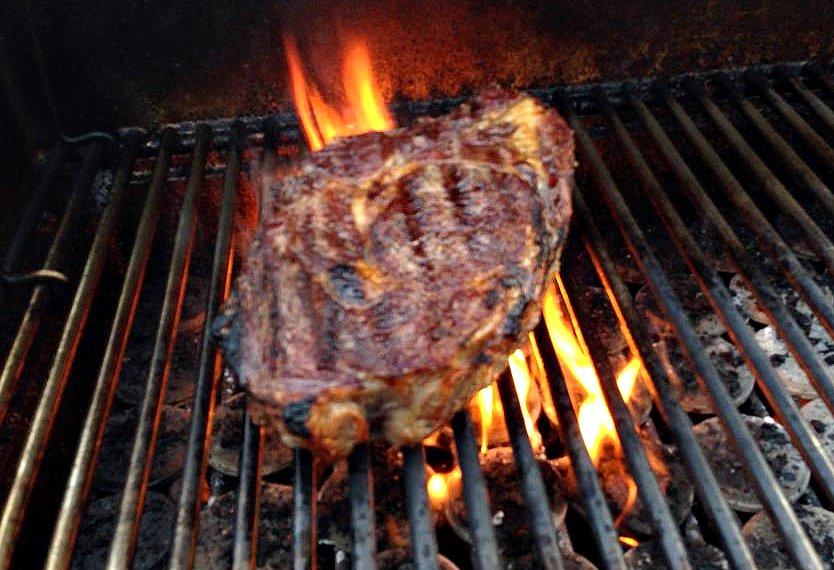
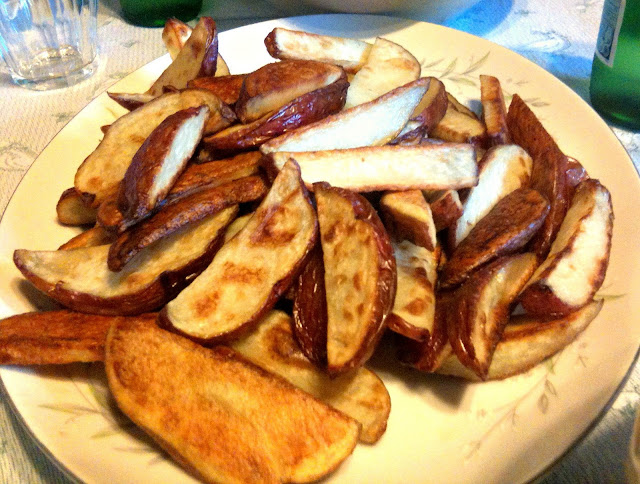
(photo: simple roasted potatoes <patate al forno> with sea salt, freshly ground black pepper, and plenty of extra virgin olive oil)

Italians love their roasted potatoes or patate al forno.  In Italy, most home cooks produce a variation of roasted potatoes based on their particular region.  My favorite versions include using plenty of herbs (sage, rosemary, fennel seed, etc.) and a good extra virgin olive oil.  The particular version I prepared recently included extra virgin olive oil from Sicilia, sea salt, and plenty of freshly ground black pepper.
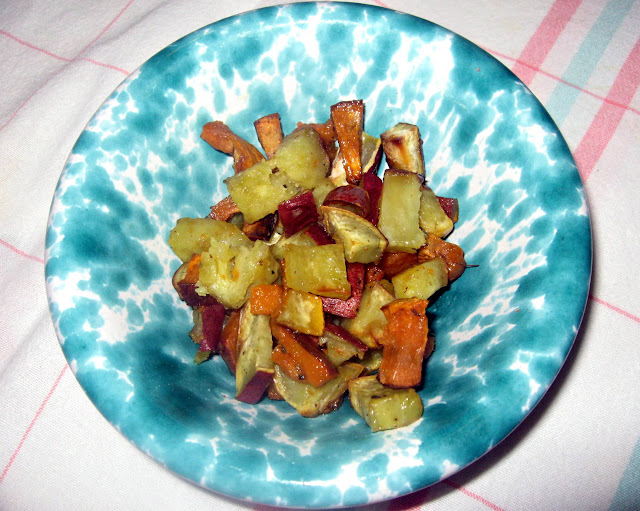
(photo: organic sweet potatoes roasted with wild fennel seeds from Sicilia)

The sweet potato is a tropical plant and was brought to Italy by Columbus via South America. Today, the plant is grown in my home state of New Jersey as well as Japan, parts of Russia, and, of course South America.  I'm a big fan of sweet potatoes and we use them in our (via Dr. K.) homemade ravioli, though our more everyday use includes roasting the potatoes in the oven with wild fennel seeds.  Here's our quick recipe: 
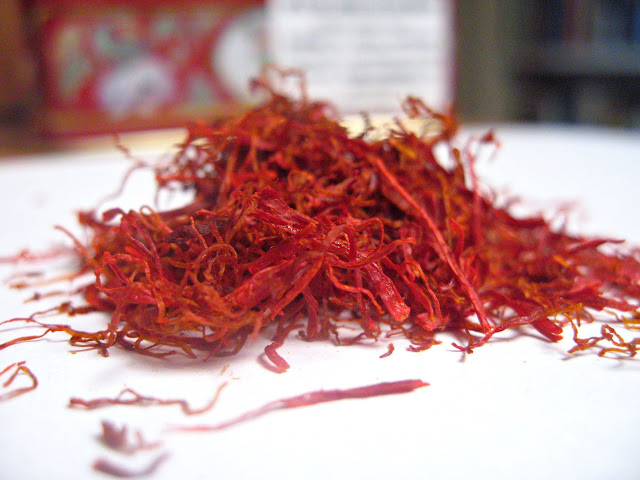
(photo: our saffron "threads" just prior to adding to the cooking broth for Risotto Milanese)

Saffron (or Zafferano) has always had a special place in my heart; more specifically, it's had a special place in my memory.  I associate saffron with my childhood and the yellow arborio rice my mother prepared for me on special occasions (viz., any time I asked for it and we happened to have some "saffron dust" busta <or envelope> in the house).  The variety of saffron my mother used to prepare risotto was packaged in a small yellow and red envelope and was supplied by Zia Teresa shop from Calabria.  And while I enjoyed the wonderful flavor that saffron gave my mother's risotto what I really enjoyed seeing was how the saffron dust would infuse a yellow/red color to the cooking liquid.  
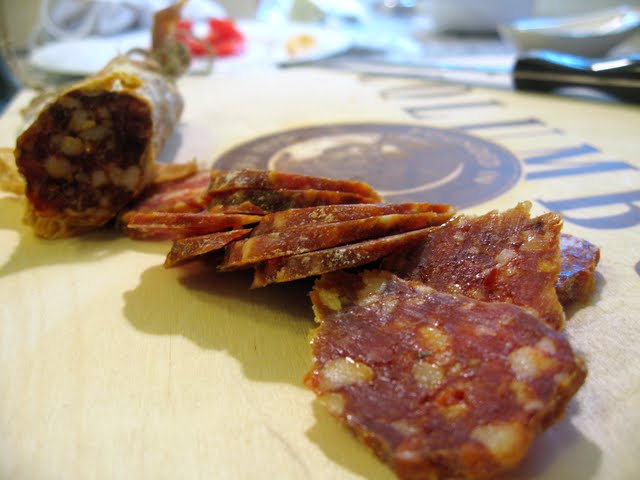
(photo: Columbus Artisan hot sopressata sliced by hand)

Peperoncini
and Salumi

If there's one food item that the southern province of Calabria is famous for it would be peperoncini (or red chili peppers). Peperoncini are used in pasta dishes (Penne all'Arrabbiata, for example), cured meats and vegetables (including the trendy salumi spread, 'Nduja), soups, and an eggplant stew dish called ciambotta.  

Almost every Calabrian family grows their own chili peppers and many summer festivals honoring and praising the mighty capsicum peppers can be found throughout southern Italy during the summer months, including the most famous festival in the town of Diamante.   Most Calabrian homes have dry red chilis hanging from their doors or windows which is known as the practice of diavolicchio (a tradition which once was thought to ward off disease).   Some famous Calabrian hot chilis include: Italian Cayenne pepper or naso di cane, ciliegia (cherry), amando (loving), and sigarette (cigarette).

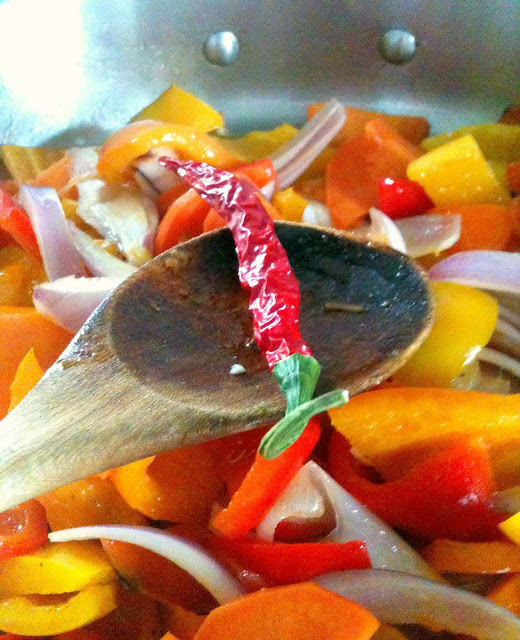
(photo: red and yellow peppers fried along side red onion and potatoes, including plenty of hot peppers)

The region of Calabria, and the birthplace of my parents, is widely known for its variety of peppers, including the hot and sweet variety such as peperoni di Senise red peppers and corno di toro yellow peppers.  Calabria also boasts a reputation for wonderful eggplant varieties and some of the best sweet red onions on the planet (especially in and around Tropea). 
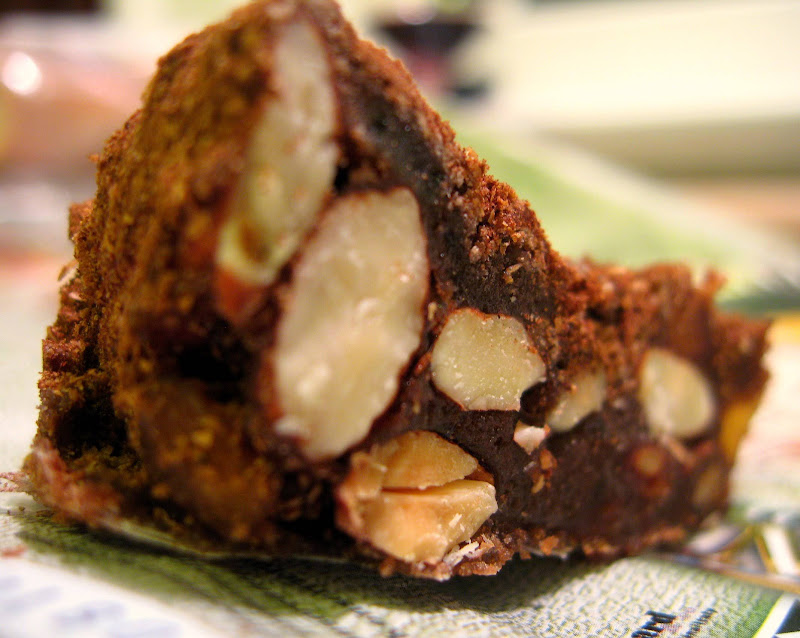
(photo: close up of panforte made by Pasticcerie Sinatti in Siena)

We've never been much of a dessert type of site here at Scordo.com - holding the view that sugar and chocolate can't compete with salt and fat!  So, when we had the opportunity to try a traditional Italian dessert we were a bit skeptical given our countless posts on pastas, salumi, crocchette, eggplant parmigiana, and fried, whole, sardines.  

Panforte is a an Italian dessert and is the equivalent of a Tuscan fruitcake (specifically made in the city of Siena).  Panforte (literally translated as "strong bread") is a flat, dense, round cake made with honey, hazelnuts, almonds, candied citron, citrus peel and spices.  The Nero version (as shown in the photos) includes cocoa powder and differs from panforte fiorito (which includes a layer of marzipan).  
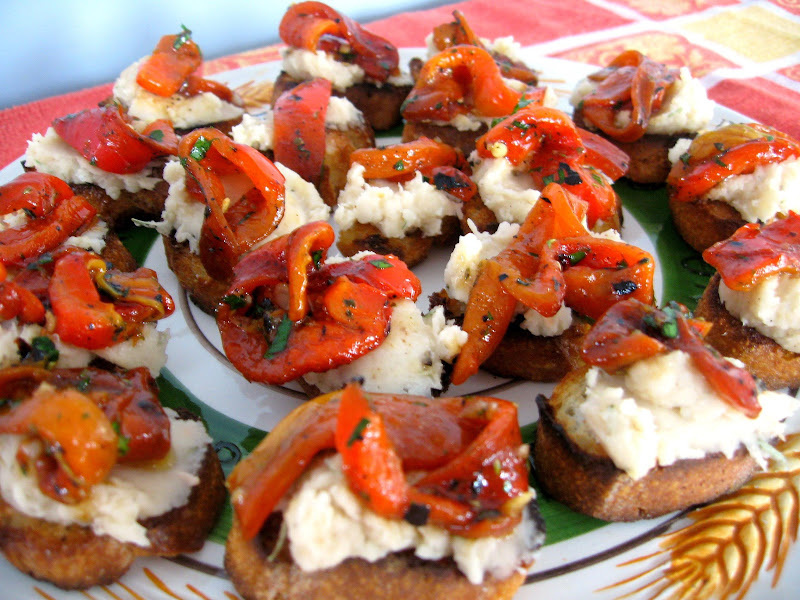
(photo: crostini with cannellini bean spread and roasted peppers)

Crostini literally means "little toasts" in Italian and they are Italian appetizers or tapas consisting of flavorful toppings.  Crostini are usually made from Italian baguette, sliced about 1/2 thick and quickly toasted or grilled.  In the US, the word bruschetta is used to refer to crostini with a fresh tomato, basil, salt, and pepper topping.  Bruschetta, like crostini, can be topped with an almost limitless list of ingredients.  Here's a quick recipe for making Italian toast:
 
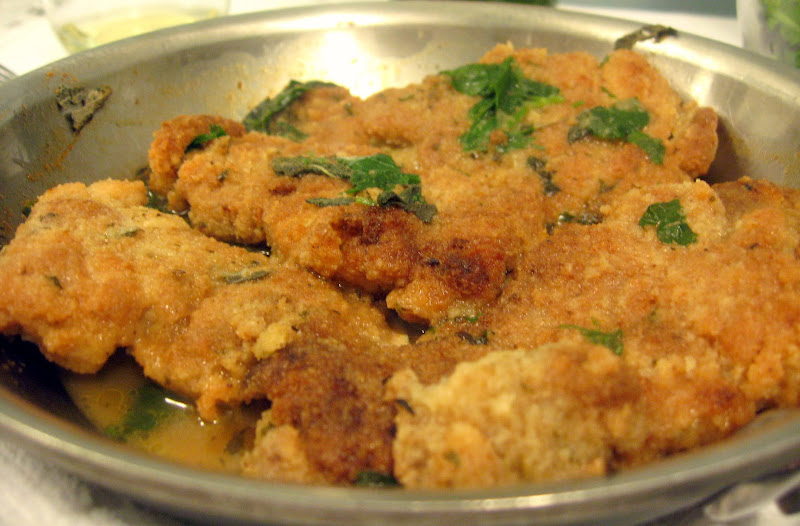
(photo: a great way to prepare chicken cutlets: rosemary chicken)  

Here's a simple chicken dish that I learned from my, childhood, next door neighbor Amelia who was originally from Genoa, Italy.  My mother prepared this dish at least once a weak during the winter months (my sister and I would jump with joy when we saw this dish at the dinner table).  Amelia had her own rosemary bush in her backyard (preserved in winter with a glass dome) but you can buy your rosemary at the market!. 

(photo: the varying parts of a pig, photo courtesy of Meat Salt Time by Tony Seichrist)

 I have to admit, I have an addiction.  Specifically, my addiction is centered on the mighty pig and it's cured off-spring, Salami!  

Salumi (the plural for salami) is made from either a single, whole, cut (e.g., Prosciutto) or ground parts of the pig.  All salumi (at times referred to as charcuterie) is cured, including some type of spice, and is aged for varying periods of time (for most Italians, cooked pork products, such as mortadella and prosciutto cotto, would also be considered salumi). 

Some of the more popular salumi in Italy include, Cotechino or Zampone, Guanciale, Lardo, Pancetta, Salame, Salame genovese di Sant'Olcese, Felino, 'Nduja, Soppressata, Ciauscolo, Prosciutto, Prosciutto di Parma, Prosciutto di San Daniele, Speck, Culatello (a personal favorite), Culaccia / Culatta, Prosciutto cotto, Capicola (another personal favorite), etc.  See my guide to salumi for more information. 

Scroll down for a chance to win a great book on how salami is made!

(photo: Salumi drying in cells and developing mold.  photo courtesy of Meat Salt Time by Tony Seichrist)

All great salami starts with a high quality pig, such as Duroc, Ossabaw, Mangalitsa, Pata Negra, etc.  And salumi such as Felino or Soppressata are made from different parts of the pig including the neck, belly, loin, jowl, etc.  The pig parts need to be ground before the spicing and stuffing process can begin. And as you probably guessed, both the lean and fatty parts of the pig are used during the grinding process (in fact, this is a key step because a good salumi needs a good ratio of fatty to lean meat).  Before the grinding takes place, most salumi makers coarsely chop their cuts of meat and thereafter it goes through a coarse grind plate.  Next, the meat is ready for salt and spice.  

The best salumi makers, such as Christiano Creminelli (who is the subject of a new book by Tony Seichrist entitled, "Meat Salt Time), use high quality sea salt and spices such as black pepper, garlic powder, nutmeg, dextrose or sugar, chili flakes, cloves, fennel seed, juniper berries, white pepper, etc.  The spices vary according to the type of salumi being produced, but most salumi are usually comprised of about 3% salt.  

(photo: Different Salumi spices, in this case the type of spices used by Creminelli.  photo courtesy of Meat Salt Time by Tony Seichrist)

After the spicing process, the salumi mixture is stuffed into a natural casing and tied and the critical fermentation process begins.  During the fermentation process, they key goal is to control temperature and humidity.  As Seichrist explains:

"The temperature and humidity are primed for bacterial growth, and the sugars in the recipe provide food for the growing culture.  As the bacteria begin to multiply and consume the sugars, there is a sudden drop in PH.  It is this sudden lowering of the pH that renders salumi completely safe to eat."  

The fermentation process also allows the salt in the meat to pull the water out of the salumi (this is what "drys the salumi and the high humidity during the process prevents the meat from drying out too much").  The ideal temperature at the beginning of the fermentation process is about 73-75 degrees with humidity close to 100 percent.  After about 10 hours, the humidity level needs to be dropped to 60 percent (for about 5 hours) with a gradual drop in temperature, as well.  After the 5 hours the humidity level is raised slowly (during a 4-5 day process) to about 75-85 percent with a temperature between 55-60 degrees.  The salumi stay in the aforementioned environmental conditions (usually in a curing cell when making large production batches) for about 17 days (during which critical mold and bacteria is created as well), in total.  

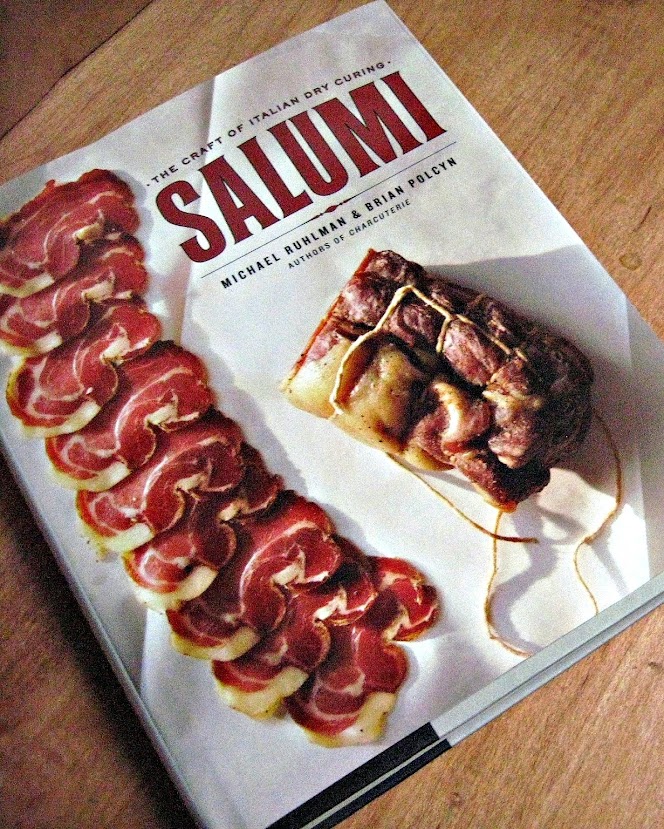
Are you interested in learning more about the salami making process and how high quality artisan producers such as Creminelli make their products?  If so, enter to win your very own copy of Meat Salt Time ; the book includes some of the best food photography I've seen(!):

- Only one entry per person please.

- The contest is open until 12 midnight on 10/4 and a single (1) random user will be picked via Random.org (sorry contest only open to folks from the US given shipping logistics).  The winner will be announced immediately on Twitter (so please follow me) and on Scordo.com by 8PM on Tuesday, 10/7.

- Requirements (both are needed): 1. Become a fan of Scordo.com on Facebook (if you're a fan already please "share" the page on your Facebook account) and 2. leave a comment here on your favorite food process, that is, something like making salami that you know well (e.g., making homemade pasta or fried chicken).  

- The book publisher will send out the book to a single contest winner during the week of 10/11.
  
(photo: Christiano monitoring the butchering process. photo courtesy of Meat Salt Time by Tony Seichrist)

IMG_6317
(photo: The Canonica Verde Umbrian Spice Blend including rosemary, sea salt, garlic, and red pepper flakes)

Click here for my other olive oil reviews!

As you've probably noticed, Olive Oil and Pasta are at the heart of Italian cuisine (both above and below the mezzogiorno, the geopolitical dividing line of Italy).  Specifically, my love for both products started in Nonna Scordo's New Jersey basement (we all lived in the same two family home for a few years before my parents purchased their own home).  As a small boy I was incredibly skinny and, as the legend goes (Italian mothers are tremendous storytellers with penchants for stretching empirical truths), I would not eat much.  One day, Nonna Scordo discovered I had a particular fondness for large rigatoni rigate with her blended olive / corn oil mixture (olive oil, athough still expensive today, was particular difficult to acquire in the mid 1970's through the mid 1980's, at least for folks in the lower to middle class ranks in the US), hence Nonna's move to stretch her olive oil.  Neverthless, rigatoni with oil and an abundance of mixed (again another "food stretch") Pecorino Romano and Pamigiano Reggiano cheese became my favorite meal (allowing me to reach puberty with some fat on my bones).  

IMG_6323
(photo: the Zitoni Cararecci - notice the length of this mammoth pasta shape!)

As a dish, pasta with olive oil is still one of my favorite simple pleasures in life and I, indeed, wax philosophical about my beloved Nonna Scordo every time I take a bit of rigatoni.  One such emotional moment came when I bit into a piece of Zitoni Casarecci from the producer Pastificio Vicidomini.  While I had the Zitoni with a chicken ragu, when I tried the pasta during the cooking process it had the same texture, mouth feel, and flavor of the rigatoni Nonna Scordo made in her kitchen.  More specifically, the Zitoni Casarecci had starchy and complex overtones, and while it didn't have the crunch and whole wheat flavor of Rustichella pasta, it certainly tasted and behaved (yes pasta must behave when cooked and tossed with the condiment) like a top flight Italian pasta.  Zitoni, as I mentioned in my last Scordo Pasta Challenge post, was a "special occasion" pasta in Italy.  As my mother describes, she would often be sent to the local shop near her Calabrian home to purchase a few kilos for Easter or Christmas lunch.   Because of the length of Zitoni Casarecci it is cut into pieces by the cook and the size can vary according to whichever pasta dish is being prepared.  

IMG_6395
(photo: the organic extra virgin olive oil from La Poderina from Grosseto)

On the olive oil side, I was fortunate to try two new olive oils from Italy this past week, including an organic oil from Grosseto La Poderina Toscana IGP, Seggianese monocultivar (made via a unique process called Sinolea) and a Tuscan variant, Rosselli del Turco DOP Chianti Classico.  Click here to read about the labels IGP, DOP, etc as they are applied to foods and wines in Italy.  

The Grosseto La Poderina is a solid extra virgin oil and can, indeed, be used as an everyday olive oil.  The relatively low acidity I found in the oil makes it a nice oil to try if you're new to consuming extra virgin olive oil.  I found the organic oil to be great with tomatoes, a salad of beet greens, and in salad dressings.  Color was outstanding with nice green/yellow contrast.  

IMG_6392
(photo: the super pungent Rosselli del Turco extra virgin olive oil)

The Rosselli del Turco was another beast entirely.  In fact, the smallish bottle that the oil is packaged in leads one to think automatically that Rosselli is a serious extra virgin.  So serious, in fact, that the shop carrying the product claims that it has one of the highest levels of polyphenols of any olive oil they've come across (think of polyphenols as tannins, like found in wine; the medical theory is that there's a correlation between the consumption of polyphenols and good health)!  Science aside, the oil was indeed pungent and overly peppery and bitter (I've had first cold pressed extra virgin olive oil straight from the press and the intensity didn't compare to the "attack" at the end of the palate the Rosselli produced; I actually coughed after tasting it).  In fact, on it's own (say with bread), I'd say it's a bit much for the American palette, but when drizzled on a piece of skirt stake with lots of black pepper it's quite good and can finish a dish that has complex flavors (maybe a piece of Bluefish or Swordfish for example).  The color of the oil was a neutral yellow.


IMG_6325 
(photo: lavish pizza made with the Umbrian Spice Blend)
 
IMG_6316

Finally, I sampled a spice packet containing an Umbrian blend (Canonica Verde Umbrian Spice Blend) of chili pepper, garlic, salt, parsley, and rosemary.  I was a bit hesitant to try a "blend of spices" because I'm accustomed to receiving herbs dryed in Italy from my family in individual containers (including oregano, red pepper flakes, rosemary, etc.) - the blending usually happens at home and for a given meal or dish.  Nevertheless, I sampled the packet on two dishes, first a lavash pizza with extra virgin olive oil, fresh basil, and provola and second a  roast chicken.  The spices proved to be a bit salty when used on the pizza, with only the sea salt and rosemary flavor components coming through.  However, when I rubbed the blend in a whole chicken and roasted the bird with a bit of olive oil, the spices blended together nicely and both the quality and flavor of the mix came though (including the chili peppers and garlic).

All the products above can be found in the wonderful online shop Olio2go.com.   
scordo on twitter scordo.com on facebook become a fan stumble scordo rss feed for scordo

Scordo.com Free Newsletter - Sign Up Today
* indicates required

BECOME A FAN OF SCORDO ON FACEBOOK:


GOOD READING:


MORE ABOUT US:


FEATURED STORIES:


Homemade Sun Dried Tomatoes in Olive Oil Recipe
Don't settle for the canned varieties found at supermarkets; find out how to make your own [+]


How to Make Authentic Tomato Sauce
This is the authentic Scordo family recipe - straight from Calabria. You'll be amazed at how simple the recipe is to make [+]


Guide to Italian Extra Virgin Olive Oil
My grandfather produced his own extra virgin olive oil in Italy and I've put together an olive oil buying guide just for you [+]


How to Make Rice Balls or Arancini At Home
The ultimate Italian street food - these fried treats are great for the holidays or for any lunch or dinner; try them with your kids [+]


Guide to Making Espresso at Home
Making good espresso at home isn't easy but once you master a few easy tips you'll never settle for the junk served at most cafes in the US, including Starbucks [+]


Why You Should Not Eat Out
My argument on why eating out doesn't make sense [+]


Guide to Italian Meats: Salame, Capicola, Prosciutto, etc.
Learn all about the great "deli meats" and authentic cured specialties from Italy [+]


Scordo Pizza Recipe
Who doesn't love pizza, but did you know it's real easy to make at home [+]


English to Italian Translation Powered by
Grab this Widget


SPONSORS, AFFILIATES, SUPPORTERS:

Italian Food and Life Site


mymelange
Independent Budget Backpacking Travel Tips

Advertise with Scordo.com


DONATE AND HELP KEEP US GOING:


Feeling generous and want to help keep Scordo.com producing fresh and original content?


QUESTIONS, IDEAS, TIPS:


email scordo.com: blog at scordo.com


Note: The views expressed herein are solely my own and should not be attributed to my employer in any way. This site is not maintained utilizing my employer's resources or on company time.


RSS feed graphic for scordo.com Subscribe to Scordo.com via RSSBlog Flux Directory