Recently in Books Category


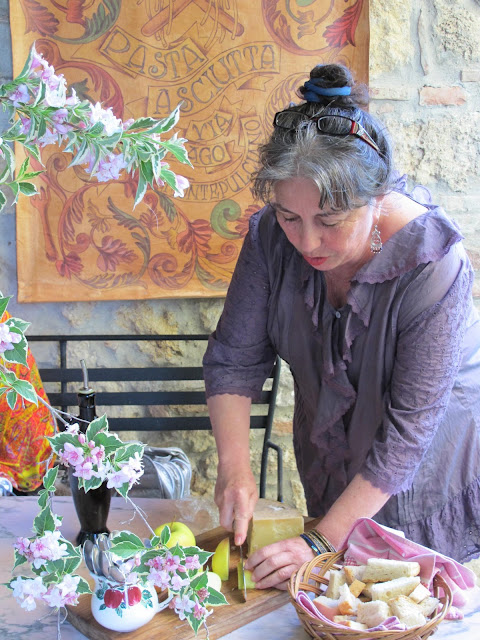
(Photo: Mary Ann Esposito, photo courtesy of NY Mag)

Every big idea or theory has an associated sound bite.  The French philosopher Rene Descartes is remembered for his famous line, "I think, therefore I am.", the chef Jacques Pepin loves to utter, "fast food my way", and the chef, turned uber capitalist Lidia Bastianich (see the mega Italian Mall, Eataly, just opened with Mario Batali and Lidia's son, Joe) loves to utter "Tutti a tavola a mangiare" (translated roughly as everyone come to the tables it's time to eat - kind of ordinary sounding in English!) after she prepares her TV meal.

If the Italian table had an associated sound bite it would be something like, "simple ingredients make outstanding food."  Give me a few days and I'll jazz up the tag line, but the idea of simple, great tasting, food made via fresh and seasonal ingredients is at the heart of what it means to eat or cook like an Italian

For PBS host and cookbook author Mary Ann Esposito she's taken the idea that the best Italian food is made via simple, and fresh, ingredients as a literal truth and just released her new cookbook, Ciao Italia: Five Ingredient Favorites.  Mary Ann's book includes recipes (from dinner to dessert) that are made with five ingredients or less (including salt and pepper).  Some of my favorites include pork chops with pistachio crust, Prosciutto di Parma and pine nut pizza, and chocolate, hazelnut and banana tartlets.


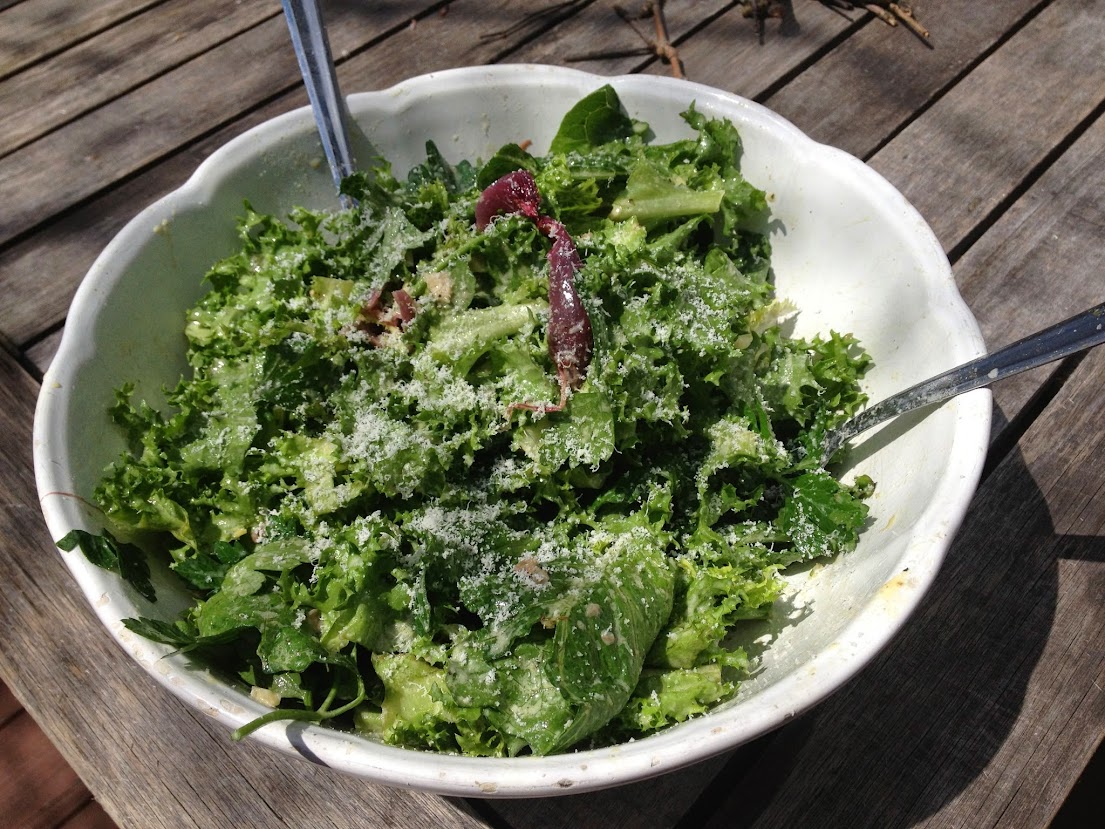
(Photo: Mushroom and celery salad from Ciao Italia Five ingredient Favorites by Mary Ann Esposito. St Martins Press, NY)

In honor of the new cookbook and the fact that I used to see Mary Ann Esposito on the campus of the University of New Hampshire (she tapped her PBS show Ciao Italia close to campus) during my undergraduate years (I never had the courage to introduce myself), I interviewed Mary Ann and asked her a series of questions about her Italian American experience and how she defines Italian cooking.


Moreover, Scordo.com has also partnered with Mary Ann to offer one lucky reader a chance to win a free copy of Ciao Italia: Five Ingredient Favorites!  Here's what you'll need to do to enter the contest:

- Become a fan (or encourage somone to fan) Scordo.com on Facebook and leave a comment on our wall on your favorite, simple, Italian recipe or food and 2. Become a fan of Mary Ann on Facebook.

- Only one entry per person please.

- The contest is open until 12 midnight on 9/9 and a single (1) random user will be picked via Random.org (sorry contest only open to folks from the US given shipping logistics).  The winner will be announced immediately on Twitter (so please follow me) and on Scordo.com by 8PM on Friday, 9/10.

- Please be sure to send me an email to let me know you've become a fan on Facebook (sorry, Facebook doesn't allow me to sort by new fans), email me at blog at scordo dot com

- Mary Ann's publisher will send out the book to a single contest winner during the week of 9/13.

Finally, here's my interview with Mary Ann, enjoy: 

Question One:
Tell us what it means to be an Italian-American and how you would best suggest to young Italian-Americans to keep our traditions alive and well (across food, lifestyle, and general living)?

Mary Ann's Answer:
"It means everything to me because the Italian culture has historically set the standard for so much of world achievements.  When you think of inventions, art, architecture, music, saints, science, religion, fashion, family and food, much of it has been attributed to the Italians. Young Italian Americans should involve themselves in organizations like the National Italian American Foundation, study Italian in school and on their own and above all talk to their family members about the history of the immigrants who made them who they are today. I try to do this through our web site ciaoitalia.com and Mary Ann Esposito Foundation which encourages would be chefs to study Italian regional cooking. You can learn more about the foundation on the web site."

Question Two:
What part of Italy did your family originate from?  What traditions do you (or your family) bring to the US from Italy?

Mary Ann's Answer:
My family is from the province of Avellino in the region of Campania and Caltanisetta in Sicily. My grandparents were very proud but poor people. First and foremost they brought strength and a fearless attitude. They brought strong religious faith. They brought their skills of tailoring and farming and olive culture. They made wine; we did the same. They cultivated gardens; we did the same. They made all their own food; we do the same. I try to emulate their traditions by recreating the foods I grew up via my books and my PBS series television, Ciao Italia now in its 21st year of broadcast. I also keep my family traditions alive through my blog.

Question Three:
How you define Italian cooking at home?

Mary Ann's Answer:
Fresh, in season ingredients, treated simply to keep the integrity of the food. All my cookbooks stress this.


(Photo: Pistachio pork chops from Ciao Italia Five Ingredient Favorites by Mary Ann Esposito. St Martins Press, NY)

Question Four:
You have a Masters Degree in history from the University of New Hampshire; has your knowledge of history impacted how you cook and see the world?

Mary Ann's Answer:
Absolutely. When I wrote my thesis on a Renaissance Italian cooking manuscript, I began my introduction by saying without food there is no history. Food and history are inseparable. Early foods like grains, legumes and puls allowed civilization to flourish and many wars were waged over whether there was food or not. In Italian culture, food is the cornerstone of everything. Take bread as an example. When I make it, I am reminded of how this simple staple from water and flour is still the staple food of third world and emerging nations. I see that waste not want not quality that my grandparents had who revered bread so much that not a bit was every wasted. To this day, I never throw away stale bread, using it instead for bread salads, as fillers for vegetables, to sprinkle over pasta dishes and as what has come to be very chic and in today, the bruschetta or crostino.

On Ciao Italia I give you not only a recipe but the story behind the recipe; where does it come from, why is it named so. The Mary Ann Esposito Foundation's goal is to keep the history and traditions surrounding Italian regional foods alive. I want the next generation of Italian Americans to take over where I leave off so we can preserve our heritage for generations to come.

Question Five:
What are some of your favorite recipes and food types outside of traditional pasta with tomato sauce, for example?

Mary Ann's Answer:
I love to make polenta and risotto as well as traditional breads and pizza. Once you start studying the regions of Italy and their local foods, you have a better understanding of why there really is no Italian food per se; there is only regional food. I love eels from the Veneto and from Sardinia; the bistecca of Florence and the porchetta of Umbria. Any eggplant dishes and rabbit stews are also favorites. I have so many that it would be impossible to mention them all here and that is why their importance has consumed me in my work.

Question Six:
What are the top five ingredients that you keep in your pantry at all times?

Mary Ann's Answer:
Extra virgin olive oils, imported semolina pastas, dried beans, arborio rice, San Marzano tomatoes. In fact my latest book is called Ciao Italia Five Ingredient Favorites and you would be surprised how much you can make with just 5 ingredients as opposed to a whole list!
Related Posts with Thumbnails
08SlowFood
(photo: couch's whiting or blue whiting with red onion, peppers, and tomatoes)


(UPDATE 1/31/09: Contest is closed.  The winner is Evan Lucas!  Thanks to everyone for participating.)

In Elena Kostioukovitch's preface from the book, "Why Italians Love to Talk About Food" Elena asks, "And why is that you identify particular historic moments with references to food?"  The "you" Elena is referencing are the intelligentsia of the Italian landscape (i..e, scholars, journalists, historians, political figures, etc.) but she might as well be talking about the seamstress from Naples or the fisherman from Calabria.  You see, for most Italians, food is the identifier of moments (hence the phrase, "Parla come mangi" or Speak the Language of Your Food); it bonds Italians, allows them to experience pleasure, and defines what it means to lead a good life.  In America, we consume material or money, while in Italy its inhabitants eat wonderful foods to "live well and soundly" (and it's the most basic and pure form of consumption).  

18Pasta 
(photo: is that drying pasta or makeshift window curtains?)  

21Marches
(photo: the long process of harvesting saffron)

I have to confess, I was fascinated with Kostioukovitch's book well before I sat to read through the 450 pages.  My fascination wasn't, of course, centered on how a people could disregard economic or material status for the sake of food, but, rather, why anyone would want to chase the good life in any other manner beyond eating well.   You see, I learned early only to associate both important events in my life, as well as the mundane, with wonderful food.  For example, I associate my first trip as a boy to Italy with the taste of cold pressed extra virgin olive oil from Nonno Latella's small olive orchard outside of Bagnara Calabra.  The olive oil was different from the corn oil my Italian family consumed in the States (we couldn't afford olive oil in those days) and I quickly identified our trip to Calabria with the green nectar from many years to come.  And it wasn't just olive oil that formed strong references to key events in my life.  I still associate, vividly, the smell of frying dough with Christmas Eve (zeppola), boiling pasta water with Sunday mornings (linguine with a rabbit ragu), sun dried tomatoes , provolone cheese, and salami to my parent's Saturday evening dinner parties, and strong stove top espresso with my mother's breath.    

Kostioukovitch does a great job of documenting the same sort of food associations I mention above in her 19 chapters on Italian regions, history, and folklore.  I was particularly interested in her chapter on Calabria and it didn't disappoint.  Here are some interesting food and cultural tidbits on the southern Italian province of Calabria from Kostioukovitch:

24Mediterranean Diet
(photo: I'll take the zucchini blossoms!)

1. In some parts of Calabria, "farmers still read omens from a pig's entrails when it is taken to slaughter, as the Etruscan haruspices did."  I remember when Nonno Latella used to slaughter a given pig from his stock (about every 2 years or so) and the ritual was very solemn (he didn't do much reading or perform any rituals; rather he was focused on slaughtering the pig).

2. Calabrian women danced and shouted incantation to drive away evil spirits while kneading dough.  Both my Calabrian born grandparents kneaded plenty of dough and I don't remember them shouting, unless of course I came into the kitchen with dirty hands.  However, I do remember Nonna Scordo telling me I had very poor hip movement when I kneaded (she said I had no rhythm or style and she was right).  

03Veneto 
(photo: grilled seafood in Veneto)  

3. The sign of the cross is traced on loafs of bread before they enter the oven.  I'll have to ask Zia Giovanna if she performs this ritual in her bakery each morning.  My hunch is that she may on occasion trace a few crosses, given her belief that one can make major life decisions by placing a single drop of extra virgin olive oil in a bowl of water and then asking the oil to move in a certain manner (when she did this for me as a small child I thought we were playing the Oiju board game; I was slapped quickly and told to sit still).

4. Calabria was part of Magna Craecia (or "Greater Greece" from the eight century B.C. until the third century.  The Romans arrived in Calabria 500 years after the Greeks and loved the local wines!  After the Roman empire fell, "Calabria was ruled by the Germans, the Goths, the Lombards, the Byzantines, the Normans, the Franks, the Swabians, the Saracens, the Spanish, and the French."  The 'ndrangheta (Calabrian mafia) begin flexing it's muscle from 1850 onwards and some say they've never loosened their vice grip on the region (a sad fact for the people of Calabria).  

5. Cistercians monasteries dominated much of Calabria and their traditions continue to this day, such as practicing an ascetic way of life and deep reliance on agriculture.

6. An annual swordfish sagra (festival) is held on the first Sunday in July in Bagnara Calabra.  The sagra features wonderful food and is best known for the blessing of the ontre or traditional fishing boats used to spear swordfish.  The is one cool event and it takes place only 10 minutes outside of Pellegrina (Pellegrina has it's own sagra focused on wheat)

7. Calabrians are famous for the diversity of their eggplant crop as well as reliance on fava beans, broad beans, and white beans.  Many fish are consumed from the Tyrrhenian and Ionia seas including swordfish, tuna, sardines, and herring.  See my article on 10 Ways to Cook Like An Italian here.

09ValleAosta
(photo: boar head next to boar salami?)

Contest / Book Give Away

In order to spread the concept of leading the good life via food (or at least talking about it!) the folks over at Farrar, Straus, and Giroux hava agreed to send a free copy of Why Italians Love to Talk About Food to one lucky Scordo.com reader !  Here's how you can enter the Why Italians Love to Talk About Food book giveaway contest:

- Prize Giveaway includes one (1) copy of Why Italians Love to Talk About Food.

- What you need to do to enter: 1. leave a comment under this post on a favorite food memory (from any region of the world) and how you indentify it to a major life moment or event (or even an important person or relative) and 2.sign up for the Scordo.com What's New Newsletter here (if you're already a newsletter subsriber than you'll need to sign up as a fan of Scordo.com on Facebook here).
 
- Only one entry per person please.

- The contest is open until 12 midnight on 1/30 and a single random user will be picked via Random.org (sorry contest only open to folks from the US given shipping logistics).  The winner will be announced immediately on Twitter (so please follow me) and on Scordo.com by 5PM on Monday, 2/1. 

cover
(photo: book cover)

- Please use a valid email address when leaving a comment so I can contact you just in case you're the lucky winner (I'll need your shipping address). 

- Farrar, Straus, and Giroux will send out the book to the single contest winner during the week of 2/1.

Finally, Elena was nice enough to answer a few of my questions on Italians and food.  You can find the full interview below and also purchase the book via Amazon:

1. How did you first get interested in the relationship a typical Italian has with his or her food?
 It was soon after I began my formal study of Italian language and culture in the University of Moscow. Suddenly I realized that there's a multitude of topics, either abstract or practical, which are closely linked to a food themes of in the mind of Italian people (and of people of Italian origins of course). An Italian says about his or her mother that 'she's as gentle as a bread', about a friend: 'we're like mac and cheese' ('cacio con i maccheroni'), and about a nasty person: 'his pumpkin (head) obviously lacks salt (brains)'. So the more I've been reading Italian journalism, poetry, novels, even philosophy and academic books, the more obvious it was: in order to understand Italy and Italians, one definitely should familiarize herself with secrets of their culinary code.
 
2. What surprised you the most about how Italian interact and relate to food?
I just love their comprehensive approach to food! A dish can't be 'delicious' or 'bad' per se, it's to be evaluated in context of the entire feast menu. To really enjoy spaghettis, one should take into account a dish that was served before it (antipasto), what was a main dish, and what followed (a dessert). Such an approach suppose that a customer is not only able to evaluate a palatability of every single dish, but also understands what sequence/combination of dishes might be considered prefect, good, adequate, bad, or disastrous. I should affirm that literally every adult Italian has got - subconsciously in the majority of cases - this culinary culture, that he or she has adopted from the very childhood, both in family and in social institutions (kindergarten, school, college etc.)

Yet to say that Italian teenagers today - and especially in big cities - gradually absorb an American-style eating traditions: hamburgers, French fries, hotdogs, Coca-Cola. It is possible that in a decade or two Italian culinary rituals and traditions will sink into degradation and will be swept away by a globalization.
 
3. Americans get a bum wrap for their relationship with food (not to mention the typical American diet); are things changing in the US? Will we ever see regional cooking make a comeback in the US?
 Well, you tell me! I strongly hope that there's a possibility for that in the US, but let your readers express their own judgments. I will enjoy reading them.  (Scordo comments: well, what do you think of Elena's question, will American ever be food obsessed in the way Italians live and eat?)
 
4. Your book is not a typical cookbook; was it difficult to talk about food with no references to recipes?
The main subject of my book is not a food in itself, but what Italians SAY about it. To a certain degree, my book is a systematized collection of testimonies of Italians who cook, sell, describe, picture, enjoy and eat Italian food. To put it the other way, my book's main focus is not on recipes, but on existing general concepts and their roots.
 
5. Is there a particular regional, Italian, cuisine that you like best?
 My favorite regional Italian cuisine is definitely that of beautiful Toscana (Tuscany). Its food is full of energy and dynamism essential for Tuscan character. I adore the taste and look of fresh Tuscan products: vegetables, bread, fish, meat, and not to forget about its inimitable wine. I would highly recommend a freshly-made fiorentina beef stake (only a couple of minutes on grill), a cazzimperio salad made of fresh vegetables and special seasoning (vinegar, olive oil, local spices). Tuscan bread is in the base of the world-known bruschettes. As for a local fish courses, made of Tuscan fish, so rich in flavor, my favorite is a delicious cacciucco soup, which according to a local tradition should be prepared of at least five different kinds of fish (as many as Cs in its name, cacciucco), though the more the better.
 
6. Of the southern regions of Italy, is there a dish or food philosophy that you enjoyed researching or were surprised by?
As almost every newcomer, I was amazed by a practice of  meridionale (southerners) to eat a wet uncooked fish or seafood just from the net, seasoning it only with salt and lemon juice and washing it down with chilled white local wine. This viand turned to be just as tasty, nutritious and delightful as French oysters accompanied by Chablis wine or Japanese fugu sushi with Japanese beer; the only difference is that the last two are world-famous luxury food, while only few connoisseurs outside Italy know the divine taste of a freshly caught octopus, sea urchin and frutti del mare accompanied by chilled Fiano wine (brought to Apulia by Angevins some 800 years ago). To tell you all the truth, I believe that one should try these delicacies only in Italy, combining a joy of gourmet with other esthetic pleasures Apulia with its magnificent seashore and plenty of old Norman castles offers.
Related Posts with Thumbnails
Pge 191
(photo: via the Italian Farmer's Table, rye bread)

(UPDATE 1/10/09: Contest is closed.  The winner is SimplyForties!  Thanks to everyone for participating.)

If you've read any of my articles focused on Italian living and lifestyle over the last 6 months, then you've probably come to the conclusion that my Italian roots (and those of my parent's) are firmly situated in the mezzogiorno (the word mezzogirono references the southern region of Italy, including the regions of Basilicata, Campania, Calabria, Apulia, Molise,  Abruzzo and the islands of Sicily and Sardinia ).  In turn, I often shy away from writing about northern Italy because I'm both unfamiliar with the region and also because so much has been documented and said about areas/cities such as Toscana, Roma, Sienna, Genoa, etc.  But when a good friend forwarded me an article from a local newspaper in Connecticut I know I stumbled upon something special, namely, a new book by husband and wife team Matthew Scialabba and Melissa Pellegrino entitled, The Italian Farmer's Table, Authentic Recipes and Local Lore from Northern Italy (see the accompanying website here!).  

0-7627-5264-5
(photo: via the Italian Farmer's Table, cover photo)

Like the movie Julie and Julia, Matt and Melissa ate, worked, and lived their way through every region of northern Italy by way of agriturismi (subsidized, working, family farms that provide lodging and meals to travelers).  The couple also documented 150 northern Italian recipes from the farms, including many dishes I've never read or encountered in Italian cuisine.  The 150 recipes are translated with great care and they can, for the most part, be easily adapted for the American kitchen.  In addition to the recipes, the book also include tidbits on local traditions, events, and, of course, food items (for example, in the the chapter on the Casa Al Campo farm we learn about the Dolomite Mountains and the hunting rituals surrounding deer and chamois).  The Italian Farmer's Table also features great photography, especially photos taken with the farm owners and their local products.  

Pg 5
(photo: via the Italian Farmer's Table, making pasta)

I loved the Italian Farmer's Table so much that I asked Matt and Melissa if they were willing to offer a free copy of their book to a lucky Scordo.com reader and, echoing the generous spirit of the Northern Italian farmers referenced in the book, they agreed!  Here's how you can enter to win a free copy of The Italian Farmer's Table:

- Prize Giveaway includes one (1) copy of the The Italian Farmer's Table

- What you need to do to enter: 1. leave a comment under this post on your favorite Italian region or city that you've visited (if you haven't been to Italy which region would you like to visit?) and 2. sign up for the Scordo.com What's New Newsletter here.
 
- Only one entry per person please.

- The contest is open until 12 midnight on 1/10 and a single random user will be picked via Random.org (sorry contest only open to folks from the US given shipping logistics).  The winner will be announced immediately on Twitter (so please follow me) and on Scordo.com by 5PM on Monday, 1/11. 

- Please use a valid email address when leaving a comment so I can contact you just in case you're the lucky winner (I'll need your shipping address). 

- Globe Pequot Press will send out the book during the week of 1/11.

Finally, Matt and Melissa were also nice enough to answer a few of my questions on local versus organic food, the agriturismo industry, why Italians place so much emphasis on eating well, etc.  You can find the full interview below and also purchase the book via Amazon.  

1. What inspired you pick up and leave the US and live in a foreign country.  Was it difficult to adjust and handle the practical elements of living a foreign country.
We had been toying with the idea to write a cookbook about the Italian agriturismo for about six years.  After numerous rejection letters from publishers, we decided to do the trip ourselves.  We knew that the whole agriturismo system was practically unknown to the American tourist and that as the farm to table mantra began to pick up steam here in America, the timing was right for a book of this nature.  We had both lived in Italy before so being there again was not that big of an adjustment.  I think the hardest part was living out of a suitcase for four months and changing farms every 5th day.
 
Pg 94
(photo: via the Italian Farmer's Table, fennel)

2. There's been lots of talk in the media surrounding organic and local foods.  Should shoppers concentrate on buying local versus organic?
Hopefully if it's local, it's also seasonal and not shipped across the country or from another country.  While we commend organically grown food we are not that big on its status symbol and government approved stamp.  There is nothing better than eating ingredients that are in peak season and harvested close to where they are sold.  Many of the farms we visited considered themselves "independently" organic, farming naturally without pesticides or chemicals, but perhaps lacking an official organically grown certificate. Hopefully, most locally grown food available to consumers are adopting a similar philosophy.
 
Pg 68
(photo: via the Italian Farmer's Table, harvesting grapes)

3. How do Italian shop for food and is there a big emphasis on organic or local foods?
 Italians shop for the day, often going to the markets every day to seek out what's fresh and looks the best.  Kitchens often have much smaller refrigerators than we have in the US and they eat far less processed foods and snack food.  

4. What's an agriturismo?
An agriturismo, is a working farms with accommodations and restaurants, where everything grown and raised on the farm are served to guests.  The system was formed in the eighties to help preserve small family farms.   By allowing them to open their doors to overnight guests, farms were able to supplement their incomes by providing food and lodging.  They have experienced tremendous success, and there has been a huge movement throughout the country as crumbling farms are being renovated and revitalized.  There really is no better way to experience rural Italy than to stay at an agriturismo and soak in some local culture and eat and drink like a real Italian.  
 
5. What makes local Italian food taste so good and is it really possible to recreate the dishes in your book here in the US?
Prime ingredients that haven't traveled hundreds of miles.  We have adapted all recipes for the American home cook
 
6. What's your favorite northern Italian region?
Too difficult a question - each region has its own personality and charm
 
7. You mention the "Italian countryside lifestyle" - what exactly is this?
Living sustainably and with the seasons consuming what one can grow and raise locally.  
 
Pge 91
(photo: via the Italian Farmer's Table, fresh ricotta)

8. Why do Italians put so much emphasis on eating well and how does good food contribute to such a high quality of life in Italy?  
Eating well means everything to Italians.  Eating means so much more than consumption, but rather, a time to be with friends and family and to sit down and enjoy company and conversation united by food.  This all contributes to a high quality of life focused on more intrinsic values with less emphasis on material objects.  
 
9. What's your favorite, local, Italian dish to prepare in the US?
For us, in CT, we love linguine with clams.  Fresh local little necks, garlic, hot pepper, white wine, and lots of parsley.  Summer or winter, the briney salty flavor is a classic Italian (southern) favorite.

10. How is local farming set up in Italy and how can this system of food production feed a large western country and is it possible to replicate this system in the US?
The Italian agriturismo can prove to be a model example of how small farms can succeed and operate.  As more and more Americans are shopping at farmer's markets and becoming interested in learning about where their food comes from, smaller, family run farms have begun to experience success and economic sustainability.  While we are moving in the right direction, there is still much to change about American's eating habits.  The White House's first garden is symbolic of more awareness about the importance of eating well, and there's hope on the horizon for a better and healthier American diet.
   

Related Posts with Thumbnails

kant.jpgA college professor once told me that most adults finish all serious reading by the time they reach the age of 23.  He went on to say that most professions, even ones that require a four year degree, do not require the worker to engage in prolonged or critical reading.  And while I'm sure there are exceptions to the statement, I agree wholeheartedly with the professor's conclusion.  Ask yourself, for example, what was the last serious novel you read or the last time you read The Economist from cover to cover (that's Immanuel Kant on the left, by the way; he wrote a Critique of Pure Reason and should be on your reading list)?

Related Posts with Thumbnails

franz.jpgI've been fascinated with Kafka since High School and Zadie Smith offers an excellent review of The Tremendous World I Have Inside My Head: Franz Kafka: A Biographical Essay.


I think vegetarianism will most likely be the preferred way of eating in the far future (say once we over fish the oceans and grow up ethically as a civilization) and Su restaurant in the NYC metro area will start the conversion of the meat eaters (I'm currently one but thinking about a conversion)!


Related Posts with Thumbnails

Welcome To Scordo.com

Google Ads:


Follow Us:
twitter scordo facebook fan page scordo rss feed contact scordo.com more about scordo.com


Read Through Our Top Categories:
personal finance best of house and home best of italian way food and products best of how to and home improvement best of

Sign Up: Scordo.com What's New Newsletter
* indicates required

Help Keep Us Going:

Feeling generous and want to help keep Scordo.com producing fresh and original content?

Questions, Ideas, or Tips:

email scordo.com: blog at scordo.com


Blog Flux Directory

Note: The views expressed herein are solely my own and should not be attributed to my employer in any way. This site is not maintained utilizing my employer's resources or on company time.

RSS feed graphic for scordo.com Subscribe to Scordo.com via RSS