Recently in How To Category

italy2_vineyard 
(photo: the backdrop isn't New Jersey but rather Nonno Scordo's farmland in Calabria.  Nonno is in the center while my father is on the right and my Uncle is positioned on the left.  All three men are/were excellent pasta eaters and the photo above is one of my favorites <as my father often says, life in Post War southern Italy was difficult, but the quality of life, including food, was wonderful.>) 

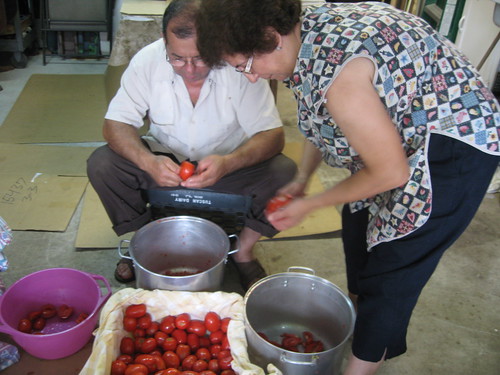
Growing up in Northern NJ on a densely packed block full of immigrant families (mostly from Calabria) both Thursday and Sunday were special days.  That is to say, for many of the families on our tiny New Jersey block from Pellegrina, Bagnara Calabra, Grimoldo, and Ceramida Thursday and Sunday were designated as pasta days!  My mother, from Pellegrina, would often make pasta with Tomato sauce on Sunday and then a more exotic pasta condiment on Thursday (maybe a ragu of rabbit with Pappardelle, for example).  And I'm convinced our New Jersey block had a higher relative humidity on the aforementioned days because of of all the pots of boiling water going at once (ever notice why Italian kids have great skin!).  

Here, then, are eight pasta tips gathered from the many Calabrian women on Oregon Avenue (from, say, 1979-1994) in New Jersey.  Oh, enjoy your pasta today!

1. Buy the best possible dry pasta on the market.  Like fine dress shoes, you get what you pay for in terms of dry pasta.  Good dry pasta usually comes from Italy and is made with 100% semolina (Durham wheat) flour and spring water.  The better Italian products are also made by hand. De Cecco is a fine readily available pasta brand.  Rustichella d'Abruzzo uses slightly better ingredients for a nicer end product and is usually sold at Italian specialty shops. 

2. Use lots of fresh boiling water.  I have a dedicated pot when it comes to boiling water for pasta and I always overcompensate when it comes to the amount of water needed.  You want lots of water so that the pasta doesn't stick during the cooking process. 

3. Salt the water right before adding your pasta and as soon as you have a good, rolling, boil going.  Not including a healthy amount salt in your pasta water is the equivalent of eating a tomato without salt, so please use plenty of it!

4. Once you add your dry pasta to the pot stir often and don't walk away from the pot.  You don't need to nurse a pot of cooking pasta like risotto, but you should certainly stir every 2-3 minutes.

5. Most brands include cooking times depending on pasta shapes so it's important to time when you add your pasta to the boiling water.  Al dente (or to the tooth) is the golden rule, but I know plenty of dyed-in-the-wool northern and southern Italians who go well beyond the al dente cooking time period,  Nonno Scordo, for example, preferred rigatoni and penne at 1-3 minutes over al dente.  Like finding your niche in the wine world, you should cook pasta to your taste, but please don't turn it into mush (just keep in mind there should be some give when chewing pasta).  Finally don't add olive oil (or any oil for that matter) to your pot.

6. Add your drained pasta to your hot pan containing the condiment or sauce and never vice versa.  Adding your pasta to the hot pan containing the sauce will allow you to cook through the pasta for an extra 30-90 seconds.  You should also save some of the starchy pasta water just in case you're looking to change the consistency of your sauce.  You don't always need to add pasta water to your sauce, as many FoodTV personalities do.  Moreover, do not rinse your pasta after the cooking process (again because the pasta contains a coating of starch that allows your condiment to adhere to the pasta).

7. Finish your pasta with a bit of olive oil (I almost always add a bit of olive oil to my completed pasta dish).  The oil gives your pasta dish an additional fresh oil component and just finishes the dish.  You can add grated cheese to your pasta during the mixing of pasta and sauce in your pan and then again at the table.  You can use Parmigiano-Reggiano, Grana Pa'dano (a great substitute for the more expensive Parmigiano-Reggiano) , or Pecorino Romano (note Pecorino Romano is not a substitute for Parmigiano-Reggiano)

8. Watch your portions.  Most Italians have pasta as a starter for any given dinner or lunch and not as the main dish.  A quarter pound of pasta for two people, for example, is deal.   

Related Posts with Thumbnails
IMG_2613
(Some home improvement projects are just too big for the average homeowner to take on him or herself.  Case in point, when a 100+ year old Silver Maple falls across the entire width of your street.)  

Like many first generation college grads, I come from a long line of blue collar workers (I don't like this phrase as, in my experience, many old world "blue collar workers" are as capable and technical as the average college grad here in the US).  My father was trained as an electrician, but has a skill set ranging from plumbing and carpentry to landscaping and roofing.  Both of my father's brothers are also skilled craftsmen and their expertises include metal working/welding and carpentry.  If I extend my family connections further, the list grows to include professional landscapers, blacktop and cement experts, general contractors, finish carpenters and framers, masons, commercial and residential plumbers, etc.

My hands on skill set, however, is limited.  I can count my home improvement skills on a single hand (and I include painting and mowing the lawn high on the list; not very impressive tasks).  In turn, I often work with my father on running most of the home improvement projects on our 80+ year old home.  And while I've picked up the occasional hands on skill from my father, I've learned to love and master the second most important home ownership skill set; namely, negotiating with contractors.  

Even with a large family-based home improvement network it's often necessary to contract out large jobs given a special skill set, piece of equipment, or simple lack of time to get the project done yourself.  A necessary home improvement project you may need to outsource to an expert may include pouring a new cement sidewalk, laying a new asphalt driveway, installing a new roof, sanding and installing new hardwood floors, tiling a bathroom, or removing a large tree from your local street (see above). 

When it comes to outsourcing a home improvement project and , in turn, negotiating with contractors and tradesmen here are 12 home grown tips keep in mind.  By utilizing the tips below you'll be certain to get the best price and highest quality tradesmen to work on your project:

1. Avoid amateurs and new businesses.  Young and inexperienced individuals and businesses often charge less for a given service and while you may save a few bucks on that new exterior paint job or new furnace for example, you'll end up paying more over the life of the service or item installed.  Hire a bunch of college students to paint your home, for example, and they'll often skimp on the preparation side of exterior painting which includes finely sanding the given surface.  And if you paint on a surface not prepared correctly, you'll need to paint again the following year.     

2. Get at least three bids or estimates.  If you don't have at least three estimates for a home improvement project you'll have no basis to compare what a job should cost.  Moreover, when you talk to as many specialists as possible you'll begin to learn what it's going to take to build a new deck or put in a new roof (and with knowledge comes the ability to negotiate).

3. Avoid hiring a general contractor most of time.  Most general contractors are not hands on and as a homeowner you'll basically be paying a single individual to act as a glorified coordinator.  You can skip the GC mark up and contact the individual tradesmen directly.  Yes, you'll need to spend some time researching who you need to call to get a particular home renovation project completed, but you'll save big by bypassing a general contractor.  I've often been told by general contractors when I push them on pricing that, "hey, I have to make some money here, Vince"  My reply, "go and find someone else to make money on I'm not going to need your services!"  

4. Avoid using "experts" or installers from big box stores like Home Depot and Lowes.  It may seem convenient to hire the local carpet or window installers from Home Depot but there are plenty of horror stories I've heard and the expertise level is often very low with the aforementioned crews.    

5. Ask folks in your neighborhood for recommendations on the top carpenters, plumbers, and electricians in your area.  If you're lucky enough to have a mom and pop hardware store in your town then ask the owner for tips on good tradesmen in the area.  And don't forget to check out completed jobs in your neighborhood (your standard for what constitutes good work may be higher than the 80 year old Mrs. Smith down the block).  Also, don't forget to check local online message boards and visit the Better Business Bearru web site.  

6. Negotiate fiercely and make it a point to tell the contractor you're not desperate to get the project done and you're looking for the best price and a quality job.   If you know you need a new roof then don't wait until you have water coming in from your second floor ceiling to get bids and select a roofer.  If you know someone more knowledgeable than yourself then have them at your house when meeting a contractor to get an estimate.  And as I said earlier, prepare yourself with a bit of research so that you can talk specifics about the job you are looking to get done.  If you get a strange vibe or a bid comes in too high or too low then tell the contractor to take a hike (remember this is a business transaction and you're not looking to become best of friends).  

7. When getting down to an estimate let the contractor give you a bid without much in the way of negotiations (you don't want to reveal too much about what you're willing to pay); at this point, you want to get a baseline price on what s/he is charging for the given service/work.  Get the estimate in writing and move on to the next scheduled estimate or contractor.  After going through several estimates and work samples, you'll have a sense for who you'd like to use.  Have the contractor come over again (don't negotiate on the phone) and tell him you'd like to move forward but that his quote is beyond what you expected and can afford.  Usually the contractor will reduce his estimate by about 10 percent.  State that it's still too high and that you've received 3-4 other estimates for similar work.  The contractor will probably come down again.  Next, tell him you'll pay for the entire project in cash and also do any of the prep work or demo work necessary (if you don't have cash to get the work done, you may want to think twice about being a home owner and maintaining a home).  The contractor should come down again.  Finally, tell him you're willing to recommend his service to friends and family.  His final estimate should be between 20%-30% lower than his first quote (depending on the size of the job).    

8. Before accepting any bid check out the contractors work on at least two similar projects and, if possible have a conversation with the home owners who used the given contractor.  Ask the home owner if the contractor did the work himself or relied on a crew and if they showed up on time and worked neatly.  Finally, ask if the project was completed on time and if s/he met your expectations from a end product and work process perspective.

9. Put as little money down at the beginning of the project as possible. If the contractor screams desperation that he needs money to secure supplies or materials then the contractor is probably not right for you.  If the job is large, then you may want to promise the contractor a small amount (maybe 10-20 percent of the total job) at some mid point milestone.  Remember, you need to have some incentive so that the contractor shows up every day and finishes the job on time.  My standard line to contractors who ask for money upfront is, "why should I give you money if you haven't given my anything in return?"

10. Get everything in writing and be compulsive about the details.  Have the contractor document begin and end time (even if it's an estimate), materials used, who will do the work, insurance, warranty on service and materials, etc.

11. If you've selected a contractor try to be home for at least a few hours during the first day of work and then at random times during the project lifecycle.  Check the contractors work and ask questions.  If the contractor is not doing something according to what you specified in the contract or what you verbally agreed to ask him or her to correct the issue.  Don't expect to have thing go your way if you don't manage the work or contractor in some capacity.  Before making your final payment inspect the work.

12. If the contractor wants to put up a sign advertising his or her work on your front lawn tell the contractor you don't offer free marketing services so s/he can either reduce his estimate again or keep his, "another quality job done by ABC Corp." in his pick up truck.  If at the end of the project the contractor has done a great job ask for some business cards and pass around to friends and family.

Remember that most older homes in the US will need constant home improvement work (here are 5 areas not to ignore) and that learning how to complete a given job or project yourself (if done correctly and with quality) can save you thousands of dollars per year.  If you must use a contractor, then treat the negotiation and the project as a sort of game where your end goal is to get the highest quality work done and the lowest possible price point (in other words, love to haggle!).

Related Posts with Thumbnails
retrokitch

Back in February I wrote a short article on how to clean your kitchen and touched on hot topics such as floor washing, stainless steel polishing, and granite cleaning (I'm sure you're thinking: riveting subjects!).  On the topic of cleaning granite, I suggested folks use a white vinegar/water solution to clean their granite, but I'd like to now officially retract my suggestion.   After a few months of consistent use, I have started to see some very light etching take place.  The etching is minor and I may have overdone the percentage of white vinegar to water ratio, thus causing a bit of etching.  Moreover, I have started to use a small microfiber towel and regular dish soap to wash and sanitize my granite on a every other night basis (this is a three step process: washing, remove soap, and dry).  The dish soap does a great job of cleaning the granite, so long as the granite is free of debris (i.e., no crumbs, ground coffee, etc.) before washing.  The dish soap cleaning method also does not cause any etching.  

What my new method does not do well, however, is polish granite.  Our granite has been fairly shiny and new looking, but now that we're entering year three with our countertop I'm craving that new granite look again and rethinking the idea that you do not need specialty products to clean a kitchen well.  Enter Goddard's, a 170+ year old brand that earned it's reputation on silver cleaning products.  Nowadays, Goddard's produces a whole range of cleaning products, including a granite polish, stainless steal cleaner, and appliance and countertop polish.

IMG_4744
 
Stainless Steel Polish and Cleaner

I recently sampled the three Goddard products mentioned above in my own kitchen (partly out of pure necessity given that our metal and stone surface were a big old mess and also because of a sample pack). My black/white granite was dull and fading fast and my stainless steel appliances were full of smudges, micro-scratches, and very dull looking overall.  The first Goddard product I tried was the stainless steel cleaner.  The cleaner had a watery consistency and came in a spray bottle.  I sprayed my fridge and dishwasher twice and proceeded to remove the excess liquid with a microfiber clothe (I did this in two distinct stages).  I was also careful to wipe with the grain of the steel.  Overall, the stainless steel cleaner did not do a good job removing smudges or provide any sort of polish or shine to the metal.  The product did remove some of the contaminants on the surfaces of my fridge, stove, and dishwasher, but overall I was disappointed with the product and, to be perfectly honest, the cleaner gave me the same end results as using hot water and dish soap.  

I've had much better success with Signature Polish, which is recommended by Wolf / Sub Zero and acts as both a cleaner and polish.  I received a sample bottle with my Wolf stove purchase and it has outperformed all of the stainless steel cleaners that I've applied to my appliances in three plus years.  The Signature Polish provides a deep shine, removes small scratches, and cleans exceptionally well.  Moreover, the polish/cleaner goes a long way and only a small amount of liquid is needed to clean a large area.  Overall, when it comes to cleaning stainless  and getting that great, smudge less shine, I think it's always best to go with a thicker, polish type, solution versus a water based product.  

IMG_4778


IMG_4780

Granite Polish and Cleaner

I also tried Goddard's granite polish and without jumping the gun the spray solution was outstanding.  I applied the polish with a paper towel and removed excess with a microfiber cloth.  The solution gave my granite an exceptional shine and provided an ultra smooth feel to my countertop.  In fact, my wife thought our granite felt just like the day we installed it some 3 years ago.  The only two compliant I have are that the solution is a bit oily, in turn leaving some swirl marks and a bit of elbow grease is required to get the stone dry and free of any polish.  The bottle also doesn't state whether the polish is food safe (i.e., whether you can place fruit, vegetables, etc. directly on the stone).

Finally, I tried the much thicker Goddard's Appliance and Countertop Polish on our granite only and compared to the granite polish it did not provide the same sort of shine and feel.  The solution was also much thicker and more difficult to wipe up.  There may be a better application for the appliance and counter top polish (such as a glass stove top), but it was only average on our granite countetops (the solution provided decent cleaning power, but it did not produce a superb shine).  The product would be better labeled as a cleaner versus a true polish.  On the positive side, Goddard's Appliance and Countertop Polish is labeled food safe and is also a certified Kosher product. (UPDATE: I tried the Appliance and Countertop Polish on black, stove top, enamel and the result was very positive.  The polish did indeed provide a nice, deep, polish and cleaned the enamel quite well.  The polish did require a bit of work in terms of removal (it was a little oily) and to get a true shine, but it seems the mirror like finish will last a bit.  I'm curious to see how the polish holds up to spills, oil, heavy cooking, etc.)

So, yes I do recommend a good stainless steel polish and granite/stone cleaner for your home kitchen, as well as a basic cleaning kit including white vinegar (floors), Murphy's Oil (wood cabinets), Pine Oil, dish soap (granite, stove burners and top), and Soft Scrub with bleach cleanser (porcelain sink).   What are you waiting for, get out there and go clean those hunks of steel and stone in your kitchen!

Related Posts with Thumbnails
leaves

(The following is a guest post from Adrienne Carlson; who regularly writes on the topic of criminal justice.  See Adrienne's
related article on DIY ways to protect your home.)

Your home is probably the greatest asset you own, and when you let it run to ruin you are wasting your money in the worst way possible. A home that is clean and well maintained is worth more than one that is dirty and run down, even if the latter is bigger than the former. And when it is the place where you live on a regular basis with your family, your motto should be the clichéd proverb, "Cleanliness is next to Godliness." 

There are cheap and easy ways to clean your home, even if you've neglected cleanliness for some time now:

Be organized: Have a plan to clean your home. Don't try to do it all in one day, because it is going to take forever. Start with one room at a time, and when you're done, move on to the next one. Keep the bathrooms and kitchen for last, as they have the most stains and dirt. 

Remove clutter: A place for everything and everything in its place is a wonderful and easy way to keep your home clean. If you avoid throwing things around the house, you don't have to spend time picking them up later.  

Don't neglect the outside: Ensure that you keep your lawn and driveway neat and tidy at all times. The outside is what most people see, so make sure your paint is fresh and that your windows are washed and sparkling. 

Rope the entire family in: If you make cleaning a family affair, it's easier on all of you. It's not an easy job to keep cleaning up after messy children and spouses, so enforce cleanliness as a rule in your family from the time your kids are very young. Hold them responsible for keeping their rooms clean and reward them for neat and tidy rooms. 

Quick Tips:

- Use toothpaste to get your taps and other chrome fixtures shining.

- Use newspaper when cleaning mirrors, windows and other glass surfaces. It does not leave behind ugly streaks like cloth does.

- Do your laundry once or twice a week, but allocate storage space and enough baskets for your family's dirty clothes. Train your kids and spouse to separate laundry before they put them in the baskets. 

- Make your bed as soon as you get up. It's a routine that saves a lot of time. 

- Empty your garbage regularly; and invest in a garbage can with a closed lid so that the odor does not permeate your entire house. 

- Keep your windows open to let in fresh air and remove the smell of staleness that hangs around closed homes. 

- Never keep your dirty dishes for later. A sink full of stinky dishes can cause slime to build up and also create an unpleasant odor in your kitchen.

- Keep an eye out for cobwebs and dust bunnies - they can crop up at any time, so get rid of them instantly. 

Cleaning your home should be an everyday process, not one that you adopt once a year or when the mood strikes. When you do a little each day, the entire process is more manageable and seems like less of a chore. So get into the habit of cleaning everyday as part of your routine, and you can save yourself a huge amount of time, effort and money in the process.

For more in depth tips on cleaning your home see the following Scordo.com articles:


(The following is a guest post from Adrienne Carlson; who regularly writes on the topic of criminal justice.  See Adrienne's related article on DIY ways to protect your home.)
Related Posts with Thumbnails
IMG_3134
(Photo: wild picked Chanterelle mushrooms from New Jersey)

As I've suggested in a recent post, I'm a dyed in the wool country man, but I live a few minutes outside of the largest city in the US!  You must be thinking: how paradoxical that this guy loves nature yet lives so close to a major urban area?  Well the truth of the matter is I value the rural life in small doses at this stage of my life (given the associations I make with urban/suburban living: family, friends, work, activities, food, etc.).  I am convinced, however, that at some point in my life I'd like to make a go at living the rural life.  Sure, my thoughts of life in the country are more romantic than pragmatic, but there are certain country activities that I sometimes crave like raising animals, tending a large scale garden, building a barn, listening to silence, feeling isolated, walking in the woods, etc.  

IMG_3132
(Photo: mushroom prep: first cutting into larger chunks)

The walking in the woods part got me thinking about an activity that I watched my grandfathers and father (along with his friends) take part in each and every Fall; that is, foraging for wild mushrooms.  My grandfather foraged in the forests of Calabria, while my father and his buddies strolled through the Palisades in northern New Jersey to find edible mushrooms for pickling and frying (the preferred methods of consumption amongst the people of Pellegrina).

Foraging for wild mushrooms can be a dangerous proposition and, like learning a trade, it takes years to get it right and the help of an experienced technician is mandatory.  You can find wild mushrooms in large cities next to shade trees, suburban lawns, and the remote woods.  The best season to look for wild mushrooms is in the Fall and preferably a day or two after a large rainfall.  Identifying edible wild mushrooms can be tricky and that's why you should forage only with an experienced picker (they don't have to have Mediterranean blood, however!).

Many non poisonous mushroom varieties are easy to identify, such as Morel, Chanterelle, Oyster, Puffballs, and Coral Fungus (click here for some pics). You should assume that other varieties are poisonous as your safest bet is to stick with the type you've confirmed are edible and look for new types only with an expert.  My father, for example, is an expert only in the wild mushrooms that he's consumed and identified here in the US and in Italy (that is to say, he sticks to looking for 2-3 basic varieties of wild mushrooms).  

Picking mushrooms is fairly easy, but you'll want to bring along a good quality knife to remove and clean the 'shrooms.  You'll also want to bring along a few plastic bags to store the items along with a backpack if you're taking a day hike.  

IMG_3133
(Photo: mushroom prep: cutting into finer pieces)

Cleaning wild mushrooms is straightforward but you'll want to keep the following tips in mind:

1. Use a clean rag or small brush to remove all the dirt.
2. Look for bugs and other creatures before bringing any mushrooms into your home.
3. Mushrooms can spoil quickly so after cleaning the items store them in your refrigerator until you're ready to prepare your newfound delicacies.  

Cooking your mushrooms is where the fun begins!  Like any store bought mushroom, wild mushrooms can be prepared in many different ways, including fried, baked, boiled/pickled, in pasta and risotto, etc.  Personally, I'm a sucker for pan fried mushrooms with lots of garlic and parsley.  My mother pickles a few different varieties of wild mushrooms (especially the varieties that contain lots of water).  If the family happens to find wild porcini they are excellent with penne and a quick pan tomato sauce. 

My advice on how to start finding wild mushrooms: ask around and see if you have any old world Europeans living in your neighborhood, my hunch is that they have a secret mushroom foraging fetish.  So, be nice to your German or Italian neighbor (maybe buy him a bottle of wine) and he'll take you mushroom picking in the Fall (I swear you'll be hooked!). 

Here are some other excellent resources:

Related Posts with Thumbnails
IMG_4334

We've had a cold and wet summer in the Northeast this year, so I'm not sure what the Fall and Winter seasons will bring us in terms of temperature, snow, wind, and rain.  However, I do know that a good looking garden (including grass, shrubs, and flowers) starts as soon as everything begins to die or go dormant.  Here are some basic Fall gardening tips that will make your green space look great come the first couple of warm days in the Spring:

1. If your garden includes a lawn then the early Fall time period is the best time to re-seed, fertilize, and add lime.  I tend to fertilize in the early Fall and early Spring time periods and I usually use my soil sample numbers to guide the type of fertilizer I buy.  A soil sample analysis will tell you how to amend your lawn's soil and whether it needs more or less potassium, nitrogen, etc. I like to test my soil every 5-8 years.  It's important that you follow the instruction on your spreader when adding fertilizer and lime and amend your soil according to whatever nutrients you need to put back into the ground.  Re-seeding your lawn with new grass seed is fairly simple and can be done by hand if your lawn is not too large.  I re-seed any bare spots in my lawn every October.  

2. Don't forget that your plants, shrubs, and bushes can also benefit from an application of fertilizer.  Use a slow release fertilizer and apply the correct amount according to the bag instruction.  Over fertilizing can be an issue for any plant, so it's always best to under fertilize if you're unsure.  

3. October is a good time to prune shrubs and bushes and ensure that the plants will come back healthier and fuller in the Spring.  Every bush or shrub has a slightly different pruning method so it's best to do a little research on how much material to cut off and where in the branch formation you should cut.  October is also the best time to plant new shrubs and bushes.  Visit the GardenWeb forums for specific advice on trees, shrubs, and just about any plant.

4. If you have any hardscapes in your garden such as pavers, natural stone, etc. the Fall is a good time to apply a sealer to help protect your surfaces.   For example, I seal my concrete paver walkway every other year so that the pavers do not shift or come loose.  I also add new play sand in between the pavers to keep water from reaching underneath the walkway (you'll want to add your sand first, with a large broom, and thereafter add your sealer to bind the sand).  While not necessarily tied to your garden, resealing your asphalt driveway is also a good idea if the current surface is cracked, crumbling, or is in general disrepair.  I'll be applying a blacktop sealer for the first time this Fall and I'll let you know how involved the process after the project is complete.

5. I happen to live in a town with an active Shade Tree Commission and a recognized Tree City USA program - this means our community takes maintaining and planting new trees pretty seriously.  The commission prunes street trees, plants new trees in the Fall, and removes any dead or almost dead trees.  The Fall is a great time to plant a new street tree!  Planting a tree near your home increases property value, shades your home during the summer months, and just makes for a better quality of life.  Most plant centers have crews available to plant street trees, but you can plant your own tree with a little bit muscle and a few friends on a crisp Fall weekend.  
Related Posts with Thumbnails
DSCN1317

Cooking at home isn't rocket science and like most things in life it just takes a little bit of practice to get right (and of course a few good tips).   Here are eight essential food and kitchen tips so that you can become a good home cook (be careful what you call yourself or some foodies will get upset, just kidding Michael Ruhlman!) :

1. Buy high quality, fresh food.  Good ingredients need very little in the way of jazzing up.  For example, a piece of, just caught, fish requires a bit of salt and a few minutes in the broiler.  Home made pasta requires a bit of olive oil and some freshly grated Parmigiano-Reggiano.  In general, buying high quality ingredients will take the stress out of making food taste good and also reduce the amount of prep time for most foods (don't listen to the personal finance types who advocate eating whatever is on sale at the local mega-market).

2. Condition yourself to cook at home.  It takes a bit of time before a home cook can become efficient in his or her kitchen.  For folks who haven't spent much time cooking at home, the first couple of months may include long prep times, starting over with some dishes, and what seems like forever cleaning up, but it does get easier over time.  

3. Invest in good equipment.  You don't need too many gadgets, but what you do buy should be high quality.  Here's my list.

4. Write down dishes that you enjoy and are good at preparing.  Cooking at home doesn't mean making elaborate dishes every night; in fact, if you have a real life you'll end up making the same core dishes over and over again.  In turn, documenting the dishes that work for you will take the stress out of deciding what to cook each night.  This is a fine philosophy especial for the Monday - Thursday time period; experiment with exotic recipes during the weekend.

5. Become a wine expert.  Wine was designed to be consumed with food; this is a fact and the more you know about wine the more you'll enjoy eating and cooking at home.  There are plenty of great wine resources on the web (I like Robert Parker, but there are resources including the media crazed Gary Vaynerchuk at WineLibrary, but be careful with the latter resource as Gary both rates and sells wine.  UPDATE: just got some clarification on this from Gary V. and it looks like the operation is legitimately concerned about honest reviews and selling inventory is a secondary concern).  I always advise folks to get to know a few local wine merchants (there's no substitute for someone understanding what you like and making personal recommendations; plus the same person will probably give you a discount over time).  Yes, the merchant wants to sell wine, but a good merchant favors the relationship over the dollar.

6. Burn your take out menus.  If there's no option to order in or go out for dinner then you'll certainly begin cooking at home (you gotta eat, right?).  Also, 99 percent (especially outside of the big cities) of what you get at restaurants and take out joints is pure junk.

7. Keep a pantry full of staple food items.  A well stocked pantry means you'll most likely be able to whip up a fantastic meals in no time.  Here's a list of good Italian pantry items and a list from Mark Bittman

8. Keep fresh bread in the kitchen at all times.  I always advise folks to purchase a baguette every other day and re-heat it for dinner or lunch once it gets stale.  Don't consume bread with butter each night, but rather have a few pieces with good tuna in olive oil, homemade soup, or a lush tomato salad with plenty of olive oil and basil.  Sandwiches are also great dinner items (especially with good ingredients!). 

Related Posts with Thumbnails
IMG_4331

As the peak summer growing season comes to an end, I took a trip to my parent's place to have a look at their urban garden in full bloom.  My parents have grown ripe tomatoes, feathery zucchini flowers, sweet string beans, basil, parsley, figs (yes, in New Jersey!), blazingly hot cayenne peppers, mint, squash, and woodsy rosemary for as long as I can remember.  Most of the vegetables are started from heirloom seeds and mom and dad spend a considerable amount of time watering, weeding, cutting, tilling, etc. the garden.  Generally, my parents don't take on a project unless they can do it extremely well and their home garden is no exception.  

The aforementioned garden inspired me to start my own small garden when we first purchased our home several years, but I quickly encountered two big problems: 1. lack of sun and 2. lack of time.  I couldn't do much about the lack of sun in our backyard given several large trees (I like the shade) but I could motivate myself to work harder on the garden.  So, I tried to weed and nurture our small suburban garden, but I just didn't have the passion and feel needed to make it flourish.  So, now several years later we're left with a few patio planters (in terra cotta) filled with lush basil and parsley (hey, I can make plenty of pesto).  

IMG_4356

I bring up my own garden malfunction story to prove a point.  Namely, even with a good background and the know-how to garden there were still a few key elements missing that prevented me from growing high quality vegetables and herbs.  That is to say, there are basic intangibles that allow high achievers to win the US Open or climb the corporate to CEO, for example, or even complete a large home improvement project or start and maintain a thriving garden that I didn't possess when I started my garden. 

Here are four intangible personality traits needed for general success in life (not necessarily to grow a great garden!):

1. Passion.  You know what I'm talking about here; passion is the fuel that drives any big dream or desire to get stuff done.  Passion pushes people to work countless hours on a crazy garage-bred idea or quite their job and move half way around the world to travel and explore the world.

IMG_4338

2. Shortsightedness.  Any time someone achieves something extraordinary something else in their life, inevitably, takes a back seat.  If you're practicing to win the US Open, then it's going to be tough to maintain a romantic relationship, travel for pleasure, or read a few great novels (do you think Roger Federer is a well rounded person?).  Anything worth achieving requires a ton of time and certain things will take a back seat in life when time is at a premium.

IMG_4339

3. Stubbornness.  My parents would never allow their garden to die or produce mediocre results.  In many ways, my parent's greatest strength is their perseverance and willingness to push through life (even if the path is uphill and windy).  This is a typical recent immigrant characteristic and tough to teach.

IMG_4334

4. Feel.  You can instruct someone to swing a tennis racquet, but you'll quickly get a sense if that person has a "feel" for the racquet and how to, generally, hit a tennis ball.  You'll notice how their body moves and bends to greet the tennis ball and the explosion of arm and back muscles to propel the ball forward.  You'll also notice how the person reacts after they hit the ball; namely, how they land ready to swing again and quickly sprint left or right to chase down the next spinning tennis ball.  This, in a crudely described manner, is having feel.  Apply the description to business, cooking, parenting, sport, etc., if you don't have it you'll probably never be able to excel, at the highest level, at a particular task or goal.   

Related Posts with Thumbnails
fire

Have you noticed the days getting shorter and the local kids walking to get to their first day of school?  Or that the temperature has dropped a bit and you can actually sleep with a breeze coming through your bedroom at night?  Well, if so, you've picked up on the fact that September is here and in turn the perfect time to get a good fire going in your fireplace!  

I actually like to make fires when it's between, say, 55 - 60 degrees because, in most cases, you don't need your central heating system to be on and you can enjoy a fire without it sucking all of the warm air from your home.  You can start a fire when it's warmer, but I don't think you'll enjoying the experience as much.

Contrary to what most people think, fireplaces don't provide much heat outside the area immediately in front of the hearth and a roaring fire actually robes the rest of your home of warm air (basically, the fire is looking for oxygen and grabs it from every room in your house).  There are some exceptions; for example, a wood stove is an excellent, and highly efficient, wood burning machine! 

So, when the outdoor temperature is right and you don't have your heat running, keep the following 11 tips when creating that perfect roaring fire:

1. Open your damper (this is straightforward but you would be surprised how many people actually forget).

2. Use good firewood.  According to the US Forest Product Lab, Locus, Ash, and Beech are the best varieties.  However, the most important attribute of firewood is that it is seasoned or dried for at least a year (this will allow the wood to burn cleanly and without any smoke; seasoned wood also burns hotter).

3. Get a hold of some fatwood.  Fatwood catches fires very quickly and stays lit long enough for your starter wood to get going.  LL Bean sells fatwood, but you can probably find it locally for a better price/

4. Get a hold of some starter wood (I usually walk around my yard and try to find some old, small, branches that have fallen and have become naturally seasoned).  You can also ask your local wood delivery guy to supply some starter pieces for your stove or fireplace.

5. You'll need some old newspaper and matches, I like burning Ed-Ops I disagree with...

6. Once you have the "ingredients" it's time to build the fire.  Start by crumpling 5-6 pieces of newspapers and placing it under your grate (don't crumble the pieces to small or tight as they will not burn right).  Next, place 6-7 pieces of firewood on top of your metal grate.  Your smaller starter wood goes on top of the fatwood (don't skimp here, try to include 8-10 good pieces), followed by 1-2 pieces of your regular firewood (look for the smallest pieces in your pile).  Light the newspaper and watch the magic happen!

7. The key to maintaining a fire is to produce red, glowing, embers that pile up underneath your grate.  As soon as you have a good pile of embers you'll be able to add new firewood and it will catch immediately. 

8. Poking the fire every 30 minutes or so will also feed new air into the wood pile and you'll notice the flame picking up, as well.

9. Whenever I plan to light a fire I make sure that we do not have any major plans for the day, so we do not need to, unexpectedly, leave the house for long periods of time.

10. About 2-3 hours before you plan to leave the fire unattended, make sure you stop adding wood to the fire.  This will ensure that the fire has some time to die down (NOTE: the fire and embers will still be extremely hot).  You should make sure that your fireplace screen is on securely and at all times (except for when you are adding would of course), I've seen sparking embers fly 3-4 feet.

Enjoy the fire and make sure you have a good book, glass of wine, or the wife/husband with you!

Related Posts with Thumbnails
lawnfix
Photo: Our front yard used to be covered in ivy, we dug it up and seeded a lawn.

Many homeowners are intimated with the prospect of taking care of their own lawn.  They fear cutting, fertilizing, and watering their lawn and year after year are disappointed with the way their lawn looks.  In turn, many homeowners hire a landscaper with no formal training and who charges an arm and a leg to take care of what most people see first when they come to your home (would you let anyone pick your clothes and dress you?). 

So, I'm here to tell you to fire your landscaper (that's right call him tonight) and read the following 6 lawn maintenance tips.  If your lawn doesn't looks great after a year, I'll come over and give you a lawn care tutorial (provided you don't live in sub Saharan Africa).

1. Keep your grass tall or mow high.  You know how your local golf course keeps their lawn (kind of like a green crew cut), well that will kill your lawn at home.  Keeping your lawn between 2-3 inches will allow it to retain moisture, fend off disease/blight, and give the appearance of a lush and healthy lawn.  Get to know the height settings of your lawn mower and use those setting to control grass height (especially during the late summer months).

2. Test your soil.  Contact your local cooperative extension at your local college or university and they'll mail you a soil testing kit.  A soil test will tell you how to fertilize come the Spring and Fall.  Don't just run to the local Home Depot and guess which number fertilizer you need, let a soil test tell you how to amend your soil (including lime).

3. Don't water at night or in the afternoon.  The best time to water your lawn is in the early morning, so that 1. your lawn has an opportunity to absorb the water and 2. it doesn't develop any blight due to watering too late in the evening. If your lawn is large water in stages and let the water soak in for 30-45 minutes.  You should only be watering once a week, even in extreme weather.

4. Don't hire a landscaper.  Taking care of your lawn, once you have the right equipment and know-how, is super easy and also provides an immediate pride of ownership type feeling that can motivate you to take on other projects at home.  Plus, you're saving money by cutting your own lawn and are getting exercise.

5. Detach and aerate your lawn in the Spring (once per year).  If you don't complete these two tasks you'll have a compacted, hard, lawn surface that won't allow for water and nutrients to get down into the soil (and detaching gets rid of any dead grass come the end of winter).  I detach with a rake (it's tough work), but I recommend renting an aerator from the local home center. 

6. Get the right equipment.  With any project, it's difficult to do a job well unless you have the right equipment.  In turn, make sure you purchase a quality mulching mower and sharpen the blade regularly (personally, I don't mulch because it tend to suphicate my lawn, but other folks I know have had success with mulching).  You'll also need a quality rake, fertilizer spreader, edger, and lawn shears.  I love power tools, but I don't own a string trimmer and the 5 year old electric blower gets minimal use because I prefer sweeping/raking (given the exercise).

Finally, and this isn't really a tip but rather a fact, grass will NOT grow where there is shade.  And no matter how desperately you want grass you really do need lots of sunshine for a lawn to flourish.  If you have areas where the sun only shines for 2-3 hours a day, you may want to consider other grand covers like ivy, pachysandra, etc.

vinwater
Photo: You need to spend time on your lawn (no way around that), so you might as well enjoy it!
Related Posts with Thumbnails
pestofinal

Growing up in New Jersey I was surrounded by people from all over the world (on my block alone I remember families from Italy, Egypt, Lebanon, England, Spain, etc.); needless to say, the aroma of food hovered on Oregon Ave like haze hovers over Los Angeles.  

One of my favorite food smells came from my next door neighbor Amelia.  Amelia worked in the New York City garment district as a dress designer, but her real passion was food (and the occasional Americano cocktail in the afternoon).  Amelia was also born in Genoa, Italy - the Pesto capital of the world. You see, in Genoa (given it's geographic position), basil grows like wild flowers.  And the basil in Genoa isn't the metallic, bitter herb you find in your run of the mill supermarket in the US, rather it's sweet, aromatic, and more equivalent to a succulent peach then an herb.

I was lucky enough to watch Amelia make pesto on several occasions as a teenager and to this day I still use her traditional Genovese recipe when I make pesto at home.  The following is Amelia's recipe with a few caveats:

1. Try to find "young" basil; that is to say, first picked basil usually tends to be sweeter and less bitter.  Growing basil is fairly easy and I would recommend purchasing seeds from Europe.  

2. Amelia included a bit of parsley in her recipe and while it's not usually called for in most Pesto recipes it adds another layer of complexity to mixture, which I highly recommend.

Ingredients:

- 1, large, bunch of basil leaves (washed and dried very well - no water)
- 1 handful of Italian parsley (washed and dried) - you can leave some of the parsley stem, but make sure to cut off about half the stem.
- 1 cup of Parmigiano-Reggiano (grated on a box grater) - see my guide to Italian cheese
- 3-4 tablespoons of cream cheese (yes, yes, don't laugh!)
- Handful of pine nuts
- Salt and pepper to taste
- 4-5 tablespoons of olive oil
- 2-3 cloves of garlic

You can combine the above ingredients via several tools, namely, 1. food processor, 2., mortar and pestle, or 3. chopping with a large chef's knife or mezzaluna.  Amelia used a mortar and pestle, but you can use a food processor (it does take a little bit away from the flavor of the pesto given the strength of the blade/machine, but, to be blunt, it's tough to get the right consistency with a mortar and pestle set up unless you're accustomed to the tool). 101 Cookbooks swears that a mezzaluna is the best tool, but I think if you use a knife for pesto you're getting more of an alio e olio type of pasta condiment.  

If you're going to use a food processor, start by adding the garlic and pulsing.  Thereafter, add your basil, parsley, and pine nuts.  Let the machine process the ingredients and slowly add your oil, salt, and pepper.  Thereafter, add your cream cheese and pulse again.  Finally, add the Parmigiano-Reggiano and the remaining olive oil.  You are looking for a consistency just before the mixture turns into a paste.

I like serving pesto with thin linguine (or linguine fine) and tend to add a splash of fresh olive after plating and, of course, more Parmigiano-Reggiano. A dry red wine like Aglianico from Basilicata (southern Italy) goes well with pasta pesto
Related Posts with Thumbnails
breaditaly
Photo: Zia Gianna making bread in her olive/chestnut wood fueled oven in Calabria.

Everyone loves "Italian food" and it's many authentic and inauthentic variations, but many people (including chefs at top restaurants) get Italian food wrong.  

In turn, here are ten ways to cook like an Italian (without being a Foodie):

1.  You hear it all the time, but ingredients are key.  Buy fresh and local whenever possible (it's ok to spend money on food; you shouldn't let a coupon drive what you eat at the dinner table).  Organic is good, but don't go out of your way to purchase organic items over locally grown and fresh items.  Also, learn to love food shopping and find the best shops in your area (selecting and finding ingredients is part of the cooking process).

2.  Use tons of olive oil.  I use a good olive oil for sautéing, pan frying, sauces, etc. and extra virgin olive oil for dressing tomatoes, finishing selected dishes, and with plain bread.  

3.  Find good bread and buy it every other day (for the rest of your life).  Italians consume bread like it's water.  And most Italians begin their day with an espresso at the local bar and thereafter visit the local baker for a loaf of bread.  I buy bread every other day and on the second day I re-heat it to bring back the texture and crunch.


5. Find Time to cook and eat.  Cooking takes time and eating the food you prepare shouldn't be a sprint.  I don't buy the argument that families are too busy to cook these days and can't find the time to sit and enjoy a homemade meal.  If mom or dad can find the time to shuttle little Timmy to soccer, violin, and karate practice (as well as stop by Starbucks for an overpriced coffee-like drink and check their blackberries 20 times an hour) then parents can spend an hour at the dinner table together enjoying food, catching up, and relaxing (with a glass of wine).

6. Incorporate wine into your diet. Yes, I'm recommending wine as part of any balanced, healthy, diet!  Wine, of course, is made to be consumed with food and it also has the ability to calm nerves and put people in better moods (and isn't life about finding happiness).  Buy wine or make it yourself .

7. You don't need William Sonoma.  Skip the fancy stove, marble countertops, $150 chef's knife, and pizza stone.  Good equipment is NOT a prerequisite for preparing good food (15,000 BTUs doesn't boil water faster than your run of the mill GE stove).  I can't tell you how many Nonnas I know that prepare out of this world food over a 4 burner, propane fueled, stove - cutting fresh ingredients with a plastic handled serrated knife.  Nonna Rosa would have laughed at the FOOD TV Network.  Click here for what you need.

8. Eat lots of the right fish, skip the beef, and fall in love with pork and chicken.  OK, there are some areas in Northern Italy where beef is king, but for the most part fresh fish, pork, and chicken rule in Italy.  Fish can be prepared in a simple manner with olive oil, kosher salt, and lemon.  Chicken can be roasted, stewed, pan fried, etc.  Pork requires a little more skill to prepare, but when done correctly is probably the tastiest flesh on the planet.


10. Don't become a foodie, just let food become part of your lifestyle.  That is to say, keep it simple, resist the urge to complicate a dish, just enjoy food (without turning it into a career or obsession).
Related Posts with Thumbnails
chick3

(The following is a guest post from Wendy Thomas at SimpleThrift ; Wendy is also a Journalist for the Nashua Telegraph)

As a writer of a weekly newspaper column on thrift, the author of a blog on the same subject, and a mother of 6 children I consider it my responsibility to continually try out different ways of being thrifty.  

Which is how we came to be chicken owners.  

How tough can raising a bunch of cute adorable chicks be? I asked the family.  

Surprisingly, the answer is it's not tough at all.  

We got our first set of chicks from a reader of my blog who knew I had been thinking about the idea. Well what's thriftier than free chickens?  She gave us 8 brown chicks with the understanding that she would take back any that turned into roosters (our neighbors were happy to hear about that part).  

The chicks came with a 25 pound bag of food and all we had to add was a food and water feeder. They lived happily in our garage for a few weeks. When the youngsters got their feathers it was time to move them outside. Here is where we had our first and only problem with the chickens - where would we keep them? 

We looked for hen-house plans on the internet and in books and while some were very creative (the cab of a truck was used for one and an igloo made out of hay bales was used for another) we decided to have a local builder make one for us.  

Although we could have made it ourselves, or even jury-rigged something for less money, we live in the woods of New Hampshire where we have raccoons, coyotes, and fisher cats. In the long run for the safety of the birds (and my piece of mind) we got a professionally made hen-house that is so sturdy it could survive a nuclear attack.  

Once we got the chickens in the hen house, the daily care was minimal. Each morning we let them out of the hen-house into the pen. If someone was going to be around during the day, we herded them into the fenced-in dog area where they spent the day eating grass and bugs.  

Other than checking on food and water, that's it for the daily care. At night, we don't even have to herd them into the hen-house anymore - when the sun goes down, they automatically go inside.  

We don't have eggs yet and with the cost of the hen-house we figure we'll need to sell 6, 723 eggs to break even. Is it worth it? You betcha, the kids are being incredibly entertained and are learning about taking care of animals. They are seeing where food comes from, the work that goes into it, and how people handle that food. There is a new appreciation for what they eat.  

Having chickens will eventually give us those thrifty eggs but those birds are also making us all better global citizens with respect to food.

Related Posts with Thumbnails
wedd_scordo
Photo of some master elder savers.


The savings rate of Americans, meanwhile, jumped to 5.2 percent in the period April to June, the highest since 1998. A higher savings rate, however, could slow economic recovery because consumer spending accounts for 70 percent of economic activity.

I read about the above implication over and over again in the media and it drives me crazy!  You (read: us) are not responsible for growing the US economy.  As individuals we are responsible for ourselves and our "financial house", so continue to save and look for ways to cut your spending.   Having cash at hand (via a healthy savings account) will empower you to lead the life you want and make you sleep like a baby at night (let the economists worry about the US economy).

Here are 20 quick tips on how to save:

1. Establish the ritual - saving is about repeating an act over and over again.

2. Put it in and don't take out (i.e., your cash).

3. Make it a game - for every thousand dollars saved, give yourself a small treat (train yourself - just like it's done with a dog).

4. Say goodbye to friends who don't save (remember what peer pressure was like in high school).

5. Avoid too many hobbies (you can have a few, but the more hobbies you take on the more bills you'll have.  E.g., collecting wine, seeing movies at the theatre, stamp collecting, golf, etc.).

6. Try, don't buy (look for inexpensive ways to get the experience or product you desire).

7. Haggle and don't settle for the advertised price.

8. Don't buy a new car and maintain your car until the cost to maintain your vehicle exceeds value of vehicle.

9. Don't eat out or order take out food.

10. Understand and master what truly fulfils you (it's almost never material goods).

11. Exercise (if you feel good, then you're less likely to spend).

12. Splurge on small treats on a consistent basis (yes, if you know that you're going to treat yourself to dinner out once a month, then you know you can't go out every week, for example).

13. Don't live in a large city (things are more expensive and your lifestyle will be more extreme).

14. Get rid of debt fast (if you don't do it immediately after you finish your degree, for examples, debt may stay with you for life)

15. Streamline - figure out what you need versus what you'd like to have.

16. Make your own coffee, breakfast, lunch, and dinner (in general do-it-yourself as much as possible, including home renovation).

17. Love your local library.

18. Don't emulate people, be yourself.

19. Live below your means, in general.

20. Never, ever, let your mortgage and tax payment exceed 20% of your take home pay.

21. Watch your auto renewing services and plans (like cell phone, data plan, Netflix service, cable, magazine subscriptions, etc.)
Related Posts with Thumbnails
sundriedtom2.jpg

One of my favorite, all purpose, condiments on this little planet is sun dried tomatoes preserved in olive oil.  Authentic sun dried tomatoes capture the essence of the tomato and can be enjoyed year round.  

As a young boy, one of my first vivid memory includes large outdoor tables lined with hundreds of thinly sliced tomatoes laying in the Calabrian sun.  My grandmother would dry the tomatoes outdoors for days until the slices turned a deep red color and shriveled beyond recognition.  The sun was of the southern Italian variety, of course, and the tomatoes heirloom and nurtured, by most standards, better than most small children.  The combination of dry/intense Mezzogiorno sun and superb tomatoes yielded a product that didn't need much sprucing, but leave it to Nonna Vincenzina to preserve the tomatoes and add even more flavor.

The following is Nonna Vincenzina's sun dried tomato recipe:

sundriedtom.jpg

Ingredients:

- 3-4 cups of olive oil depending on the size of canning jar
- Fresh basel (you'll need a good amount of leaves to include in each layer, more on this below)
- 4-5 cloves of minced garlic
- ½ cup of dried oregano 
- Kosher salt 
- 3-5 pounds of sun dried tomatoes (try and find the imported variety; here's a link to some organic sun dried tomatoes just in case you can't get them from Italy)

Start by finding a large, wide mouth, mason jar; pint size is fine, but if you can find larger jars they'll store more tomatoes.  Wash your mason jar very well and you can even go as far as sterilizing the jar.  Next, begin layering your unseasoned sun dried tomatoes in the jar in the following order:

- layer of tomatoes
- sprinkle of kosher salt
- pinch of garlic
- pinch of dried oregano
- and a layer of fresh basel leaves

Repeat the above layering process until you're nearly at the top of the jar (don't over stuff the jar because your last step includes filling the jar with olive oil).  Finally, fill the jar with the layered tomatoes with olive oil, making sure that the tomatoes are completely submerged.  Screw on the lid tightly and store the jar in a cool, dark, closet or cupboard.  You'll need to let the tomatoes sit 6-8 days before consuming them (the oil needs to soften the tomatoes and you also need to let the garlic, basel, and oregano do it's thing).

Some of my favorite uses for sun dried tomatoes include:

- lazy weekend lunch with sharp cheese, good bread, and wine
- in any type of sandwich
- as a side dish with roasted pork chops, grilled chicken, or simple white fish (e.g., flounder, cod, etc.)

Sun dried tomatoes go well with a crisp white wine to off-set the sweet and rich flavor of the cured tomato; try a nice Chenin Blanc from South Africa (yes, I know it's not a southern Italian wine, but, hey, it pairs nicely!)

Note: It's vital when you cure vegetables in olive oil that you thoroughly clean the jar itself as well as all the ingredients and utensils used in the preparation.  My family has been curing and pickling vegetables (as well as tomatoes for tomato sauce) for well over 50 years and we haven't had any health issues.  Also, I've tried drying my own tomatoes and I haven't had any luck, the best sun dried tomatoes are truly "sun dried!"

Related Posts with Thumbnails

oldbaby.jpg

For most sane men, seeing their significant other give birth is a mind blowing experience.  My brain, for example, is already beginning to elicit nausea every time I think about my wife's upcoming labor and delivery.  Don't get me wrong, I'm terribly excited about the arrival of our first baby, but the birthing process isn't like renovating a kitchen or bath.  Delivering a baby, at least from all the unsolicited second hand accounts I've heard, seems more akin to an art form than a structured process.  

With the above said, I recently came across a "Husband Remind Sheet" from 1973 (thanks to a fabulous mother of six!).  The printed document was part of a packet given to new parents at a local hospital and given that I'm a sucker for practical tips I've re-produced some highlights:

1. Your main function aside from physical comfort measures is to supply encouragement, emotional support, praise and to remind your wife of training tools as she may have difficulty remembering these during active labor contractions.

2. Understand that this is an extremely demanding physical experience and frequently tell her that you are proud of her efforts and grateful to be able to share it with her.

3. Ice ships, if hospital allows this, are given between contractions.  Use alternatively with lollipops.

4. Talcum powder on your hands will add to the comfort of a back rub.

5. Be alert for signs of muscle tension and give the appropriate command to relax.

6. Be prepared to leave the room when asked and to retire to the fathers room or similarly designated waiting room until recalled back into the labor room.  You are not to wander into the halls for any purpose other then extreme emergency!  A nurse can be summoned with the call bell on the labor room wall.

7. Transitions signs - Irritability, restlessness, sensation or extreme physical and emotional fatigue, low back pressure increasing to an urge to "push", nausea (vomiting), tremors or shaking of the extremities, chills or heat flashes, a vocal expression of wanting to "give up" and finally and involuntary rectal push that signifies full dilatation.

8. Commands given in a loud demanding tone or voice will be "tuned out" so instead issue all directions in a low calm voice directly into her ear. 

Related Posts with Thumbnails
rogerfed.jpg

For much of Sunday's epic Wimbledon Final Andy Roddick outplayed Roger Federer.  Roddick out served Federer, played with more intensity, and had a number of incredible winners (including many backhand winners to Federer's forehand side).  So, how did Federer manage to beat an opponent who played exceptionally well and, in some way, wanted the Wimbledon Championship more than Roger himself?  Federer simply outlasted Roddick.  

Let's face it, as the London Time's Simon Barnes suggested, Roddick was hurling thunderbolts in the manner of Zeus well into the early evening, yet Federer was able to capitalize on a few missed shots in the 15-14 game to quickly win the match and his 15th Grand Slam championship.  In the end, Federer was just better at accomplishing the specific goal at hand: winning the tennis match.

Federer's mesmerizing style and talent reminded me of how important it is in life to stay on track and focus on particular goals.  More specifically, Roger is a great example of the type of good short sightedness needed to achieve any practical life goal whether it be winning a tennis match, saving for a home, raising a child, or excelling at your job.  Tuning out big picture goals for the sake of a MICRO-GOAL, such as winning a tennis match, however, is much harder than it appears.  For example, think of all the random thoughts Federer may have had twirling in his brain at the time of the match:

"Man, Nadal isn't in this tournament, I really need to win now"

"I beat Roddick in two Wimbledon finals, why is he playing so well today"

"I just can't get a rid on his serve and he's hitting cleaner shots than I am today, it's not going to be a good day because I usually hit cleaner and can break serve"

"All these tennis legends and the media expect me to win and get number 16, what will the world think if I don't win"

"The wind is starting to pick up and the light is fading, can I outlast this guy?  Maybe I should slow down the pace or pick up my energy level and try to go for outright winners"

Now, I don't have a window into Federer's brain (only he knew what he was thinking on Sunday) but his keen ability to simply win the tennis match; namely, keep the ball between the lines until your opponent makes an error or misses a shot is a superb practical life skill.  Here are a few others that may help you achieve a few goals of your own (albeit maybe less impressive than 16 Grand Slam tennis championships):

1. Tune out unimportant variables.  When you want to achieve something specific it's not good to act or think philosophically.  The big picture is actually your enemy.

2. Don't change your style or approach if it works most of the time.  For example, if you're a good saver and have had success with investing in low risk vehicles (like a traditional savings account, CD, bond, etc.) don't begin buying large quantities of securities because the current trend is big returns on your money.  In the long run, you've probably picked an approach that has worked and switching tactics will not get you closer to a particular goal.

3. Surround yourself with people who think like you.  

4. Avoid panic until the last possible moment.  Staying calm is a great life skill; in addition to preserving your blood pressure and heart the ability to maintain a calm mind helps you stay relaxed and avoid pressure and a muddled perspective (remember you want laser like clarity on your end goal).  Having said the above, I do advocate letting the steam escape at some point.

5. Prepare.  If you know how to do it and have proved to yourself that you can achieve a goal then doing it again is a matter of being well prepared.
Related Posts with Thumbnails
tub.jpg

Next to renovating your kitchen, a bathroom renovation can, in most cases, provide outstanding ROI for a homeowner.  Beyond ROI, a newly constructed bathroom can also provide a homeowner with years of leak-proof functionality and enjoyment.  If you're considering renovating the one room in your house that can make you look pretty, here are some quick tips:

1. Porcelain is king!  
Porcelain tile is easy to clean and practically indestructible.  Moreover, Porcelain tile is not porous so it's a natural fit in a room filled with water and moisture. Personally, I would stay away from marble (it's porous, chips easily, and tends to turn yellow with time), granite (needs to be sealed), and ceramic (chips and not as strong as porcelain) when deciding on tile choices for a bathroom renovation.

2. Light is important when you are trying to get clean.  
I like to include lighting in or near the shower/tub area, wall mounted lighting above a mirror, and adequate overheard lighting.

3. Exhaust the room.  
An average shower produces a ton of steam, so be sure to adequately vent your bathroom with a recessed bath fan.  Also, if you have a window in your bathroom, be sure to open it during your shower (and try not to scare the neighbors)!

4. Replace the pipes, sheet rock, and plywood!  
I recommend doing a gut renovation when it comes to bathrooms.  A gut renovation will allow you to replace old and possibly faulty copper pipes, old concrete board and sheetrock (which may or may not have had water damage), and properly level and stabilize the floor and shower area with new plywood.  

5. Expect the project to take longer than you imagined.  
Renovating a bathroom includes tile work, electrical, sheet rock, concrete board, framing, plumbing, etc. and, in some ways, is a more complicated project than a kitchen renovation.  

Are you looking for more information on bathroom renovations?  If so, check out the GardenWeb Bath forum (the message board has tons of enthusiastic members who will answer your questions, Garden Web also has an excellent forum on kitchen renovation).  

BONUS TIP
Don't purchase a rain shower shower head (they use tons of water and lack proper pressure), instead purchase this inexpensive shower head from Kohler (thousands of guests at the Holiday Inn can't be wrong)!

Related Posts with Thumbnails
firstime.jpg

(The following is a guest post from David at Pimp Your Finances - click here to subscribe to his blog)

I'm new to the world of home ownership, but I've already learned a lot. I'm big on doing things myself. It's incredibly satisfying, and I like the idea of saving money.

Here are some of the projects I've worked on so far: built a 200 foot retaining wall (with french drain), installed a screen door, installed a storm door, installed two ceiling fans, dug a garden, grown grass from seed, built a 400 foot fence, and wired my living room walls for surround sound.

It's been a lot of work, but it's also been fun, and I've learned a lot too. Here are 14 home improvement lessons I've learned.

1. Make a plan

Before you so much as pick up a hammer, you need to have a plan - and not just for the current project. It should include at least the next few years of projects. There are a few reasons why.

First, if you don't have an over-arching vision, you'll end up with a bunch of projects that look good individually, but don't tie together at all.

And second, if you don't do your projects in the right order, you may end up having to redo previous ones.

As an example, I built a retaining wall beside my driveway. Then I had the driveway paved a few months later. The company that did it ended up hitting the wall, so now I'm stuck with a crooked wall in a few places.

I should have paved the driveway first, then built the wall.

2. Add one-third onto your material estimates, one-half onto time estimates

As obsessive as I am with planning and numbers, none of my initial estimates are ever accurate.

I've found that if I add one-third onto all of my material estimates, it gives me enough to finish most projects. I'd rather have too much than not enough.

You can always take extras back to the store later. Plus running  to the store in the middle of a project is frustrating, and a waste of time.

On the time side, I've found that everything always takes longer than you think. Nothing ever goes according to plan.

If I add one-half to all of my time estimates, it makes things more reasonable, and prevents me from taking on too much at a time.

3. Make sure you get irrigation right

Irrigation is by far one of the most destructive problems you can have with your property. If you don't get it right, water will run towards your house. This can be disastrous, as it can lead to foundation problems, which are among the most expensive and difficult to fix.

Do yourself a favor, and fix the irrigation on your property first and foremost. Water should be channeled away from the house, and the ground should slope upward anywhere it touches your home.

4. Recognize your limits

As much as I like to pretend I'm superman, there are some things I just can't do. Take irrigation for example.

I managed to successfully direct water away from my driveway, but now it just goes straight into my backyard. I've tried two or three times to correct it, but it's just not working.

At this point, I'm ready to pay someone to do it for me. It's getting so bad that water is running towards my house (and basement walls), and I'm not going to put my foundation at risk.

For me, it's worth it to hire someone to do it. After the irrigation is taken care of, I can the rest of the landscaping myself. But until then, it doesn't make sense to do anything because the water is so destructive.

5. Buy supplies from local, independent companies when possible

I found a great landscape supply company just a mile or two from my house. I can buy dirt, gravel, etc... by the ton for much cheaper than I could get at the big chain stores.

As an example, dirt normally runs $2-$5 for 40 pounds at Home Depot.  I can buy a ton of the same quality dirt for $30 from the local store. That's a savings of at least 70%.

You'll need to have a truck to really take advantage of it, but the prices are so good that it would be worth it to rent a truck from Home Depot for an hour.

6. Consider renting tools you'll use infrequently

As fun as it is to have a big tool collection, sometimes it's a waste of money. If you're only going to need tools once or twice a year, it may make more sense to rent them from hardware stores. You can rent tools for between $40-$100, depending on the tool and how long you need it.

If you're going to use a tool infrequently, it doesn't make sense to buy it. You've got to store it, maintain it, and pay to fix it if something goes wrong.

A good example - I needed an auger to dig holes for fence posts. Instead of buying one for at least $300-$400, I just rented one for the day for $60.

7. Don't forget regular maintenance

Make sure you take the time to do regular maintenance after you finish big projects.

I spent a lot of time last spring working on growing grass from seeds. It took about 4 or 5 months, but I finally had a healthy looking yard.

Then I let the grass grow too long. When I finally cut it, the yard was shocked.

Then a drought hit, and most of the grass completely died.

I lost six months worth of progress because I didn't spend two hours mowing the yard. It's an awful feeling.

8. Do it right the first time

With most things in life, it doesn't matter if you get it exactly right. I've heard some people say that you really only need to do something 85% of the way to get the benefits of it.

Home improvement isn't one of those things.

You have to live with your work for years. Take the time and effort to do things right the first time.

You don't want to have to redo it later (wasting your time), and it could bug you for years if something isn't quite right. Parts of my retaining wall aren't straight, and it absolutely drives me crazy.

9. Don't put off projects until you're getting ready to sell

I've seen people that put off home improvement projects until they're getting ready to sell their house. As a result, they never get to enjoy it.

Their house is actually at its best right before they move out. It just doesn't make sense.

Make sure you get to enjoy your improvements... do them for yourself, not the next owner.

10. Make improvements because they're important to you. Not because of what it will do for the value of your home

If the recent housing bubble has taught us anything, it's that you can't count on your house always increasing in value.

When you make improvements to your house, you should do it because it's something that's important to you and will make your life more enjoyable. You shouldn't do something just because you think it will increase the value of your house.

I'm not saying that you shouldn't be aware of how projects could affect your property value... just that it shouldn't be the deciding factor. If you choose projects that are important to you, you won't regret them later.

11. Choose plants that makes sense for your climate

When you landscape, choose plants that make sense for your situation. Don't just choose something that looks pretty. Your first criteria should be what makes sense for your:

>> average rainfall
>> temperatures
>> directness of sunlight

Too many people choose plants by their looks, and try to force it to work in their climate. It ends up wasting time, energy, and water.

You'll be much better off choosing plants that naturally thrive in your situation.

12. Most of the real yard work is done in the fall and winter

The most important yard maintenance is done in the fall and winter. This includes things like aerating, fertilizing, repair, and reseeding. By the time you get to the full heat and sun of the summer, it's too late to grow anything from scratch.

13. When you hire contractors, get estimates and references. Also, pay them in cash for a discount.

There are times when you have to hire outside help, but that doesn't mean you have to pay an arm and a leg for it.

When you hire contractors, get estimates from at least 3-5 people. Also, ask for references! You want to make sure that they actually see jobs through to completion, and take care of any customer concerns.

Don't forget to ask if contractors offer a discount for paying by cash (or check) instead of credit card. In my experience, many offer a 2-3% discount. This is especially true if you work with independently owned businesses.

14. Have fun, and take pride in your work

Home improvement is hard work. It's time consuming, and it can be expensive.

But that doesn't mean it can't be fun. Try to enjoy the work you do. Take pride in it, and try to think about how your home will be more enjoyable after you're finished with the project.

You'll enjoy yourself more, and the quality of work will improve if you keep a good attitude.

Even though I'm busy every weekend with one project or another (and a to-do list in case I finish early), I still love working around my house.

I love knowing that I'm making my home more enjoyable (and hopefully more valuable). I also love that I'm saving money - and maybe doing a better job - by doing it myself.

About the author: David writes at Pimp Your Finances, a personal finance site aimed at young adults, but full of information that everyone can use. He tries to keep things fun and informative. If you like this post, subscribe to his blog to read more.
Related Posts with Thumbnails
foodpolice.jpg

According to Food and Wine magazine home cooking is the number one food trend for 2009!  And the news is no surprise as more and more people elect to not eat out and cook meals from scratch.  This is great new, right?  Well, according to a recent New York Times article by Tara Parker Pope it really depends who is doing the cooking, the recipe, and in what size dishes the food is served.

A 2006 report in the Journal of American Dietetic Association states that the person who purchases and buys the food has the biggest influence on family eating habits (the research labeled these individuals as "nutritional gatekeepers!" and they also seem to influence children's lunches, snacks, and food ordered at restaurants).  The old guard nutritional gatekeepers used to be comprised entirely of women, but these days the gatekeeper can be a grandmother, father, housekeeper, or nanny.  

The New York Times article also went on to describe the distinct types of nutritional gatekeepers found in most homes:

>> Giving - these cooks specialize in home cooking and baked goods; they're also very eager to cook for people.

>> Methodical - these cooks follows recipes exactly and all the food they produce is a byproduct of the cookbooks they read.

>> Competitive - these cooks want to impress people and don't really care about health.

>> Healthy - these cooks are a little less concerned about taste and prepare lots of fish and vegetables (and use fresh ingredients in general).

>> Innovative - these cooks experiment lots with ingredients and cooking styles and they tend to produce healthy meals.

The New York Times has a quiz that will allow you to determine your cooking personality.   There are also some great tips that come out of determining what type of nutritional gatekeeper you are, including:

>> "Giving" cooks turn out to be the least healthy.

>> "Innovative" cooks seem to employ the best overall philosophy, using fresh ingredients to improve taste and the heath factor.

>> Recipes should be scrutinized; just because a recipe calls for 3 sticks of butter and 10 egg yolks doesn't mean you need to produce the dish in the same exact manner.  A study by two universities concluded that, "Even some cookbooks recipes have fallen victim to the super sizing trends made popular by fast food restaurants.  Researchers examined seven editions of the Joy of Cooking published from '36 - '07.  In 14 of the 18 recipes studied the calorie content had surged by an average of 920 calories or 44 percent per recipe."

>> The dishes and bowls you serve food in can increase food consumption by more than 20 percent (see the book, "Mindless Eating: Why We Eat More Than We Think").

>> Foodies will probably not want to associate with "healthy" cooks, as they are focused less on flavor and taste.

Related Posts with Thumbnails
greengo.jpg

This is a guest post from Heather Levin at TheGreenestDollar.com  TheGreenestdollar.com's goal is simple: to give people easy, common-sense ways to save money and go green.

These days, "going green" is on everyone's lips, and with good reason.  One quick glance at the headlines and it's obvious our planet needs some help, and quickly.  But it's not just that; with the economy in shambles, many people are discovering that going green can actually save money as well.  And the best news? It doesn't cost a fortune to implement some money-saving, eco-friendly strategies.  It's easier than you think to save green by going green.

Want some easy tips on how to get started?  Let's go...

1. Switch to CFL Bulbs
One of the easiest things you can do is switch over to CFL bulbs.  I know you've probably heard this tip before, but there's a reason why so many people bring it up!  
EnergyStar.gov (source: http://www.energystar.gov/index.cfm?c=cfls.pr_cfls) estimates that if every American home replaced just one light bulb with a CFL bulb, we would save enough energy to light more than 3 million homes for one year.  That's significant.  And, that's just one bulb.  Imagine if more of us replaced all our bulbs...
CFL bulbs use 75% less energy, and last up to 10 times longer than a regular bulb.  It's a small investment to get started, but you'll quickly earn the money back on your lower electric bill. If you do make the switch to CFL bulbs, keep in mind that you can't just toss them in the trash once their life is over.  They contain a small bit of mercury, and must be safely disposed of. Fortunately, Home Depot makes this easy.  You can recycle your CFL bulbs for free at any Home Depot store.

2. Make Your Own Rain Barrel
Another great way to help the planet and save money is to buy or make your own rain barrel.  
How does this help?  Well, if you live in the city then you probably pay for water.  Every time you turn on the water hose, just visualize shiny silver dimes pouring out in place of your H2O.  In my town, water costs so much that it almost amounts to that. If you had a rain barrel, however, there'd be no need to turn on the water faucet and use "bought water" on your lawn or garden.  You'd immediately be saving money. 

Harvesting rainwater also helps the planet because you're using resources that are falling from the sky.  Water that comes out of your tap takes lots of energy to treat, so the less you use the more energy you save.  

Visit the TheGreenestDollar.com for more tips on how to go green!

3. Figure Out Your Carbon Footprint
Knowledge is power.  So, take a few minutes to figure out what your carbon footprint is.  
Do you know how many tons of Co2 your household emits each year?  Most people don't.  Once you factor in transportation, heating and cooling, groceries, and house size, the average American household puts out over 42 tons of Co2 per year. That's 500% of what the rest of the world puts out, at least according to the Berkeley Institute of the Environment (source: http://coolclimate.berkeley.edu/ ) .  

Learning how much Co2 your family puts out can be an eye-opening experience.  And as the old business adage goes, "What gets measured, gets managed".
The Berkeley Institute created this incredibly easy Carbon Footprint Calculator (link: http://coolclimate.berkeley.edu/) that allows you to see just how much Co2 you're really putting out, and how your emissions compare with the rest of the country.  It's definitely worth the time to find out how you're doing. And don't forget: with this knowledge comes the power to change!

4. Invest In A Push Mower
According to Joanna Yarrow's book, "1001 Ways To Save The Earth", an average, gasoline-powered mower can produce as much pollution per hour as 40 cars.
Yikes. If you want to help the planet, then ditch your gas mower for a traditional, human-powered push mower. Push mowers cost around $100-$150.  But, you'll quickly make up this investment because you'll no longer have to buy gas or oil to mow your lawn.  And because there's no motor or electrical parts, your push mower will last longer.
You'll also reduce air pollution, noise pollution, and get more exercise.  What's not to love here?  I have a push mower myself, and can honestly say I'll never go back to using a gas mower.  It's heaven.

5. Start Using Reusable Shopping Bags
According to the Boston Globe (source: http://www.boston.com/bostonglobe/editorial_opinion/oped/articles/2007/11/10/sack_the_plastic_shopping_bag/ ), there are over 365 billion plastic bags used each year just in the United States.  And, less than 1% of those are ever recycled. The rest get dumped into landfills, where they'll sit for the next 1,000 years.  Decomposing. Plus, plastic bags are made with oil.  Not good. Want to make a big difference in the world with a small thing? Then carry reusable shopping bags with you to the store.  I know it doesn't seem like much, but the fewer plastic bags you take home means the fewer that end up in a landfill, on the side of the road, or in our oceans.  Plus, you might even save money doing this; many stores are rewarding customers with coupons or money back for every reusable bag they bring in to use.  My grocery store up the street gives me 5 cents for every canvas bag I bring in to reuse.  Sure it's not much, but it adds up over time. In fact, the Boston Globe estimates that one canvas bag will replace over 1,000 plastic bags during its lifetime, if it's used consistently. That's a lot of bags, a lot of energy, and a lot of oil you're saving.

Last Word...
Many people think that saving the environment involves doing something big.  You know, attending a protest, chaining yourself to a tree...that sort of thing.   The reality is that it's the little things that make the most difference.  Shopping less, buying used, being aware of excess packaging on products...all these little decisions can add up to major changes.  Especially if we all start doing them together.

Visit the TheGreenestDollar.com for more tips on how to go green!
Related Posts with Thumbnails
Untitled-31.jpg

Haggling is fun!  Yes, you heard it here first!  Haggling is comprised of deal making, arguing particular points, and, ultimately, winning a game.

I witnessed my first haggling experience during a street fair in Italy.  I remember my very bold and sassy aunt telling a street vendor that his shoes were too expensive and that she couldn't believe he was making any money!  The shoes being sold were all-leather sandals made by hand; they were, from my perspective, a pretty good deal on a good product.  My aunt named a price and the back and forth started with extreme intensity.  My aunt argued that she could walk a few hundred meters and find the same pair of sandals for a bit less and that she was also thinking of buying more than one pair.  The street vendor lowered his price and pointed my aunt to another similar product that was being sold at the price she wanted.  My aunt countered with the fact the he wasn't going low enough and that the other pair of shoes were of less quality.  My aunt began walking away and the street vendor yelled at a price that was fair and my aunt came back.  She tried one more price point and the vendor said, look, you're going to drive me out of business, do you want the shoes?  My aunt purchased a single pair of shoes and got about 35% off the advertised price.  When the vendor called her back she knew she was going to get a good price.

Haggling requires a little showmanship and the ability to be bold and logical.  You won't always get the price you want, but the game doesn't require you to buy (so if the price isn't right simply walk away).  I've haggled on everything from contractor services and clothing to wine and appliances.  I've been laughed at by sellers and yelled at for demanding too low a price.  At the end of the day, however, there are tons of sellers who will offer the product you want at the price you are willing to pay; the trick is to not want the product too much and be willing to wait for the right vendor.  

Here are some quick tips on how to haggle:

1. Never settle for the advertised price as it's always marked up.

2. Start your counter-offer at about half of what you are willing to pay and set a limit in your mind.  The seller will always want to go up in increments because he knows that you're playing the haggling game 

3. Mention to the seller that you have many friends and relatives who are interested in buying from him and that you will promote his product or services to them (most small businesses rely on word of mouth marketing).  Also, Ask the seller for business cards so you can pass them out to friends and family

5. Before you plan on making a purchase do your research and a get a sense for the quality of the product and what other folks are selling the item for (many shops <online included> price match).

6. Mention, or better yet, suggest to the seller that you don't need the product he is selling and are willing to wait for the right price.  

7. Mention to the seller you will pay in cash (the credit card has killed the art of haggling).

8. Smile and use your charm, but stay composed and cool (sellers will pick up on your intentions if you seem nervous and really want the product).

9. Don't be ashamed or too proud.

10. Be ready to walk away.

11. You can haggle on most products and services (including large ticket items such as appliances, cars, electronics, house, and small items such as clothing, shoes, etc.).  Everything is negotiable.

Note: Thanks to Simon for the photo above!

Related Posts with Thumbnails
tools.jpg

When I first purchased my 80+ year old home I had countless, uncontrollable, urges to renovate every square foot of the house; I wanted a period kitchen with white, maple, cabinets, a claw tooth soaking tube with 1inch hexagon tile, and new cedar clapboards for the outside of the house with luxurious copper gutters.  When I explained everything I wanted to do to my master-renovator father, he almost strangled me.  His advice was to take a deep breath and figure out what I could live with and which items in the house needed immediate attention and would return the most benefit to our family.  I took his advice to heart and I learned to live with the many flaws of an older home.  

What we did decide to work on has, indeed, provided the most comfort and benefits to our family: we put in new kitchen cabinets along with new, modern, appliances, a new, super efficient, furnace and central air condenser, re-finished all of the white oak hardwood flooring, painted each room, insulated, planted grass, installed a paver walkway, re-graded the property to avoid water getting into our basement, and installed a new garage door.  

parents.jpg

Photo: my mom and dad - the inspiration for much of the content on Scordo.com!

There's plenty of work to still do and I suspect we'll never get done with all of the items on our master punch list, however it's been both a gratifying and eye opening experience working on a older home!  In turn, I wanted to share a few quick tips with folks who are overwhelmed with all of the constant work older homes require, including the best renovation tip of all: don't look for problems, renovate smartly!


The Kitchen Comes First
The first room we tackled after purchasing our home was the kitchen.  You should consider renovating your kitchen if you lack cabinet space (or have poorly functioning doors and drawers), have 15+ year old appliances, lack adequate lighting, receptacles, and electrical current.  Most wood kitchen cabinet doors can be repainted, but it does require a considerable amount of time (you'll want to apply several coats of high quality, kitchen-use, paint).  Your kitchen floor is also important given the wear and tear it will go through, so you should evaluate the condition of tiles, hardwood, or linoleum in your kitchen.  A major kitchen renovation can be costly, especially if you choose to use high-end materials and appliances.  Go for good quality cabinets with all wood construction and a tough exterior finish, reliable appliances, and solid flooring (porcelain tile is the best choice in my view).

Cooling / Heating / Insulation
Our old steam furnace had been in use for 25+ years and we sensed that the unit would go at any time.  So, as if on cue, when we fired up the unit on the first cool October day one of the main pipes leading into the unit failed (and when we inspected the unit itself there was corrosion everywhere).  We had the same experience with our Central AC condenser (which looked like it was in good shape during our inspection, but we couldn't test because of the ambient air temperature).  Good, efficient, heating/cooling systems are vital to a comfortable home, so don't skimp on furnaces and cooling units.  In terms of insulation, everyone should conduct an energy audit and see where you can insulate and save money.  High quality windows are expensive and the ROI, at least to me, is uncertain (unless of course energy prices soar well beyond what most homeowners are paying currently).

Bathrooms
Our bathrooms are circa 1975, but they're all functional and have no leaking pipes (I know, it's a miracle), so we haven't done any major work.  However, if you're bathroom leaks, has cracking tiles and mold, and poor ventilation and lighting, you may want to consider a full renovation.  It's almost always a good idea to get down to the studs when renovating a bathroom so you can properly fix old pipes, run new electrical wire, put in new blueboard for tiles, etc.

Re-finishing Hardwood Floors / Painting
These two tips are no-brainers and should be done before moving into your new home.  Choose a good quality polyutherine finish (as opposed to water based alternatives which do not protect your floor as well) and sand down to bare wood.  We hired a professional to refinish our floors and I think it was well worth the money.  Painting, on the other hand, is an easy DIY given you prepare your surfaces well and give yourself plenty of time to complete the task.  It took us 3 weeks (with a two man crew) to paint the interior of our home (including all the trim).

Landscape
Your first urge when you move into your new home may be to rip up all of the ugly ivy and cut down every bush and small tree, but I'm advising you wait!  In the grand scheme of things, the landscape can wait until you've completed all the necessary interior items on your checklist.  In our case, we had a grading issue and needed to level certain portions of the property within the first year of ownership, but we waited about a year before we trimmed bushes, put in a lawn, etc.

Roof / Siding / Gutters / Soffits & Facia 
You can usually tell if your typical asphalt roof is need of a repair / replacement if the shingles crack easily or if you bend a particular shingle and it does not bend back.  Asphalt shingles also show their wear, so make sure to inspect your roof often (especially if it's older than 15 years; most asphalt roofs last anywhere between 15 - 25 years).  If you have a natural surface exterior (like cedar) then you'll need to paint or stain the surface every 8-10 years depending on climate conditions or inspect the cedar for insect/water damage if left natural.  There are some nice man-made materials that look like natural clapboard or cedar shakes and they do not require as much maintenance.  Your gutters are critical to keeping water away from your house, so get them cleaned twice a year (if you can't do it yourself) and watch for areas in your gutter system that do not function correctly (like an avalanche of water coming off your roof during a rain storm!).


Related Links:


Related Posts with Thumbnails
sandwh.jpg

Bringing your lunch to work every day is one of the easiest ways to save money and control your diet (trust me, you don't want Sal at the local deli making your hero sandwich).  So, when the Canadian, frugal living, blogger SaverQueen asked me to do a guest blog post for SaverQueen.com, a make your own lunch entry came immediately to mind! 

Here's an excerpt from the guest post (make sure to click through to Saverqueen.com to read the rest of the article):

I've been "bringing my lunch to work" since I was 5.  The habit started in Kindergarten when my mother used to pack my chicken cutlet sandwiches for me; now, 27 years later, I'm still packing my own lunch and bringing it to work - the only difference is that I have to do it myself (Mom, if you're reading, please feel free to whip up a few sandwiches)!

Packing your own lunch has many benefits and not just the obvious money saving advantages, consider the following before purchasing your lunch at your corporate cafeteria or local pizzeria:

1. You can control calories, fat, salt (nutritional content) if you bring your lunch.

2. You can choose the quality of ingredients by making lunch at home.

3. You can control portion size, if you pack your own lunch.

4. You can control the flavor and spices of your lunch (in other words, you can make it just like you want it).

5. You're helping the environment by not eating off paper plates, plastic forks/spoons, Styrofoam cups, etc. (if you use re-usable containers and lunch bags).

Read the rest of the article at SaverQueen.com

Related Posts with Thumbnails
Thumbnail image for link.jpg
Five Ways To Save Money At A Sporting Event  
Excerpt: **This is a guest post by Jeff Rose. In my hometown, one of the things that my wife and I enjoy doing is going to see our former alma mater battling it out on the basketball court.  I'm sure most can relate to attending a similar event, whether it be your former university... via Frugaldad.com

Excerpt: I've been happily married to the same man for 22 years. What is our secret to marital bliss? In one word, communication. Oh yeah, and respect. I'd better add kindness, cooperation, compromise, commitment, shared values and fun. AND date nights! via Millionairemommynextdoor.com

nadal.jpg

Excerpt: I was thinking about why more people and families don't have a budget.*It's really the thing to do to keep track of your expenses and income and make sure you don't go over with your spending. I thought about all the... via Freefrombroke.com

Excerpt: It seems like a good time to post a winter favorites list. You all helped me out greatly last week with your suggestions about where I should go when I get to Tokyo and Kyoto - what better time to return the favor and highlight a few of my favorite things on this end via 101cookbooks.com

pastagreen.jpg

Excerpt: We love it when we get emails like this. Reader Patricia from Montreal wrote us saying that she loves the site, and it inspires her cooking. She took Emma's Januaryweekend project challenge to make homemade pasta, and look at how well it turned out! Read on to see more of her homemade pasta. via thekitchn.com

Excerpt: The month of February I'll be offering a money-making tip every weekday. Here's the one for today: Make money by blogging. I've talked about this idea a bit before, but I wanted to add some specifics today. via freemoneyfinance.com

wintermountains.jpg

Excerpt: It's tax time! It's hard to remember everything about taxes, so here is a comprehensive tax guide to get you through tax season! From important tax dates to planning for next year, and just about everything in between, we've got you covered! via mydollarplan.com

Excerpt: I have a pretty funny story about scrounging for change.Two years ago, right before Christmas, I gathered up all of the lose change in our house and headed to a local grocery store.  My goal was to use the store's Conistar machine and exchange my coins for an Amazon gift certificate.  I'm not sure exactly how much change I had when I arrived at the store, but I do know that it filled up a large  Ziploc bag. via ncnblog.com

bored.jpg

Excerpt: One nice day can throw your senses into a tizzy after spending the last several months couped up in the house or bundled up in layered clothing. Struggling through cabin fever can be especially difficult for those who crave the sun and just don't see enough of it during the winter months.  via wisebread.com
Related Posts with Thumbnails
chips_pot.jpg
The upcoming Oscars Award show always gets everyone in the movie-going spirit and why not it's fun to plan a night at your local theatre taking in a good movie followed by a late night meal and a glass of good Zindfandel!  But wait, hold on, are you really going to spend $20+ dollars for tickets, $15+ dollars on snacks, and then $50-$75 dollars on dinner and a decent bottle of wine?  The answer is an obvious no and not just in the current economy; I find many of our friends who consistently do dinner and a movie to be consistently amongst the cash-strapped crowd.  Don't get me wrong I love film, I just don't like spending my hard earned cash on overpriced tickets and snacks.  What I do instead is plan movie night at home and head to my local library for DVDs.  Yes, some local libraries lack a decent film collection, but our town library happens to have a nice assortment of films.  I'm also an on and off subscriber to Netflix, but I never keep the service running for more than 4-6 months (I essentially exhaust the movies I really want to see and then cancel my, auto renew, subscription).  

Either way you get your films, you'll need some snacks to go with your movies!  Here's a list of some of my favorite chips and dips, as well as a list of some great movies by category!

Potato Chips 
There's something about thinly friend potatoes with copious amounts of salt that gets me excited!  Potato chips are one of my all time favorite foods and please don't let my mother find out.  I can enjoy potato chips during a late night rummage through the pantry or, in this case, with a good movie.  My all time favorite potato chips include:

capecode.jpg
1. Cape Cod Potato Chips (Classic and Salt & Vinegar are my favorite) 

2. Kettle Chips (any flavor, really!)


4. Terra Chips (Original) 

Tortilla Chips
Corn chips exploded into the US marketplace in the early to mid nineties and they've become a staple (any one know why?) of informal get togethers and parties.  And there are pretty tasteless, and overly salted, products on market (such as Tostitos and Santitas White Corn chips made by FritLay).  You can of course make your own Tortilla Chips, however there are also some good brands on the market, I prefer the following products: 

greenmount1.jpg
1. Green Mountain (great combo of salt and corn taste)


3. Doritos (yes, I like Doritos!)

Guacamole
Next to the egg, the avocado would be one of the food items I would want if I were stranded on a remote island.  Mix in fresh lime juice and cilantro and you have an exquisite tortilla chip accompaniment; here is my recipe:

- 2 large, very ripe, Hass avocados
- 1 large lime (keep out of the fridge for a few hours and roll on cutting board before juicing)
- 1 bunch of fresh cilantro (I know cilantro is a love/hate type of herb, but I happen to love the flavor)
- ¼ finely diced red onion
- ½ finely diced plum tomato
- Salt and pepper to taste

Mash the avocados with a fork and add your lime juice (click here if you've never sliced an avocado before).  Stir the two ingredients and the cilantro, onion, and tomato. Next, add salt and pepper to taste and give the mixture a final stir.

Sour Cream Dip
Potato chips, in my view, really don't need a dip, but that's not to say that I don't enjoy dipping my perfectly salted chips into a nice white mixture of sour cream!  Here's my favorite recipe for Sour Cream and Onion Dip:

- 1 pt of sour cream
- 3-4 finely diced green onions
- Salt and freshly ground black pepper to taste
- 1 teaspoon garlic powder or 3-4 cloves of mashed caramelized or roasted garlic 

Combine all the ingredients in a medium sized bowl and mix very well.  

Movies
A movie critic will tell you that one can, objectively, rate and talk about a given movie.  And we'll see a perfect example of how certain movies become more highly regarded than others with the upcoming Oscars - we'll soon know which 2008 movie wins best picture (Slumdog Millionare, Frost/Nixon, he Curious Case of Benjamin Button, or The Reader).  In my view, however, deciding on whether a movie is good or bad can often be a very subjective experience and depdendent on how many other films one has watched, personal history, ethnicity, education, mood, etc.  So, I recommend the following "movie night" movies based solely on the fact that I really liked them all!  Most of all, however, each one of the movies below (categorized by actor, genre, or style) made me feel as though I was totally submerged in the plot and the story the director wanted to convey.  Pick one of the following up:

clint.jpg
1. Woody Allen
Vicky Cristina Barcelona

2. Bill Murray
The Royal Tenenbaums

3. Johnny Depp
What's Eating Gilbert Grape

seanpenn.jpg
4. Sean Penn
Carlito's Way

5. Foreign 
Y Tu Mama Tambien
La Strada
Respiro

6. Engrossing
The Shipping News
Mulholland Drive

7. Classics
The 400 Blows
Odd Man Out
Sudden Fear
Notorious

8. Western
The Magnificent Seven
The Three Burials of Melquiades Estrada

(Thanks to Fatfreevegan.com for the first photo above)

Related Posts with Thumbnails
foodporn.jpg
My wife has been an avid reader of KathEats.com for well over a year and raves about her real world recipes and outstanding food photos.  Being a dyed-in-the-wool foodie I took my wife's enthusiasm as a sign to visit Kath's site and I had a mini-revelation: good, practical, food can, indeed, make you look and feel great!  

As someone who was raised to prepare fresh food, I've always enjoyed food for what it was; namely, a tasty plate of homemade linguine with a fresh plum tomato sauce or a perfectly seared veal chop with fresh dandelions sautéed with tons of garlic, for example.  What I only realized recently, however, is that food can really improve one's quality of life.  Kath's blog demonstrates that one can be healthy, not eat out often, and prepare great meals at home

orange.jpg

In cooperation with KathEats.com, I've summarized and provided links to some of her best, and most practical, tips and recipes!  Let's have a look:


Oatmeal is a wonderful, all encompassing, meal.  Oatmeal is a good source of protein, Vitamin E, Zinc, iron, and magnesium.  Oatmeal is also a great source of insoluble fiber which helps stool get through the digestive tract more quickly (which breaks down in the digestive tract and traps substances related to high cholesterol in turn preventing the substances from entering the blood stream).  However, and to tell you the truth, I eat oat meal, made with milk and with a bit of maple syrup, because it feels me up in the morning and allows me to go to lunch without needing a snack or another meal.  See Kath's tribute to really exploit the possibilities of oatmeal!


Kath makes her eggplant dish with tomato sauce and reduced fat mozzarella, in the classic Italian-American tradition.  My version, keeping with my southern Italian roots, is comprised of grilled eggplant, freshly chopped parsley, grated Parmigiano-Reggiano, and extra virgin olive oil.  I love both new world and old word versions of eggplant parmigian.  And they're both examples of great, real world, food.


The frittata, or omelet, is a recession's worst nightmare.  A good frittata is usually made from whatever leftovers are in your fridge and the only fresh ingredients you need are a couple of eggs.  Kath's version includes smoked salmon, eggplant, and zucchini.  My personal favorite is onion and thinly sliced potatoes.


Kath really does eat pasta and it's not the carb loaded disaster the US media made it out to be in recent years.  Europeans have been loading up on pasta for centuries and their waistlines are, in fact, not expanding (so what gives?)!  What gives is portion size and flavor.  If something tastes good (and I know it sounds counter intuitive) you'll probably feel more satisfied after a small portion, relative to a larger dish with no flavor.  In terms of portion size, I often make a little less than a quarter of a pound of pasta for two individuals and the portion is thereafter split (with plenty for leftovers).  Kath has some great pasta dishes, including Penne Rigate with feta, zucchini, fresh tomato, and olives.  My all-time favorite pasta dish is linguine with olive oil, parsley, garlic, and Parmigiano-Reggiano.

Other practical, yet very tasty recipes on Katheats.com include:

1. Tofu (don't knock it until you've tried it!)
2. Modified Lentil Soup (do you like to be frugal, then embrace the lentil!)
4. Wild Mushroom Soup (real wild mushrooms are better than steak)
5. Pumpkin Chickpea Pasta (you should love the chickpea!)

cake.jpg

(photos courtesy of KathEats.com)

Related Posts with Thumbnails
kitchen2.jpg
I'm a big believer in keeping a clean house; in fact, my wife would argue that I'm a bit compulsive about cleaning, but hey it's fun, mindless, work and it gives me great satisfaction when I see clean hardwood floors, a shiny stainless steel fridge, or crystal clear windows! 

I take special pride in cleaning our kitchen, but it does present some challenges because of the varying materials and the amount of use the room gets from a day-to-day perspective.  Here's a quick tips list for cleaning your kitchen:

Cabinets:

Cleaning your wood cabinets (painted or stained) is a two step process and given that we have white cabinets I like to clean them every 1 - 1.5 weeks:

1. Dust all cabinet surfaces.  By dusting I don't mean using a feather duster which merely moves dust from one place to another, rather use a product that captures dust such as the Swiffer Sweeper Dry Cloths.  Swiffer cloths are a bit expensive, but they do an outstanding job of capturing dust.

2. Mix a solution of 1 gallon of warm water with a ¼ cup of Murphy's Oil Soap. Grab a clean micro fiber cloth and submerge into your Murphy's solution.  Ring the cloth well and begin cleaning your cabinet's surfaces.  I like to work in sections and thoroughly dry the cabinets with a second micro fiber cloth.

Stainless Steel Appliances:

Stainless steel is a pain in the butt to keep clean, however it does look great when polished and is a great material to have in the kitchen from a durability perspective.  I wipe down the stainless steel in our kitchen once a week via the following process:

1. Grab a clean micro fiber cloth and wet it thoroughly, next wipe the stainless steel in the direction of the grain (never go against the grain).   Dry the stainless steel with a second micro fiber cloth.

2. Apply a high quality stainless steal polish to a clean micro fiber cloth and rub with the direction of the grain.  Let the polish sit for 30-50 seconds and remove with a clean micro fiber cloth.  I use Signature Polish and it works great (I also find that a creamy polish works better than a thin, water-like, stainless steel cleaner)

Porcelain or Ceramic Tile:

In my view tile is the ideal surface for any kitchen and it hould be cleaned, at the least, once per week.  I've experimented with a white vinegar/water solution, dish soap and water, dedicated tile soap, etc., but I've found that a generic pine oil/isopropanol cleaner works best.  I mix a ¼ cup of pint oil all purpose cleaner with about a gallon of hot water. Before cleaning tile, it's key that you sweep your floor very well.  I like using a sponge mop for tile, as it gives you precise control over how much cleaning solution you apply to the floor.  Casabella makes a nice mop, but you can purchase cheaper alternative at your local supermarket.

Stovetop:

We choose to purchase a large commercial-type oven/range at home given that we cook each and every day.  And I clean my black stovetop once a day because regardless of how careful I try to be during the cooking process, there's always some liquid or piece of food that makes it's way to black enamel surface or stainless steel parts.  Here's my process for cleaning the stove:

1. Mix a solution of hot water and regular dish soap and wipe down both your block stove top and stainless steel sections of your stove.

2. Next, with a clean micro fiber cloth, place some of the same pine oil based cleaner on your cloth towel and wipe down the black stovetop area (do not use this cleaner on your stainless steel).  

3. Dry the surface with a clean micro fiber cloth.

Granite Countertops:

Granite is a wonderful material for kitchens (it's heat resistant, tough, and retards most stains).  Most granite types should be sealed, at the least, once per year (I think the Dupont Stonetech Professional Sealer / products are great.  My nightly ritual for cleaning granite consists of:

1. Removing any dirt/debris from the granite with a paper towel.

2. Wipe down the granite with a solution of white vinegar and water (I keep this mixture in a spray bottle in a <using 1 part vinegar / 3 part water>) .

That's it!  You don't need to buy any fancy granite cleaners or desanitize your countertops with some intense, anti-bacterial, formula (unless of course you're butchering a large farm animal in your suburban kitchen).  I do advise, however, that you quickly wipe down water, wine, juice, acidic liquids, etc. before they have a chance to sit on your granite, this will make cleaning your countertops much easier and require less work during your nightly clean up.  Note: Some folks and granite professionals recommend not using white vinegar to clean granite given the possibility of etching, so you may want to use a mild dish soap and warm water instead of white vinegar/water.  I haven't had any problems with my granite in 3+ years - it's a pretty tough material.

I'm a big believer in not using or purchasing many household cleaners (both for financial and environmental reasons).  In turn, my overall house cleaning arsenal includes:

1. White vinegar
2. Unscented bleach
3. Pine Oil based multipurpose cleaner
4. Murphy's Oil
5. Bleach based mildew cleaner

Do you use other products for your home or have other kitchen cleaning tips?

Related Posts with Thumbnails
winterblues.jpg
As a teenager, and then well into my late twenties, I didn't give any thought to the winter months and the brutal cold, lack of consistent sunshine, or the large amount of time spent indoors.  However, now in my early thirties, I have a heightened sense of hatred for the late November through mid-March timeframe.  There must be a neurotransmitter turned on when you reach the age of 32 or so that tells your brain, "the winter sucks, go find a warm place."  Escaping to Florida or any place near the equator during the winter months is looking more and more appealing to me with every passing year.  Nevertheless, don't despair; there are some anti-winter tips to be had!

There's no silver bullet when it comes to beating the winter blues, but there are some practical steps everyone can take to feel a bit better each and every day; here are five tips that I try to utilize on a daily basis:

1. Exercise
Go for a run, a long walk, or book a quick hour (during non peak times) at your local indoor tennis facility.  You'd be amazed what exercise does for your brain and, in general, your outlook and psychological state.  

2. Change Your Routine
It seems easier to get into a routine during the winter month because of the amount of time spent indoors and everyday tasks like getting up, making breakfast and coffee, leaving for work, driving back from work, figuring out what to do for dinner, etc. all seem amplified during the November - early March timeframe.  Try and break up your routine during the cold weather months (change your office hours if possible, go to sleep a bit earlier, switch from coffee to tea, change your hair style, etc. - you're looking for any type of change).

3. Watch Your Diet, but Have Fun with Food
It's really easy to gain weight during the winter months given lower levels of exercise, cravings for fatty and carb-heavy foods, and, again, the lack of exposure to sunny conditions and warm weather.  Try experimenting with different types of food with an emphasis on fruits and vegetables of the season (oranges, pears, broccoli, spinach, winter squash).  Watch your meat intake during the winter months and try and focus on eating fresh fish and poultry.  A glass of good wine and some dark chocolate will help, as well.

4. Socialize
Spending time with friends and family is a great pick me up in any season, but it's especially important to maintain social connections during the winter.  Isolating yourself indoors can be real easy when it's 15 degrees outside, but make an effort to visit your family, go out for a coffee with friends, and maybe even organize a dinner party on Saturday night.  Fight the urge to be alone!

5. Read (and Listen to Music) and Turn Off the TV
Reading is critical 365 days a week, but keeping your brain active during the winter months can help you feel stimulated and positive without spending a ton of money on a Caribbean vacation, spa treatment, or an expensive dinner out.  I especially like reading fiction during the winter months because there's something wonderful about escaping with a good story when all you see outside is frozen ice and snow.  Listening to music can also help, so fire up your iTunes collection and play something that makes you feel good (repeat as necessary).

Do you have tips that you use to fight winter depression?
Related Posts with Thumbnails
oldbizphoto.jpg
If you haven't figured it out yet, making your way through life is all about relationships and keeping, quoting a cheesy Sun Tzu, your friends close and your enemies closer!  Personally, I don't like having dinner with enemies, including my old grammar school bullies, mean spirited high school teachers, and the grumpy South American whom I occasionally purchase my coffee from in the morning, so I concentrate on my friends. 

In turn, here are 6 people I would recommend you trying really hard to get along, and build relationships, with (I'm assuming you keep your wife or husband close!):


1. Attorney
Unfortunately, we live in very litigious world and having someone who advocates for your legal well being is paramount.  Go out to dinner with your attorney at least once a year and buy him a nice bottle of wine at Christmas.  You never know when you you'll need legal service or advice and being able to call your lawyer at any moment is a nice security blanket.

2. Doctor
You're going to get old and break down - this is a fact.  If you're in your mid twenties or early thirties you may feel like a raging bull, but once 40 comes, things can start to go down hill.  So, find a young doctor and grow old with him or her.  Get a check up every two years if you are young and certainly every year if you're getting on in years.  

3. Accountant 
I don't advocate doing your own taxes.  I know most smart folks can do their own returns, but they're missing out on an opportunity for an expert to look at their financial situation.  A good accountant can offer advice on finances and provide insight on tax law/strategy.  Sure, there is a cost involved, but I think the idea that one is optimizing their tax status via a professional outweighs the cost.   

4. Mechanic
Yes, it's cheaper to own a reliable vehicle over an 8-10 year period versus leasing a vehicle every 3 years.  Most folks who do not buy cite maintenance and repair issues; however, if you know a good mechanic and treat him well, then he'll be sure to do quality work and maybe even anticipate problems with your vehicle (stay away from costly dealerships as most of their profit comes via parts and service and not sales).  So, find a good mechanic and stick with him (bring the vehicle to him for oil and filter changes even if it's cheaper at your local Jiffy-Lube)

5. Mother/Father
How often do you see your parents?  Do you have dinner with your father and mother at least once a month?  Parents can provide an abundance of advice, comfort, and love.  If you've moved far away from your parents, have you considered moving back?  For thousands of years most families lived relatively close to each other to leverage the service, advice, and resources of each individual in the family.  Why has this changed, especially in the US?

6. Boss / Industry / Employees
Whatever you do for a living and whether you have a boss, are self employed, or own a company, you should keep the people in your profession close to you.  If you work for someone, then make sure you're building a relationship with your boss so they can be your advocate in the organization.  If you own your own business and have employees, then making your employees happy will make them more productive.  If you're a brilliant entrepreneur, then keeping close friends in the industry your're involved in is critical. 

Related Posts with Thumbnails

Welcome To Scordo.com

Follow Us:
twitter scordo facebook fan page scordo rss feed contact scordo.com more about scordo.com


Read Through Our Top Categories:
personal finance best of house and home best of italian way food and products best of how to and home improvement best of

Sign Up: Scordo.com What's New Newsletter
* indicates required

Help Keep Us Going:

Feeling generous and want to help keep Scordo.com producing fresh and original content?

Questions, Ideas, or Tips:

email scordo.com: blog at scordo.com


Blog Flux Directory

Note: The views expressed herein are solely my own and should not be attributed to my employer in any way. This site is not maintained utilizing my employer's resources or on company time.

RSS feed graphic for scordo.com Subscribe to Scordo.com via RSS